


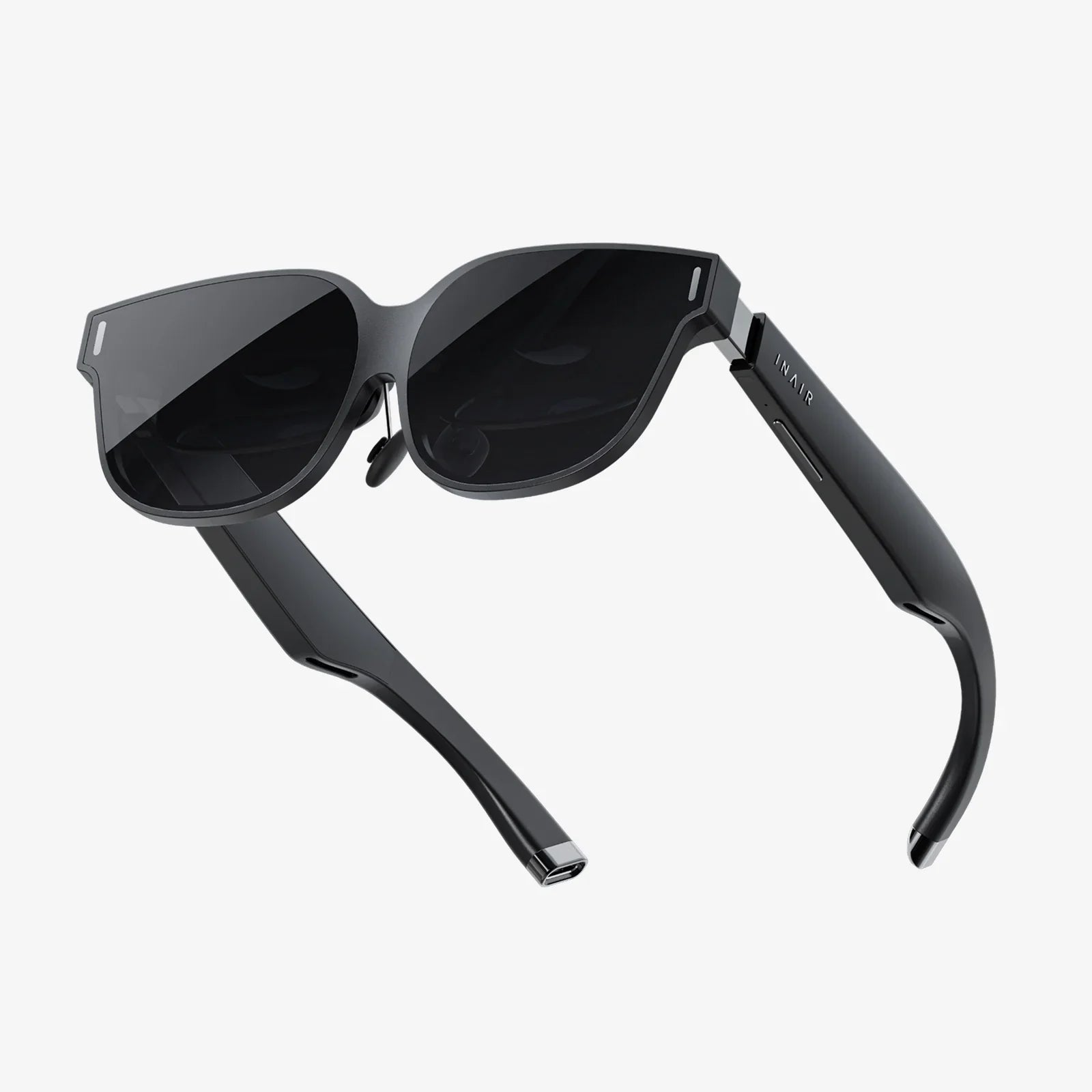
Imagine a world where the digital realm leaps out of the screen and into your living room, where the line between simulation and reality blurs into nothingness. This is the promise, the allure, and the breathtaking reality of the modern 3D stereoscopic monitor. It’s more than just a display; it’s a portal to another dimension, and it’s reshaping how we interact with technology, entertainment, and information.
The Science Behind the Illusion: How We Perceive Depth
To truly appreciate the marvel of a 3D stereoscopic monitor, one must first understand the fundamental principles of human depth perception. Our ability to see the world in three dimensions is a sophisticated biological trick, primarily achieved through binocular vision. Because our eyes are spaced approximately two-and-a-half inches apart, each eye receives a slightly different two-dimensional image of the world. The brain's visual cortex then performs an incredible feat of computation, merging these two disparate images (a process known as stereopsis) and interpreting the differences to construct a single, coherent 3D picture with depth, volume, and space.
A 3D stereoscopic monitor artificially recreates this natural process. It delivers a unique image to each eye, mimicking the way we naturally see. The technology on the display itself is only half the story; it requires a symbiotic relationship with a method to ensure each eye sees only the image intended for it. This is where the various implementation technologies come into play.
A Spectrum of Technologies: From Active Shutter to Autostereoscopy
Not all 3D monitors are created equal. The market has seen several competing technologies, each with its own advantages and trade-offs in the quest for perfect stereoscopic delivery.
Active Shutter 3D (AS3D)
This was once the dominant technology for high-end home entertainment. Active shutter systems rely on LCD shutter glasses that synchronize with the monitor via an infrared or Bluetooth signal. The monitor displays the image for the left eye, and the glasses black out the right lens. It then rapidly switches to display the image for the right eye, blacking out the left lens. This happens at such a high frequency (typically 120Hz or 240Hz, meaning 60 or 120 frames per eye) that the brain fuses the alternating images into a smooth, continuous 3D experience. The primary benefits were high resolution and minimal crosstalk (ghosting), but the drawbacks included expensive, battery-powered glasses, a noticeable flicker for some viewers, and a dimmer overall image.
Passive Polarized 3D
Commonly found in commercial cinemas, this technology uses a specialized filter on the monitor that polarizes the light for each eye's image in different directions (often circular polarization). The user wears inexpensive, lightweight glasses with corresponding polarized lenses. Each lens only allows the correctly polarized light to pass through to that eye. The main advantage is the cheap, comfortable glasses that don't require power. The traditional downside was that the technology effectively halved the vertical resolution for each eye, as early implementations used a technique called "line interlacing." However, advanced modern panels have largely mitigated this issue.
Autostereoscopic Displays: The Holy Grail
This is the future of 3D monitoring—technology that requires no glasses at all. Autostereoscopic displays use complex optical elements, like lenticular lens sheets or parallax barriers, placed over the screen to direct different images to the viewer's left and right eyes based on their viewing angle. This creates a truly "free" 3D experience, eliminating the need for any eyewear. Early versions suffered from very narrow "sweet spots," requiring the viewer to remain in a specific position, and often had issues with resolution and brightness. Yet, advancements in eye-tracking technology are revolutionizing this field. Cameras track the viewer's head and eye position in real-time, dynamically adjusting the lenticular system to provide a stable, high-quality 3D image across a much wider field of view. This technology is rapidly maturing for professional applications.
Beyond Entertainment: The Professional Power of Stereoscopy
While gaming and movies are the most consumer-facing applications, the true transformative power of 3D stereoscopic monitors lies in professional and scientific fields.
Medical Imaging and Surgery
In the medical realm, depth is not a luxury; it is a critical component of accuracy. Surgeons using minimally invasive techniques (laparoscopy or robotic surgery) rely on 3D monitors to provide a true sense of depth and spatial relationships between organs, tissues, and surgical instruments. This dramatically improves precision, reduces surgery time, and enhances patient safety. Similarly, radiologists can examine CT and MRI scans in stereoscopic 3D, allowing them to better visualize complex anatomical structures, pinpoint the exact location of tumors, and plan radiation therapy with unprecedented accuracy.
Engineering and CAD Design
For engineers and architects, a 3D stereoscopic monitor is an indispensable tool for Computer-Aided Design (CAD). Viewing a complex mechanical assembly, a building's structural framework, or an intricate circuit board in true 3D allows designers to spot interferences, understand spatial relationships, and validate designs long before a physical prototype is ever built. This saves immense amounts of time and resources, streamlining the entire product development lifecycle.
Scientific Visualization and Geospatial Mapping
Scientists use these monitors to visualize complex molecular models, astronomical data, and geological formations. Meteorologists can study storm systems in 3D, gaining better insights into their development and potential severity. Geologists and oil & gas explorers can interact with subterranean seismic data in three dimensions, making it easier to identify potential resource deposits. The ability to "step inside" the data leads to deeper understanding and more insightful conclusions.
The User Experience: Setup, Requirements, and Comfort
Adopting a 3D stereoscopic monitor involves more than just plugging it in. A powerful graphics subsystem is mandatory, as it must render each scene twice—once for each eye—effectively doubling the rendering workload. This demands a high-end graphics card with robust driver support for the chosen 3D technology.
Content is, of course, king. The experience is only as good as the source material. Native 3D content, created specifically for the medium, provides the best results. This includes 3D Blu-ray movies, specifically designed video games, and professional software with built-in stereoscopic rendering engines. The monitor itself is merely a window; it needs the right "view" to be compelling.
Perhaps the most significant hurdle for widespread consumer adoption has been user comfort. A subset of the population experiences eye strain, headaches, or nausea when viewing stereoscopic 3D. This "3D fatigue" can be caused by factors like excessive parallax (the difference between the left and right images), slow refresh rates, flicker, or a mismatch between the convergence and focus of the eyes. Modern displays with higher refresh rates, better algorithms, and brighter backlights have made great strides in reducing these negative effects, but it remains a consideration for some users.
The Future is in Depth: Where Stereoscopic Technology is Headed
The trajectory of 3D stereoscopic technology is pointing toward a more seamless and integrated future. The clear trend is the move away from glasses-dependent systems and toward advanced autostereoscopic displays. As eye-tracking becomes faster, more accurate, and cheaper, we will see monitors that can accommodate multiple viewers simultaneously, each enjoying a personalized 3D perspective.
This technology is also a foundational pillar for the next great computing platforms: Virtual Reality (VR) and Augmented Reality (AR). While VR headsets use two separate displays (one for each eye) to create an all-encompassing virtual world, the underlying principle of stereoscopy remains identical. The research and development into higher resolution, higher refresh rate, and lower latency panels for 3D monitors directly benefits the VR/AR industry. Furthermore, the concept of "volumetric displays" that can create light fields—true three-dimensional images that can be viewed from any angle without glasses—represents the ultimate evolution of this technology, though it remains largely in the research phase.
The journey of the 3D stereoscopic monitor is a story of technological ambition. It’s a tool that has already fundamentally changed critical industries like medicine and engineering, and its evolution continues to push the boundaries of our digital interactions. It challenges the very definition of a "screen," transforming it from a flat canvas of pixels into a dynamic volume of light and space, offering a glimpse into a future where our digital and physical realities are inextricably and beautifully linked.
Share:
Headphones Great for Glasses: The Ultimate Guide to Uncompromised Comfort and Audio
Digital Goggles Are Reshaping Reality and Redefining Human Experience