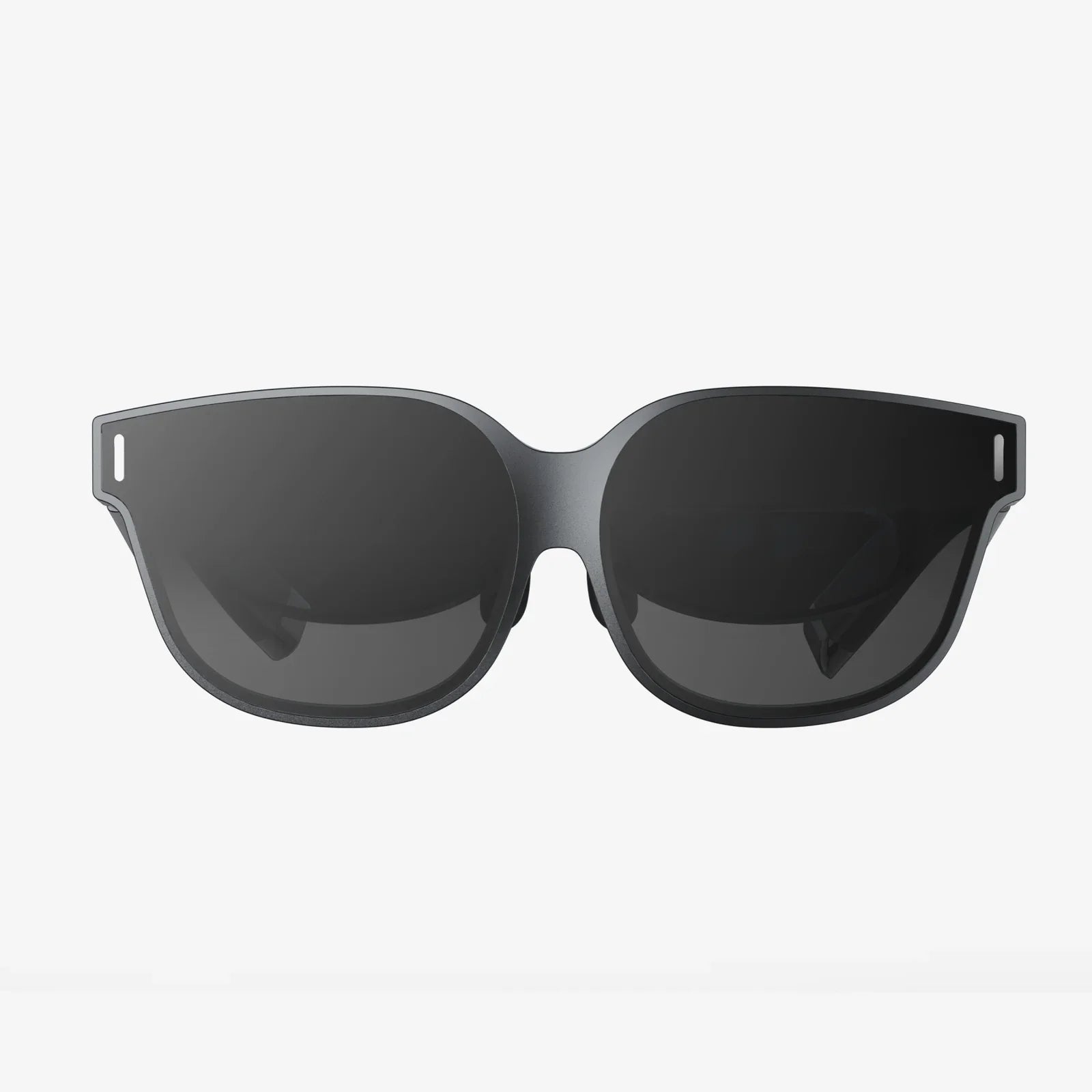
Imagine slipping on a headset and instantly transcending the confines of your physical space—scuba diving through a vibrant coral reef, walking on the dusty surface of Mars, or designing a skyscraper from the inside out with a wave of your hand. This is no longer the stuff of science fiction; it is the palpable, awe-inspiring reality offered by modern 3D virtual reality VR goggles, a technological marvel that is fundamentally reshaping how we work, learn, play, and connect.
The Architectural Blueprint: How VR Goggles Craft Immersion
At first glance, a pair of VR goggles might seem like a simple screen strapped to your face. In reality, they are a sophisticated symphony of advanced hardware and software engineering, all working in concert to trick your brain into accepting a digital world as real. The magic lies in the precise orchestration of several key components.
The Visual Engine: Stereoscopic Displays and Lenses
The heart of the experience is visual immersion. Unlike a traditional monitor, VR goggles use two high-resolution displays (one for each eye) to create a stereoscopic 3D effect. By presenting slightly different images to each eye, the brain seamlessly merges them into a single, three-dimensional picture with depth and scale. These displays are then viewed through specialized optical lenses that warp the image, correcting it for your eyes and creating a wide field of view (FOV) that fills your peripheral vision. This expansive FOV is critical; it eliminates the "looking through a window" feeling and makes the virtual environment feel all-encompassing. Furthermore, to prevent the nauseating disconnect between visual movement and physical stillness, a high refresh rate (90Hz and above) is essential, ensuring motion appears smooth and lifelike.
The Guardian of Movement: Inside-Out and Outside-In Tracking
For the virtual world to feel responsive and real, the goggles must know where you are and how you are moving at all times. This is achieved through positional tracking. There are two primary methods. Outside-in tracking uses external sensors or base stations placed around the room to precisely monitor the position of the headset and controllers. Inside-out tracking, now more common in consumer devices, embeds cameras directly onto the headset itself. These cameras observe the real-world environment, tracking its features to understand your movements without any external hardware. This technology also enables features like a "guardian" or "boundary" system, which projects a digital wall when you get too close to the edge of your play area, preventing collisions with your coffee table.
Hearing and Feeling: Spatial Audio and Haptic Feedback
True immersion is a multi-sensory experience. Spatial audio is as crucial as high-resolution visuals. Advanced audio algorithms simulate how sound waves interact with the environment and your head, allowing you to hear a spaceship whoosh past your left ear or pinpoint the faint whisper of a character behind you. This 360-degree soundscape adds a profound layer of believability. Complementing this is haptic feedback, which provides a sense of touch. While most prevalent in handheld controllers—which can simulate the recoil of a gun or the tension of drawing a bow—emerging technology is bringing haptics to gloves and full-body suits, promising the feeling of virtual rain on your skin or the impact of a virtual ball.
Beyond the Game: The Expansive Universe of VR Applications
While gaming provided the initial commercial thrust for VR, the applications for this technology now extend far beyond entertainment, infiltrating and revolutionizing numerous professional fields.
Revolutionizing Education and Training
VR offers an unparalleled tool for experiential learning. Instead of reading about ancient Rome, students can take a guided tour through a historically accurate digital reconstruction. Medical students can practice complex surgical procedures on virtual patients, making mistakes without consequences and honing their skills in a risk-free environment. Similarly, VR is transforming corporate and industrial training. Aircraft mechanics can learn to repair jet engines, and factory workers can be trained on dangerous machinery, all within a completely safe virtual space. This "learning by doing" approach dramatically improves knowledge retention and operational safety.
Transforming Design and Architecture
For architects, engineers, and interior designers, VR goggles are a revolutionary prototyping tool. Instead of viewing a building design on a 2D screen, they can step inside a full-scale 3D model of it. They can walk through the hallways, assess sightlines, and experience the spatial relationships between rooms before a single brick is laid. This allows for identifying design flaws and making iterative changes with incredible efficiency, saving vast amounts of time and resources. Clients can also be given virtual tours, enabling them to provide feedback on a design they can truly experience.
Expanding the Frontiers of Healthcare and Therapy
The therapeutic potential of VR is immense. It is being used for exposure therapy, helping patients with phobias (like fear of heights or flying) confront their triggers in a controlled, gradual manner. It is also a powerful tool for pain management, distracting burn victims during wound care with immersive, calming experiences. Furthermore, VR serves as a platform for cognitive rehabilitation for stroke patients and helps those with autism practice social skills in simulated environments. Remote surgeons are even using VR to teleport into operating rooms across the globe to consult or guide procedures.
Redefining Social Connection and Remote Work
VR is evolving into a new platform for social interaction and collaboration. Social VR platforms allow people to meet, talk, play games, and watch movies together in a shared virtual space, represented by digital avatars. This sense of "co-presence"—feeling like you are truly in the same room with someone—is far more powerful than a standard video call. For remote work, teams can collaborate in virtual boardrooms, manipulate 3D data models together, or conduct virtual training sessions, making physical distance irrelevant and fostering a new level of teamwork.
The Human and Societal Impact: A Double-Edged Sword
As with any transformative technology, the rise of VR goggles brings with it a host of complex ethical, social, and psychological considerations that society must grapple with.
The Challenge of Accessibility and the Digital Divide
While costs are decreasing, high-quality VR systems still represent a significant financial investment. This creates a risk of a new digital divide, where access to these powerful experiential and educational tools is limited to those with sufficient means. Ensuring equitable access in schools, libraries, and community centers will be crucial to prevent a future where VR exacerbates existing social and economic inequalities.
Privacy in a Data-Hungry Medium
VR goggles are arguably the most data-intensive consumer devices ever created. They don't just track what you click; they track your every movement, your gaze, your reactions, and even map your physical environment. This biometric and behavioral data is incredibly valuable and raises severe privacy concerns. Who owns this data? How is it being used? Could it be used for manipulation or surveillance? Establishing robust ethical frameworks and data protection laws specific to VR is an urgent priority.
The Psychological Effects of Blurring Realities
Spending significant time in highly engaging virtual worlds can have psychological effects. Users might experience "VR hangover," a short-term dissociation from reality. Longer-term, questions arise about addiction, the impact on real-world social skills, and the potential for individuals to retreat into idealized virtual existences. Furthermore, the phenomenon of presence is so powerful that experiencing traumatic events in VR can be genuinely psychologically damaging, necessitating careful content curation and user support systems.
The Horizon of Tomorrow: The Future Worn on Your Face
The current generation of VR goggles is impressive, but it is merely a stepping stone. The future promises devices that are lighter, more powerful, and more seamlessly integrated into our lives. Several key trends are poised to define the next decade of VR.
The Pursuit of Photorealism and Hyper-Immersion
The relentless march of technology will push visual and auditory fidelity toward true photorealism. Displays will achieve 8K+ resolution per eye and wider fields of view, eliminating the "screen door effect" entirely. Haptic technology will evolve from simple vibrations to sophisticated tactile suits and gloves that can simulate temperature, pressure, and texture. The combination of these advancements will create experiences that are visually, audibly, and tactilely indistinguishable from reality.
The Rise of Augmented Reality and the Merging of Worlds
The line between Virtual Reality (fully digital) and Augmented Reality (digital overlays on the real world) will blur. Future headsets will likely be mixed reality (MR) devices by default, capable of switching between fully immersive VR and context-aware AR. This will unlock applications where digital information and objects interact meaningfully with your physical surroundings—imagine a mechanic seeing repair instructions overlaid on an engine or an architect visualizing a new building on an empty plot of land.
Brain-Computer Interfaces and the Ultimate Interface
The final frontier for VR interaction may be the elimination of controllers altogether. Emerging research into brain-computer interfaces (BCIs) aims to allow users to control virtual environments directly with their thoughts. While this technology is in its infancy, it holds the promise of the most intuitive and immersive interface possible, where your intention is the command. This could not only revolutionize VR but also restore mobility and communication for people with disabilities.
The journey through the looking glass is no longer a fantasy. 3D virtual reality VR goggles are the key that has unlocked the door, offering a glimpse into a future where our digital and physical selves are intertwined in ways we are only beginning to understand. They challenge our perceptions of reality, redefine human connection, and hold the potential to solve some of our most pressing problems. The virtual frontier is vast, unexplored, and waiting. The only question that remains is not if you will step into it, but when.