


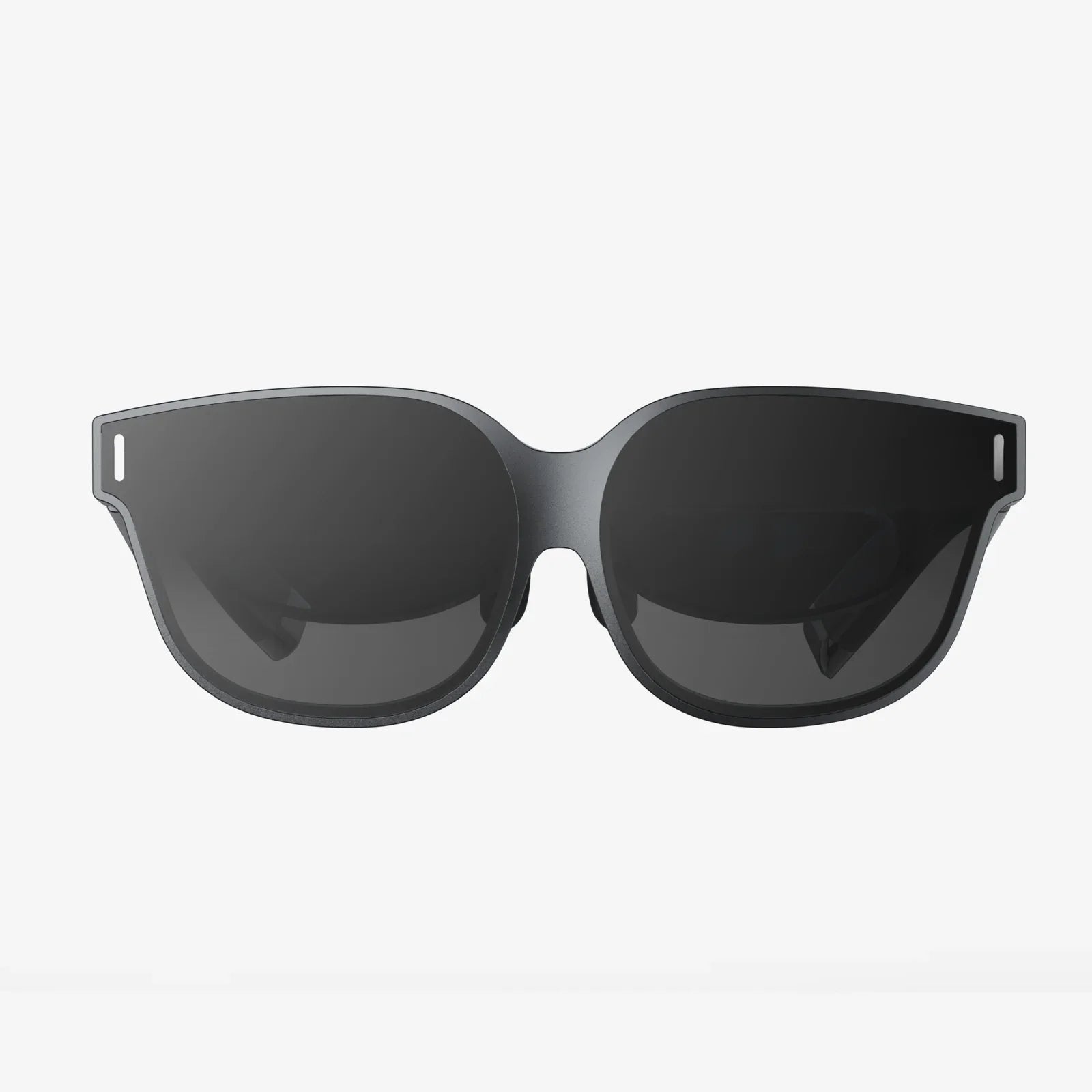
Imagine holding an entire universe in the palm of your hand, a portal to distant worlds, thrilling adventures, and breathtaking experiences, all waiting to be unlocked. This is the promise held by 3D VR glasses for Android, a technology that transforms your powerful smartphone into a gateway to immersive digital realms. The journey from a niche curiosity to an accessible entertainment medium has been remarkable, and it all starts with a simple headset and the device you already own.
The Magic Behind the Lenses: How Mobile VR Works
At its core, the concept is elegantly simple yet technologically profound. 3D VR glasses for Android are not standalone supercomputers; they are sophisticated optical devices designed to harness the power of your smartphone. The process begins when you slot your Android device into the headset's compartment, aligning the screen directly in front of two high-quality lenses.
These lenses perform two critical functions. First, they magnify the image on your phone's screen, filling your entire field of vision to eliminate distractions from the outside world. Second, and more importantly, they warp the image to create a stereoscopic 3D effect. Your phone's display shows two slightly different images, one for your left eye and one for your right. The brain seamlessly merges these two perspectives, creating a convincing illusion of depth, scale, and immersion. Built-in sensors in your phone, like the gyroscope and accelerometer, track your head movements, allowing the software to update the view in real-time. When you look up, down, or side-to-side, the virtual world moves with you, selling the fantasy that you are truly inside the experience.
A Universe of Content: What Can You Actually Do?
The hardware is merely a vessel; the true value lies in the vast ocean of content available on the Android platform. The possibilities are nearly endless, catering to a wide array of interests.
Gaming and Interactive Experiences
This is where mobile VR truly shines. Gone are the days of simple rollercoaster simulators. Today's library includes deeply engaging titles that range from pulse-pounding horror games and intricate puzzle solvers to serene exploration adventures. You can find yourself on the deck of a starship, fending off alien invaders, or solving a mysterious crime by examining a virtual crime scene from every angle. Many games offer controller support, bridging the gap between mobile and console-quality interactive entertainment.
360-Degree Videos and Virtual Travel
Have you ever wanted to stand on the surface of Mars, swim with great white sharks, or attend a live concert from the front row? 360-degree videos make this possible. Platforms host millions of these immersive videos, allowing you to explore destinations and events that would otherwise be inaccessible. It's a powerful tool for education, tourism, and pure escapism, all from the comfort of your living room.
Social and Collaborative Spaces
Virtual reality is becoming increasingly social. Numerous applications allow you to create a digital avatar and meet with friends, family, or colleagues in virtual spaces. You can watch movies together on a giant virtual screen, play social games, or even use these spaces for remote work collaboration, making distance feel irrelevant.
Educational and Training Applications
From anatomy students exploring a detailed 3D model of the human heart to history students walking through a digitally reconstructed ancient Roman city, the educational applications are profound. VR provides a level of contextual understanding and retention that traditional textbooks and videos simply cannot match.
Choosing Your Portal: Key Features to Consider
Not all headsets are created equal. When selecting 3D VR glasses for your Android device, several factors will significantly impact your experience.
Compatibility and Phone Size
This is the most crucial first step. Ensure the headset you choose has a compatible tray or adjustable mechanism that can securely hold your specific Android phone model. Measure your phone's dimensions and check the headset's maximum size limits to avoid frustrating incompatibilities.
Field of View (FOV)
Measured in degrees, the Field of View refers to how much of the virtual world you can see without moving your head. A wider FOV (typically 100 degrees or more) is far more immersive, as it reduces the sensation of looking through binoculars or a scuba mask. A narrow FOV can constantly remind you that you are wearing a headset, breaking the sense of presence.
Lens Quality and Adjustability
The lenses are the windows to the virtual world. Look for headsets with high-quality, aspherical lenses that minimize visual distortions like the "screen door effect" (where you can see the gaps between pixels) and chromatic aberration (color fringing). Equally important is the ability to adjust the distance between the lenses (interpupillary distance or IPD) and the focus. This allows you to customize the view to match your unique eyesight, ensuring a sharp and comfortable image.
Comfort and Build Quality
You'll likely be wearing the headset for extended periods. Weight distribution is key. Headsets with a sturdy strap system that distributes weight across your forehead and the back of your head are far superior to those that simply strap to your face. Padded foam interfaces that are breathable and removable for washing are also essential for hygiene and comfort during longer sessions.
Input Methods: From Gaze to Controllers
Basic interaction in VR often starts with a "gaze" control, where you look at a menu item to select it. However, for true interactivity, you will want a headset that includes or is compatible with a dedicated motion controller. These Bluetooth controllers often feature touchpads, buttons, and sensors that track their movement in 3D space, letting you reach out and manipulate the virtual world intuitively.
Beyond the Hype: Understanding the Limitations
While incredible, mobile VR does have inherent limitations compared to high-end, PC-powered systems. The graphical fidelity is entirely dependent on your phone's processor and graphics chip, meaning experiences are less visually complex. Positional tracking—the ability to lean in, duck, or walk around in a virtual space—is rare and less accurate than with external sensor systems. Additionally, prolonged use can lead to eye strain or motion sickness for some users, though this is often mitigated by high-quality hardware and well-designed software. Being aware of these limitations helps set realistic expectations and allows you to better appreciate the technology's impressive achievements.
The Future is Mobile: Where is This Technology Heading?
The evolution of 3D VR glasses for Android is far from over. We are already seeing trends toward standalone headsets with built-in Android-based operating systems, which offer a more seamless experience. However, the smartphone-powered model remains a vital and accessible entry point. Future advancements will likely focus on better lenses, wider fields of view, and improved input methods. As 5G connectivity becomes ubiquitous, cloud-based VR streaming could offload heavy processing from the phone itself, enabling even more sophisticated experiences on mobile hardware. The line between mobile and high-end VR will continue to blur, making immersive technology available to everyone.
Your Android device is more than a communication tool; it's a key to countless other dimensions. 3D VR glasses unlock this potential, offering an affordable and incredibly diverse entry into virtual reality. Whether you seek adventure, knowledge, connection, or simply a new way to be entertained, the perfect experience is waiting just a download away, ready to transform your perception of reality itself.
Share:
What AR VR Headsets Could Look Like: A Glimpse Into the Future of Wearable Computing
Distinguish Between AR and VR: A Guide to the Realities of Immersive Tech