


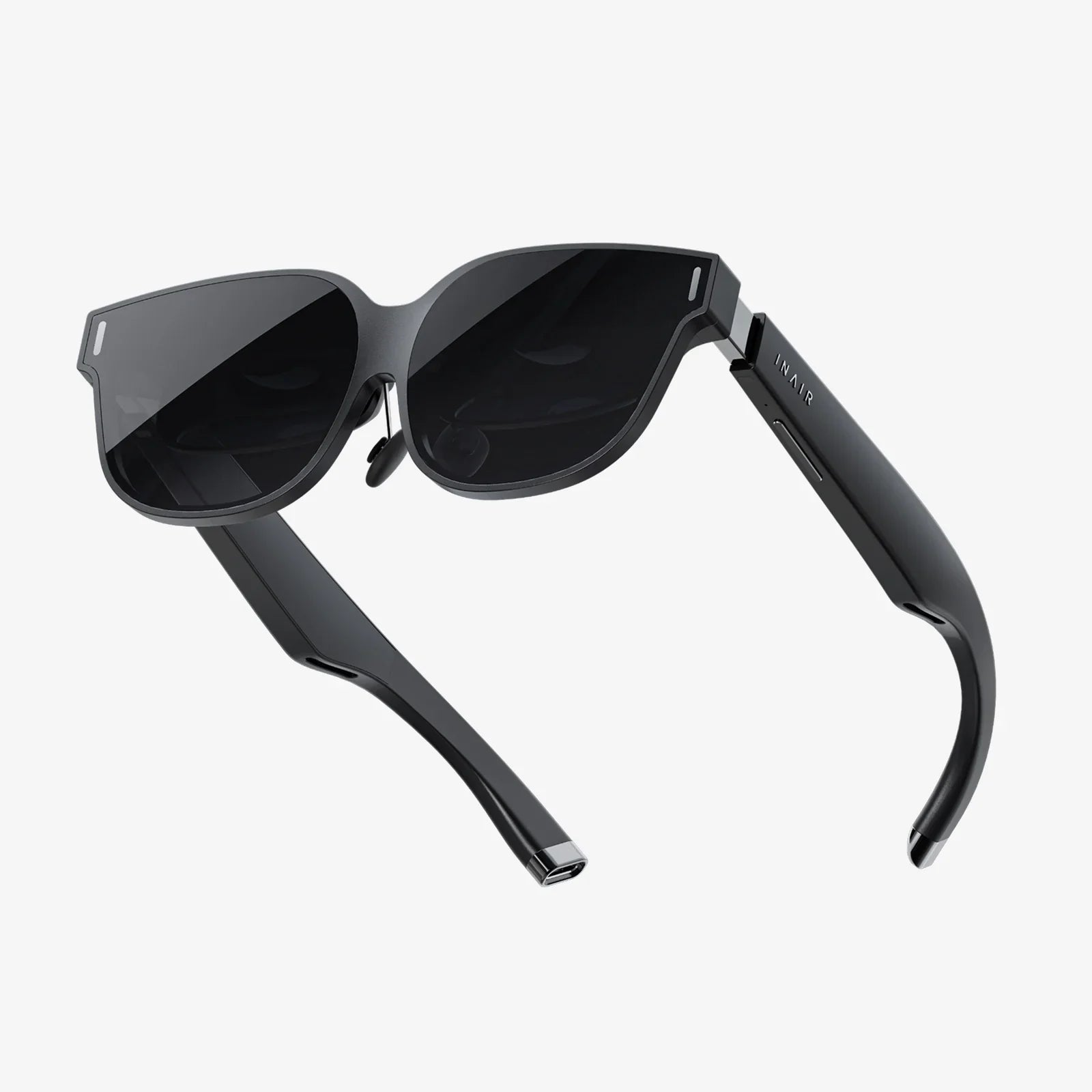
Imagine slipping on a sleek visor and being instantly transported. The world around you melts away, replaced by a breathtaking alien landscape or the roaring stands of a stadium on the other side of the globe. You look up and see digital constellations, you lean in to examine a intricate virtual artifact. But the illusion, no matter how visually stunning, remains just that—an illusion—until you hear it. The subtle rustle of leaves behind you, the distant echo of a spaceship engine, the whisper of a character right in your ear. This is the magic unlocked by the seamless integration of 3D VR glasses headphones, a combination that doesn't just show you a new world, but makes you believe you are truly there. It’s the final, crucial piece of the presence puzzle, and it’s revolutionizing how we play, learn, and connect.
The Symphony of Immersion: Why Audio is Half the Experience
For decades, visual fidelity has been the primary battleground for consumer technology. Higher resolutions, faster refresh rates, and wider fields of view have been the metrics of progress. Yet, in the realm of virtual reality, this focus on the visual alone is like orchestrating a symphony and only caring about the violins. Audio is the cello, the brass, the percussion—it provides the depth, the context, and the emotional weight.
Human beings are hardwired to navigate and understand their environment through sound. Our hearing provides a continuous, 360-degree awareness that sight cannot. We can pinpoint the location of a buzzing bee without seeing it, and we instinctively turn our heads towards the source of a sudden noise. This biological reality makes spatial audio, not just high-quality audio, the critical companion to VR visuals. Integrated 3D VR glasses headphones are specifically engineered to exploit this, using a combination of hardware and advanced software to create a convincing soundscape that moves and changes with your head movements.
When you turn your head to the left in a virtual environment, the audio doesn't just pan from the right speaker to the left; it changes in timbre, volume, and phase, exactly as it would in the real world. A voice speaking from behind you will sound distinctly different than one speaking from in front. This phenomenon, known as head-related transfer function (HRTF), is what allows our brains to spatially locate sounds. Premium integrated audio systems are fine-tuned to replicate HRTF with astonishing accuracy, tricking your auditory cortex into believing the sounds are emanating from points in three-dimensional space around you, not from speakers glued to your ears.
Beyond Gaming: The Expansive Universe of Applications
While high-octane virtual reality games are the most obvious beneficiaries of this technology, the applications for immersive audio-visual experiences extend far beyond the realm of entertainment.
Revolutionizing Education and Training
Imagine a medical student being able to step inside a hyper-realistic simulation of the human body, not only seeing the intricate weave of capillaries around a heart but hearing the simulated lub-dub rhythm change with various conditions. Or consider a technical trainee learning to repair a complex engine, where the specific clunk of a correctly seated part or the worrisome whir of a misaligned gear provides crucial, real-time feedback. This multi-sensory learning environment dramatically improves knowledge retention and skill acquisition.
The Virtual Workspace and Social Connection
Remote work and collaboration have become staples of the modern economy. Integrated 3D VR glasses headphones can transform a standard video call into a meeting around a virtual conference table. Spatial audio ensures that when a colleague on your right speaks, their voice comes from your right. This recreates the natural flow of conversation found in physical meetings, reducing the cognitive load of deciphering who is talking and fostering more natural, productive collaboration. Social platforms in virtual reality also rely heavily on this; sharing a virtual campfire with friends from across the world feels genuine when you can hear the crackle of the fire in front of you and your friend's laughter coming from beside you.
Cinematic Experiences and Virtual Tourism
The movie industry is beginning to explore narrative experiences designed for VR. With a integrated headphone system, you are no longer just watching a film; you are in it. The director can place audio cues all around you, making you a participant in the story. Furthermore, virtual tourism applications allow you to stand in the Sistine Chapel or at the edge of the Grand Canyon. The immersive sound of echoing voices, chirping birds, or rushing water completes the illusion, offering a profound sense of place that a flat screen and standard speakers could never provide.
Anatomy of Integrated Audio: Form and Function
The design of headphones built directly into 3D VR glasses is a fascinating exercise in balancing acoustic engineering with ergonomic constraints. Unlike traditional headphones, they cannot rely on large, encompassing ear cups for perfect sealing and bass response. Instead, they often employ innovative solutions.
Many systems use on-ear or near-field speakers positioned close to the ear. This design allows for a lighter, less bulky headset and maintains awareness of your real-world surroundings if desired—a feature often called "passthrough" or "transparency" mode. The speakers are typically paired with advanced digital signal processing (DSP) to compensate for the lack of a sealed acoustic chamber, ensuring rich and full sound.
Another critical feature is built-in microphones. For social and professional applications, clear communication is paramount. These microphones are often designed with noise-canceling technology to isolate the user's voice from background noise, ensuring you are heard clearly in the virtual world without the sound of your keyboard clacking or a fan humming in the room.
The headband itself often serves as a conduit for audio, a technique sometimes called bone conduction or more accurately, audio conduction through the headset's structure. This can enhance the feeling of immersion, making sounds feel like they are vibrating through your body during intense moments like explosions or engine rumbles.
Choosing Your Portal: A Buyer's Guide to Integrated Audio VR
With a growing market of devices featuring integrated audio, selecting the right one requires careful consideration of your primary use cases and personal preferences. Here are the key factors to weigh.
1. Audio Fidelity: The Pursuit of Quality
Not all integrated audio is created equal. Look for devices that emphasize high-resolution audio support and detailed specifications for frequency response. A wider range (e.g., 20Hz – 20,000Hz) will deliver deeper bass and crisper highs. Reading professional reviews that test the audio performance is invaluable, as specs on a page can't always capture the nuance of sound quality.
2. Comfort and Fit: The Long Session Test
A VR headset is something you wear, and comfort is non-negotiable, especially for longer experiences. Consider the weight of the device and how the audio components interact with the overall fit. Do the speaker pads rest comfortably on your ears? Is the headband adjustable? Remember, discomfort is a major immersion-breaker. If possible, try before you buy.
3. Spatial Audio Technology: The Engine of Immersion
Investigate the spatial audio technology powering the device. Different manufacturers use different software solutions and algorithms to create their 3D soundscapes. Some may have partnerships with renowned audio companies to license their technology. A more advanced and well-tuned spatial audio system will provide a more convincing and immersive experience, with precise sound positioning that remains stable as you move.
4. Connectivity and Compatibility
Ensure the headset is compatible with your intended platform, whether it's a powerful personal computer, a dedicated gaming console, or a standalone system. Also, check for connectivity options. While the integrated headphones will be the primary audio output, having a standard audio jack or Bluetooth connectivity can be a great bonus for times when you want to use your own high-end headphones or need to listen privately without disturbing others.
5. The Passthrough Advantage
For users who need to frequently interact with their physical environment—perhaps to find a drink, check a phone notification, or supervise children—a good passthrough audio mode is incredibly useful. This feature uses the built-in microphones to pipe real-world sounds into the headphones, allowing you to hear what's happening around you without removing the headset. The quality of this implementation varies, so it's another feature to check in reviews.
The Future Sounds Incredible
The trajectory of this technology points toward even deeper integration and intelligence. We are moving toward systems that can perform real-time acoustic environment analysis, using microphones to scan your physical room and then adjusting the virtual soundscape to match its acoustic properties. This would make a virtual voice in a small, tiled bathroom sound appropriately echoey, while a conversation in a virtual forest would be dampened and absorbed, just as in reality.
Furthermore, research into personalized HRTF is ongoing. The future may hold a quick setup process where you use your phone's camera to scan your ears, creating a custom audio profile that perfectly matches your unique physiology for the most accurate and immersive 3D audio possible. Haptic feedback integrated into the headband or audio straps will add a tactile layer to the auditory experience, letting you feel the rumble of thunder or the thump of a bass drum.
The fusion of visual and auditory technology in 3D VR glasses headphones is more than a mere convenience; it is the essential catalyst for true presence. It’s the difference between observing a dream and living within it. This synergy is quietly building the foundational layer for the metaverse and the next generation of human-computer interaction, making the digital frontier feel not just visible, but vibrantly, undeniably real. As these devices continue to evolve, they promise to further blur the line between our physical and digital realities, offering experiences that are limited only by our imagination. The door to other worlds is open, and it sounds amazing.
Share:
Benefits of AR and VR: Transforming Industries and Redefining Human Experience
Promotional VR Glasses: The Ultimate Tool for Immersive Brand Engagement