


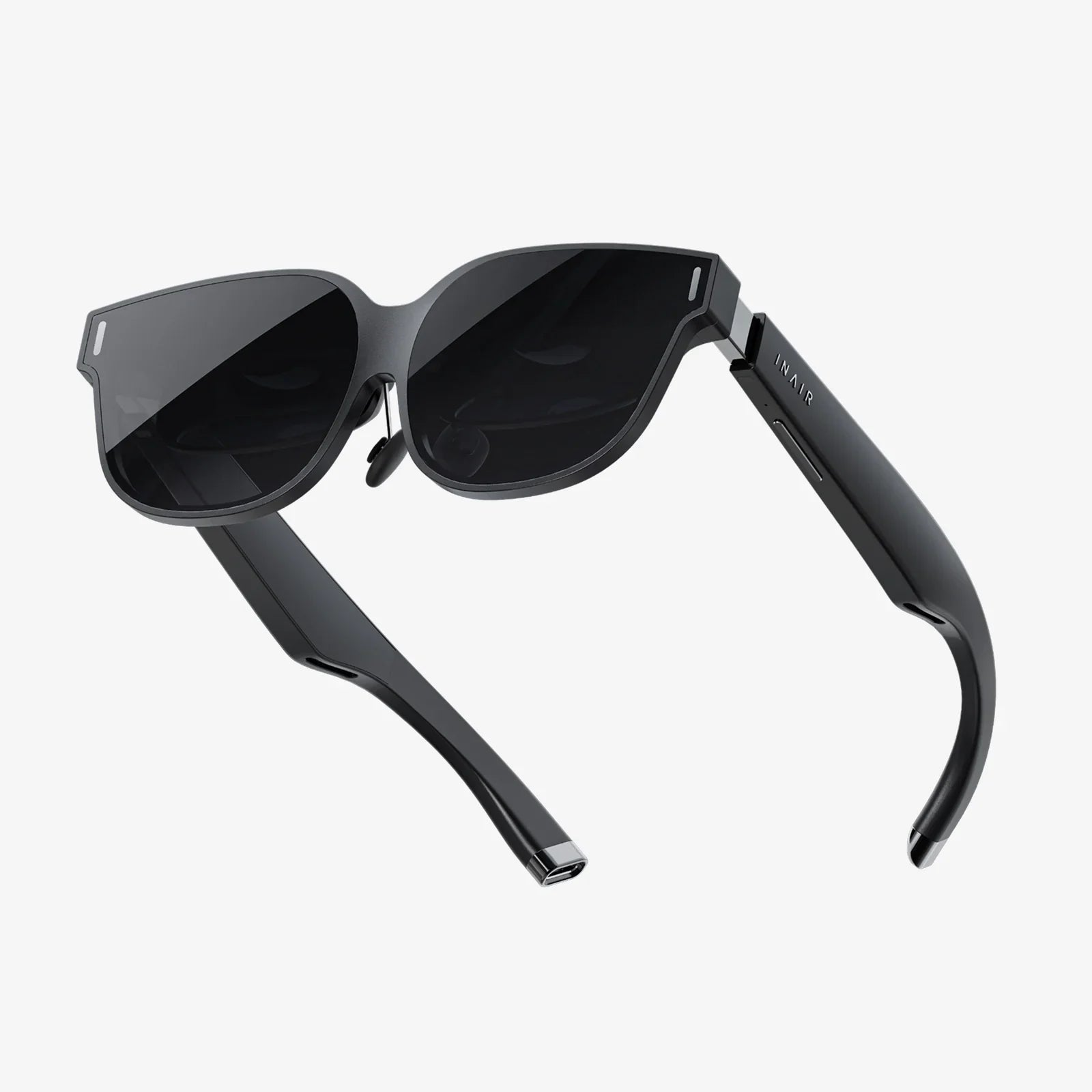
Imagine slipping a sleek, powerful computer into your pocket, only to later strap it to your face and be transported to another world. This isn't science fiction; it's the reality forged by the convergence of 3D VR and iPhone technology, a combination that is democratizing immersive experiences and redefining the very nature of mobile computing. The journey from a simple communication device to a portal for virtual exploration represents one of the most fascinating evolutions in modern technology, and it's happening right in the palms of our hands.
The Unlikely Synergy: High-Performance Hardware Meets Immersive Software
The marriage of immersive 3D virtual reality with a smartphone might seem like a recent innovation, but its roots are deeply embedded in the relentless pursuit of miniaturization and power. Modern flagship smartphones, particularly those running a certain popular mobile operating system, are technological marvels. They pack desktop-class processors, high-resolution displays, advanced gyroscopes, accelerometers, and powerful graphics units into a slim, portable form factor. It is this raw computational power that makes them the ideal, albeit unexpected, heart of a personal virtual reality system.
The concept is elegantly simple: the smartphone provides the brain and the eyes for the VR experience. Its high-pixel-density screen is split into two distinct images, one for each eye, creating the stereoscopic 3D effect. Its internal sensors track the slightest movement of your head, updating the view in real-time to create a convincing sense of presence and immersion. All of this is housed within an affordable head-mounted display, which is essentially a sophisticated holder with lenses. This symbiosis means that for millions of users, the gateway to virtual worlds isn't a bulky, expensive, and tethered desktop computer; it's the device they already own and carry everywhere.
Beyond the Hype: The Core Technologies Powering the Experience
To understand the magic of a 3D VR experience on a mobile platform, one must dissect the core technologies working in concert. It's a ballet of hardware and software, each component playing a critical role.
The Display: A Window to Another Reality
The screen is the soul of the experience. Early mobile VR was plagued by the "screen door effect," where users could see the fine lines between pixels, shattering the illusion of reality. Advancements in display technology, including OLED panels with exceptional contrast ratios, high brightness, and incredibly high pixel-per-inch (PPI) densities, have largely eradicated this issue. These screens offer deep blacks and vibrant colors, which are essential for creating believable virtual environments. The fluidity of the experience is also paramount, with high refresh rates becoming a standard feature, ensuring that motion is smooth and latency is minimized to prevent the disorientation and motion sickness that plagued earlier iterations.
Sensors and Tracking: The Art of Presence
Immersion is broken the moment the virtual world fails to mimic your real-world movements perfectly. This is where the sophisticated array of sensors comes into play. A combination of a precision gyroscope, accelerometer, and magnetometer—often referred to as an Inertial Measurement Unit (IMU)—constantly measures the rotation and orientation of the device. This is known as 3 Degrees of Freedom (3DoF) tracking, allowing you to look around a virtual space by turning your head. More advanced systems are now incorporating outward-facing cameras on the device itself, enabling 6 Degrees of Freedom (6DoF) tracking. This technology, often called inside-out tracking, allows the system to understand not just your rotation but also your physical movement through space, letting you lean, duck, and walk around within a limited area, vastly deepening the sense of immersion.
Computational Prowess: The Engine Room
Rendering two high-resolution, high-frame-rate views simultaneously is an immense computational task. The system on a chip (SoC) found in modern devices is a powerhouse, featuring CPUs and GPUs that rival older desktop components. This raw processing power is necessary not only for graphics but also for the complex spatial audio processing that convinces your brain sounds are coming from specific locations in the virtual space. Furthermore, advanced machine learning cores are now being leveraged for tasks like foveated rendering (which prioritizes graphic detail where the user is looking) and improved positional tracking, all while managing power efficiency to prevent overheating and preserve battery life during these demanding sessions.
A Universe in Your Pocket: Applications and Experiences
The true value of any technology lies in its application. The ecosystem of experiences available for mobile-based 3D VR has exploded, moving far beyond simple tech demos and novelty games.
Gaming and Interactive Entertainment
This is the most obvious and often the most thrilling application. Mobile VR platforms host a vast library of experiences, from casual puzzles that take place on a table in front of you to full-fledged adventure games where you are the protagonist. The intimacy of the headset and the direct control offered by simple Bluetooth controllers—or even just your gaze and a head nod—create a uniquely engaging form of interactive entertainment. You are no longer just controlling a character on a screen; you are inhabiting the game world.
Education and Virtual Travel
Perhaps the most transformative use case is in education and exploration. Imagine a history class where students can don a headset and stand in the Roman Forum, looking up at the ancient structures surrounding them. Or a biology lesson where they can step inside a human cell, watching organelles float by. Applications allow for virtual travel to the peaks of Everest, the depths of the ocean, or the surface of Mars, all from the safety of a classroom or living room. This experiential learning creates powerful memories and a deeper understanding of complex subjects that textbooks alone could never provide.
Social Connection and Collaborative Workspaces
Virtual reality is evolving into a social platform. Newer applications allow users to meet in virtual spaces as customizable avatars. They can watch movies together on a giant virtual screen, attend live concerts, visit art galleries, or simply hang out and chat in a fantastical environment. This has profound implications for remote work and collaboration. Teams distributed across the globe can meet in a virtual boardroom, interact with 3D models of products they are designing, or brainstorm on a shared whiteboard that feels tangibly present, fostering a sense of togetherness that video calls cannot replicate.
Challenges and Considerations on the Road Ahead
Despite the incredible progress, the path forward for mobile-based 3D VR is not without its obstacles. The primary limitation remains the fundamental trade-off between mobility and performance. While the chipsets are powerful, they are still constrained by thermal and power budgets, limiting the graphical fidelity and complexity of experiences compared to tethered PC-based systems. Battery life is also a significant concern, as rendering VR is immensely draining.
User experience hurdles also persist. While headset designs have improved, comfort during extended sessions is still a point of development. Furthermore, creating intuitive and accessible control schemes that don't require a multitude of external sensors and peripherals remains a key focus for developers. The industry is also grappling with important questions around privacy, data security, and establishing ethical guidelines for these deeply immersive and persuasive experiences.
The Future is Spatial: Where Do We Go From Here?
The trajectory of 3D VR on mobile platforms is inextricably linked to the broader evolution of spatial computing. We are moving towards a future where the digital and physical worlds are seamlessly blended. The next generation of devices is already hinting at this future, with advanced augmented reality (AR) capabilities that overlay digital information onto the real world through the device's camera. The line between VR and AR will blur, creating mixed reality (MR) experiences where virtual objects can be placed and interacted with in your physical living room.
Future advancements in display technology, like micro-LED and holographic displays, will make the visuals indistinguishable from reality. Connectivity standards will enable cloud-based rendering, where the heavy computational lifting is done on remote servers, streamed seamlessly to the headset, bypassing the hardware limitations of the device itself. This will truly unlock photorealistic graphics and complex simulations on a mobile platform. Furthermore, the development of more natural human-computer interfaces, like advanced hand-tracking and eventually even neural interfaces, will remove the controller entirely, allowing us to interact with the digital world as intuitively as we do with the physical one.
The potential is limitless. From revolutionizing how we design cities and train surgeons to creating entirely new forms of artistic expression and social interaction, the combination of 3D VR and mobile technology is not just about entertainment. It is about expanding the human experience, breaking down the barriers of location and physicality, and providing new tools for creativity, connection, and understanding. This pocket-sized portal to other dimensions is more than a gadget; it's the first step into a vast and uncharted future, and it's an journey that is just beginning.
You hold the key to countless worlds in your pocket; the only question left is which one you'll choose to explore first. The barrier to entry has never been lower, and the adventures have never been more compelling—your front row seat to the next digital revolution is waiting, and it's hiding in plain sight, disguised as the most personal device you own.
Share:
Current Best VR Headset 2025: The Ultimate Immersive Experience Awaits
VR Headset Computer Monitor: The Ultimate Immersive Desktop Experience