


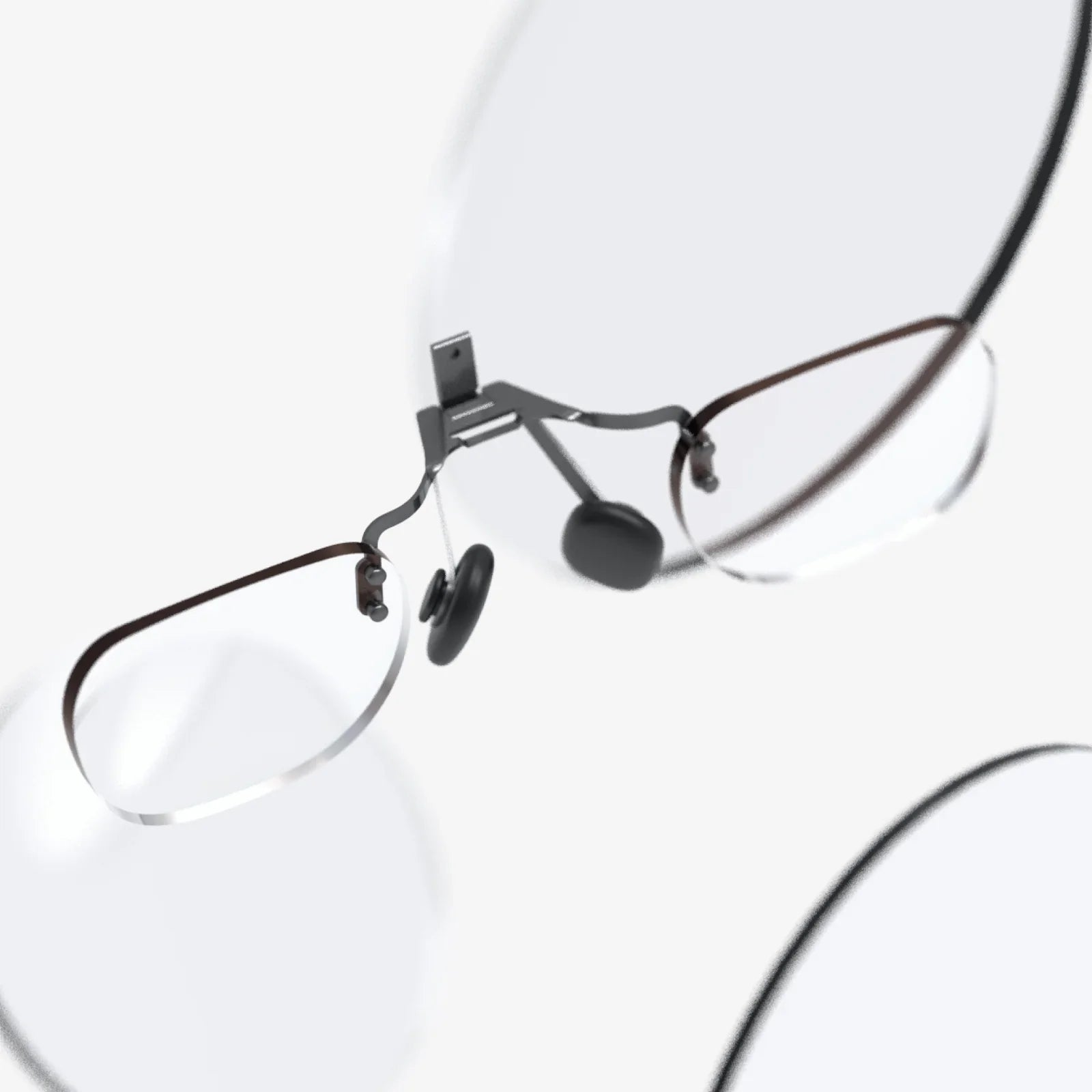
Imagine stepping through a portal into another world, a realm not of flat images and distant sounds, but of palpable depth and immersive presence. This is the promise of 3D VR, a technology that has finally shed its sci-fi skin to become one of the most powerful and disruptive tools of the 21st century, poised to redefine everything from how we work and learn to how we connect and escape.
The Architectural Pillars of Presence: How 3D VR Works
At its core, 3D VR is an elaborate trick on the human senses, a sophisticated ballet of hardware and software designed to manufacture the feeling of presence—the undeniable, often startling, sensation of being somewhere else. This illusion is constructed on several key technological pillars.
The first is stereoscopic vision. By presenting a slightly different image to each eye, 3D VR headsets replicate the way our brains naturally perceive depth in the real world. This binocular disparity is the foundational layer of the three-dimensional effect, creating a convincing sense of scale and space that a traditional screen cannot match.
The second pillar is low-latency head tracking. Sophisticated internal sensors—gyroscopes, accelerometers, and magnetometers—constantly monitor the orientation of your head. External sensors or inside-out tracking cameras then map its position in physical space. This data is fed back to the software in milliseconds, allowing the virtual environment to respond to your movements in perfect, real-time synchrony. Look up, and the virtual sky appears; crouch down, and you peer under a virtual table. This seamless feedback loop is critical; any perceptible delay between movement and visual update shatters the illusion and can cause discomfort.
The third crucial element is a wide field of view (FOV). Early headsets offered a limited, tunnel-vision experience. Modern iterations have significantly expanded the FOV, bringing it closer to our natural peripheral vision. This enlargement of the visual sphere is essential for deepening immersion, making the virtual world feel vast and all-encompassing rather than a mere window one looks into.
Finally, spatial audio completes the sensory picture. Unlike standard stereo sound, spatial audio algorithms simulate how sound waves interact with the environment and our ears. A noise behind you actually sounds like it's coming from behind. This 360-degree soundscape is not just an added effect; it is a powerful cue that reinforces spatial awareness and presence, making the virtual world feel tangibly real.
Beyond Gaming: The Expansive Ecosystem of 3D VR Applications
While gaming provided the initial commercial thrust for 3D VR, its applications have exploded far beyond entertainment, infiltrating and revolutionizing numerous professional and educational fields.
Transforming Education and Training
3D VR has become a potent pedagogical tool. Instead of reading about ancient Rome, students can take a guided tour through a meticulously reconstructed Colosseum, hearing the echoes of the crowd and appreciating the sheer scale of the architecture. Medical students can practice complex surgical procedures on virtual patients, making critical mistakes without consequences and honing their skills in a risk-free environment. This experiential learning fosters deeper understanding and retention than textbooks or videos ever could.
Similarly, high-stakes industries are leveraging VR for training. Astronauts have used simulators for decades, but now firefighters can train for navigating zero-visibility infernos, pilots can practice handling emergency scenarios, and factory workers can learn to operate dangerous machinery—all within a completely safe, virtual space. This not only improves competency but also saves lives and resources.
Revolutionizing Design and Architecture
The fields of design, architecture, and engineering have been utterly transformed. Architects and their clients no longer have to struggle to interpret two-dimensional blueprints. They can don a headset and step inside a full-scale, photorealistic model of a building before a single brick is laid. They can walk through hallways, check sightlines from windows, and assess the flow of space, making design adjustments in real-time based on an intuitive, embodied understanding of the project. This eliminates costly errors and ensures the final product aligns perfectly with the vision.
Redefining Remote Collaboration and Telepresence
The concept of the video call is being rendered obsolete by social VR platforms. Remote collaboration in 3D VR is not about staring at a grid of faces on a screen; it's about sharing a virtual space with lifelike avatars of colleagues. You can gather around a 3D model of a new product, examining it from every angle together. You can brainstorm on a virtual whiteboard that exists in three dimensions, or attend a virtual conference where the serendipitous hallway conversations are preserved. This sense of shared presence fosters a level of connection and productivity that traditional remote work tools cannot achieve.
Pioneering New Frontiers in Therapy and Healthcare
Therapeutic applications of 3D VR are delivering remarkable results. Exposure therapy for phobias—fear of heights, flying, or public speaking—is now conducted with unparalleled control and safety within virtual environments. Patients can confront their fears gradually, with a therapist guiding the experience every step of the way.
VR is also being used for pain management, particularly for burn victims undergoing painful wound care. By immersing patients in a calming, engaging virtual world like a snowy landscape, their attention is diverted, and their perception of pain can be significantly reduced. Furthermore, VR experiences are helping stroke patients with motor rehabilitation and providing cognitive stimulation for elderly patients, offering new hope and improved quality of life.
The Hurdles on the Path to Ubiquity: Challenges Facing 3D VR
Despite its incredible potential, the path to mainstream adoption for 3D VR is not without significant obstacles.
The issue of user comfort remains paramount. A subset of users experiences cybersickness, a form of motion sickness caused by a disconnect between visual motion and the body's vestibular sense. While advancements in display refresh rates and tracking precision have mitigated this for many, it is still a barrier. The physical ergonomics of headsets—their weight, heat, and pressure on the face—also limit comfortable usage to shorter sessions for many people.
There is also the challenge of friction and accessibility. For a high-fidelity, room-scale experience, users often need a powerful computer, a cleared physical space, and the technical know-how to set everything up. While standalone headsets have dramatically lowered this barrier by integrating all necessary components, they often represent a trade-off between convenience and graphical performance.
Perhaps the most profound challenge is the social and psychological dimension. As we spend more time in richly rendered virtual worlds, questions arise about privacy, data security, and the nature of reality itself. The long-term effects of prolonged immersion on social development and mental health are still being studied. Furthermore, creating a truly ethical and equitable metaverse—a collective virtual shared space—presents enormous societal challenges that we are only beginning to grapple with.
The Future is a Layer: The Convergence of 3D VR and Augmented Reality
The future of 3D VR is not necessarily about more isolation inside a headset. The most exciting trajectory is its convergence with Augmented Reality (AR). The endgame is a single, lightweight device capable of seamlessly transitioning between fully immersive virtual worlds and overlaying digital information onto our physical reality—a concept often referred to as Mixed Reality (MR).
Imagine a architect inspecting a construction site, seeing the planned structural beams overlaid perfectly onto the unfinished building. A mechanic could see the internal components of a complex engine highlighted through their AR glasses. This blending of the digital and physical will unlock applications we can scarcely imagine today, making the technology an invisible yet integral layer enhancing our everyday perception of the world.
Advancements in haptic feedback, from sophisticated gloves to full-body suits, will further bridge the gap between the virtual and the real, allowing us to feel the texture of a virtual object or the handshake of a colleague on another continent. Eye-tracking and facial expression tracking will make avatars more emotionally resonant, capturing a wink, a frown, or a look of surprise to make digital interactions feel truly human.
This is not just the next step in computing; it is the next step in human experience. 3D VR and its adjacent technologies are evolving into the ultimate medium—a platform for creation, connection, and exploration limited only by our collective imagination. The virtual frontier is open, and it is waiting for us to build it, explore it, and call it home.
The line between the digital and the physical is not just blurring; it's being actively redesigned by 3D VR, inviting you to step across a threshold and experience a reality where the only true limit is the boundary of your own curiosity.
Share:
Computerized Eyewear: The Invisible Revolution Reshaping Human Interaction
Computerized Eyewear: The Invisible Revolution Reshaping Human Interaction