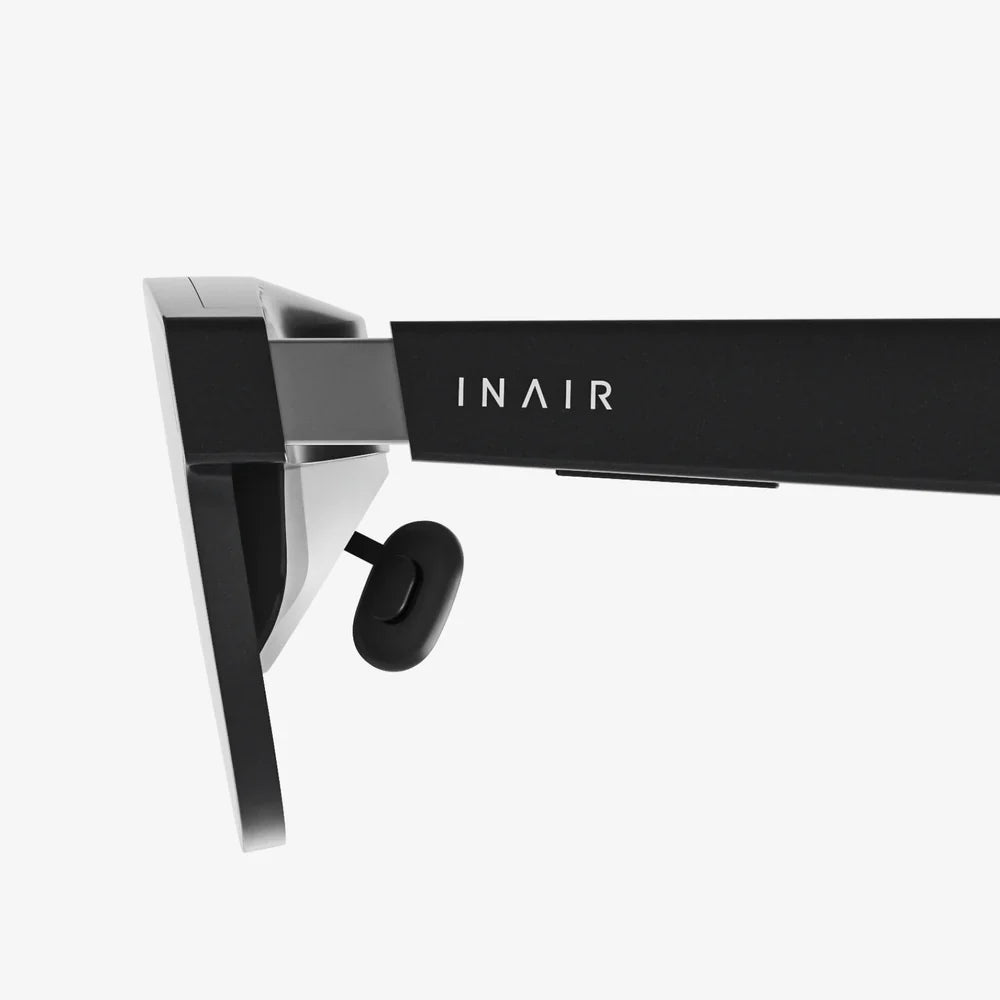
Imagine a world where information is no longer confined to the flat screens of our devices but blooms into life right before our eyes, integrated seamlessly into the fabric of our reality. This is the promise of the 3D wearable display, a technological leap that is set to redefine the very nature of human-computer interaction, entertainment, and social connection. It’s not just an upgrade to a smartphone; it’s a gateway to a new dimension of experience, offering a persistent, intelligent, and spatially aware visual layer over our world. The race to perfect this technology is one of the most significant in modern computing, promising to untether us from our desks and pockets, freeing digital content into the three-dimensional space we naturally inhabit.
The Architectural Marvel: How 3D Wearable Displays Actually Work
The magic of a true 3D wearable display lies in its ability to trick the human brain into perceiving depth and volume in a digital image, creating holographic-like visuals that appear to occupy real space. This is a far cry from simply watching a 3D movie on a 2D screen. The technology is a sophisticated symphony of optics, sensors, and processing power, all miniaturized into a comfortable, head-worn form factor.
Core Display Technologies
Several competing technologies are vying to become the standard for delivering 3D imagery directly to the retina.
-
Waveguide Optics: This is a leading method, particularly for augmented reality (AR) applications. It involves projecting light into a thin, transparent piece of glass or plastic. This light bounces internally through the waveguide via a process called total internal reflection before being directed into the user’s eye. Tiny, complex patterns on the waveguide (often called gratings) are responsible for "in-coupling" and "out-coupling" the light, effectively painting the image onto the real world. This allows for a sleek form factor while maintaining a wide field of view.
-
Micro-OLED Displays: These are incredibly small, high-density screens that are placed extremely close to the eye. Paired with sophisticated lenses, they can create the illusion of a much larger screen floating in space. Their key advantages are exceptional contrast, vibrant colors, and fast response times, making them ideal for high-detail virtual reality (VR) and mixed reality (MR) experiences.
-
Light Field Technology: A more advanced and computationally intensive approach, light field displays aim to replicate how light naturally enters the human eye from different directions. Instead of projecting a single flat image, they project multiple rays of light, allowing the eye to focus naturally at different depths within the virtual scene. This technology holds the key to solving visual discomfort (vergence-accommodation conflict) that can plague other 3D display methods, creating a more natural and comfortable experience.
The Sensory and Computational Backbone
A display is only one part of the system. For the 3D imagery to be convincing and useful, the device must understand its environment and the user’s position within it. This is achieved through a suite of sensors:
-
Cameras: Multiple high-resolution cameras perform simultaneous localization and mapping (SLAM). They constantly scan the environment to create a real-time 3D mesh, understanding the geometry of the room, the location of surfaces, and the position of objects.
-
Depth Sensors: Often using LiDAR (Light Detection and Ranging) or structured light, these sensors fire out invisible dots or lasers to precisely measure distances, adding crucial depth data to the environmental model.
-
Inertial Measurement Units (IMUs): These accelerometers and gyroscopes track the precise movement and rotation of the user’s head with millimetric accuracy, ensuring the virtual image remains locked in place even as the user moves.
All this sensor data is processed by a powerful onboard chip, a dedicated processing unit that acts as the brain of the device, fusing the digital and physical worlds in real-time.
A Universe of Applications: Beyond Novelty
The potential applications for 3D wearable displays extend far beyond gaming and entertainment, poised to transform entire industries and redefine daily tasks.
Revolutionizing Professional Fields
In fields where spatial understanding is critical, this technology is a game-changer.
-
Medicine and Surgery: Surgeons could overlay 3D scans, like MRI or CT data, directly onto a patient’s body during procedures, seeing "through" tissue to identify tumors, blood vessels, or critical structures without making a single incision. Medical students could practice complex procedures on hyper-realistic 3D holograms, accelerating learning and improving outcomes.
-
Engineering and Design: Architects and engineers could walk clients through full-scale, holographic models of buildings before a single foundation is poured. Mechanics could see interactive repair instructions overlaid on the engine they are fixing, with arrows pointing to specific bolts and warnings highlighting potential issues.
-
Remote Collaboration: The concept of telepresence will be utterly transformed. Instead of a flat video call, a colleague’s life-sized, volumetric hologram could appear in your room, able to gesture and interact with 3D models that you both can see and manipulate simultaneously, as if they were physically present.
Transforming Daily Life and Social Interaction
-
Contextual Computing: Your digital world becomes context-aware. Directions to your destination are painted onto the street itself. Reviews and menus pop up as you look at a restaurant. The name and last project of a colleague you meet at a conference subtly appear next to them, saving you from awkward memory lapses.
-
Immersive Entertainment: Imagine watching a basketball game from a virtual courtside seat or having the characters from a movie seemingly step out into your living room. Concerts, theater, and social gatherings could be experienced from anywhere in the world with a profound sense of "being there."
-
Personalized Learning: History lessons could involve walking through ancient Rome. Astronomy students could have the solar system orbit around them. Complex abstract concepts in physics or chemistry become tangible, interactive 3D models.
The Inevitable Challenges: Navigating the Hurdles
For all its promise, the path to ubiquitous 3D wearable displays is fraught with significant technical, social, and ethical challenges that must be addressed.
Technical and Human-Factor Hurdles
-
Battery Life and Thermal Management: The immense processing power required for real-time spatial computing is a huge drain on batteries. Creating all-day wearable devices that don’t overheat or become uncomfortably heavy remains a primary engineering challenge.
-
Form Factor and Social Acceptance: The current generation of devices, while impressive, are still often bulky, obtrusive, and can cause social awkwardness. The ultimate goal is a pair of glasses that are indistinguishable from regular eyewear—a goal that requires massive advancements in miniaturization of components.
-
Visual Comfort and Safety: Prolonged use must not cause eye strain, headaches, or nausea. Furthermore, overlaying digital information onto the real world raises critical safety concerns, particularly when navigating streets or operating vehicles. Ensuring users remain aware of their physical surroundings is paramount.
The Ethical and Societal Quagmire
Perhaps the most profound challenges are not technical but philosophical.
-
Data Privacy and Surveillance: These devices, by their very nature, are data collection powerhouses. They have cameras and sensors constantly scanning everything and everyone around the user. The potential for unprecedented surveillance, both by corporations and governments, is staggering. Who owns the data of a conversation recorded by my glasses? Can a stranger record me in public without my consent? These questions require robust legal and ethical frameworks.
-
The Digital Divide and Accessibility: Will this technology become a luxury that further separates socioeconomic classes? If critical information and services are delivered primarily through these expensive devices, it could exacerbate existing inequalities.
-
Reality Filtration and Advertising: If a company can project an ad onto any blank wall you see, we risk creating a world of visual spam. The ability to filter our reality—to choose what digital information we see and what we block—will become a fundamental right. The line between enhancing reality and polluting it is dangerously thin.
The Road Ahead: From Prototype to Paradigm
The development of 3D wearable displays is following an exponential curve. We are currently in the early adopter phase, where the technology is impressive but still maturing. The next five to ten years will be critical. We will see a fierce competition between different technological approaches, a gradual but relentless reduction in size and weight, and the emergence of killer applications that move the technology from a niche product to a mainstream necessity.
The ecosystem around this technology—the apps, the content creation tools, the connectivity standards (like 6G for low-latency cloud processing), and the ethical guidelines—will evolve in tandem. The companies that succeed will be those that solve not just the hardware puzzle but the entire human-experience puzzle, prioritizing comfort, intuitive interaction, and user privacy.
This is not merely the next iteration of the smartphone; it is a fundamental shift in our relationship with technology. It represents a move away from pulling a device out of our pocket to glance at a world behind glass, and towards a future where technology enhances our perception of the world we already live in. It promises to augment not just our reality, but our own human potential.
The doorway to a layered world is opening, offering a glimpse of a future where our digital and physical lives are no longer separate, but elegantly, intelligently, and profoundly intertwined. The device that makes this possible will become the most intimate and powerful computer we have ever known, reshaping everything from how we work and learn to how we connect and see the universe around us. The question is no longer if this future will arrive, but how quickly we can adapt to its incredible possibilities and navigate its profound challenges.