


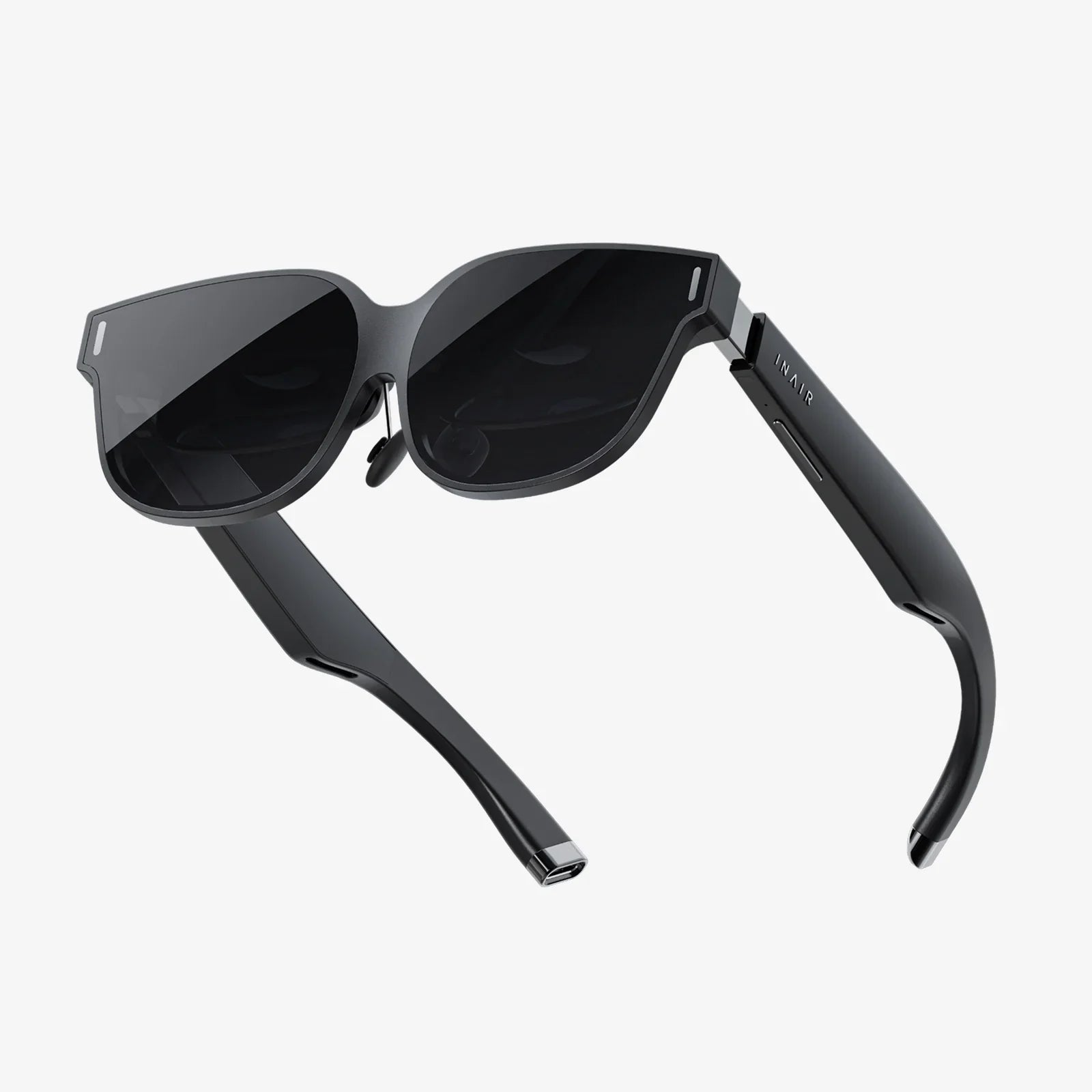
You put on a headset, and suddenly, the world around you melts away. You’re no longer in your living room; you’re standing on the surface of Mars, conducting a crucial experiment, or you’re deep underwater, surrounded by a silent, majestic coral reef. This is the magic of virtual reality, a technology that promises not just to show you another world, but to make you feel like you are truly within it. But this magic isn’t born from a single piece of wizardry. It is the precise and powerful orchestration of four core, interdependent elements that work in concert to fool your senses and transport your consciousness. Understanding these four elements of virtual reality is the key to appreciating its profound potential and its future trajectory.
The First Element: Immersion – The Art of Presence
At the very heart of the virtual reality experience lies immersion. This is the sensation of being physically present in a non-physical world. It is the feeling of “being there,” the suspension of disbelief that allows your brain to accept the digital environment as your current reality. Achieving this is the primary goal of any VR system, and it is accomplished through a multi-sensory siege on your perception.
The most critical tool for creating immersion is the visual component. High-resolution displays, positioned mere centimeters from your eyes, must fill your entire field of view. Any black borders or “screen door effect” can instantly shatter the illusion. Furthermore, these displays must update with incredibly low latency, tracking your head movements and rendering the world from a new perspective in milliseconds. Any lag between your physical movement and the visual response can cause disorientation and motion sickness, the mortal enemies of immersion.
But true immersion extends beyond vision. It involves:
- Auditory Immersion: Three-dimensional spatial audio is crucial. The sound of a bird chirping must come from a specific point in a tree above and to your left. The roar of a virtual crowd must swell around you, changing dynamically as you turn your head. This auditory anchoring is a powerful, often underestimated, component of feeling present.
- Vestibular Challenges: One of the biggest hurdles to full immersion is the conflict between what your eyes see and what your inner ear feels. If you’re “walking” in VR while physically stationary, this sensory mismatch can cause discomfort. Advanced systems and clever software techniques are constantly being developed to mitigate this issue.
Ultimately, immersion is the foundational element. It is the canvas upon which the rest of the experience is painted. Without a convincing sense of presence, the other elements lose their impact and meaning.
The Second Element: Interactivity – The Power of Agency
What good is being transported to a magnificent world if you are merely a ghost, unable to touch, move, or affect anything within it? This is where the second element, interactivity, comes into play. Interactivity is the measure of your ability to manipulate and engage with the virtual environment and its objects in a meaningful, natural way. It is the difference between watching a film and being inside a video game.
This element is primarily delivered through motion-tracking controllers and, increasingly, through hand-tracking technology. These input devices translate your real-world gestures—pointing, grabbing, throwing, pushing—into actions within the virtual space. The quality of interactivity is judged by its precision, responsiveness, and the intuitiveness of the control scheme. Picking up a virtual rock should feel natural; the weight may be simulated, but the action of reaching out, closing your virtual hand, and lifting it should be seamless.
Interactivity also encompasses navigation. How do you move through this world? Teleportation mechanisms, artificial locomotion (using thumbsticks to “walk”), and even omnidirectional treadmills are all solutions to the complex problem of granting the user agency to explore their digital surroundings without breaking immersion or causing nausea.
This element is what transforms a passive experience into an active one. It empowers the user, giving them a stake in the virtual world. It allows for training simulations where a medical student can “practice” a procedure, for architects to “walk” through a building before it’s built, and for anyone to sculpt, build, or play in ways that are impossible in the physical world. Interactivity is the language through which the user communicates with and shapes their virtual reality.
The Third Element: Sensory Feedback – Beyond Sight and Sound
While sight and sound do the heavy lifting, the third element—sensory feedback—is what pushes the experience from convincing to truly breathtaking. This refers to the technology that stimulates our other senses, primarily touch (haptics), but also potentially proprioception (the sense of self-movement and body position), and even smell or taste in experimental setups.
Haptic feedback is the most developed form of sensory feedback beyond audio-visual. It ranges from simple vibrations in a controller to simulate the recoil of a gun or the buzz of a saw, to highly advanced force-feedback gloves and exoskeletons. These sophisticated devices can simulate the texture of a surface, the resistance of pushing a heavy object, or the shape of a virtual tool in your hand. This tactile information is a profound shortcut to the brain’s perception of reality. The feeling of a virtual object “clicking” into place in your hand provides a certainty and satisfaction that visuals alone cannot.
Other forms of sensory feedback are on the horizon. Vestibular feedback systems aim to physically move the user to match visual motion, eliminating the nausea problem. Temperature feedback devices can simulate the warmth of a virtual sun or the chill of a virtual breeze. While these technologies are not yet mainstream, they represent the next frontier in breaking down the final barriers between the real and the virtual. Sensory feedback completes the sensory loop, providing the tangible proof that makes the digital world feel substantive and real.
The Fourth Element: Believable Environments – The Stage and Its Story
The final element is the stage upon which the entire experience is set: the believable environment. This encompasses everything within the virtual world itself—the art design, the physics, the narrative, and the characters. It is the quality and consistency of the worldbuilding. A user can be fully immersed, have perfect interactivity, and receive detailed haptic feedback, but if the world they are in is poorly rendered, illogical, or boring, the experience will fail.
A believable environment is one that operates by consistent, understandable rules. Gravity should behave as expected (unless the world’s lore explains otherwise). Objects should have appropriate weight and physical properties. The world should feel alive and reactive. This is achieved through powerful graphics engines that render realistic lighting, shadows, and textures, and complex physics engines that govern how objects interact with each other and the user.
Beyond technical prowess, believability is an artistic achievement. It involves compelling narrative design, sound architectural and environmental design, and thoughtful audio design. It’s the subtle ambient sounds, the way light filters through a virtual forest canopy, and the sense of history in a crumbling virtual ruin. This element provides the context and the purpose for the other three. It gives the user a reason to be immersed, something to interact with, and sensations worth feeling. A believable environment is the soul of the experience, transforming a technical demonstration into a memorable journey.
The Symbiotic Relationship: How the Four Elements Work Together
These four elements do not exist in isolation; they are deeply and fundamentally interconnected. Each one enhances and relies upon the others in a symbiotic relationship.
Consider a simple action: picking up a virtual coffee mug. Immersion puts you in the kitchen. Interactivity allows you to reach out and wrap your fingers around the mug’s handle. Sensory feedback provides a slight vibration and resistance in the controller, simulating the mug’s weight and ceramic texture. The believable environment has rendered the mug with realistic smudges and steam, placed it in a logically designed kitchen, and given it accurate physical properties so it doesn’t clip through the counter.
If any one of these elements fails—if the tracking is laggy (breaking immersion), the controller doesn’t respond (breaking interactivity), there is no haptic feedback (making it feel weightless), or the mug is a flat, cartoonish texture (breaking believability)—the entire illusion is compromised. The magic of VR exists in the harmonious convergence of all four elements. A weakness in one is a weakness in the entire experience.
The Future Built on Four Pillars
The evolution of virtual reality is, at its core, the refinement of these four elements. The quest for higher-resolution displays, wider fields of view, and faster refresh rates is a push for deeper immersion. The development of more intuitive controllers, full-body tracking, and neural interfaces is an expansion of interactivity. Breakthroughs in haptic suits, force-feedback technology, and temperature control are the building blocks of richer sensory feedback. And the relentless advancement of graphics engines, artificial intelligence for non-player characters, and worldbuilding tools are all in service of creating more complex and believable environments.
As these pillars grow stronger and more sophisticated, the line between our physical reality and our digital ones will continue to blur. The applications will stretch far beyond entertainment, revolutionizing fields like remote collaboration, education, therapy, and design. The potential is limitless, but it will always be built upon the solid, interdependent foundation of immersion, interactivity, sensory feedback, and believable environments.
Imagine a not-too-distant future where a student can step into a perfectly simulated ancient Rome, feeling the virtual sun on their skin, hearing the marketplace chatter from every direction, and interacting with historical figures powered by AI. This future isn't about a single gadget; it's about the seamless fusion of all four elements, working in perfect harmony to create experiences that are not just seen or heard, but lived. The journey to that future is already underway, and it is being guided by our deepening understanding of these fundamental principles that make virtual reality not just a technology, but a new form of human experience.
Share:
Trending AI Tools Reshaping the Future of Work and Creativity
Best Software for 3D Animation Video: Your Ultimate Guide to Professional Tools