


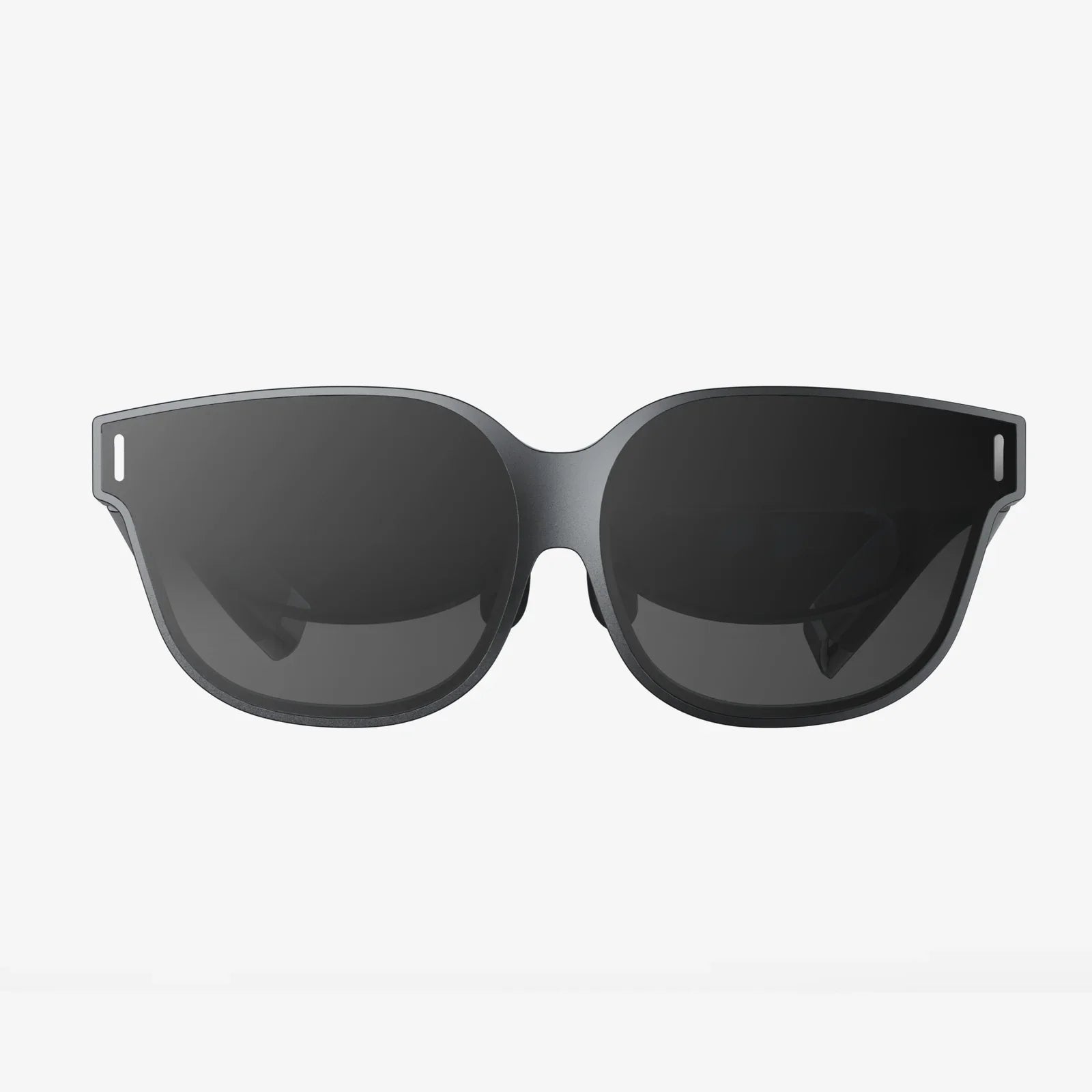
Imagine a world where your reality is not a fixed, immutable canvas but a dynamic interface, a layer of digital information seamlessly woven into the fabric of your everyday existence. This is the promise of Augmented Reality (AR), a technology not of distant science fiction but of the present, quietly and profoundly altering how we work, learn, play, and interact with the world around us. While often grouped under a single banner, AR is not a monolithic technology; it is a spectrum of experiences, each with its own unique mechanics, applications, and potential. To truly understand its transformative power, we must delve into the four core types that form its foundation.
The Foundational Pillar: Marker-Based Augmented Reality
Often considered the original form of AR, marker-based Augmented Reality, also known as image recognition or recognition-based AR, relies on a visual trigger to activate and anchor the digital experience. This trigger, a distinct and easily identifiable pattern called a "marker," is typically a black-and-white geometric shape, a QR code, or a specific image. The AR device's camera continuously scans the environment. When it identifies and recognizes this predefined marker, it springs into action, overlaying the associated digital content—be it a 3D model, video, animation, or information—precisely onto the marker's location.
How It Works
The process is a marvel of digital orchestration. The device's camera captures the real-world scene. Sophisticated software then analyzes this visual feed in real-time, searching for the unique pattern it has been programmed to recognize. This involves complex algorithms that can identify the marker despite variations in angle, distance, lighting, or even partial obstructions. Once a positive identification is made, the software calculates the camera's position and orientation relative to the marker. This spatial understanding allows it to render the digital object with correct perspective and scale, making it appear as a natural part of the physical environment. The user views this composite reality through their device's screen, witnessing a magical fusion of the tangible and the virtual.
Applications and Use Cases
Marker-based AR's strength lies in its precision and reliability. Because the digital content is tied to a specific, known point in space, the overlay is exceptionally stable and accurate.
- Education and Publishing: Textbooks and museum exhibits come alive. A student can point their tablet at a diagram of the human heart to see a beating, interactive 3D model emerge from the page, allowing them to explore layers and functions in a way static images never could.
- Marketing and Packaging: Product packaging transforms into an interactive portal. Scanning a cereal box might launch an animated game featuring its mascot, while a wine label could tell the story of its vineyard through an immersive video.
- Industrial Maintenance and Repair: Technicians can scan a marker on a complex piece of machinery to instantly pull up schematics, animated repair instructions, or performance data overlaid directly on the equipment, reducing errors and training time.
Limitations
This approach is not without its constraints. The experience is entirely dependent on the presence and visibility of the marker. If the marker is damaged, obscured, or poorly lit, the AR effect will fail. Furthermore, it requires foresight—someone must have placed the marker or designed the trigger image in the first place, limiting its use to controlled, pre-planned environments rather than spontaneous interaction with the wider world.
The Unshackled Experience: Markerless Augmented Reality
If marker-based AR is like following a precise recipe, markerless Augmented Reality is akin to freestyle cooking—it uses the environment itself as its ingredients. This is the most common and rapidly advancing form of AR, powering everything from popular mobile games to sophisticated furniture apps. It requires no pre-programmed triggers. Instead, it uses advanced technologies like simultaneous localization and mapping (SLAM), GPS, accelerometers, and digital compasses to understand the world around it and place digital content contextually within it.
How It Works
Markerless AR is a feat of sensory perception and computational power. The device uses its cameras and sensors to scan the environment, creating a real-time digital map of the space. It identifies flat surfaces like floors, tables, and walls, and understands their geometry and depth. Technologies like SLAM allow the device to simultaneously map an unknown environment and track its own location within that map. GPS provides a macro-level understanding of the user's global position, perfect for placing location-specific information. With this spatial awareness, the software can anchor a digital object to a point in the real world—a virtual chair sits stably on your living room floor, or a navigational arrow hovers over a city street—without ever needing a physical marker.
Applications and Use Cases
The freedom of markerless AR unlocks a universe of possibilities, making it ideal for large-scale and impromptu applications.
- Retail and Interior Design: Users can visualize how a piece of furniture would look and fit in their actual living space or "try on" virtual watches and glasses, seeing how they look on their own wrist or face before making a purchase.
- Navigation: AR navigation apps overlay directional arrows, street names, and points of interest directly onto the live camera view of a city street, making it intuitive to find your way without constantly looking down at a map.
- Gaming and Entertainment: This technology enabled a global phenomenon, allowing players to hunt for digital creatures that appeared to inhabit their local parks, streets, and homes, blending gameplay seamlessly with physical exploration.
- Social Media Filters: The playful face filters and effects that add bunny ears or alter your background are a ubiquitous form of markerless AR, using facial recognition as a surface for digital augmentation.
Limitations
The primary challenge is environmental understanding. The accuracy of content placement can sometimes be less precise than with markers, especially in featureless or constantly changing environments. It also demands significant processing power and sophisticated sensor suites, which, while common in modern devices, can drain battery life quickly.
The Tangible Illusion: Projection-Based Augmented Reality
While most AR is experienced through a screen, projection-based Augmented Reality takes a different, more direct approach. It uses digital projectors to beam light onto physical surfaces, creating interactive displays that alter the perceived reality of a space without requiring users to look through a device. This projection can be a simple static image or a complex, dynamic interface that responds to touch and interaction.
How It Works
This method involves one or more projectors, often coupled with depth-sensing cameras like infrared sensors. The projector casts the digital imagery onto a real-world object or surface. The depth-sensing camera then monitors that surface, detecting when and where a user's hand or another object interrupts the projected light. This allows the system to create an interactive experience. For example, a projector can beam a virtual keyboard onto a desk, and sensors can detect your finger taps, registering them as keystrokes. Another advanced technique involves using multiple projectors to create complex 3D holographic-like images that can be viewed from different angles without special glasses.
Applications and Use Cases
Projection-based AR excels in creating shared, collaborative, and immersive environments.
- Industrial Design and Manufacturing: Engineers can project assembly instructions or wiring diagrams directly onto a workbench, guiding workers through complex tasks with absolute precision, reducing errors and improving efficiency.
- Retail and Art Installations: Store windows can be transformed into interactive displays where passersby can "touch" projected items to learn more. Artists use this technology to create breathtaking exhibits where static sculptures appear to move, change, and respond to the audience's presence.
- Medical Training: It can be used to project anatomical information, such as the network of veins, directly onto a medical mannequin or even a patient's body, providing a valuable guide for trainees practicing procedures like venipuncture.
Limitations
This form of AR is highly dependent on the projection surface—its color, texture, and geometry can affect the clarity and quality of the image. It is also generally confined to a specific, pre-set area where the projectors and sensors are installed, lacking the portability of smartphone or headset-based AR solutions.
The Replacement Reality: Superimposition-Based Augmented Reality
Superimposition-based Augmented Reality represents one of the most advanced and contextually powerful forms of the technology. It doesn't just add a digital object to the view; it completely or partially replaces the original view of a real-world object with an augmented version. This requires not just recognizing an object but understanding it in intricate detail to perform a convincing digital replacement.
How It Works
This technology relies on incredibly sophisticated object recognition, far beyond simple marker identification. The AR system must first be able to identify a specific object within the camera's view—for example, a specific model of car engine, a piece of historical monument, or a human body. Using a pre-loaded 3D model or dataset of that object, the software then meticulously aligns the digital version over the physical one, matching perspective, lighting, and occlusions. The result is a seamless replacement where the real object is either entirely obscured or enhanced with digital information. In medical applications, it might involve replacing a view of a patient's skin with a real-time visualization of their underlying bone structure or vascular system.
Applications and Use Cases
Superimposition AR is a powerhouse for fields requiring deep visualization and analysis.
- Healthcare and Surgery: This is arguably its most critical application. Surgeons can use AR headsets to see “through” a patient’s tissue, with CT or MRI scans superimposed directly onto their body, precisely showing the location of a tumor, a blood vessel, or a fracture during a procedure. This provides an invaluable X-ray vision-like capability.
- Archaeology and History: Tourists at a ruin can point their device at a crumbled structure to see a full-color, digitally reconstructed version of the ancient building superimposed perfectly over the remains, effectively peeling back the layers of time.
- Automotive and Repair: A mechanic working on a complex system could use AR glasses to replace the opaque casing of a component with a transparent, labeled, animated diagram of its inner workings, making diagnosis and repair far more intuitive.
Limitations
The complexity of accurate object recognition and registration is immense. The system requires a vast and detailed library of 3D models for every object it needs to recognize. Any error in alignment or tracking can break the illusion and, in critical applications like surgery, could have serious consequences. It demands immense computational resources and highly specialized, often expensive, equipment.
The Converging Future and Impact on Industry
The boundaries between these four types are increasingly blurring. The most powerful future AR applications will likely be hybrids, leveraging the precision of marker-based recognition for initial calibration before switching to markerless tracking, or using superimposition techniques enhanced by projection. This convergence, driven by advancements in artificial intelligence, computer vision, and hardware miniaturization, is poised to revolutionize entire sectors. In manufacturing, AR is becoming the new standard for assembly guides and remote expert assistance, slashing training time and errors. In retail, it's bridging the gap between online and in-store shopping, while in education, it's turning abstract concepts into tangible, interactive experiences. The future of AR is not about which type wins, but about how they can be intelligently combined to create intuitive, powerful, and context-aware tools that augment human capability itself.
We stand at the precipice of a new layer of reality, a digital skin stretched over our physical world, waiting to be interacted with, learned from, and manipulated. The four types of Augmented Reality are the brushes and paints for this new canvas. From the simple trigger of a marker to the unshackled freedom of spatial computing, from the tangible light of a projector to the transformative power of digital superimposition, each technology offers a unique key to unlocking this potential. Understanding their differences is the first step in imagining the applications yet to be conceived, the industries yet to be transformed, and the new, augmented human experience that is already beginning to take shape right before our eyes.
Share:
Back to the Future Augmented Reality: Blending Nostalgia with Next-Gen Vision
Best VR 2.0 Glasses: The Ultimate Immersive Experience Unveiled