


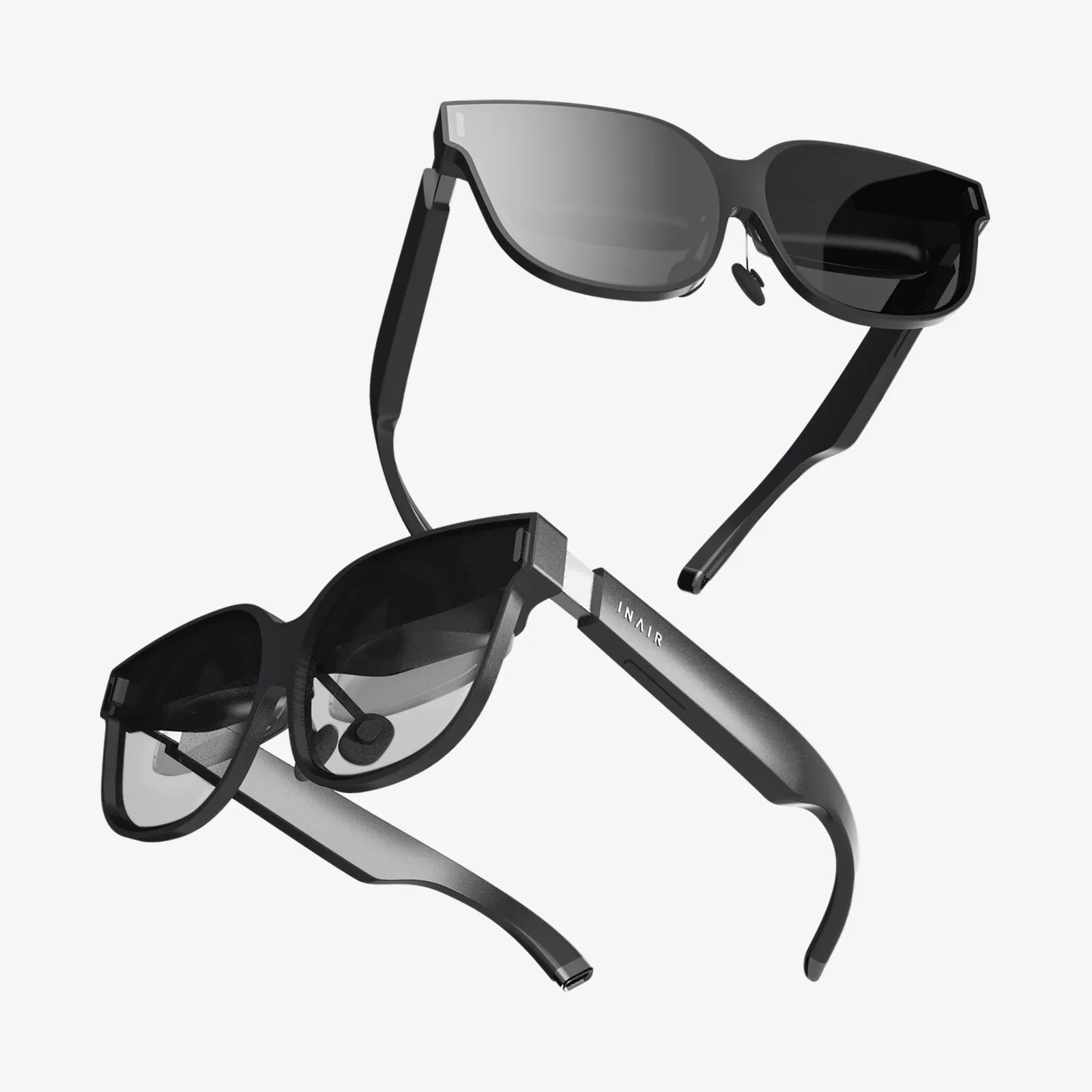
- by wangfred
4K AR Smart Glasses: The Dawn of a Seamless Digital Overlay on Reality
- by wangfred
Imagine a world where information doesn’t live on a screen in your hand but is seamlessly woven into the very fabric of your reality. Directions appear as floating arrows on the pavement, the history of a landmark materializes before your eyes, and a virtual colleague sits across from you at your physical desk. This is no longer the realm of science fiction; it is the imminent future being unlocked by a new generation of wearable technology, chief among them, 4K AR smart glasses. This technological leap represents more than just an incremental upgrade; it is the critical threshold where augmented reality transitions from a novel gimmick into an indispensable, visually immersive extension of our lives.
For years, augmented reality has been hampered by a fundamental limitation: visual fidelity. Early iterations and even many current devices suffered from what developers call the "hologram effect"—fuzzy, low-resolution, ghost-like images that were superimposed on the world but never felt truly part of it. The digital content was dim, pixelated, and often confined to a small field of view, forcing users to look through a tiny, distracting window rather than experiencing a blended environment.
The move to 4K resolution (approximately 3840 x 2160 pixels) per eye in smart glasses shatters this barrier. This density of pixels packed into micro-displays positioned mere centimeters from the retina creates a level of detail that is the absolute prerequisite for immersion. Text becomes razor-sharp, readable as if on a high-end monitor. Virtual objects gain tangible texture and depth, allowing them to occlude and be occluded by real-world objects convincingly. This eliminates the straining and squinting that plagued earlier models, reducing cognitive load and eye fatigue. It is the difference between watching a standard definition broadcast and a stunning 4K HDR nature documentary; one you observe, the other you feel you are inside. This resolution is the foundation upon which all other AR experiences must be built, making the digital overlay not just visible, but believably real.
Packing this level of performance into a form factor that resembles everyday eyewear is a monumental feat of engineering. It requires a symphony of advanced technologies working in perfect harmony.
At the heart of the visual experience are the waveguides. These are transparent lenses embedded with nanotechnology that act as conduits for light. Instead of a bulky projector, tiny laser or LED light sources at the temples fire photons into the edge of the waveguide. These photons then travel through the lens, bouncing off microscopic gratings until they are directed into the user’s eye. This complex process is what paints the high-resolution imagery onto the real world without obstructing the user's natural vision. Recent advancements in diffractive and holographic waveguides have been crucial in making these systems thinner, lighter, and more efficient, allowing for a wider field of view and brighter images even in sunny conditions.
Rendering two streams of complex 4K graphics in real-time, while simultaneously processing data from a suite of sensors, demands immense computational power. This is handled by specialized processors, often based on architectures found in high-end mobile devices but optimized for the unique spatial computing tasks of AR. These chips handle simultaneous localization and mapping (SLAM), which allows the glasses to understand and map their environment in 3D, track the user’s eye movements and gestures, and run the AR operating system and applications. Some models leverage a hybrid approach, offloading heavier processing to a companion device like a smartphone or a dedicated compute pack, striving for the perfect balance between performance, battery life, and weight.
To interact intelligently with the world, 4K AR smart glasses are equipped with a sophisticated array of sensors. This typically includes high-resolution cameras for depth sensing and object recognition, inertial measurement units (IMUs) for tracking head movement, microphones for voice commands, and often dedicated eye-tracking cameras. This sensor suite allows for a range of intuitive inputs:
The applications for this technology extend far beyond consumer entertainment. They are poised to become the next fundamental computing platform, revolutionizing professional fields.
In manufacturing and complex repair, technicians can have schematic diagrams, torque specifications, and animated instructions overlaid directly onto the machinery they are working on. This provides contextual information hands-free, drastically reducing errors, improving training speed, and increasing efficiency. Architects and engineers can walk through full-scale 3D holograms of their designs, making changes in real-time and experiencing spatial relationships long before ground is broken.
Surgeons can access vital patient statistics, ultrasound data, or MRI scans in their field of view during procedures without turning away from the operating table. Medical students can practice complex procedures on detailed, interactive holographic anatomies. The potential for remote assistance is also profound, allowing a specialist to see what a field medic sees and provide guided annotations directly into their view.
The concept of video calls will be radically redefined. Instead of flat faces on a screen, 3D holographic avatars of colleagues can be projected into your space, able to gesture and interact with shared 3D models. This creates a powerful sense of "telepresence," making remote collaboration feel as natural as being in the same room.
For the average user, the implications are equally staggering. Navigation becomes intuitive, with giant virtual signs floating over your destination. Your entertainment is no longer confined to a rectangle; a virtual cinema screen can be projected onto your wall, or a game can transform your entire living room into a new world. Shopping for furniture becomes a certainty, as you can see a true-to-scale hologram of a new sofa in your actual living room before you buy.
Despite the exciting potential, the path to mainstream adoption for 4K AR smart glasses is not without significant challenges.
The evolution of 4K AR smart glasses points toward a future where they become as ubiquitous as smartphones are today. We are moving toward even more advanced display technologies like 8K and beyond, varifocal lenses that dynamically adjust to where you are looking to prevent eye strain, and neural interfaces that allow for control through thought. The distinction between our digital and physical lives will continue to blur, not in a way that isolates us, but in a way that enhances our perception and interaction with the world around us.
We stand at the precipice of a new era of computing, one that promises to free information from the confines of glass rectangles and integrate it directly into our perception. The arrival of high-resolution, comfortable, and intelligent AR smart glasses is the key that will unlock this future, transforming how we work, learn, connect, and experience reality itself. The world is about to get a major upgrade, and it will be seen through a pair of seemingly ordinary glasses.