


- by wangfred
4K OLED Clear Microdisplay - The Unseen Engine Powering a Visual Revolution
- by wangfred
Imagine a screen so sharp, so brilliantly colorful, and so perfectly transparent that digital information doesn’t just appear in front of your eyes, but floats seamlessly within your world, indistinguishable from reality itself. This isn’t science fiction; it’s the promise being unlocked today by the 4K OLED clear microdisplay, a technological marvel that is quietly becoming the cornerstone of the next computing revolution.
To appreciate the significance of this technology, we must first break down its name into its constituent parts. Each term reveals a layer of its sophisticated engineering.
When we talk about "4K" in the context of microdisplays, we are referring to an astonishingly high resolution packed into an impossibly small space. Traditionally, 4K (3840 x 2160 pixels) is associated with large-screen televisions. However, when this same pixel count is condensed into a display often smaller than a postage stamp, the result is an unparalleled pixel density measured in thousands of pixels per inch (PPI). This extreme density is not for bragging rights; it is an absolute necessity. In head-mounted applications like augmented reality (AR) glasses, the display is magnified by optics to fill a significant portion of the user’s field of view. Any flaw, any visible pixel grid (often called the "screen door effect"), would instantly shatter the illusion of immersion. A true 4K microdisplay eliminates this effect, creating a smooth, continuous image that is critical for rendering fine text, intricate graphical overlays, and lifelike virtual objects.
OLED, or Organic Light-Emitting Diode, technology is the second critical piece of the puzzle. Unlike traditional LCDs that require a separate backlight, each pixel in an OLED panel is a microscopic, self-emissive light source. This fundamental characteristic bestows several game-changing advantages for microdisplay applications:
A microdisplay is, by definition, a display with a diagonal screen size typically under one inch. Shrinking a high-performance 4K OLED panel to this scale is a feat of precision manufacturing, often involving semiconductor-like fabrication processes on silicon wafers. This miniaturization is what enables the development of sleek, lightweight, and wearable form factors, moving away from the bulky, uncomfortable headsets of the past.
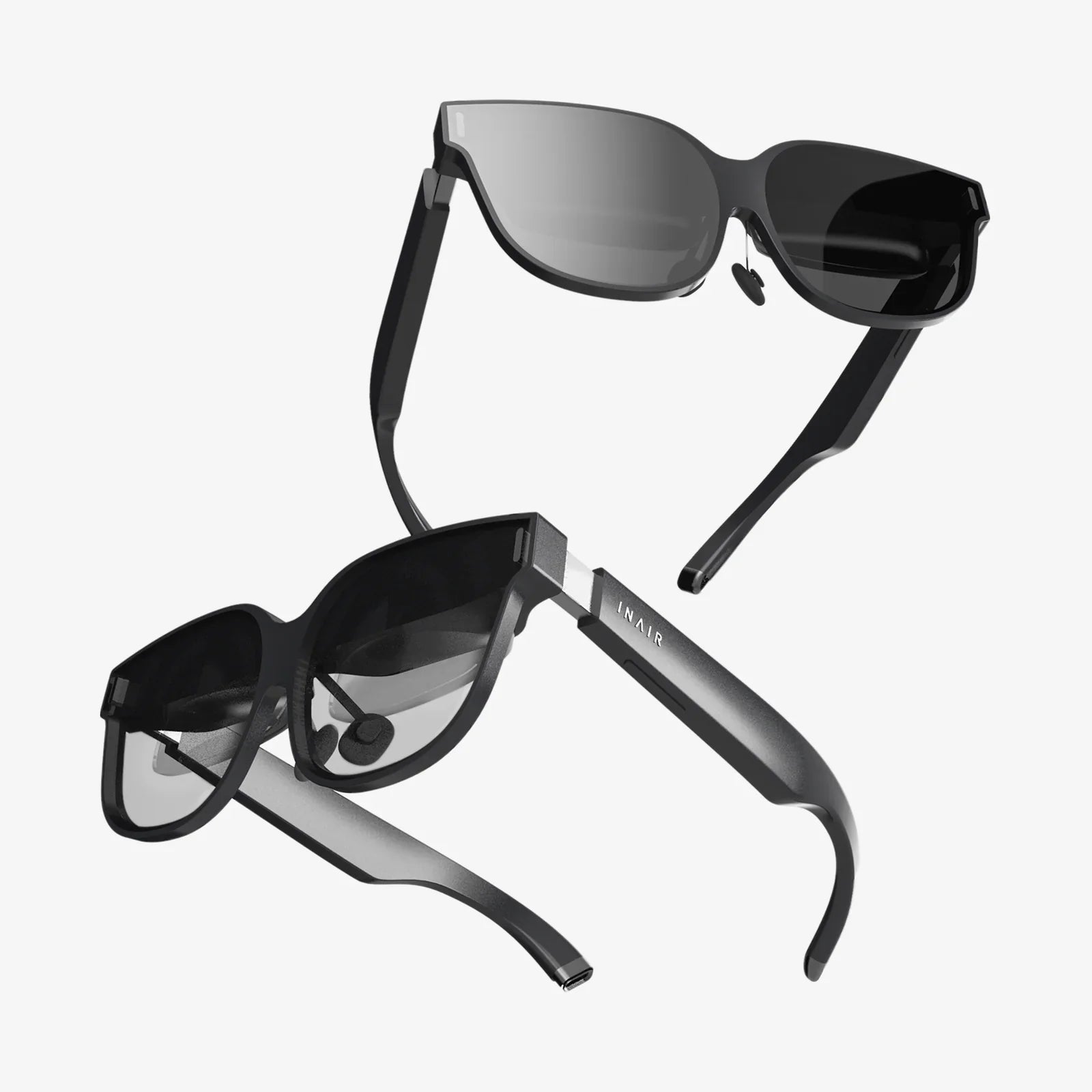
This is the most revolutionary aspect. A clear microdisplay, also known as an optical see-through display, is not just a screen you look at; it is a screen you look through. The display substrate itself is transparent, often made of glass or a sophisticated polymer. In its off state, it is virtually invisible, allowing the user to see the physical world unimpeded. When activated, the OLED pixels emit light to draw images directly onto this transparent canvas, superimposing digital content onto the user’s real-world view. This creates the foundational experience of augmented reality—a blend of the physical and the digital.
The unique combination of high resolution, perfect contrast, lightning speed, and transparency makes the 4K OLED clear microdisplay an enabling technology for a vast array of industries beyond consumer entertainment.
This is the most prominent and ambitious application. Future AR glasses aspire to be a ubiquitous replacement for the smartphone, and the display is the single most important component determining their success. A 4K OLED clear microdisplay provides the visual fidelity needed for all-day comfort and utility:
The impact here is already being felt and is profoundly practical.
While not "clear" in the same way, high-resolution OLED microdisplays are also revolutionizing fully immersive VR. They are the key to building lighter, more compact headsets that offer breathtaking visual quality, deep blacks, and smooth performance, making virtual worlds more believable and comfortable to inhabit for extended periods.
Despite its immense potential, the path to making this technology mainstream is fraught with technical and economic hurdles.
The evolution of the 4K OLED clear microdisplay is far from over. Research is pushing the boundaries even further. We can expect to see developments in higher resolutions like 8K, further increases in brightness for use in sunny environments, and even more efficient pixel structures to reduce power consumption. Integration with advanced eye-tracking and varifocal lenses will solve issues with visual comfort and depth perception. Furthermore, the development of more durable and longer-lasting organic materials will ensure the technology is ready for the mass market.
We are standing at the precipice of a fundamental shift in how we interact with digital information. The 4K OLED clear microdisplay is the key that unlocks this future, moving computing from a device we carry to an experience we inhabit. It promises a world where information is contextual, intuitive, and seamlessly woven into the fabric of our reality, transforming everything from how we work and learn to how we connect and create. The clear screen is not just a display; it’s a window into the next era of human-computer interaction, and that window is now opening.