


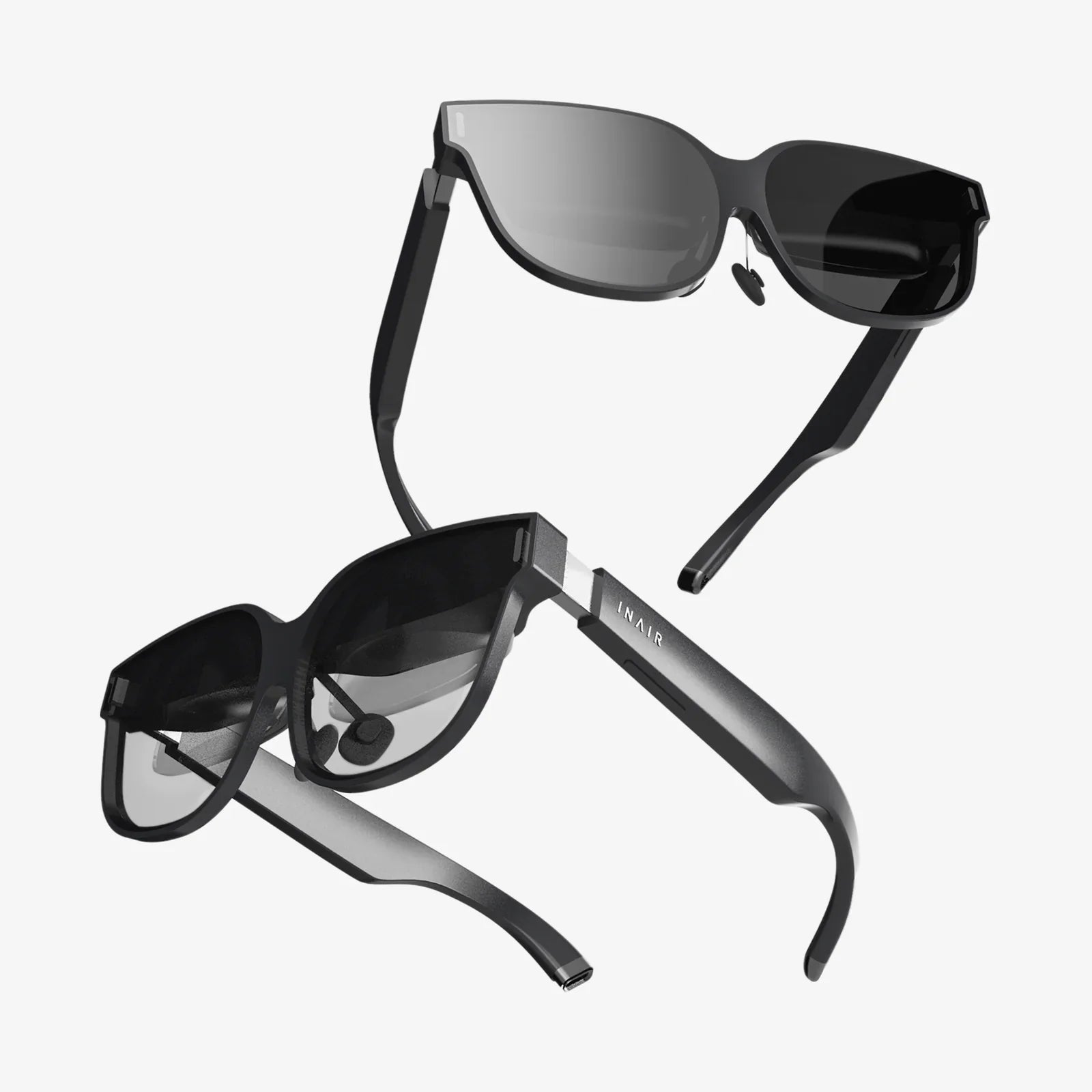
Imagine stepping into a world so crisp, so vivid, and so utterly convincing that the line between the digital and the physical begins to blur. This isn't a distant dream of the future; it's the reality offered by the latest generation of 4K VR glasses. For years, virtual reality promised an escape, a portal to new dimensions, but it was often hampered by a visible barrier—the dreaded "screen door effect," where users could see the fine lines between pixels, constantly reminding them they were looking at a screen. The advent of 4K resolution per eye in VR headsets is shattering that barrier, delivering an unprecedented level of clarity and immersion that is fundamentally changing our relationship with digital content. This leap in fidelity isn't just an incremental upgrade; it's the key that unlocks the true, awe-inspiring potential of virtual reality.
The Resolution Revolution: Beyond the Screen Door Effect
To understand why 4K is such a game-changer, we must first look at the journey of VR display technology. Early consumer headsets were pioneering, but they operated at resolutions that, by modern flat-panel standards, were relatively low. When this resolution is magnified by lenses and placed mere centimeters from your eyes, the individual pixels become discernible. This creates the screen door effect (SDE), a mesh-like pattern that overlays the virtual world, breaking immersion and preventing fine details from being appreciated.
4K VR glasses directly combat this issue. The term "4K" in this context typically refers to a combined resolution approaching 4K across both displays, or more impressively, a resolution of nearly 4K per eye. This massive pixel density—often exceeding 2000 x 2000 pixels per eye—pushes the pixels so close together that the human eye can no longer distinguish them individually at a normal viewing distance through the lenses. The result is a seamless, crystal-clear image. Text is sharp and easily readable, distant objects in games retain their detail, and virtual environments feel tangibly real. It’s the difference between looking through a window with a fine mesh screen and looking through a perfectly polished pane of glass.
Deconstructing the Technology: More Than Just Pixels
While resolution is the headline feature, achieving a truly immersive 4K VR experience is a complex ballet of several cutting-edge technologies working in harmony.
The Heart of the Experience: Advanced Display Panels
Two primary display technologies dominate high-end VR: LCD (Liquid Crystal Display) and OLED (Organic Light-Emitting Diode). Each has its strengths. LCD panels are more common in 4K VR setups due to their ability to achieve higher pixel densities and eliminate screen door effect more effectively through RGB-stripe subpixel arrangements. They also often offer a higher "fill factor," meaning more of the display area is light-emitting rather than black space between pixels. OLED panels, famous for their perfect blacks and incredible contrast ratios, have traditionally struggled with higher resolutions and pixel persistence, which can lead to motion blur. However, advancements are rapidly closing this gap, with new OLED technologies offering both high resolution and the unparalleled contrast that makes dark scenes so compelling.
The Gateway to Another World: Precision Optics and Lenses
A high-resolution display is useless if the lenses in front of it distort, blur, or chromatic aberration (where colors separate at the edges). Modern 4K VR glasses employ custom-designed Fresnel or hybrid Fresnel-aspherical lenses. These are engineered to provide a wide field of view (FOV) while maintaining edge-to-edge clarity, ensuring that the sharpness of the central image extends to your peripheral vision. A key challenge is managing the "sweet spot"—the area where the image is perfectly in focus. Higher-quality lenses have a larger sweet spot, reducing the need for constant adjustment and making the experience more comfortable and stable.
The Brain and the Brawn: Processing Power and Connectivity
Rendering two separate 4K images at a minimum of 90 frames per second (and often 120Hz or higher) is an immense computational task. It requires a significant amount of graphical processing power (GPU). This is why many 4K VR glasses are tethered to a powerful external computer, which acts as the engine room for the experience. This tethered connection, often via a high-speed cable, provides the necessary bandwidth and power to drive the displays without compromise.
Standalone headsets represent the other end of the spectrum, integrating all the necessary processing power into the headset itself. These devices use advanced mobile chipsets that are marvels of efficiency, delivering a high-fidelity, wire-free experience. While they may use techniques like fixed foveated rendering (which concentrates processing power on the center of your vision) to maintain performance, the best standalone devices now offer stunning 4K visuals that were unimaginable just a few years ago.
Building the World: Tracking and Interaction
Immersion isn't just visual; it's kinetic. 4K VR glasses are typically paired with sophisticated inside-out tracking systems. Using multiple wide-angle cameras mounted on the headset, these systems map your physical environment and track the position of your head and controllers without the need for external sensors. This creates a fluid, natural interaction where you can reach, grab, throw, and manipulate virtual objects with astonishing precision, all within the crystal-clear world the displays provide.
A Universe of Applications: Far Beyond Gaming
While gaming is the most famous application for VR, the clarity of 4K opens doors to countless other professional and creative fields.
The Ultimate Playground: Gaming and Entertainment
In gaming, 4K is transformative. Exploring a vast open world, you can appreciate the texture of ancient brickwork on a castle wall, read faded signs from a distance, or count the stitches on a character's leather armor. Horror games become exponentially more terrifying as every grisly detail is rendered in stark clarity. Social VR platforms and virtual cinemas become viable alternatives to real-life interaction, as the fidelity of avatars and streaming content makes communication feel genuine and movies feel larger than life.
Revolutionizing Education and Training
Imagine a medical student not just reading about human anatomy, but walking through a photorealistic, life-sized 4K model of the human heart, watching valves open and close with stunning clarity. Aspiring mechanics can disassemble and reassemble complex machinery in a virtual space, examining every part in minute detail. Historians can offer virtual tours of ancient ruins, reconstructed with archaeological accuracy, allowing students to inspect artifacts and environments as if they were truly there. The educational potential is limitless.
The Future of Remote Work and Collaboration
The shift to remote work has revealed the limitations of video conferencing. 4K VR collaboration spaces offer a compelling alternative. Architects and engineers can inhabit 3D models of their designs at full scale, spotting issues and making decisions with a level of understanding impossible from a 2D blueprint. Teams from across the globe can meet around a virtual prototype, examining it from all angles and annotating it in real-time, all while reading each other's body language through realistic avatars. The clarity of text and detail makes reading documents and spreadsheets in a virtual environment a practical reality.
Navigating the Considerations: Comfort, Content, and Hardware
Adopting this technology is not without its considerations. The high-resolution displays and advanced processing can lead to headsets that are heavier and require more power, making ergonomics and weight distribution critical factors for long-term comfort. Battery life for standalone units is a constant balancing act between performance and longevity.
Furthermore, to truly capitalize on 4K resolution, content must be created for it. While existing VR games and experiences benefit greatly from the higher resolution through supersampling, native 4K content is needed to show the technology at its best. This requires developers to create higher-resolution textures and assets, which in turn demands more powerful hardware from the user. The ecosystem is still maturing, but the trajectory is clear.
The Horizon of Possibility: What Comes After 4K?
If 4K is the present, what does the future hold? The industry is already looking toward 8K resolutions and beyond, aiming for what is often termed "retinal resolution"—a pixel density so high that the human eye cannot perceive any further improvement. Other areas of innovation include:
- Varifocal Lenses: Lenses that dynamically adjust to focus on the virtual distance you're looking at, mimicking the natural behavior of your eyes and solving the vergence-accommodation conflict that can cause eye strain.
- HDR (High Dynamic Range): Bringing much brighter brights and much darker darks to VR, significantly enhancing realism and depth.
- Eye-Tracking and Foveated Rendering: This is the true holy grail. By tracking exactly where your eyes are looking, the system can render the center of your vision in ultra-high detail while reducing the rendering load on the periphery. This massively improves performance without any perceptible loss in quality, making high-resolution experiences more accessible.
We are standing at the precipice of a new era of digital interaction. 4K VR glasses are not merely a product; they are a portal. They represent the culmination of years of research and development, finally delivering on the foundational promise of virtual reality: true presence. The barrier between you and the digital world has never been thinner. The question is no longer if the technology is compelling, but how you will choose to step through and explore the infinite worlds waiting on the other side.
Share:
Augmented Reality Innovations Are Reshaping Our World Beyond the Hype
Augmented Reality Simple Definition: A Beginner's Guide to the Digital Overlay