


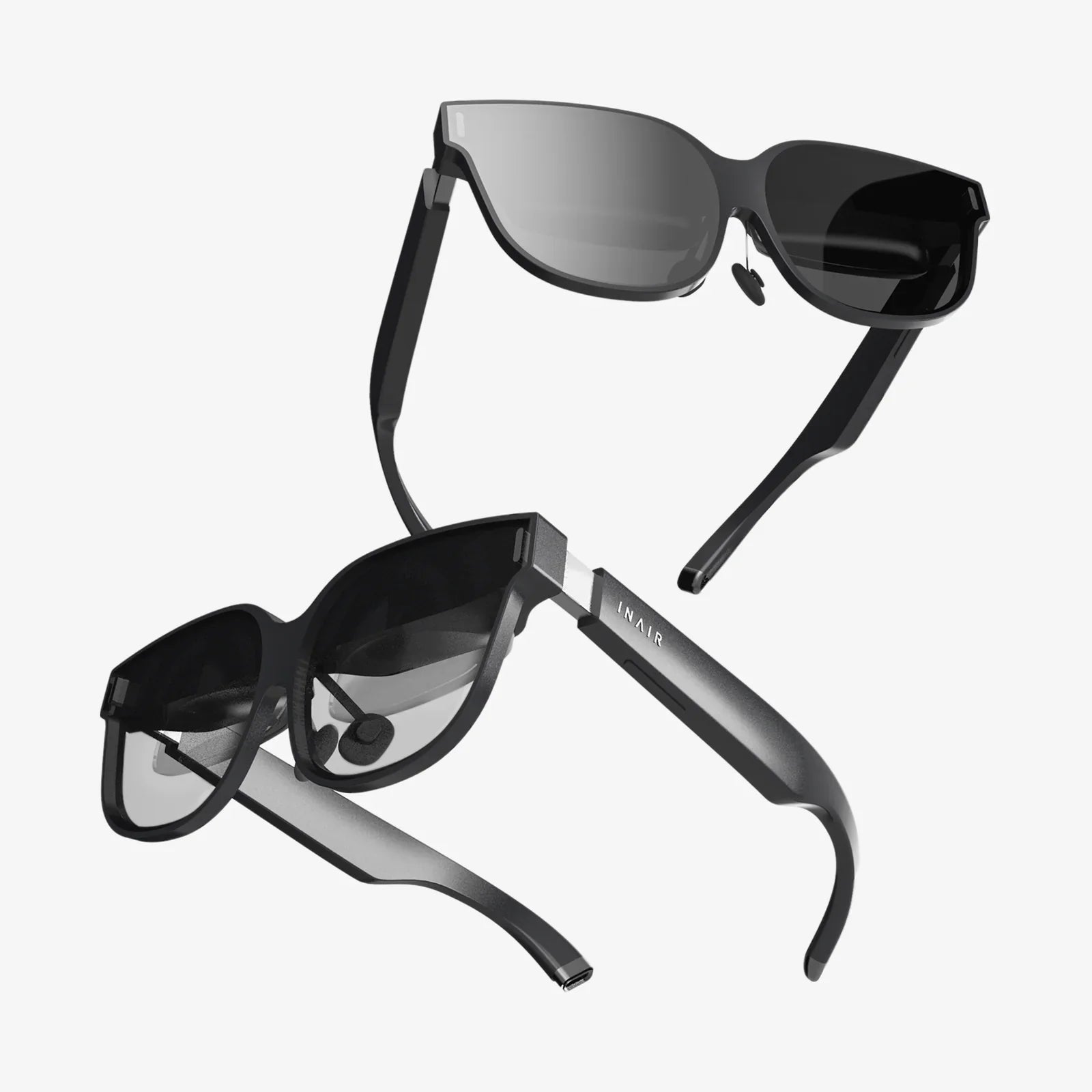
Imagine a world where your watch not only tells time but also saves it, where your glasses don't just help you see but help you understand, and where your clothing does more than protect you—it empowers you. This is not a glimpse into a distant sci-fi future; it is the reality being woven into the fabric of our present by the rapid and relentless evolution of wearable devices. These sophisticated pieces of technology have transcended their initial novelty to become indispensable tools for millions, offering unprecedented insights into our bodies, our health, and our interactions with the world around us. The true power of wearables lies not in their individual capabilities, but in their collective potential to create a seamlessly connected, data-enriched, and profoundly personalized human experience. The journey into this world begins with understanding the five foundational pillars that support the entire ecosystem.
The Wrist-Worn Command Center: Smartwatches and Fitness Trackers
Arguably the most recognizable and widely adopted category, wrist-worn devices have become the gateway to wearable technology for the general public. These devices have evolved far beyond their simple pedometer ancestors into sophisticated mini-computers strapped to our wrists.
Their primary function revolves around health and fitness monitoring. Equipped with an array of sensors, including optical heart rate monitors, accelerometers, gyroscopes, and increasingly, electrocardiogram (ECG) and blood oxygen saturation (SpO2) sensors, these devices provide a continuous stream of biometric data. They track steps, distance traveled, calories burned, heart rate zones during exercise, sleep patterns, and even stress levels. This data is then synthesized into actionable insights through companion applications, empowering users to make informed decisions about their workout intensity, recovery needs, and overall wellness strategies.
Beyond health, these devices serve as a crucial notification hub, filtering the digital world onto our wrists. They display calls, messages, and app alerts, allowing users to stay connected without the constant need to pull out a phone. This has subtly changed modern etiquette and productivity, enabling quick, discreet interactions. Furthermore, many models offer contactless payment capabilities, music control, and GPS navigation, consolidating numerous everyday actions into a single, accessible device. Their ubiquity is a testament to their utility, functioning as a personal dashboard for both our physical and digital lives.
Augmenting Reality: Smart Glasses and Augmented Reality Wearables
If smartwatches are about bringing the digital world to you, smart glasses are about overlaying the digital world onto the real one. This category represents one of the most ambitious frontiers in wearable tech, aiming to seamlessly blend our physical and digital realities through Augmented Reality (AR).
The core technology typically involves a small, transparent display lens that projects information—such as text, directions, images, or 3D models—directly into the user's field of vision. This is often accompanied by a bone conduction speaker for audio feedback and a suite of cameras and sensors for tracking the environment and user movements. The applications are vast and transformative. In enterprise and industrial settings, technicians can use them to view schematics and instructions hands-free while repairing complex machinery. Surgeons can have vital patient data and imaging scans visible during procedures. Warehouse workers can receive picking and packing information without glancing at a handheld scanner, dramatically improving efficiency and accuracy.
For consumers, the potential is equally exciting. Imagine walking through a foreign city and seeing historical information and translations pop up as you look at landmarks and menus. Navigation can become intuitive, with directional arrows painted onto the street in front of you. The social and entertainment applications are also profound, enabling new forms of interactive gaming and shared experiences. While consumer adoption has been slower due to factors like design, cost, and battery life, the technology is steadily progressing toward a future where digital information is contextually integrated into our natural perspective of the world.
The Sound of Innovation: Smart Earwear
Often overlooked in discussions of wearables, smart earwear—primarily in the form of wireless earbuds and hearing aids—has become a powerhouse of personal audio and biometric technology. They have evolved from simple audio-output devices into intelligent, interactive nodes in our personal area network.
The most advanced models now feature active noise cancellation (ANC) to create immersive auditory environments, transparency modes to blend external sounds with audio, and spatial audio for a theater-like experience. However, their intelligence goes much deeper. Integrated sensors enable touch and gesture controls for music and calls, and some are now incorporating accelerometers for head-gesture commands, like nodding to answer a call.
Perhaps the most significant advancement is their role in health monitoring. The ear provides a stable, secure location for sensors that is less susceptible to motion artifacts than the wrist. This makes it an ideal site for highly accurate heart rate monitoring, and researchers are exploring its potential for measuring core body temperature and even detecting signs of illness through changes in the inner ear. Furthermore, advanced hearing aids now leverage artificial intelligence to automatically filter out background noise, focus on speech, and even translate languages in real-time, restoring and enhancing one of our most vital senses. This combination of high-fidelity audio, intuitive control, and health sensing positions smart earwear as a critical and discreet category in the wearable landscape.
Weaving Technology into Fabric: Smart Clothing and Body Sensors
This category represents the ultimate goal of wearable technology: complete integration. Smart clothing involves embedding sensors and conductive threads directly into the fabric of garments like shirts, socks, sports bras, and shoes. Unlike devices you put on, this is technology you wear, making it invisible and unobtrusive.
The advantage is a vastly superior data collection capability. A smart shirt can have multiple ECG electrodes placed perfectly across the torso to measure heart activity with clinical-grade accuracy, detecting arrhythmias that a wrist-worn device might miss. Smart shoes can analyze running gait, balance, and weight distribution with every step. Smart socks can monitor an infant's vital signs. For athletes, this means unparalleled biomechanical feedback on their form, muscle engagement, and efficiency, allowing for highly targeted training adjustments and injury prevention.
Body sensors, which often take the form of small, discreet patches adhered to the skin, serve a more medicalized function. They can continuously monitor glucose levels for diabetics, track core body temperature for athletes and soldiers, or monitor the vital signs of hospital patients remotely, enabling early intervention. The data from these devices is often continuous and highly granular, providing a comprehensive picture of a person's physiological state that is impossible to obtain through sporadic check-ups or spot measurements. This category is pushing wearables from general wellness into the realm of precise, medical-grade diagnostics and performance optimization.
Specialized Performance Enhancers: Smart Headwear and Beyond
The final category encompasses a diverse range of specialized devices designed for specific, often high-performance, applications. This includes everything from VR headsets to smart helmets and other head-mounted displays.
Virtual Reality (VR) headsets offer complete immersion in a digital environment, primarily used for gaming, simulation training, and virtual tourism. However, their applications are expanding into therapeutic areas like treating phobias, PTSD, and chronic pain through exposure therapy and distraction techniques. In enterprise, they are used for sophisticated training simulations for everyone from surgeons to pilots and mechanics, allowing them to practice complex and dangerous procedures in a risk-free virtual space.
Smart helmets, used by cyclists, motorcyclists, and industrial workers, integrate technology for safety and functionality. They may include built-in cameras, head-up displays for navigation and speed data, rear-view cameras, communication systems, and even impact sensors that can detect a crash and send an alert with the wearer's location to emergency contacts. Other specialized wearables include devices for monitoring posture throughout the workday, wearable controllers for immersive gaming, and even smart jewelry that focuses on discreet notifications and personal safety features like emergency SOS triggers.
While perhaps less universal than a smartwatch, these devices demonstrate the targeted power of wearables to transform specific activities, enhance safety, and create entirely new digital experiences that were previously confined to the imagination.
The symphony of sensors encircling our wrists, perched on our ears, and woven into our clothes is quietly composing a revolution in human potential. This is not merely about counting steps or receiving notifications; it is a fundamental shift toward a quantified, augmented, and hyper-connected existence. The data harvested from these five types of wearable devices is building a mirror that reflects our deepest biological rhythms, empowering a transition from reactive healthcare to proactive, predictive wellness. It is forging a new language of interaction between our physical selves and the digital dimension, making technology an intuitive extension of our will. The future they are building is one where our tools don't just serve us—they understand us, anticipate our needs, and work in silent concert to elevate every aspect of our daily lives. The next chapter of human evolution will be written not in code alone, but in the seamless integration of that code into the very fabric of our being.
Share:
Projection Based AR: The Invisible Interface Revolutionizing Our World
Digital Product Projects: The Complete Blueprint from Vision to Market Success