


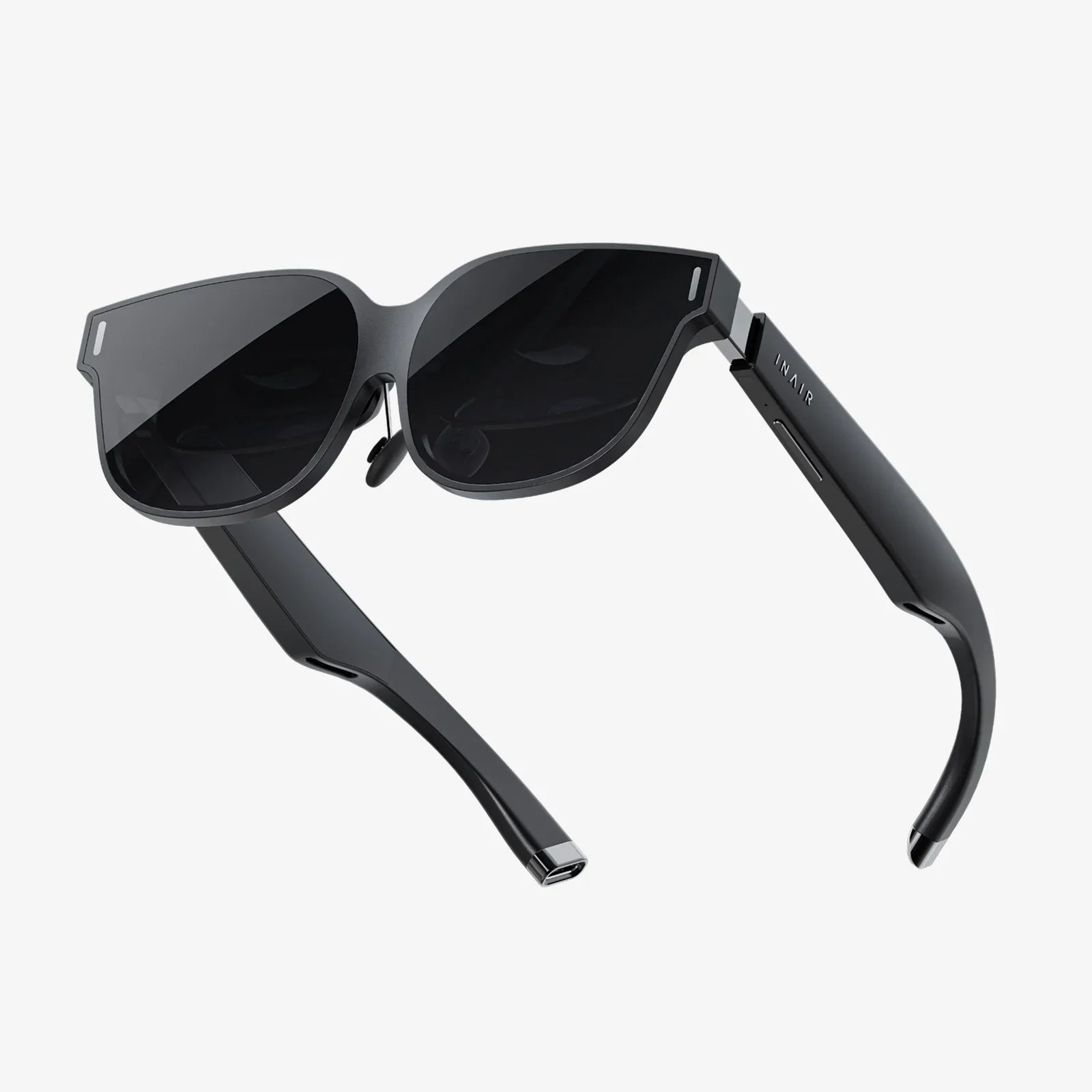
- by wangfred
5G Extended Reality: The Invisible Network Powering a New Dimension of Human Experience
- by wangfred
Imagine a world where the digital and physical seamlessly intertwine, where a surgeon in one country guides a complex procedure in another through a perfect, real-time holographic display, or where a history student walks through a photorealistic recreation of ancient Rome, feeling the scale of the Colosseum as if they were truly there. This isn't a distant science fiction fantasy; it's the imminent future being unlocked today by the powerful convergence of 5G and Extended Reality. This fusion represents one of the most significant technological shifts of our time, promising to redefine how we work, learn, play, and connect. The invisible threads of next-generation connectivity are weaving together a new fabric of reality, and it’s a story that is just beginning to unfold.
To fully grasp the revolutionary impact of their union, we must first understand the two components separately. Extended Reality, or XR, is an umbrella term that encompasses all immersive technologies. This includes Virtual Reality (VR), which creates a completely digital environment that replaces the user's real world; Augmented Reality (AR), which layers digital information and objects onto the physical world through a screen or transparent lens; and Mixed Reality (MR), which sits between AR and VR, allowing digital and physical objects to interact in real-time. From training simulations to interactive marketing, XR's potential has been tantalizing for years.
However, for a long time, XR experiences were largely tethered—either to a powerful computer by a thick cable or constrained by the limited processing power of standalone headsets. This tethered nature limited mobility, scalability, and ultimately, the immersion. High-fidelity experiences demanded immense local computing resources, making them expensive and inaccessible.
Enter 5G. The fifth generation of cellular network technology is far more than just a faster version of 4G. It is a fundamental re-architecture of mobile networks built on three revolutionary pillars:
It is the combination of these three pillars, particularly eMBB and URLLC, that acts as the key to unlocking the shackles that have held back high-end XR.
The marriage of 5G and XR is not merely convenient; it is symbiotic. Each solves the fundamental limitations of the other, creating a whole that is vastly greater than the sum of its parts.
Previously, the pursuit of high-fidelity, photorealistic graphics in XR meant being physically connected to a powerful computer. 5G's immense bandwidth allows for a paradigm shift: cloud rendering. Instead of rendering complex graphics locally on the headset, the heavy computational lifting can be offloaded to powerful servers in the cloud. The headset simply becomes a display and input device, streaming the rendered environment in real-time over the 5G network. This untethers the user completely, allowing for free movement and complex interactions without being weighed down by hardware limitations. This concept, often called "wireless fiber," enables graphically rich experiences on lighter, more affordable, and more comfortable headsets.
For immersion to be believable and comfortable, it must be instantaneous. Any perceptible lag between a user's head movement and the change in the visual perspective can lead to disorientation, motion sickness, and a complete break in presence—the feeling of actually "being there." 5G's ultra-low latency ensures that the streamed content from the cloud stays perfectly in sync with the user's movements. This is non-negotiable for comfortable, long-term XR use. In enterprise applications, such as remote control of machinery, this latency is a safety requirement, not just a comfort one.
4G networks struggle with multi-user synchronization in real-time. 5G, with its high bandwidth and low latency, enables truly shared and collaborative XR spaces. Multiple users, potentially continents apart, can inhabit the same digital environment, seeing the same objects and each other's avatars, and interacting with the digital world simultaneously without jitter or delay. Furthermore, 5G enables the concept of persistent AR worlds—digital layers of information, art, and games that are permanently anchored to specific physical locations, accessible to anyone with a device. This is the foundation for the much-hyped "metaverse," a persistent network of shared, real-time 3D virtual spaces.
5G architecture is deeply integrated with edge computing, which involves processing data closer to the source (the user) rather than in a distant centralized data center. For XR, this means an edge server in a local cell tower can handle the cloud rendering and data processing, reducing latency even further. This also allows XR devices to leverage real-time data from a vast array of local IoT sensors—cameras, LiDAR, temperature gauges—to understand and interact with the physical environment more intelligently. An AR application for a factory worker, for instance, can pull real-time data from equipment sensors and overlay performance metrics and instructions directly onto the machinery they are viewing.
The theoretical benefits of 5G XR are already materializing into practical, transformative applications across every sector of the economy.
This is perhaps the most immediate and valuable arena. Companies are using 5G-powered AR for complex assembly, maintenance, and repair. A technician wearing AR glasses can see digital arrows and instructions overlaid directly on a piece of equipment, guided by a remote expert who can see their point of view. This reduces errors, training time, and the need for travel. VR is being used for immersive safety training in high-risk environments like oil rigs and construction sites, creating realistic simulations without any real-world danger.
The potential here is life-saving. Medical students can practice intricate surgical procedures on virtual patients. Surgeons can use AR to visualize a patient's anatomy—such as CT scans and MRI data—superimposed on their body during an operation, improving precision. 5G enables remote surgery, where a specialist can control robotic arms from another location with the necessary precision and lack of latency. Telemedicine evolves into a truly immersive consultation.
Education shifts from passive learning to active exploration. Instead of reading about the solar system, students can take a virtual walk on Mars. History lessons become immersive time travel events. Complex abstract concepts in chemistry or physics can be visualized and manipulated in 3D space, deepening understanding and retention. 5G enables these rich experiences to be streamed simultaneously to entire classrooms without expensive local hardware.
Imagine trying on clothes virtually from your home, with a photorealistic avatar that reflects your body shape, or seeing how a new sofa would look in your living room at true scale. 5G XR makes this possible. For live events, the implications are staggering. Sports fans could choose to watch a game from any vantage point in the stadium—even from the perspective of a player on the field—through 360-degree VR streams. Concerts could be attended virtually, offering front-row experiences to a global audience.
Despite the immense promise, the path to widespread 5G XR adoption is not without obstacles. The rollout of full, standalone 5G networks with complete URLLC capabilities is still ongoing and requires significant infrastructure investment. Network coverage, especially indoors and in rural areas, needs to be ubiquitous and consistent for reliable XR experiences. There are also substantial challenges in developing the content, creating intuitive user interfaces, and establishing cross-platform standards to ensure interoperability between different devices and virtual worlds.
Furthermore, serious questions around data privacy, security, and the psychological effects of prolonged immersion in synthetic environments must be addressed. The sheer volume of personal and environmental data collected by always-on, always-sensing XR devices will be unprecedented, demanding robust ethical frameworks and security protocols.
The evolution will be gradual. We will first see deeper adoption in enterprise and specific vertical markets where the return on investment is clear. As the technology matures, networks expand, and devices become more socially acceptable (shifting from bulky headsets to sleeker glasses), consumer applications will flourish.
The fusion of 5G and Extended Reality is far more than a technological upgrade; it is the infrastructure for the next era of human-computer interaction. It is the bridge that will allow us to step through the screen and into a world where our digital and physical lives are no longer separate, but blended into a single, enhanced continuum. The network is the platform, and reality is the interface. We are on the cusp of not just watching the future, but stepping directly into it.
Share:
Best VR Headset Available Now: The Ultimate 2024 Buyer's Guide
VR Headset HK: The Ultimate Guide to Immersive Technology in Hong Kong