


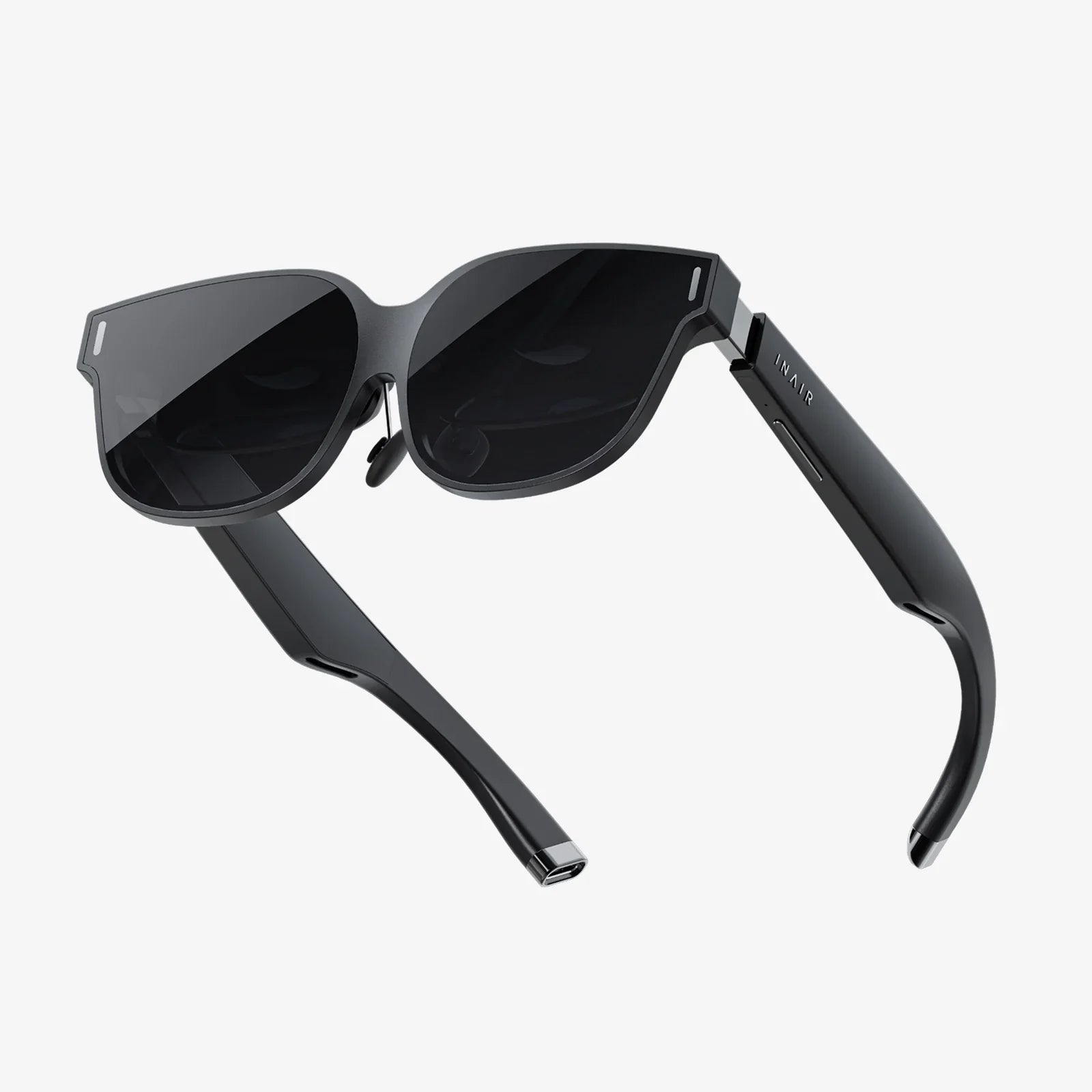
Imagine slipping a portal to another universe into your pocket. This isn't the opening scene of a science fiction novel; it's the burgeoning reality promised by a new category of immersive technology: the 6.4 inch VR headset. This specific screen size isn't a random number—it's a deliberate engineering choice that bridges the gap between the powerful smartphones we already own and the vast, immersive worlds of virtual reality. For years, VR has been synonymous with bulky, expensive, and complex setups, often tethered to powerful computers and requiring dedicated space. The emergence of the 6.4-inch form factor challenges all those notions, promising a more personal, accessible, and truly mobile entry point into the metaverse. It represents a fundamental shift in design philosophy, prioritizing convenience and portability without a wholesale sacrifice of the immersive experience that makes VR so compelling. This article delves deep into this exciting development, exploring the technology, the trade-offs, the user experience, and the profound implications of making high-quality VR something you can carry with you everywhere.
The Significance of the Screen: More Than Just a Number
At first glance, "6.4 inch" might seem like an oddly precise specification to hang an entire product category on. However, this measurement is far from arbitrary. It speaks directly to a core component of the device's design and its intended function.
The primary advantage of a 6.4-inch display in a VR headset is its direct compatibility with a huge range of modern smartphone screens. This opens the door to a specific type of VR hardware known as a mobile VR headset, or more accurately, a smartphone-powered headset. Users can simply slot their existing device into the headset, which then uses lenses to transform the smartphone's screen into a stereoscopic, wide-field-of-view display. This approach dramatically lowers the barrier to entry. There's no need for expensive internal processors, batteries, or a separate display system; the smartphone provides all the core computing and visual horsepower.
From a pure optics perspective, a 6.4-inch screen, when paired with high-quality Fresnel or aspherical lenses, can provide a very compelling field of view (FOV). While it may not match the extreme FOV of high-end, dedicated PC VR headsets, it often surpasses that of many older or more basic mobile VR units. The goal is to create a sense of presence—the feeling of actually being inside the virtual environment—and a well-designed 6.4-inch system can achieve this effectively for a wide range of applications.
Engineering for Portability: The Form Follows Function
The choice of a 6.4-inch display dictates almost every other aspect of the headset's design. The overarching principle is minimalism and weight reduction.
The chassis of such a headset is typically constructed from lightweight polymers or advanced composites. The focus is on durability without heft. The internal structure must securely cradle the smartphone, protecting it while ensuring it is perfectly aligned with the optical lenses. Misalignment here can lead to a blurry image, eye strain, or a complete break in immersion.
Ergonomics are paramount. The weight distribution must be carefully calculated. Since the smartphone is the heaviest component, its placement is crucial. A bad design will feel front-heavy, pulling down on the user's face and requiring a tight, uncomfortable strap system to compensate. A good design will balance the weight, often by positioning the phone's location and using a counterweight or a strap system that pulls the center of gravity closer to the user's head. Adjustable head straps—whether a simple elastic band or a more rigid, ratcheted system—are essential for achieving a comfortable and secure fit for a diverse user base.
Interaction is another critical engineering challenge. Most headsets in this category forego expensive external tracking systems in favor of more integrated solutions. This often includes a basic handheld controller that connects via Bluetooth. These controllers are themselves marvels of miniaturization, packing motion sensors, buttons, and a battery into a tiny form factor. Some advanced models might incorporate simple hand-tracking through the smartphone's front-facing cameras, allowing for gesture-based interaction without any controllers at all.
The User Experience: Accessibility Meets Immersion
The user journey for a 6.4-inch VR headset is designed for simplicity and immediacy. The setup process is trivial compared to a PC-based system: download a companion app, insert the phone into the headset, put it on, and you're ready to go. This low-friction entry is its greatest strength, making it perfect for spontaneous use, sharing experiences with friends, or consuming content on the go.
The visual experience is fundamentally shaped by the quality of the user's smartphone. A handset with a high-resolution, high-refresh-rate OLED display will provide a stunning VR experience with deep blacks, vibrant colors, and smooth motion. Conversely, a lower-end phone with an LCD screen and noticeable bezels will yield a more mediocre result. This variability is a unique aspect of this product category; the headset itself is a conduit, and the quality of the portal depends on the window you place inside it.
Content for these platforms is primarily consumed through mobile VR app stores. The library includes a vast array of 360-degree videos, immersive tours, casual games, and social VR experiences. While they may not run the graphically intensive, AAA titles designed for powerful desktop VR systems, the available content is more than capable of providing hours of entertainment, education, and social connection. The experience is one of curated immersion—perfect for watching a movie on a virtual giant screen, exploring a historic site, or playing a rhythm game.
Weighing the Trade-Offs: Power vs. Convenience
Adopting the 6.4-inch smartphone-dependant model involves significant engineering trade-offs. The most notable is a reliance on external processing power. The headset itself is dumb; all the intelligence comes from the phone. This means the VR experience is limited by the phone's thermal and battery performance. Intensive VR applications can quickly drain a battery and cause the device to throttle performance due to heat, potentially leading to a degraded experience over time.
Furthermore, positional tracking—the ability of the headset to understand its movement in physical space—is often less advanced than in dedicated systems. While many use the phone's inertial measurement units (IMUs) for rotational tracking, full six-degrees-of-freedom (6DoF) movement, where you can lean and dodge, is less common and typically requires additional external sensors or advanced inside-out tracking using the phone's cameras, which can be computationally intensive.
These limitations define the niche. A 6.4-inch VR headset is not intended to replace a high-fidelity, tethered system for hardcore gaming or professional simulation. Instead, it carves out its own space as an accessible, convenient, and social gateway to VR. It's for the person who wants to try VR without a major investment, for the traveler who wants a personal cinema, or for the educator who wants to bring immersive experiences to a classroom simply and affordably.
The Future is in Your Pocket: What Lies Ahead
The trajectory of the 6.4-inch VR headset is inextricably linked to the evolution of smartphone technology. As phones become more powerful, with more efficient processors, better displays, and improved thermal management, the potential of these headsets grows exponentially. The integration of 5G connectivity could enable cloud-based VR experiences, offloading the processing from the phone entirely and allowing for even more complex and detailed virtual worlds.
We can also expect advancements in the headsets themselves. Lighter, stronger materials will improve comfort. More sophisticated inside-out tracking solutions will become standard, blurring the line between mobile and dedicated VR tracking quality. The line between augmented reality (AR) and virtual reality may also blur, with passthrough camera modes allowing the phone's cameras to feed a video feed of the real world into the headset, overlaying digital information to create mixed reality experiences.
The ultimate promise of the 6.4-inch VR headset is normalization. By leveraging a device that billions already own and understand, it has the potential to demystify and democratize virtual reality. It transforms VR from a specialized hobby into a standard feature, an app on your phone, a foldable viewer in your backpack. It makes the extraordinary potential of immersive digital experiences an ordinary part of daily life.
This isn't just another piece of tech; it's the key to unlocking a universe of experiences hiding in plain sight, right on the screen you use every day. The promise of a truly personal and portable metaverse is no longer a distant dream—it's taking shape, precisely 6.4 inches at a time, waiting for you to take a closer look and dive in.
Share:
7000 Dollar VR Headset: The Dawn of a New Reality and What It Means for the Future
Popular VR Headset 2025: The Ultimate Guide to Next-Gen Immersion