


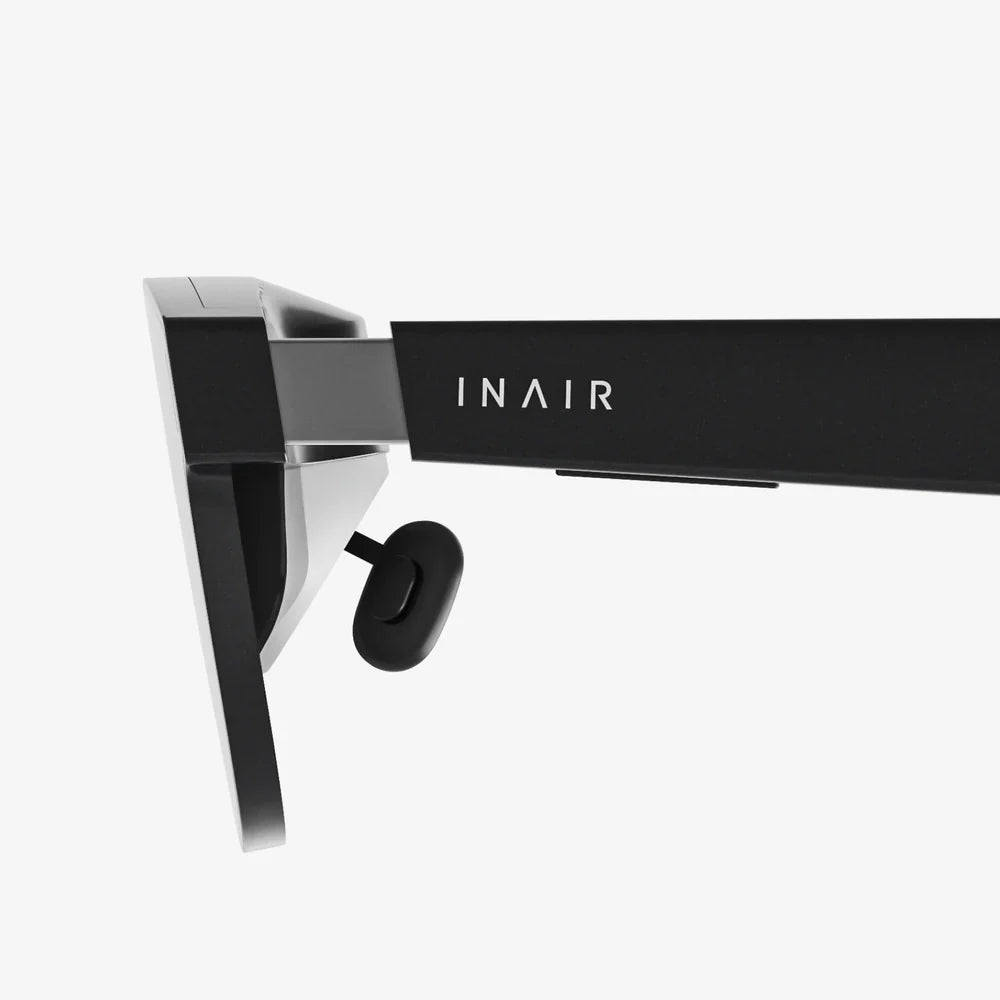
Imagine slipping on a headset and being instantly, utterly transported. The digital world doesn't just appear before your eyes; it feels palpably real, with a clarity so sharp you forget you're wearing a device, where the very concept of a 'screen' dissolves into pure experience. This isn't the consumer-grade virtual reality we know today; this is the bleeding edge, and it carries a price tag that will make most do a double-take: eight thousand dollars. To the average person, such a cost is ludicrous, an extravagance reserved for the foolish or the fabulously wealthy. But to dismiss this technological marvel as a mere luxury item is to miss the profound point entirely. The emergence of the eight-thousand-dollar VR headset is not about gaming or entertainment for the masses; it is a crucial, targeted investment in the very future of immersive computing, a high-powered engine driving innovation that will eventually trickle down to transform all our digital lives.
Beyond the Sticker Shock: Understanding the "Prosumer" Niche
The first and most critical concept to grasp is that these devices are not intended for the general public. You will not find them lining the shelves of big-box electronics stores next to popular gaming consoles. They belong to a category known as "prosumer" equipment—a portmanteau of "professional" and "consumer." This market segment targets highly specialized users who require performance and capabilities far beyond what is available in mass-market products and who are willing to pay a significant premium for it.
Think of it in terms of the photography world. A typical smartphone can take stunning photos, and an advanced mirrorless camera might cost a few thousand dollars, serving enthusiasts and professionals alike. But then there are the medium-format digital cameras used by top-tier commercial photographers and studios. These systems can cost tens of thousands of dollars for the body alone. They are not for vacation snapshots; they are tools for creating the highest-fidelity imagery for specific, demanding commercial applications. The value they provide to those businesses justifies the immense cost. The eight-thousand-dollar VR headset occupies the same space. It is a medium-format camera in a world of smartphone VR.
The primary customers for these systems are not individual gamers but enterprises, research institutions, advanced design studios, and military or medical training facilities. For an automotive company, using this level of fidelity to design a car interior in virtual reality, allowing engineers to sit in a photorealistic prototype long before any physical materials are used, can save millions of dollars. For a surgeon training on a hyper-realistic virtual model of a human heart, the cost of the headset is negligible compared to the value of a perfectly executed procedure. This price point reflects not just the cost of components but the immense value these tools deliver to the professionals who use them.
Deconstructing the Cost: Where Does Eight Thousand Dollars Go?
So, what exactly justifies such a staggering sum? The technology inside these headsets is generations ahead of what is found in consumer devices. It's not merely an incremental improvement; it's a fundamental leap in almost every component.
The Pursuit of Visual Perfection: Panels, Lenses, and Resolution
Consumer VR has largely been chasing the goal of "retina" resolution—a pixel density high enough that the human eye cannot discern individual pixels at a normal viewing distance. Premium prosumer headsets have not only achieved this but have blown past it. We are talking about dual micro-OLED displays, each boasting resolutions exceeding 4K per eye. This results in a combined resolution that is simply unheard of in consumer gear, eliminating the "screen door effect" completely and delivering text so sharp it can be used for reading lengthy documents and code.
Furthermore, the lenses are a masterpiece of optical engineering. Advanced pancake lenses allow for a much slimmer headset profile while maintaining a large, clear sweet spot. More importantly, many of these systems feature varifocal displays. This is a revolutionary technology that mechanically adjusts the focal plane of the lenses based on where your eyes are looking, tracked in real-time. In real life, your eyes naturally refocus when you look from your hand to the distant horizon. Standard VR headsets have a fixed focal plane, causing a disconnect known as the vergence-accommodation conflict, which can lead to eye strain and a subconscious sense that the world isn't quite real. Varifocal displays solve this biological problem, adding a profound new layer of comfort and realism that is impossible to ignore.
The Power of Presence: Advanced Tracking and Haptics
Immersion is broken the moment the virtual world fails to perfectly mirror your real-world movements. Prosumer headsets achieve unprecedented levels of tracking fidelity. Inside-out tracking systems use high-resolution cameras and sensors not just to track the controllers, but to map the entire environment in exquisite detail, often in real-time 3D. This allows for complex interactions and ensures virtual objects don't judder or float unnaturally.
Perhaps the most critical tracking feature is foveated rendering powered by eye-tracking. An array of microscopic cameras inside the headset monitors the precise position and movement of your pupils. The system then uses this data to render the area of the screen you are directly looking at in full, ultra-high resolution, while subtly reducing the rendering quality in your peripheral vision—areas where your eyes cannot perceive the detail anyway. This is a monumental technical achievement that drastically reduces the computational power required to drive those incredibly high-resolution displays, making the entire system viable. Without eye-tracking, the GPUs needed to run these headsets would be prohibitively expensive and power-hungry even for this market.
Beyond vision, haptic feedback is elevated to a new art form. Controllers are not just wands that vibrate; they contain sophisticated mechanisms that can simulate the feeling of touching different surfaces, the tension of pulling a trigger, or the weight and recoil of a virtual tool. Some systems even explore haptic vests and gloves, aiming to deliver a truly full-body immersive experience.
The Unseen Engine: Built-for-Purpose Hardware and Software
This level of performance doesn't run on off-the-shelf components. These headsets often use custom-designed chipsets specifically optimized for the immense data throughput required for sensor fusion, eye-tracking, and ultra-high-resolution display management. The software stack is equally specialized, offering enterprise-grade support, stability, and development tools that mainstream platforms cannot provide. The cost of this dedicated research, development, and low-volume manufacturing is inherently high, reflected in the final price.
The Ripple Effect: How Premium Tech Drives Mainstream Innovation
This is the most important part of the story. The existence of an eight-thousand-dollar headset is not an indictment of the VR industry's affordability; it is its greatest catalyst for progress. The technology ecosystem does not simply trickle down; it cascades.
Every single groundbreaking feature in today's prosumer headsets is a candidate for tomorrow's consumer devices. Eye-tracking and foveated rendering, once perfected and mass-produced in expensive units, will become cheap enough to include in every headset, dramatically lowering the hardware requirements for high-quality VR and making it more accessible than ever. Varifocal display mechanisms, currently complex and costly, will be refined, miniaturized, and eventually become standard. The high-fidelity inside-out tracking systems developed for enterprise applications will become the reliable, standard tracking for future generations of consumer products.
This prosumer market acts as a vital testing ground. It allows manufacturers to deploy and refine radical new technologies in a controlled environment with expert users who can provide detailed feedback. They work out the kinks, improve the software, and drive down production costs through iterative development—all funded by the early adopters in enterprise and research. The lessons learned here directly inform and accelerate the roadmap for affordable VR. The consumer headset of five years from will be directly built upon the lessons, components, and software pioneered in today's eight-thousand-dollar marvels.
A Glimpse into the Future: The Metaverse and Beyond
The development of these ultra-high-end systems also gives us a clear preview of where immersive technology is ultimately headed. They are the first true stepping stones towards the vision of a fully realized, persistent, and collaborative virtual space—often called the metaverse. For such a vision to be compelling and functional for professional work, it cannot be cartoony or low-fidelity. It requires the visual fidelity, comfort, and intuitive interaction that these prosumer headsets are pioneering.
We are moving towards a future where architects walk clients through life-sized, photorealistic renderings of unbuilt homes; where medical students can practice complex procedures on accurate virtual patients; where global teams can collaborate on engineering a new product as if they were all standing in the same physical room, examining a physical prototype. This future demands a level of realism and immersion that current consumer VR cannot provide. The eight-thousand-dollar headset is the vanguard, proving that this future is technologically possible and validating its use cases today.
It is the necessary first draft of a technology that will eventually become as ubiquitous and transformative as the smartphone. The cost is high because the ambition is astronomically higher than simply playing a video game. It is about redefining the way we create, learn, and connect across physical boundaries.
The next time you hear about a headset with a price tag that seems absurd, look past the number. See it for what it truly is: a compact universe of tomorrow's technology, available today. It's a crystal ball showing us the breathtaking clarity and immersive potential that awaits us all, and a powerful reminder that the future is often built first for those who can fund its earliest, most expensive iterations. The incredible experiences being unlocked right now in research labs and design studios around the world are not staying behind that paywall; they are simply taking their first steps before they eventually walk, and then run, into all of our lives.
Share:
VR Headset Lenses Cheap: A Deep Dive into Affordable Immersion
VR Headset Lenses Cheap: A Deep Dive into Affordable Immersion