


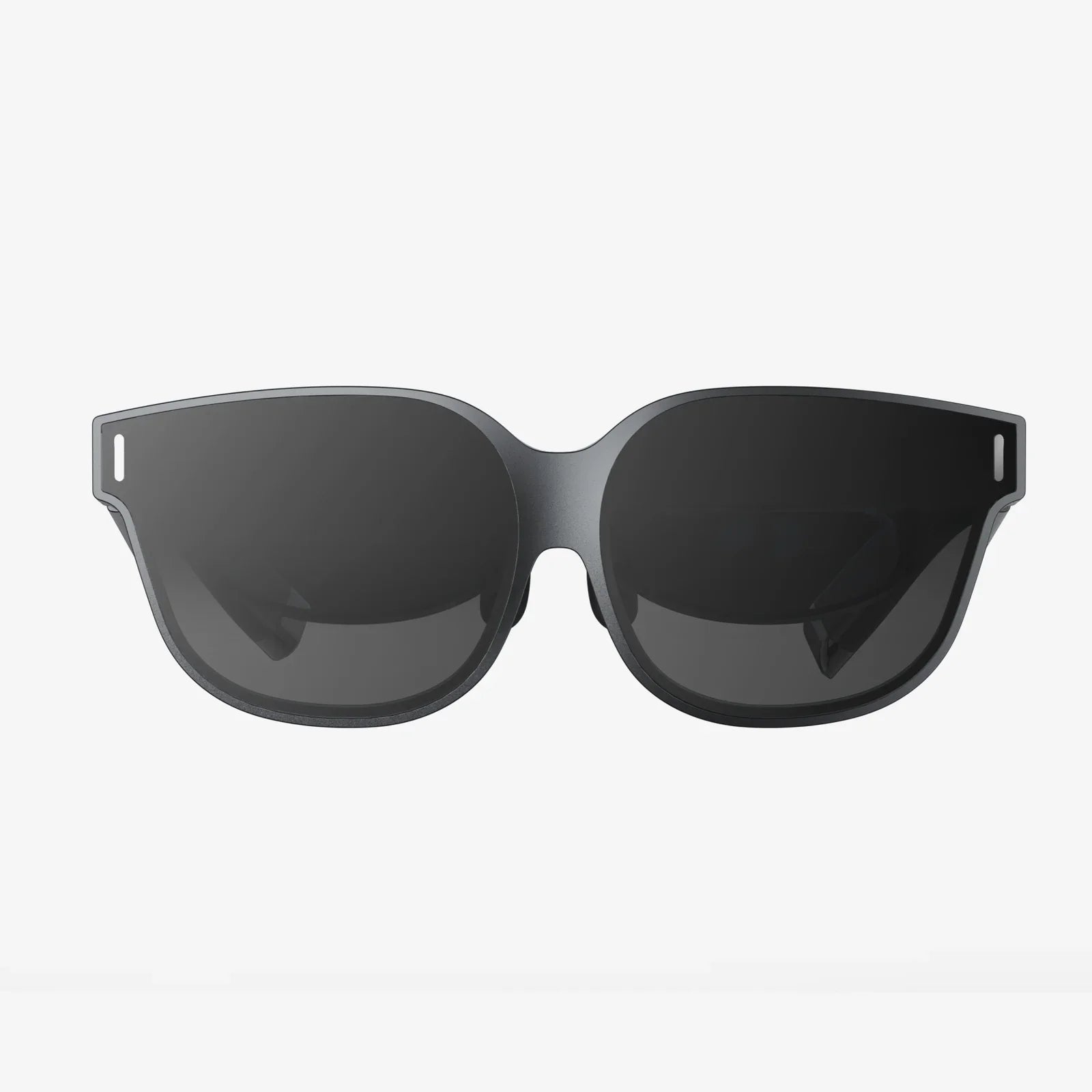
Imagine stepping through your screen into a world so vivid, so tangible, that the line between the digital and the physical begins to blur. This is no longer the stuff of science fiction; it is the imminent future promised by the powerful convergence of two transformative technologies: 8K resolution and stereoscopic 3D video. This fusion represents more than just a incremental upgrade; it is a fundamental shift in how we capture, create, and consume visual media, poised to redefine reality itself and usher in a new era of immersion that will captivate your senses and challenge your perception.
The Building Blocks of a Revolution: Understanding 8K and 3D
To appreciate the monumental leap that 8K 3D video represents, we must first deconstruct its core components. Individually, each technology is a significant achievement. Together, they form a synergistic whole that is far greater than the sum of its parts.
The Crystal Clarity of 8K Resolution
At its heart, 8K refers to a horizontal resolution of approximately 8,000 pixels. The standardized professional standard is 7680 x 4320 pixels, which equates to a staggering 33.2 million pixels on screen. This is four times the pixel count of 4K (approximately 8.3 million pixels) and a monumental sixteen times that of Full HD (2.1 million pixels). This density eliminates the visible pixel structure, even on very large screens, creating an image of such fine detail that it is often described as "through a window" rather than on a display. The benefits extend beyond mere pixel counting; 8K also typically supports higher frame rates, a wider color gamut (like BT.2020), and enhanced dynamic range, capturing the nuances of light and shadow with breathtaking accuracy.
The Depth Perception of Stereoscopic 3D
While 8K deals in breathtaking detail, stereoscopic 3D deals in convincing depth. It works by mimicking the way human binocular vision perceives the world. Our two eyes are spaced slightly apart, each seeing a slightly different perspective. The brain fuses these two two-dimensional images into a single three-dimensional perception, allowing us to judge distance and depth. 3D video replicates this by capturing two distinct images—one for the left eye and one for the right eye. When viewed through a system that ensures each eye sees only its intended image (via active shutter glasses, polarized lenses, or autostereoscopic displays), the brain is tricked into perceiving a voluminous, three-dimensional scene.
The Synergy of Sight: Why 8K and 3D Are Meant for Each Other
Past attempts at 3D entertainment, particularly for the home market, often struggled with a critical flaw: a perceived lack of sharpness and a phenomenon known as the "screen door effect," where viewers could discern the lines between pixels. This was because the total resolution of the display was effectively halved; the left-eye and right-eye images had to share the available pixels, drastically reducing the detail each eye received. This is where 8K becomes not just an improvement, but a necessity for high-quality 3D.
An 8K display showing 3D content can dedicate a full 4K resolution image to each eye. This means each eye receives a pristine, ultra-high-definition feed, completely eliminating the resolution-based artifacts that plagued earlier 3D systems. The immense pixel density ensures that the 3D image is rock-solid, with smooth gradients, razor-sharp edges, and an incredible sense of depth and volume that feels natural and effortless on the eyes. The wider color gamut and high dynamic range further enhance the realism, making the virtual world indistinguishable from our own.
Beyond the Living Room: The Expansive Applications of 8K 3D
While premium home cinema is the most obvious application, the impact of 8K 3D video will ripple far beyond entertainment, revolutionizing numerous professional and scientific fields.
A New Golden Age for Filmmaking and Storytelling
For creators, this technology is a new paintbrush. Directors and cinematographers can compose shots with incredible depth, guiding the viewer's gaze not just across the screen, but into it. Documentaries exploring natural wonders, from the intricate architecture of a coral reef to the vast expanse of the Grand Canyon, will become profoundly immersive experiences. Historical documentaries could transport students directly into reconstructed ancient cities, making the past feel palpably present. The narrative potential is limitless, offering a new language for visual storytelling.
Transforming Education and Scientific Visualization
Imagine a medical student not just reading about human anatomy, but being able to walk around a beating heart, peer into the ventricles, and observe the flow of blood in stunning 8K 3D detail. Architects and engineers could collaboratively walk through full-scale 3D models of their designs before a single foundation is poured. Geologists could explore seismic data as a tangible landscape, and astrophysicists could traverse nebulae and galaxies. This technology turns abstract data and complex concepts into intuitive, experiential learning.
Revolutionizing Telepresence and Remote Collaboration
The future of work and communication lies in telepresence—the feeling of being present in a remote location. Current video conferencing is a poor substitute for a face-to-face meeting. 8K 3D video could change that. With life-sized displays and perfect depth reproduction, it would feel as if the other participants were sitting across the table from you, with realistic eye contact and body language. This has profound implications for global collaboration, remote surgery where precision is paramount, and even for connecting families across continents in a more meaningful way.
The Technological Hurdles on the Path to Adoption
Despite its immense potential, the path to widespread adoption of 8K 3D video is fraught with significant technological and infrastructural challenges that must be overcome.
The Daunting Data Deluge
The most immediate challenge is the sheer volume of data. A single minute of uncompressed 8K 3D video at high frame rates can amount to terabytes of data. Capturing it requires specialized, incredibly high-resolution stereoscopic camera rigs. Storing this data demands massive storage arrays. Editing it requires immense computational power that is currently only available in high-end workstations. While advanced video codecs are helping to compress these files for distribution, the data requirements remain orders of magnitude greater than anything in common use today.
The Bandwidth Bottleneck
Streaming a live 8K 3D signal to a global audience requires bandwidth that exceeds the capabilities of most current internet infrastructures. It would necessitate widespread adoption of fiber-to-the-home and next-generation wireless technology like 6G to ensure a smooth, buffer-free experience. Broadcasting it is an even greater challenge, requiring a complete overhaul of existing transmission standards.
The Display Dilemma: Glasses vs. Glasses-Free
The consumer experience also presents a choice. The highest-quality 3D currently requires viewers to wear glasses. While lighter and more advanced than previous models, the inconvenience remains a barrier for some. The alternative is autostereoscopic displays (glasses-free 3D), which use lenticular lenses or parallax barriers to direct different images to each eye. However, this technology often sacrifices resolution, creates a limited "sweet spot" for viewing, and is difficult to scale to large sizes without compromising quality. A consumer-friendly, high-quality, large-format glasses-free solution is the holy grail, but it remains a significant engineering challenge.
Gazing into the Crystal Ball: The Future Shaped by 8K 3D
The journey towards ubiquitous 8K 3D is a marathon, not a sprint. We will likely see it adopted first in specialized commercial applications—in high-end museums, design studios, and medical facilities—where the cost is justified by the value. As the technology matures, follows Moore's Law, and becomes more affordable, it will gradually trickle down to the prosumer and eventually the consumer market.
Its true destiny, however, may lie as a foundational technology for the next computing platforms. The concept of the "metaverse" or persistent virtual worlds relies on convincing immersion. 8K 3D video will be crucial for creating photorealistic avatars and environments, bridging the gap between CGI and reality. Furthermore, it will be the visual engine for future augmented reality (AR) glasses, overlaying high-resolution, depth-accurate digital information seamlessly onto our perception of the real world.
The fusion of 8K and 3D is more than a format; it is a gateway. It is the key that will unlock experiences so rich, so compelling, and so real that they will forever change our relationship with technology, information, and each other. The screen as a flat window is ending; the age of the portal is about to begin. Are you ready to step through?
Share:
Best Portable Laptop Computer: Your Ultimate Guide to On-the-Go Power
Difference Between Augmented Reality and Virtual Reality with Examples: A Deep Dive