


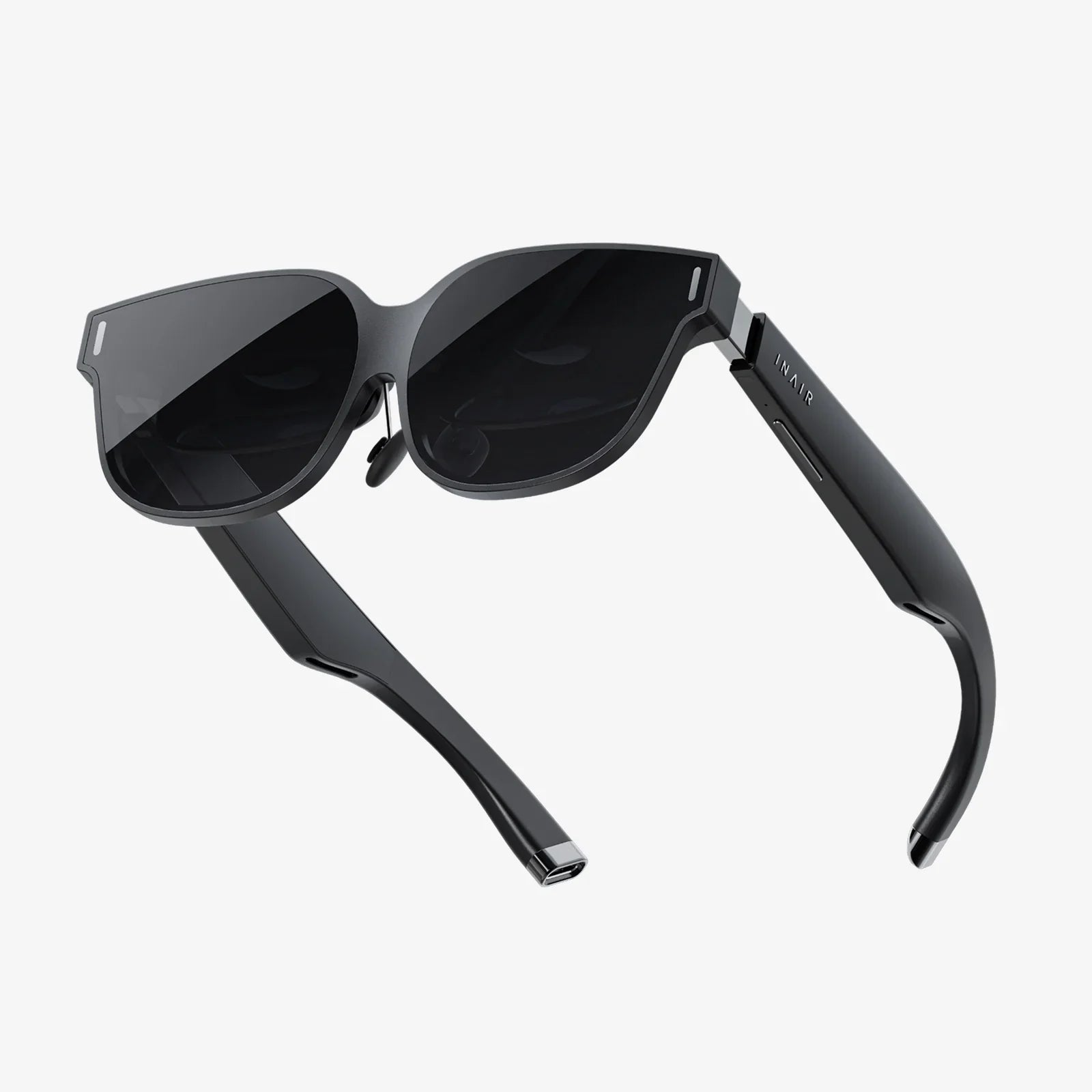
Imagine slipping on a device so advanced, so seamless, and so breathtakingly real that the very concept of a 'screen' dissolves into history. This isn't a distant sci-fi fantasy; it's the tangible future promised by the 8K VR headset of 2025. We are on the cusp of a sensory revolution, where the digital and physical will intertwine in ways previously confined to our imaginations. The race is on, and the finish line is an experience so profound it will redefine entertainment, work, and human connection. Prepare to step through the looking glass.
The Resolution Revolution: Beyond the Pixel
For years, the quest for higher resolution in virtual reality has been the primary driver of innovation. The jump to 8K in 2025, however, is not merely an incremental upgrade; it is the critical threshold where the infamous 'screen door effect'—the visible grid of lines between pixels—finally vanishes. With a combined resolution of approximately 7680 x 4320 pixels spread across two displays (one for each eye), the pixel density will be so immense that the human eye can no longer discern individual pixels at a normal viewing distance. This achievement is the cornerstone of true visual immersion.
But the 2025 headset's visual prowess extends far beyond raw pixel count. We are looking at the integration of advanced Micro-OLED or next-generation mini-LED displays. These panels offer exceptional contrast ratios, achieving true blacks and luminous highlights that make High Dynamic Range (HDR) content pop with a vibrancy that rivals the real world. Coupled with a wider color gamut, the virtual environments will feel more alive and tangible than ever before. This isn't just about seeing more; it's about feeling more through sight.
The Hardware Symphony: Powering the Unprecedented
Rendering two 4K streams at a buttery-smooth 120Hz refresh rate—or higher—is a computational task of Herculean proportions. The 8K VR headset of 2025 will not achieve this feat alone; it will be part of a symbiotic ecosystem. Inside the headset, specialized upscaling and reprojection chips will work in tandem. These dedicated processors will use machine learning algorithms to intelligently enhance lower-resolution content, reduce latency, and maintain performance, alleviating the immense burden on the primary computing source.
This primary source will likely be a bifurcated market: the untethered/standalone model and the tethered/powered model. Standalone headsets will feature system-on-chips (SoCs) built on incredibly efficient manufacturing processes, delivering performance that rivals today's high-end consoles. They will represent the pinnacle of convenience and accessibility. On the other end, tethered headsets will connect to external processing units—be it a powerful desktop computer or a dedicated, sleek external box—that houses the raw graphical horsepower needed to push native 8K resolution at high frame rates for the most demanding users. Wireless technology like Wi-Fi 7 will enable high-fidelity, low-latency streaming to untethered devices, offering a cable-free experience without compromise.
Seeing Clearly: Advanced Optics and Eye-Tracking
A high-resolution display is useless if the optics in front of it distort, blur, or chromaticly aberration the image. The 2025 headset will employ a new wave of optical technology. Pancake lenses have already begun replacing the older Fresnel lenses, and by 2025, they will be the standard. These multi-element folded optics are significantly thinner and lighter, enabling more compact headset designs. More importantly, they provide a much larger 'sweet spot'—the area where the image is perfectly clear—and drastically reduce god rays and other visual artifacts.
The true game-changer, however, will be the ubiquitous integration of high-fidelity eye-tracking. This technology will serve multiple critical functions. Firstly, it will enable Foveated Rendering. By precisely tracking where the user's pupils are pointing, the system can render the center of the gaze in full, native 8K resolution while intelligently reducing the detail in the peripheral vision. The human eye cannot perceive this reduction, but the performance savings for the GPU are enormous, often reducing the rendering load by 5x or more. This makes high-resolution VR finally computationally feasible.
Secondly, eye-tracking unlocks new dimensions of social interaction and accessibility. In multiplayer social spaces, avatars will be able to make meaningful eye contact, conveying nuance and emotion that is absent today. For UI/UX, menus can appear where you look, and selection can be made with a blink. It also paves the way for dynamic Focus and Depth of Field, where virtual objects you focus on are sharp while the background softly blurs, mimicking natural vision and reducing eye strain.
Form Meets Function: The Ergonomic Evolution
The VR headsets of the past have often been described as cumbersome, front-heavy, and isolating. The 2025 vision is one of ergonomic perfection. Through the use of new lightweight polymers, carbon fiber composites, and a better distribution of internal components (like moving the battery to the rear as a counterweight), the form factor will shrink dramatically. We are moving towards a sleek, visor-like design that feels more like wearing a pair of premium ski goggles than a desktop computer on your face.
Comfort will be paramount, with advanced facial interfaces using materials that wick moisture and are hypoallergenic. Magnetic, interchangeable interfaces will allow for easy cleaning and customization for different face shapes. Haptic feedback will not be limited to controllers; subtle actuators in the headstrap itself will provide directional cues, adding a new layer to spatial audio or simulating the rumble of a nearby explosion. The goal is a device you can wear for hours, forgetting it's even there as you lose yourself in another reality.
A World of Sound: Next-Generation Audio
Immersion is not solely a visual experience. The auditory landscape in the 2025 headset will be equally transformative. Built-in, near-field headphones will offer high-resolution, spatial audio that is both immersive and private. More advanced systems will utilize bone conduction technology, delivering rich, directional sound without covering the ears at all. This allows users to remain aware of their physical surroundings when desired, blending the real and virtual audibly.
Advanced audio ray-tracing will calculate how sound waves bounce off virtual walls, absorb into carpets, or are muffled by passing through a virtual barrier. This means you'll not only hear an enemy creeping up behind you but you'll know, instinctively, if they're in a concrete corridor or a dense forest based on the acoustic properties of the sound. This level of sonic detail is critical for complete presence.
The Software and Content Renaissance
Hardware is nothing without software. The operating systems powering these devices will be sophisticated platforms designed for seamless switching between fully immersive VR, augmented reality passthrough, and 2D floating desktop applications. The concept of a 'metaverse' will mature into a series of interconnected, open-standard virtual spaces focused on specific purposes—productivity, socializing, gaming, and live events.
Content creation tools will evolve to leverage these new capabilities natively. Game engines will build workflows that automatically optimize for foveated rendering and eye-tracked interactions. Filmmakers will create volumetric 8K 360-degree films where the viewer's gaze directs the narrative. Architects and engineers will walk through photorealistic, life-size models of their designs, spotting flaws before ground is ever broken. The value proposition will shift from pure entertainment to indispensable utility.
Beyond Entertainment: The Enterprise and Social Impact
The implications of this technology extend far beyond the living room. In enterprise, the 8K VR headset of 2025 will become a fundamental tool. Surgeons will practice complex procedures on hyper-realistic virtual anatomies. Remote teams will collaborate on 3D models as if they were standing around the same physical prototype. Training simulations for everything from emergency response to heavy machinery operation will be indistinguishable from reality, improving safety and efficacy.
Socially, the potential for connection is profound. Distance will become meaningless as families separated by oceans can share a virtual living room, watching movies together and feeling as if they are in the same space. People with mobility issues will be able to travel the world, visit museums, and attend concerts from their homes. This technology holds the promise of breaking down physical and geographical barriers, fostering empathy and understanding through shared experiences.
Challenges on the Horizon
This future is not without its hurdles. The power required to drive this technology will demand innovations in battery life for standalone units. Thermal management, keeping such powerful compact components cool, remains a significant engineering challenge. There are also crucial questions around data privacy, especially with always-on sensors and eye-tracking, and the ethical development of the virtual worlds we will inhabit. Furthermore, achieving affordability to avoid creating a new digital divide will be essential for widespread adoption.
Despite these challenges, the pace of innovation suggests they are surmountable. The 8K VR headset of 2025 is not a single product but a convergence of multiple technological vectors—display, compute, optics, and AI—all reaching maturity at the same moment. It represents the end of the beginning for virtual reality, the point where the technology finally becomes powerful enough to get out of its own way and let human experience take center stage.
The door to truly convincing virtual worlds is creaking open. The 8K VR headset of 2025 won't just be a window; it will be the entire doorway. The last remnants of the digital artifice are fading, and what emerges on the other side will be limited only by our collective creativity. The era of presence is arriving. Are you ready to step in?
Share:
VR Headset News: The Next Evolution of Immersive Technology is Here
VR Headset Canada: Your Ultimate Guide to Immersive Technology in the Great White North