


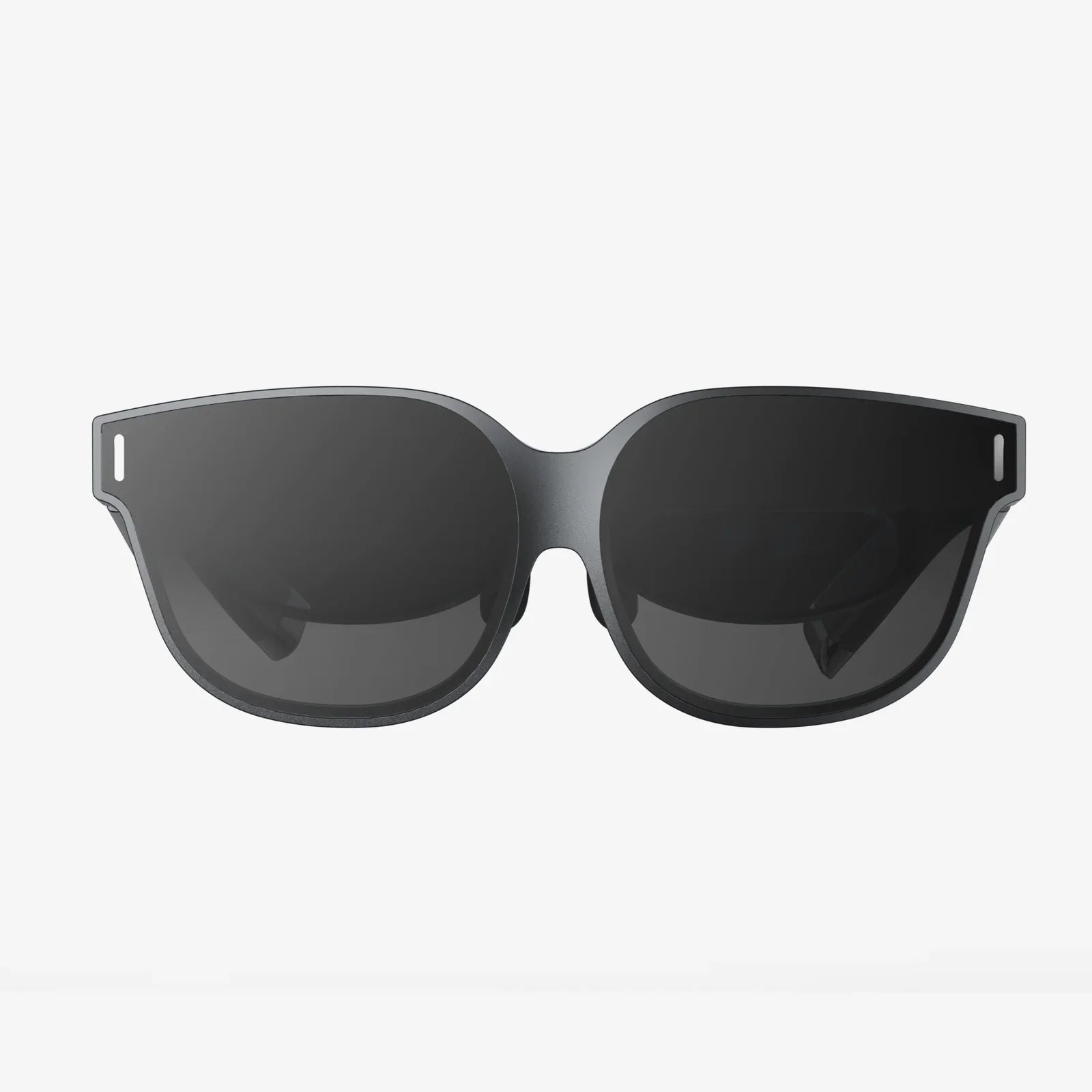
Imagine a world where your watch doesn't just tell time, but tells you about your health; where your glasses don't just correct your vision, but augment your reality; where your clothing doesn't just protect you from the elements, but connects you to the digital universe. This is not a distant sci-fi fantasy—it is the present, and it is being built upon a foundational pillar: a characteristic of wearable technology is that it is intimately, persistently, and intelligently personal. This intrinsic quality is the engine of a revolution, quietly weaving computation into the very fabric of our daily existence and promising to unlock human potential in ways we are only beginning to comprehend.
The Core of the Revolution: Intimate and Persistent Data
A characteristic of wearable technology is that it operates within what is known as the quantified self paradigm. Unlike a smartphone that is used intermittently, a wearable device is designed for constant contact. It is worn on the wrist, over the eyes, in the ears, or against the skin, creating an unbroken stream of biometric and environmental data. This persistence is its superpower. It moves beyond snapshot measurements—like a single blood pressure reading at a clinic—to provide a continuous, cinematic view of an individual's physiological state.
This data intimacy allows for a depth of insight previously unimaginable. A wearable can track:
- Heart Rate Variability (HRV): A key indicator of stress, recovery, and overall cardiovascular health, measured throughout the day and night.
- Sleep Architecture: Detailed analysis of sleep stages (light, deep, REM), disruptions, and overall sleep quality, offering a window into one of the most critical health restoration processes.
- Activity and Movement: From step counts to specific exercise recognition, VO2 Max estimates, and even subtle changes in gait that might indicate a potential injury or neurological issue.
- Electrodermal Activity: Measuring minute changes in sweat gland activity, which can be a proxy for emotional arousal and stress responses.
This constant, passive data collection creates a rich, personalized baseline. The technology learns what is normal for you. Consequently, it can detect anomalies with startling accuracy, potentially flagging the onset of illness, like an irregular heart rhythm suggestive of atrial fibrillation, or a fever indicated by a elevated resting heart rate and changes in skin temperature, long before overt symptoms appear. This shift from reactive to proactive and predictive healthcare is perhaps the most profound implication of this core characteristic.
From Data to Intelligence: The Power of Contextual Awareness
However, raw data is meaningless without interpretation. Another critical characteristic of wearable technology is that it is increasingly context-aware. It doesn't just collect heart rate data; it understands whether you are running, sleeping, or sitting at your desk. This contextual layer transforms numbers into actionable intelligence.
For instance, an elevated heart rate during a workout is expected and positive. The same elevated heart rate while you are trying to sleep is a data point of concern. Modern devices use a combination of accelerometers, gyroscopes, GPS, and sophisticated algorithms to build this context automatically. This intelligence enables features like:
- Automated workout detection and logging.
- Stress monitoring that prompts guided breathing exercises when it detects a heightened state.
- Fall detection for older adults, which can discern a hard fall from simply sitting down quickly and can automatically call for help if the user is unresponsive.
This move towards ambient computing—where technology understands our situation and intent without explicit commands—is what makes wearables feel less like tools and more like partners. They are moving from being something we interact with to something that interacts with us and our environment on our behalf.
The Seamless Integration: A Bridge Between the Physical and Digital
A characteristic of wearable technology is that it aims for seamlessness. The ultimate goal is to minimize the friction between the user and the technology, making the digital layer of information feel like a natural extension of human perception. This is most evident in the form factors themselves.
Early wearables were often clunky, obtrusive, and required frequent charging, breaking the illusion of seamless integration. The current generation, however, prioritizes aesthetics, comfort, and battery life. Smart rings are lightweight and can be worn 24/7. Advanced smartwatches boast always-on displays and multi-day battery performance. Smart fabrics are being woven with conductive threads, making the technology itself invisible.
This physical seamlessness is matched by a digital one. Notifications are delivered with a subtle haptic tap on the wrist, allowing users to triage information from their smartphone without the disruptive pull of a full screen. Audio devices can seamlessly switch between a laptop call and a smartphone podcast. This reduces the cognitive load and digital distraction associated with traditional devices, allowing users to stay connected to the digital world while remaining present in the physical one.
The Human Augmentation Frontier: Beyond Monitoring
While health and fitness monitoring is the dominant application, the characteristic of intimate persistence is paving the way for true human augmentation. This is the realm where wearables don't just report on our state but actively enhance it.
Cognitive Augmentation
Devices are emerging that use neurostimulation techniques to enhance focus, improve learning, or accelerate relaxation. By delivering gentle electrical stimulation to specific brain regions, these headbands can, for example, help a user enter a state of deep focus for a work session or promote a calm mental state for meditation, effectively giving users more control over their cognitive states.
Sensory Augmentation
Perhaps the most futuristic application lies in granting new senses or enhancing existing ones. Imagine a wearable that translates complex data sets—like stock market fluctuations or air quality metrics—into unique haptic patterns a user can learn to "feel." Or consider smart glasses that can overlay navigational arrows onto the real world, translate foreign text in real-time, or provide facial recognition cues (with appropriate privacy safeguards). These technologies are in active development, moving us towards a future where our perception of reality is personalized and enhanced.
The Double-Edged Sword: Privacy, Security, and the Ethical Quagmire
This unparalleled intimacy is not without its dark side. A characteristic of wearable technology is that it is a voracious collector of the most sensitive data imaginable. The very thing that makes it powerful—its deep, persistent connection to our bodies and lives—also makes it a significant privacy and security risk.
The data generated can reveal not just our health status, but our location patterns, sleep habits, social interactions (through proximity data), and even emotional states. This creates a target-rich environment for:
- Data Breaches: A hacked database of biometric information is far more damaging than a list of passwords. This data is immutable; you cannot change your heartbeat or sleep pattern like you can a password.
- Surveillance: Both corporate and governmental entities could potentially use this data to monitor populations in unprecedented ways, tracking not just where people go, but their physiological responses to events.
- Discrimination: There is a grave danger of this data being used by insurers to adjust premiums, by employers to make hiring and firing decisions, or by advertisers to manipulate behavior based on emotional state.
Furthermore, the ethical questions are profound. If a wearable can predict a neurological disease like Parkinson's years before symptoms appear, does the user have a right to know? What are the psychological impacts of constant self-quantification? Could it lead to increased anxiety or orthosomnia (the obsession with perfect sleep data)? The industry and society at large are grappling with these questions, and robust ethical frameworks and stringent regulations are urgently needed to ensure this technology serves humanity rather than exploits it.
The Future: Invisible, Predictive, and Proactive
The trajectory of wearable technology points towards even greater integration. The next generation will likely be increasingly invisible—think smart contact lenses, subdermal implants, and advanced e-textiles. They will move beyond tracking to prediction and automated intervention.
Imagine a device that not only detects an imminent epileptic seizure but delivers a targeted stimulus to prevent it. Or a wearable patch that continuously monitors blood glucose and automatically administers the precise dose of insulin needed. This closed-loop system, where the sensor and actuator are one, represents the pinnacle of what this technology can achieve: a seamless, intelligent system that works silently in the background to maintain and optimize our well-being.
The success of this future hinges on overcoming significant challenges in battery life, sensor accuracy, data security, and societal acceptance. But the direction is clear: wearable technology is evolving from a companion device to an integral part of the human ecosystem.
The silent revolution on your wrist is just the beginning. This intimate fusion of biology and technology promises to dissolve the final barrier between our physical selves and the digital realm, offering a future where our potential is limited not by our biology, but only by the breadth of our imagination. The next time you glance at your wearable, remember—you're not just checking the time; you're glimpsing the first chapter of a new human story, written in the language of data and defined by seamless connection.
Share:
AI Powered Wearables: The Silent Revolution Reshaping Our Daily Lives
What Does AR Means? A Deep Dive Into Augmented Reality