


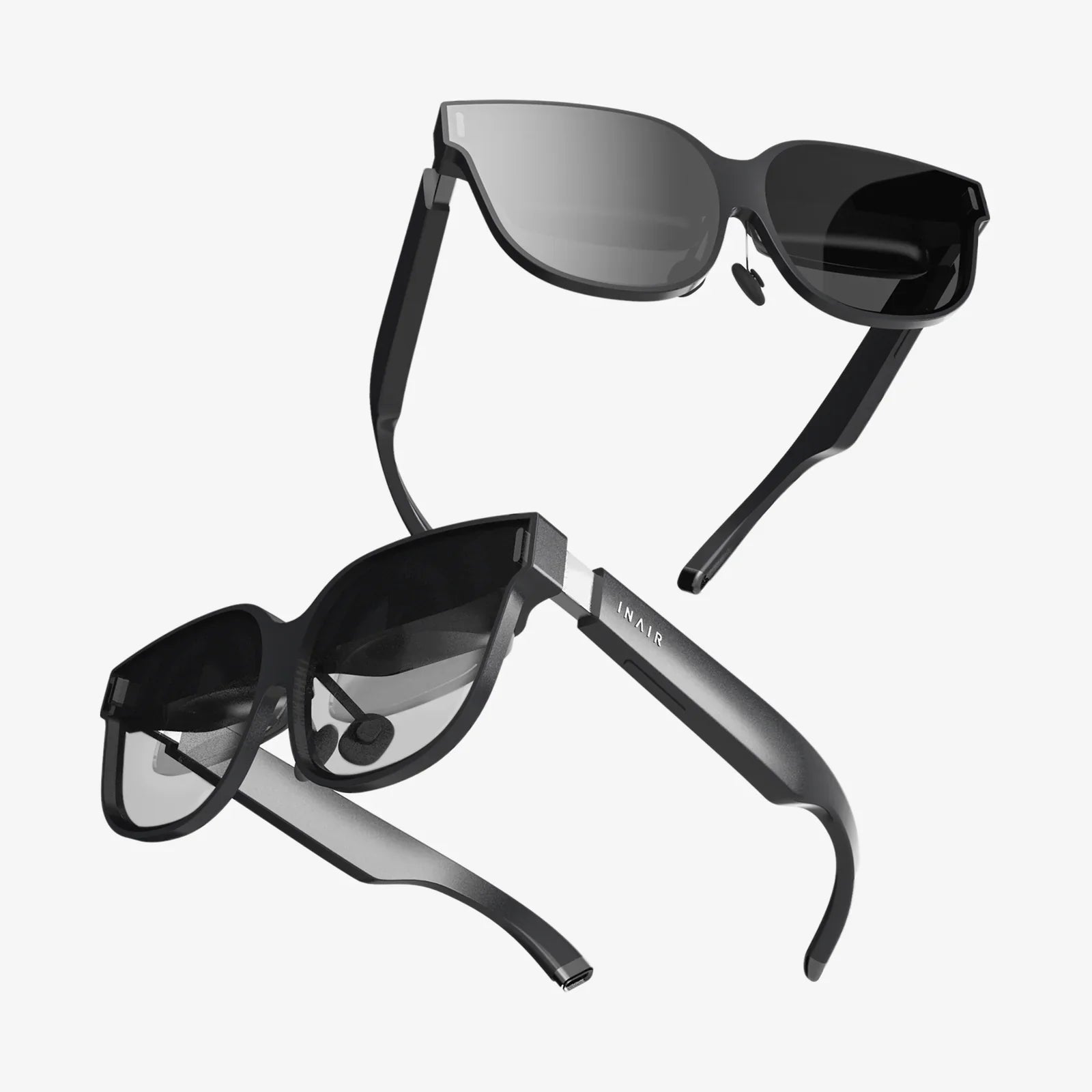
Imagine a world where your entire office, your creative studio, your gateway to global knowledge, and your connection to friends and family all fold neatly into a bag, ready to journey with you to the farthest corners of the earth. This isn't science fiction; it's the reality forged by a single, transformative invention. The quest to untether computation from the static desk gave birth to a category of technology so profound it has fundamentally rewired society, culture, and the very fabric of our daily lives. This is the story of that device, the engine of the modern mobile era.
From Concept to Reality: The Dawn of Portability
The dream of a portable computer is almost as old as the computer itself. Early machines were room-sized behemoths, but the desire to make them smaller and more accessible was immediate. The development of the microprocessor in the 1970s was the crucial spark, replacing vast cabinets of transistors with a single, powerful chip. This miniaturization made the concept of a portable personal computer not just a fantasy, but an imminent possibility.
The first machines to bear the title were scarcely "portable" by today's standards. Often weighing over 20 pounds and resembling small suitcases more than today's sleek devices, they were more accurately "luggable." They typically featured tiny monochrome monitors, minimal storage (often cassette tapes or early floppy disks), and were primarily targeted at a niche audience of engineers and hobbyists. Their value was not in convenience, but in the revolutionary idea that computing power could exist outside a dedicated laboratory or corporate data center.
Defining the Form: The Anatomy of Portability
So, what exactly defines this category? A portable personal computer is characterized by its integrated design, combining several critical components into a single, unified package designed for mobility.
- The System Unit: This is the core of the machine, housing the central processing unit (CPU), the graphics processing unit (GPU), memory (RAM), and storage (SSD or HDD). In a portable design, all these components are meticulously engineered for efficiency and low power consumption to manage heat and extend battery life.
- The Display: An integrated flat-panel screen, historically LCD and now various advanced technologies like IPS, OLED, and Retina displays, provides the visual interface. The quality, resolution, and size of this display are paramount to the user experience.
- The Input Devices: A built-in keyboard and a touchpad (or pointing stick) serve as the primary means of input, allowing for full functionality without requiring external peripherals.
- The Power System: Perhaps the most defining feature is the rechargeable battery. This component is what truly unlocks portability, freeing the user from the constant need for a power outlet. Advancements in battery technology, specifically lithium-ion and now lithium-polymer, have been a primary driver in making these devices thinner, lighter, and longer-lasting.
- Connectivity: A suite of ports for external devices (USB, HDMI, Thunderbolt) and, crucially, integrated wireless radios for Wi-Fi and Bluetooth are standard. These features ensure the device can connect to networks, peripherals, and other gadgets anywhere.
The Great Unfolding: The Rise of the Clamshell
The design that would come to dominate the world was the clamshell form factor. By hinging the display to the base containing the keyboard and system components, the device could be closed for protection during transport and opened for use. This design elegantly solved the problem of providing a large screen and a full-sized keyboard in a relatively compact form. It became the archetype, the instantly recognizable silhouette of mobile computing for decades.
A Spectrum of Portability: From Powerhouse to Ultra-Mobile
As the technology matured, the market segmented to meet the diverse needs of users. The term "portable personal computer" is now an umbrella category encompassing several distinct types.
- The Traditional Laptop: This is the workhorse, designed as a direct replacement for a desktop computer. It typically offers the largest screens (15 inches and above), the most powerful processors, dedicated graphics cards, and a full complement of ports. They prioritize performance over extreme portability, though they are still entirely mobile.
- The Ultrabook: This subcategory emerged as a response to the demand for thinner, lighter, and more stylish machines without significant performance compromises. They emphasize long battery life, solid-state storage for speed and durability, and premium materials like aluminum and carbon fiber. They are the choice for professionals and students who are constantly on the move.
- The Convertible 2-in-1: A revolutionary hybrid that blurs the line between laptop and tablet. Using clever hinge mechanisms or detachable keyboards, these devices can transform from a standard laptop into a tablet-like slate. This versatility is often complemented by a touchscreen and support for a digital stylus, making them incredibly popular for artists, designers, and note-takers.
- The Chromebook: A streamlined device that runs a lightweight, web-centric operating system. It relies heavily on cloud storage and web applications, which allows it to be produced at a lower cost with longer battery life. It has become a dominant force in education and for users whose computing needs are primarily online.
The Silent Revolution: How Portability Reshaped the World
The impact of putting a powerful computer in every backpack and briefcase cannot be overstated. It catalyzed changes across every sector of society.
- The Demise of 9-to-5: It enabled remote work on a massive scale. The office was no longer a physical place but something you could access from your kitchen table, a coffee shop, or an airport lounge. This flexibility has reshaped corporate culture, urban planning, and work-life balance.
- Education Transformed: It put a universe of information at a student's fingertips. From digital textbooks and research databases to collaborative software and online courses, learning became personalized, interactive, and unbounded by the classroom walls.
- The Creative Boom: Powerful creative software for video editing, music production, and digital art became accessible to amateurs and professionals alike. A filmmaker can now edit a feature film on a device they take on a train, and a musician can produce an album from a portable studio. This has democratized creativity.
- A New Social Fabric:
These devices, connected to the internet, became our primary portals for communication. Email, instant messaging, and social media shifted from stationary activities to constant companions. They changed how we maintain relationships, consume news, and form communities, for better and for worse.
Challenges and Considerations in a Mobile World
This new paradigm is not without its drawbacks. The very portability that defines these devices also makes them vulnerable to loss, theft, and physical damage. Cybersecurity became a more personal threat; a lost device could mean a massive data breach. Furthermore, the constant connectivity they enable has led to issues of digital addiction, the erosion of the boundary between work and personal life, and the phenomenon of "always-on" stress. Ergonomically, using a laptop for extended periods can lead to posture-related ailments, a trade-off for the convenience of computing from anywhere.
The Horizon of Mobility: What Lies Ahead?
The evolution of the portable personal computer is far from over. We are on the cusp of new breakthroughs that will further redefine what these machines can do. The integration of Artificial Intelligence (AI) directly into the hardware will lead to devices that are more responsive, secure, and efficient, anticipating user needs and managing resources intelligently. The development of foldable and rollable display technology promises to once again revolutionize the form factor, offering large-screen experiences in incredibly compact devices. We are moving towards a world of ambient computing, where your computer is less a distinct object you interact with and more an intelligent, seamless extension of your environment, with the portable device acting as its core.
From its humble, heavy beginnings to the sleek, powerful machines of today, the journey of the portable personal computer is a testament to human ingenuity and our insatiable desire for freedom and connection. It has compressed the world, empowered the individual, and ignited a revolution that is still unfolding. It is more than just a tool; it is the lens through which many of us experience, create, and share our reality.
This relentless drive to pack more power into less space, to extend battery life by the minute, and to connect us faster than ever before isn't just about technological one-upmanship. It's about fueling the next great novel, the next groundbreaking scientific discovery, the next social movement, and the next video call home from a distant city. The most powerful thing about this device isn't its processor speed or its storage capacity—it's its limitless potential to be whatever its user needs it to be, anytime, anywhere.
Share:
Convert Video to 3D: The Ultimate Guide to Creating Immersive Content at Home
AI Tools vs Human-Driven Support for Retention: The Ultimate Showdown for Customer Loyalty