


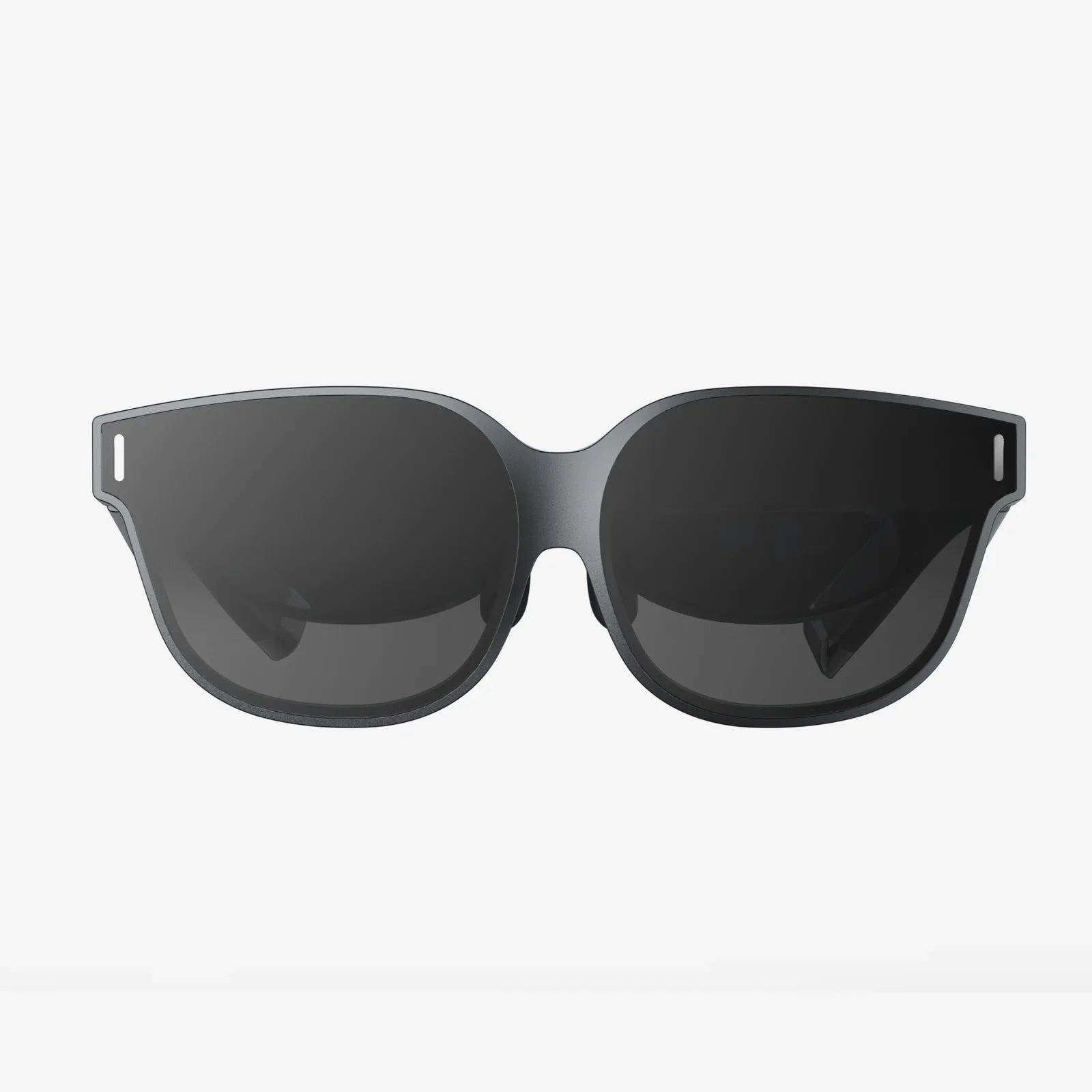
Imagine slipping on a pair of spectacles and instantly gaining a superpower—the ability to see the world not just as it is, but as it could be, layered with information, translated in real-time, and augmented with insights previously hidden from the human eye. This is no longer the stuff of science fiction; it is the burgeoning reality of ability glasses, a technology poised to fundamentally alter the human experience.
Beyond Vision Correction: A New Paradigm of Perception
For centuries, eyewear has served a singular, vital purpose: to correct faulty vision. From the earliest reading stones to modern precision lenses, the goal was to bring an individual's sight back to a baseline of 20/20 clarity. Ability glasses shatter this centuries-old paradigm. They are not about correction but about augmentation. They start from the premise that human perception, while remarkable, is inherently limited. We see only a narrow slice of the electromagnetic spectrum, we hear only a certain range of frequencies, and our memory and cognitive processing are fallible. This new class of wearable technology seeks to transcend these biological limitations, offering a digital canvas overlaid onto our reality.
The core of this technology lies in a sophisticated fusion of hardware and software. Miniaturized displays project images directly onto the retina or onto transparent lenses. A suite of sensors—including high-resolution cameras, microphones, depth sensors, and inertial measurement units—continuously scans the environment. This constant stream of data is processed by onboard or connected computing systems powered by advanced algorithms and artificial intelligence, which interpret the world and generate contextual information in real-time.
The Architecture of Augmentation: How Ability Glasses Work
To understand the potential of ability glasses, one must appreciate the complex architecture that makes them function. It is a symphony of components working in seamless concert.
Sensing the World
The first layer is perception. Unlike our biological senses, the sensors on ability glasses are multifaceted. The optical sensors capture not just light but also depth, allowing the device to construct a three-dimensional map of the environment. Audio sensors don't just record sound; they can perform beamforming to isolate specific voices in a crowded room or identify specific noises. Environmental sensors can detect air quality, temperature, and humidity. This multi-modal sensory input creates a rich, data-dense picture of the user's surroundings.
Interpreting Reality with Artificial Intelligence
Raw sensor data is meaningless without interpretation. This is where artificial intelligence becomes the brain of the operation. Machine learning models, particularly in computer vision and natural language processing, are trained on vast datasets to recognize objects, people, text, gestures, and scenes. This allows the glasses to not just see a sign, but to read it; not just see a face, but recognize it; not just hear speech, but transcribe and translate it. The AI contextualizes this information, understanding the relationship between objects and the user's potential intent.
The Interface of Overlaid Reality
The final layer is the display. Using technologies like waveguide optics or micro-LEDs, these systems project digital imagery that appears to coexist with the physical world. This can be anything from simple text notifications and navigation arrows hovering over a street to complex 3D models of machinery showing internal parts or historical recreations of ancient ruins superimposed on their modern-day remnants. The interface is designed to be glanceable and non-obtrusive, providing information only when needed and fading into the background when not.
Transformative Applications Across Society
The true power of ability glasses is revealed in their applications, which promise to revolutionize numerous fields and aspects of daily life.
Revolutionizing Professional and Industrial Sectors
In the industrial workplace, ability glasses are a game-changer. A technician repairing a complex piece of equipment can see a digital schematic overlaid directly onto the machinery, highlighting the next component to remove and providing torque specifications. A surgeon could see critical patient vitals, ultrasound data, or pre-operative plans visualized directly in their field of view without ever looking away from the operating table. An architect walking through a construction site could see the building's BIM model aligned with the physical structure, instantly identifying discrepancies. This hands-free, context-aware access to information drastically improves efficiency, reduces errors, and enhances safety.
Redefining Accessibility and Inclusion
Perhaps the most profound impact of ability glasses will be in the realm of accessibility. For individuals with visual impairments, this technology can act as a powerful visual prosthesis. It can read text aloud from any surface—a menu, a street sign, a product label—describing scenes, identifying currency denominations, and recognizing faces to discreetly provide names. For those who are deaf or hard of hearing, real-time speech-to-text transcription can be displayed, turning conversations into captioned interactions. This technology has the potential to tear down communication and navigation barriers, granting greater independence and inclusion for millions.
Enhancing Learning and Cultural Experiences
Education and tourism stand to be utterly transformed. A student studying astronomy could point their glasses at the night sky and see constellations traced and planets identified. A visitor to a museum could gaze at an artifact and see a reconstructed 3D model of how it was used centuries ago, accompanied by a historical narrative. Language learners could walk through a foreign city and see translations of street signs and menus appear naturally in their periphery, accelerating immersion and understanding. This creates a dynamic, interactive form of learning that moves beyond screens and pages into the world itself.
Navigating the Ethical and Societal Labyrinth
With such transformative power comes a host of significant challenges that society must proactively address.
The Privacy Paradox
The always-on, always-sensing nature of ability glasses presents a monumental privacy challenge. The devices, by their very function, can record audio and video of everyone in the vicinity, often without their knowledge or consent. This raises critical questions: Who owns this data? How is it stored and secured? What prevents its misuse for surveillance or social scoring? Robust ethical frameworks, transparent user controls, and potentially new social norms and laws will be required to navigate this new reality. The concept of privacy in public spaces may need to be redefined entirely.
The Digital Divide and Socioeconomic Stratification
As with any advanced technology, there is a risk that ability glasses could exacerbate existing inequalities. If they become essential tools for high-paying jobs, education, and social interaction, a new divide could emerge between those who can afford this cognitive augmentation and those who cannot. This "augmentation divide" could create a society with a enhanced upper class and a biologically-limited lower class, posing profound questions about fairness, access, and the very nature of human equality.
The Erosion of Human Connection and Attention
There is a legitimate concern that perpetual augmentation could diminish our ability to be present in the moment. If our reality is constantly mediated and annotated by a digital layer, do we risk losing the simple, unadulterated experience of the world? Would a walk in the forest become a quest to identify every species of tree and bird, rather than an opportunity for quiet reflection? Furthermore, constant notifications and information overload could fracture our attention spans even more than smartphones have, potentially impacting deep work and genuine interpersonal connection.
The Future Vision: Seamless Integration and Expanded Senses
Looking ahead, the evolution of ability glasses points toward even deeper integration with our biology and consciousness. Future iterations may move beyond the face to become contact lenses or even direct neural interfaces, eliminating the hardware altogether. The augmentation could expand beyond sight and sound to provide data-driven senses we currently lack, such as the ability to "see" infrared or ultraviolet light, "hear" the health of an ecosystem through plant bioacoustics, or "feel" magnetic north.
The ultimate goal is a seamless, intuitive, and symbiotic relationship between human and machine, where the technology fades into the background, and the augmented ability feels as natural and effortless as native human perception. The line between user and tool will blur, creating a new, hybrid form of intelligence that is both biological and digital.
We stand at the precipice of a new sensory revolution, where the frames perched on our noses could become the most powerful portal to human advancement we have ever created—a tool that doesn't just show us the world, but helps us truly see it for the first time.
Share:
Augmented Reality Display Glasses: The Invisible Revolution Reshaping Our World
Interactive Immersive Experience Digital: The New Frontier of Human Connection