


- by wangfred
Actual Reality Technologies Are Reshaping Our World Beyond the Virtual
- by wangfred
Imagine a world where the digital and physical are not separate realms to be toggled between, but a single, unified experience. A world where information is not confined to screens but is woven into the very fabric of our environment, accessible with a glance, a gesture, or a spoken word. This is not the promise of a distant, science-fiction future; it is the emerging frontier of actual reality technologies, a paradigm shift that moves beyond the purely virtual to augment, understand, and interact with our tangible world in profoundly new ways. This is the next great leap in our technological evolution, and it’s already beginning to reshape everything from how we work to how we heal.
For decades, the popular imagination has been captivated by the concept of Virtual Reality (VR) – the idea of escaping into a completely digital, simulated environment. This was followed by Augmented Reality (AR), which layered digital information onto our view of the real world, often through the screen of a smartphone or specialized glasses. While revolutionary in their own right, both approaches maintain a fundamental separation: the user is either in a digital world or looking at the digital world superimposed on their own.
Actual reality technologies represent a fundamental evolution beyond this dichotomy. Rather than creating an alternative reality or simply annotating our existing one, the core objective is to create a seamless, bidirectional bridge between the digital and the physical. It’s about making the physical world computationally understandable and interactable. This isn't about escape; it's about enhancement and integration. The 'actual' in the term signifies a focus on the real, tangible environment we inhabit, using a suite of advanced technologies to make it smarter, more responsive, and more informative.
This technological stack is complex and synergistic, relying on the convergence of several cutting-edge fields:
The magic of actual reality technologies lies in their ability to perceive, comprehend, and then act upon the physical world. This process can be broken down into a continuous feedback loop.
First, perception is achieved through the sensor array. A device, whether it's a headset, a pair of glasses, or a fixed sensor in a room, scans the environment. LiDAR projects millions of points of invisible light, measuring the time it takes for each point to return to create a precise depth map. Cameras capture high-resolution color and texture information. This raw data is a chaotic point cloud of information.
Second, comprehension happens through spatial computing and AI. The system processes the sensor data to identify surfaces, objects, and their relationships. It constructs a live 3D mesh of the environment. Crucially, it doesn't just see a flat surface; it understands it as a "floor" capable of supporting digital objects that obey physics. It recognizes a tool as a specific instrument with a specific function. This digital understanding, often called a "digital twin" of the space, is what separates actual reality from simple AR overlays.
Finally, interaction becomes possible. Because the system understands the context of the physical world, digital content can be placed and behave in a believable way. A complex 3D model of a car engine can be anchored to a real-world table, and you can walk around it, peering into its intricacies. A remote collaborator's avatar can appear to sit in an empty chair in your meeting room, their digital pointer accurately highlighting a physical prototype on the table. Instructions for repairing a machine can be dynamically projected onto the very components that need attention, rather than forcing a technician to look back and forth between a manual and the equipment.
While consumer applications often grab headlines, the most immediate and profound impact of actual reality technologies is occurring in industrial and enterprise settings. Here, the ROI is clear, measurable, and transformative.
In product design and manufacturing, these technologies are revolutionizing the entire lifecycle. Designers can create and interact with 1:1 scale holographic prototypes, examining ergonomics and aesthetics long before a physical model is ever built, saving immense time and resources. On the factory floor, assembly line workers can receive hands-free, contextual information overlaid directly onto their workspace. A digital arrow can point to the exact bolt that needs tightening, and a dynamic torque gauge can confirm the correct pressure has been applied, drastically reducing errors and training time. Maintenance technicians can see the internal status and historical data of a malfunctioning machine simply by looking at it, with AR schematics guiding them through complex repair procedures step-by-step.
The potential to save lives and improve patient outcomes is staggering. Surgeons can use AR headsets to visualize critical anatomical structures, such as blood vessels or tumors, precisely superimposed on the patient's body during an operation. This "X-ray vision" enhances precision and reduces risk. Medical students can practice complex procedures on incredibly detailed and interactive holographic human anatomies. Furthermore, actual reality tech can power advanced remote guidance, allowing a specialist surgeon in one city to guide a local team through a procedure in another, seeing what they see and annotating their field of view in real-time.
This industry is built on bringing digital blueprints into physical reality, and actual reality tech is the ultimate bridge. Architects and clients can don headsets and walk through a full-scale, holographic model of a building before the foundation is even poured, experiencing the space and making changes when they are still cheap and easy to implement. On the construction site, workers can see the underlying structural rebar and conduit systems through walls and slabs, ensuring accurate implementation and avoiding costly clashes between systems. Project managers can overlay the digital building information model (BIM) onto the ongoing construction to instantly identify any deviations from the plan.
In massive distribution centers, efficiency is paramount. AR smart glasses can visually guide warehouse pickers along the most optimal route, highlighting the exact shelf and bin number for the next item. The system can verify the picked item using image recognition, eliminating mis-picks. This leads to dramatic increases in picking speed and accuracy, reducing operational costs and improving fulfillment times.
As with any powerful technology, the rise of actual reality brings a host of complex challenges that society must proactively address.
Privacy and Data Security: These systems are data collection engines on an unprecedented scale. They are continuously capturing detailed 3D maps of our homes, offices, and public spaces. This data is incredibly sensitive. Who owns this spatial data? How is it stored, processed, and protected? Could it be used for pervasive surveillance? Robust legal and ethical frameworks are urgently needed to prevent misuse and protect individual privacy.
The Digital Divide: There is a significant risk that these technologies could exacerbate existing social and economic inequalities. If they become essential tools for high-paying jobs in fields like medicine or engineering, a lack of access could create a new class of digitally disadvantaged individuals. Ensuring equitable access and fostering digital literacy will be critical.
Human Perception and Safety: Overlaying digital information onto the real world creates unique safety concerns. A user immersed in an AR experience could easily trip over a real-world obstacle their view is obscuring. In industrial settings, a misaligned instruction could lead to a dangerous error. Furthermore, the long-term effects of continuously mediating our reality through technology on human cognition, attention spans, and our fundamental relationship with the physical world are unknown and require careful study.
Authenticity and Reality: As the line between what is real and what is digitally augmented blurs, philosophical questions emerge. If two people in the same room see different digital overlays—one sees historical facts about a painting, another sees critical reviews—are they sharing the same reality? This technology has the power to create highly personalized, but also potentially isolating and divergent, experiences of the world.
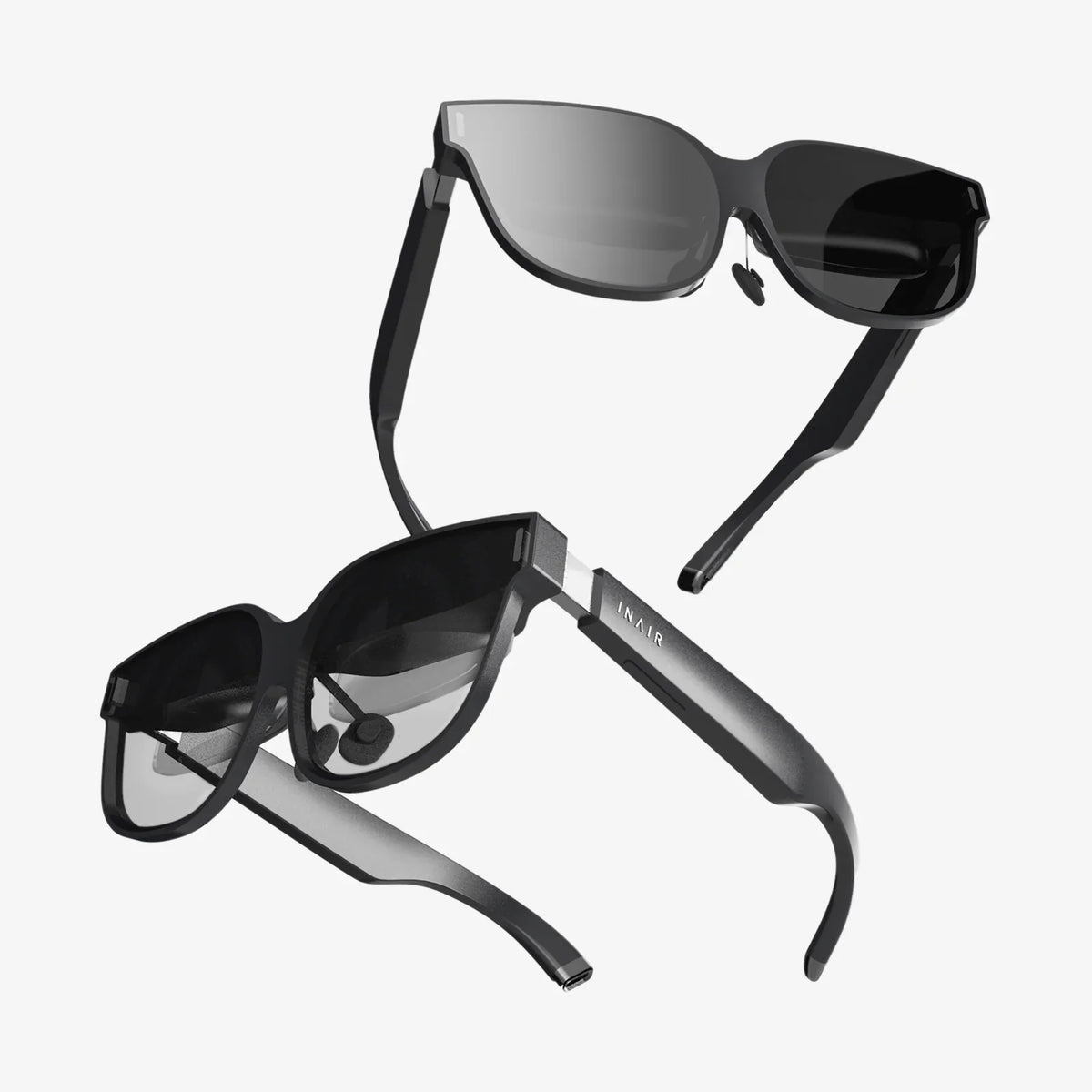
The trajectory of actual reality technologies points towards ever-greater integration and invisibility. We are moving away from clunky headsets towards sleek, socially acceptable glasses and eventually to contact lenses or even direct neural interfaces. The technology will fade into the background, becoming an unobtrusive part of our everyday lives, much like smartphones are today.
We will see the rise of the spatial internet, where information is not tied to URLs but to physical locations and objects. The world itself will become the user interface. This will unlock new forms of storytelling, art, and social connection that are inherently spatial and contextual. Remote collaboration will feel truly co-present, as if the other person is right there in the room with you, able to interact with shared physical objects.
Ultimately, the goal is not to replace reality but to enrich it. To give us superhuman abilities to see the unseen, to understand the complex, and to connect across distances as never before. The journey beyond the screen has begun, and it promises to redefine the very nature of human experience, productivity, and connection in the decades to come.
The boundary between the atoms of our world and the bits of our digital creations is dissolving, giving rise to a new, hybrid layer of existence. This isn't about logging into a metaverse; it's about upgrading our universe, infusing our immediate surroundings with a layer of intelligence, context, and capability that was once the stuff of fantasy. The tools to reshape manufacturing, revolutionize medicine, and reimhuman collaboration are moving out of the lab and into our daily workflows. The question is no longer if this future will arrive, but how quickly we can adapt to its immense possibilities and navigate its profound challenges—the era of actual reality is dawning, and it invites us all to see our world, quite literally, in a whole new light.