


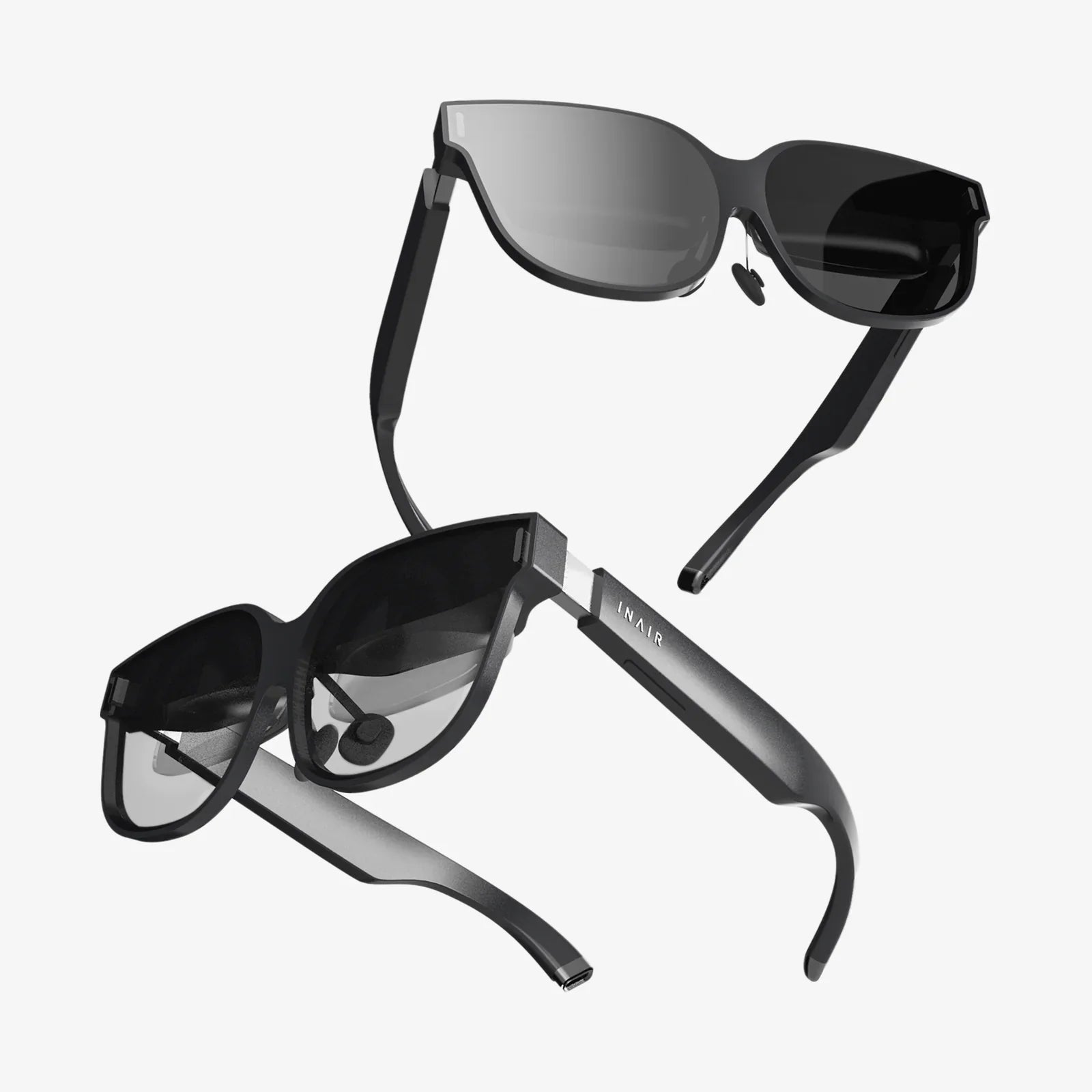
- by wangfred
Advanced Digital Products Are Reshaping Our Reality and Redefining Human Potential
- by wangfred
Imagine a world where your environment anticipates your needs, your health is continuously optimized by an invisible guardian, and the boundaries between the physical and digital realms dissolve into a seamless continuum. This is not a distant science fiction fantasy; it is the palpable reality being forged today by the relentless evolution of advanced digital products. These are not mere gadgets; they are the architects of a new human experience, the keys to unlocking potential we are only beginning to comprehend, and the silent force reshaping every facet of our existence. The future is not arriving—it is already here, in your pocket, on your wrist, and in your home.
At the core of every advanced digital product lies a silent, microscopic city of unparalleled complexity: the processor. The journey of these silicon marvels is a testament to human ingenuity, following a trajectory famously predicted by Moore's Law. We have moved from chips that could barely handle simple arithmetic to Systems on a Chip (SoCs) that pack billions of transistors onto a sliver of silicon, functioning as entire computers in a footprint smaller than a postage stamp.
This explosion in computational density is the fundamental enabler. It is what allows for the real-time rendering of hyper-realistic virtual worlds, the instantaneous processing of high-resolution video from multiple sensors, and the complex algorithms that power modern artificial intelligence. But raw processing power is only part of the story. Parallel advancements in specialized processing units, like GPUs (Graphics Processing Units) for parallel computation and NPUs (Neural Processing Units) dedicated solely to AI tasks, have created a heterogeneous computing environment. This means tasks are intelligently offloaded to the most efficient processing unit available, maximizing performance while meticulously managing the precious resources of battery life and thermal output. This silent, efficient orchestration of power is the unsung hero behind the sleek exteriors of our devices.
If the processor is the brain, then sensors are the myriad senses of an advanced digital product. Modern devices are equipped with an astonishing array of these data-gathering organs, allowing them to perceive and interpret the world around them with a fidelity that often surpasses human capability.
High-resolution optical sensors capture light, but now they do so across multiple lenses simultaneously, using computational photography to merge data and create images impossible for a single lens to achieve. LiDAR scanners fire out grids of invisible laser points to map depth and distance with millimeter precision, enabling everything from immersive augmented reality placements to sophisticated room-scanning capabilities. Inertial measurement units (IMUs) track minuscule movements in space, while microphones employ beamforming technology to isolate specific voices from a cacophony of background noise.
This constant stream of raw environmental data is meaningless without interpretation. This is where sensor fusion comes into play—a sophisticated software process that synthesizes data from all these disparate inputs to build a coherent, contextual, and real-time understanding of the device's environment. It is this fusion that allows a device to know not just that it is moving, but how it is moving, in which direction, and through what kind of space. This perceptual capacity is the critical bridge between a dumb tool and a contextually aware digital companion.
A single advanced device, no matter how powerful, is an island of limited potential. The true transformative power is unleashed when these devices cease to operate in isolation and instead form a cohesive, intelligent ecosystem. This interconnected web is facilitated by a suite of wireless communication protocols, each serving a specific purpose.
Wi-Fi provides the high-bandwidth backbone for data-intensive tasks. Bluetooth Low Energy (BLE) enables constant, power-efficient communication with nearby peripherals. Ultra-Wideband (UWB) technology adds spatial awareness to this connectivity, allowing devices to pinpoint each other's exact location to within a few centimeters. Emerging protocols like Matter aim to create a universal language for smart home devices, finally breaking down the walls between different manufacturers and platforms.
The result is a distributed network of intelligence. Your wearable health monitor communicates with your smartphone, which relays insights to your cloud-based health profile. Your smart speaker, acting as a hub, coordinates your lights, thermostat, and security system based on your presence, which is detected by your phone and watch. The product is no longer the device itself; the product is the seamless, automated, and personalized experience generated by the symphony of connected devices working in unison. This ecosystem learns your routines, anticipates your needs, and operates largely in the background, creating an ambient layer of digital intelligence woven into the fabric of daily life.
The most significant qualitative leap in advanced digital products has been the integration of sophisticated artificial intelligence and machine learning. This moves devices from being merely programmable to becoming truly adaptive. Earlier generations operated on strict "if-then" logic. Today's devices use machine learning models trained on vast datasets to identify patterns, make predictions, and personalize their functionality.
On-device AI is particularly crucial. By processing data locally on the device itself, rather than shipping it to a distant cloud server, these products achieve new heights of speed, privacy, and reliability. This allows for real-time language translation during a video call, with the audio never leaving your phone. It enables your camera to recognize a friend in a photo and suggest sharing it with them instantly. It powers health features that can analyze your heart rhythm for signs of atrial fibrillation in the background, providing potentially life-saving alerts without you ever pressing a button.
This intelligence is increasingly proactive. Instead of waiting for commands, these systems learn from your behavior and context to offer timely suggestions. Your phone might surface your boarding pass as you arrive at the airport, or your headphones might automatically switch from your laptop to your phone when a call comes in. This shift from a command-based interface to a contextual, anticipatory one represents the most profound change in how humans interact with technology since the graphical user interface.
While consumer gadgets are the most visible manifestations of this progress, the impact of advanced digital products is radically transforming entire industries far beyond the personal sphere.
In each case, the core components remain the same: sophisticated processing, comprehensive sensing, seamless connectivity, and adaptive intelligence. But their application solves real-world problems, drives efficiency, saves lives, and expands the horizons of human capability.
This breathtaking pace of innovation does not come without profound questions and responsibilities. The very power of advanced digital products forces us to confront critical ethical dilemmas that society is only beginning to grapple with.
Data privacy sits at the forefront. Devices that know our location, health, habits, and social connections collect an intimate portrait of our lives. Who owns this data? How is it used? The potential for surveillance, manipulation, and discrimination is immense if this power is left unchecked and unregulated. Furthermore, the increasing dependency on these complex systems creates new vulnerabilities. Cybersecurity is no longer just about protecting financial information; a hacked medical device or a compromised power grid can have dire physical consequences.
The specter of algorithmic bias is another critical concern. AI systems are trained on data created by humans, and they can inherit and even amplify our societal biases. If not carefully audited, an AI used for hiring, loan applications, or judicial sentencing could perpetuate historical inequalities under a veneer of digital objectivity. Finally, there is the human cost of automation. As intelligent systems become capable of performing more cognitive and physical tasks, we must thoughtfully navigate the economic displacement and societal shifts that will follow, focusing on reskilling and redefining the nature of work itself.
The path forward requires a multidisciplinary approach. Engineers must build ethics and privacy by design. Policymakers must create agile, informed regulations that protect citizens without stifling innovation. And as individuals, we must cultivate digital literacy, understanding the technology we invite into our lives so we can use it with intention and awareness, rather than being passively used by it.
The trajectory is clear: advanced digital products will become more integrated, more intelligent, and more invisible. We are moving towards a world of ambient computing, where technology recedes into the background of our lives, and the interaction becomes as natural as speaking or gesturing. Brain-computer interfaces, which are already making strides in medical applications, hint at a future where the line between thought and action is blurred, and digital connectivity is as fundamental as a heartbeat. The devices we hold today are merely the crude precursors to this seamlessly integrated future. They are not just changing what we can do; they are challenging us to decide who we want to become in an age where our reality is increasingly, and irrevocably, a blend of the born and the made.
We stand at the precipice of this new era, holding devices of immense power in our hands. The question is no longer about what these advanced digital products can do, but what we will choose to do with them. Will they be tools for empowerment and human flourishing, or instruments of division and control? The answer does not lie in the silicon or the code, but in us. The next chapter of our story is being written not with ink, but with algorithms and light, and its narrative will be defined by the wisdom, ethics, and vision we bring to its creation. The power to shape a future of boundless potential or unforeseen consequence is, quite literally, at our fingertips.