


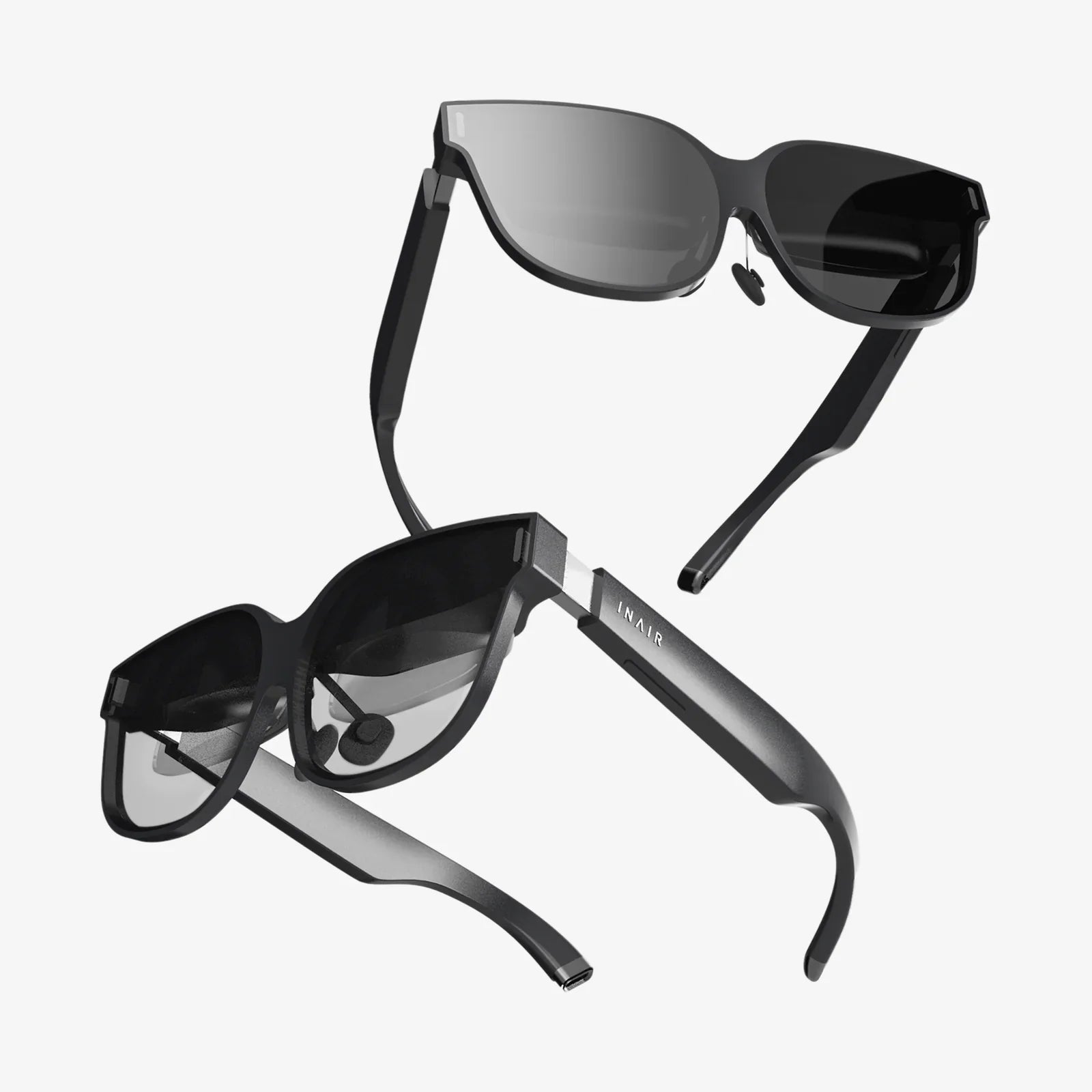
Imagine a world where your glasses do more than just help you see clearly—they connect you to a digital universe, monitor your health in real-time, and enhance your reality with a wealth of information, all while looking like a sleek, sophisticated accessory. This is no longer the realm of science fiction; it is the exciting and rapidly evolving present of advanced glasses. This technology is poised to revolutionize not just vision correction but human-computer interaction itself, moving us beyond the confines of handheld screens and into a future where digital augmentation is seamlessly integrated into our field of view.
The Evolution from Corrective Lenses to Computational Platforms
The journey of eyeglasses is a fascinating one, spanning centuries from the rudimentary reading stones of the medieval period to the precision-ground polycarbonate lenses of the late 20th century. For most of history, the primary function of glasses was singular: to correct refractive errors like myopia, hyperopia, and astigmatism. This was a passive role. The breakthrough of advanced glasses lies in their transformation from a passive optical device into an active computational platform. They incorporate micro-electronics, sophisticated sensors, and intricate software, all miniaturized to fit within the familiar form factor of eyewear.
Core Technologies Powering the Revolution
The magic of advanced glasses is built upon a convergence of several pioneering technologies. Understanding these components is key to appreciating their capabilities.
Wavefront Technology and Precision Optics
Beyond standard prescriptions, the most cutting-edge lenses utilize wavefront technology. This method creates an incredibly detailed map of the eye's entire optical system, capturing unique aberrations that traditional exams miss. This data is used to digitally design and surface a lens that provides vision of unprecedented sharpness and clarity, often surpassing what was previously thought possible, especially in low-light conditions.
Augmented Reality (AR) Displays
At the heart of the interactive experience is the AR display system. Several methods exist to project digital images onto the user's retina or into their field of view. Waveguide technology uses microscopic gratings etched into the lens to bend light from a tiny projector at the temple, creating bright, full-color images that appear to float in the real world. Other systems use micro-LEDs, which are incredibly small, efficient, and bright light sources, to paint images directly onto the retina. The result is a seamless blend of the physical environment and a digital overlay of information, directions, or virtual objects.
Sensor Fusion and Environmental Awareness
Advanced glasses are packed with a suite of sensors that act as their eyes and ears. High-resolution cameras capture the world. Depth sensors (like LiDAR or time-of-flight sensors) map the environment in 3D, understanding the distance and spatial relationship between objects. Inertial measurement units (IMUs) track head movement and orientation. Microphones listen for voice commands and ambient sound. Together, this constant stream of data allows the device to understand its environment and context, enabling interactions that feel intuitive and natural.
Onboard Processing and Connectivity
Processing all this sensor data in real-time requires significant computing power. Dedicated processing chips within the frames handle complex tasks like object recognition, spatial mapping, and running operating systems. For more intensive tasks, they connect seamlessly via Bluetooth and Wi-Fi to a companion device or directly to the cloud, ensuring the user has access to immense computational resources without any perceivable lag.
Advanced Materials and Battery Innovation
Housing this technology demands innovation in materials science. Frames are crafted from lightweight, yet durable, alloys and composites. Lenses are treated with adaptive electrochromic coatings that can instantly tint in bright sunlight, eliminating the need for separate prescription sunglasses. Perhaps the biggest challenge is power. Batteries are strategically embedded within the frames, often in the thicker temples, and are paired with power-management systems designed for all-day use, supported by efficient, low-power components and rapid charging solutions.
Transformative Applications Across Industries
The potential applications for advanced glasses extend far beyond consumer novelty, offering profound utility in professional and medical fields.
Healthcare and Surgery
Surgeons can overlay MRI or CT scan data directly onto their view of a patient during procedures, seeing critical structures beneath the surface. Medical students can learn anatomy through interactive 3D models. Professionals can access patient records hands-free, and remote experts can see what a local technician sees and provide guided assistance through annotations visible in their glasses.
Manufacturing, Logistics, and Field Service
Technicians can have repair manuals and schematic diagrams superimposed on the machinery they are fixing. Warehouse workers can see optimal picking routes and instantly verify items with visual recognition, drastically improving efficiency and accuracy. Engineers can visualize complex CAD models at full scale on the factory floor.
Accessibility and Enhanced Human Capability
For individuals with visual impairments, advanced glasses can identify and announce people, read text aloud from signs or documents, and highlight obstacles and changes in elevation on the ground. For those who are hard of hearing, they can provide real-time transcription of conversations, displaying subtitles as people speak. This technology has the power to break down barriers and provide a new level of independence.
Navigation and Contextual Information
Walking through a new city, a user can see directional arrows painted onto the sidewalk, get historical facts about a building by looking at it, or see the menu and ratings for a restaurant instantly. This contextual layer of information turns the entire world into an interactive, discoverable space.
Navigating the Challenges: Privacy, Design, and Society
Despite the immense promise, the path forward is not without significant hurdles that must be thoughtfully addressed.
The Privacy Paradigm
Devices with always-on cameras and microphones understandably raise serious privacy concerns. The potential for unauthorized recording and data collection is a critical issue. Manufacturers must implement clear, physical indicators that show when recording is active, robust data encryption, and user-centric privacy controls that give individuals complete ownership over their data. Societal norms and laws will need to evolve to govern the use of such technology in public and private spaces.
The Form Factor and Social Acceptance
For mass adoption, advanced glasses must be socially acceptable. They need to be lightweight, comfortable for all-day wear, and, crucially, stylish. The goal is to make the technology invisible, moving away from a bulky, obvious "tech" aesthetic to designs that people would want to wear even without the technology inside. Battery life remains a key constraint, and achieving a full day of active use is a primary engineering focus.
Digital Eye Strain and Long-Term Health
With screens positioned so close to the eyes, concerns about digital eye strain, headaches, and the long-term effects of persistent blue light exposure are valid. Research into display technologies that more naturally reflect light, like those using Laser Beam Scanning, and software that encourages regular breaks will be essential to ensuring user well-being.
The Future Vision: Where Do We Go From Here?
The trajectory of advanced glasses points toward even deeper integration with our lives and biology. We are moving towards interfaces controlled not by hand, but by thought and subtle eye movements, using sensors that detect neural signals or ocular intent. Holographic displays will create more realistic and immersive 3D visuals. Ultimately, the distinction between the device and the user will blur, becoming a true cognitive extension—a constant, intelligent companion that enhances perception, aids memory, and connects us to global knowledge without ever requiring us to look down.
The next time you see someone wearing a pair of stylish frames, look closer. They might be navigating a foreign city, learning a new skill, performing a complex surgery, or simply seeing the world with a clarity they never thought possible. Advanced glasses are not just a new gadget; they are a fundamental shift in our relationship with technology, offering a glimpse into a future where our reality is limited only by our imagination, and the line between the digital and physical worlds gracefully dissolves.
Share:
What Wearable Technology Is and How It's Reshaping Our Daily Lives
How Much Are The VR Headsets? A Complete Price Breakdown