Imagine a world where your computer doesn't just wait for your command; it anticipates your needs, understands your frustration in a sigh, and responds to the subtle gesture of your hand. This isn't science fiction—it's the emerging reality of advanced human computer interaction, a silent revolution that is fundamentally rewiring our relationship with technology, making it more intuitive, immersive, and intrinsically human than ever before.
From Punch Cards to Perceptive Partners: A Historical Pivot
The journey of human-computer interaction (HCI) is a story of abstraction. We began with the intricate, physical language of punch cards and batch processing, where users were distant programmers feeding instructions to room-sized machines. The advent of the command-line interface (CLI) was a leap forward, offering a textual dialogue, but it remained an esoteric language for specialists. The true paradigm shift arrived with the Graphical User Interface (GUI) and the mouse, pioneered in research labs and popularized in the 1980s. This 'desktop metaphor' made computing visual and direct, opening the digital world to billions. Yet, for all its brilliance, the GUI still required us to learn the machine's language, to point, click, and navigate within its confined digital space. Advanced HCI flips this script entirely. It's no longer about humans adapting to technology; it's about technology adapting to us. It marks the transition from a tool we operate to an environment we inhabit and an intelligent partner we collaborate with.
The Pillars of Modern Advanced HCI
This new era is built upon several converging technological pillars, each dissolving the barriers between the physical and digital realms.
Natural User Interfaces (NUIs)
NUIs move beyond the graphical user interface by leveraging interactions that feel innate and learned. The most prominent examples include touch, gesture, and voice control. Multi-touch screens transformed mobile devices into extensions of our fingers, while gesture recognition systems, using cameras and depth sensors, allow users to manipulate 3D models or navigate menus with a wave of the hand. Voice assistants have become ubiquitous, enabling a form of conversational computing where we speak naturally to control our environment, access information, and manage our lives. These interfaces succeed because they build upon skills we already possess, requiring little to no conscious learning curve.
Tangible and Embodied Interaction
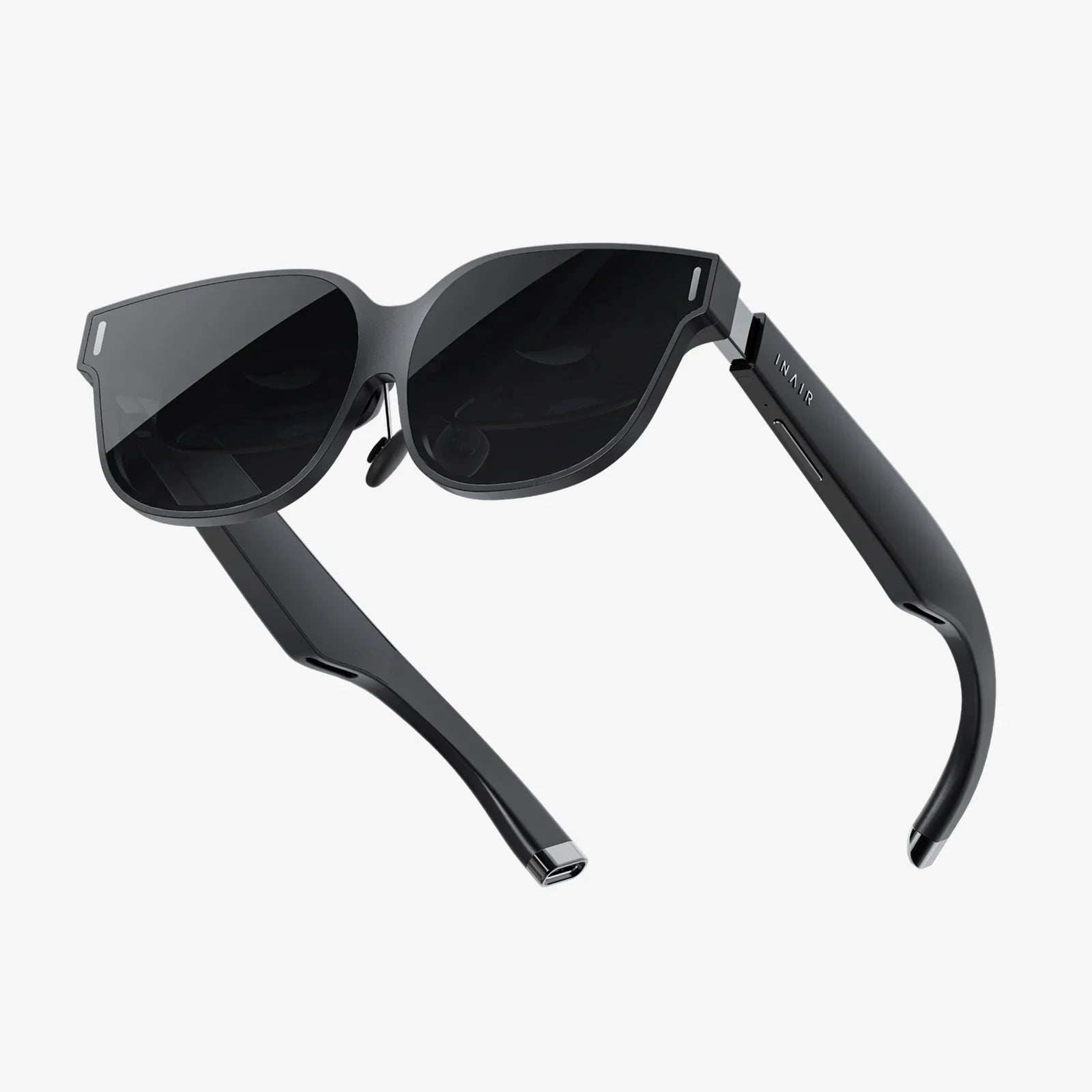
This pillar argues that intelligence is not just in our minds but is distributed across our bodies and the physical world. Tangible UIs give digital information a physical form, allowing users to manipulate data through everyday objects. Imagine adjusting a sound equalizer by twisting physical dials that control digital parameters or organizing files by physically grouping smart tokens on a table. Embodied interaction focuses on the entire body's role in the experience, as seen in virtual reality (VR) and augmented reality (AR). In VR, your physical movements—ducking, walking, reaching—directly translate into the digital world, creating a profound sense of presence. AR overlays digital information onto our physical surroundings, making the world itself the interface.
Context-Aware and Ambient Computing
Perhaps the most significant advancement is the shift from explicit command to implicit, context-aware interaction. Systems now use a symphony of sensors—GPS, accelerometers, microphones, cameras, and biometric scanners—to understand the context of the user. Your phone knows you're driving and simplifies its interface. A smart meeting room detects who is present and automatically loads their relevant files. Ambient computing envisions technology fading into the background, woven into the fabric of our environments, and proactively serving our needs without requiring direct input. The computer understands your context—where you are, what you're doing, and even your physiological state—to provide the right information at the right time in the right way.
Affective Computing: The Emotionally Intelligent Machine
This is the frontier where interaction becomes truly advanced. Affective computing aims to give machines the ability to recognize, interpret, and respond to human emotions. Using computer vision to analyze facial micro-expressions, vocal analysis to detect stress in a voice, and sensors to measure heart rate or galvanic skin response, systems can gauge a user's emotional state. An educational program could detect a student's confusion and adapt its teaching method accordingly. A car could sense driver fatigue and suggest taking a break. This moves interaction from a transactional exchange of commands to an empathetic dialogue, building trust and reducing frustration.
The Engine Room: AI and Machine Learning
None of these advancements would be possible without the rocket fuel of artificial intelligence and machine learning. AI is the silent brain behind advanced HCI. Machine learning algorithms power the speech recognition that turns mumbled words into text, the computer vision that tracks a user's gaze to determine focus, and the predictive models that anticipate the next app you'll open or the word you'll type. These systems learn from vast datasets of human behavior, continuously refining their models to become more accurate and personalized. They enable adaptivity, allowing interfaces to morph in real-time to suit an individual's preferences, abilities, and immediate tasks. AI is what transforms a simple sensor input into meaningful, contextual understanding.
Transforming Industries and Redefining Experiences
The impact of advanced HCI is not confined to research labs; it is reshaping every sector of society.
Healthcare and Accessibility
In healthcare, the implications are profound. Surgeons can manipulate 3D medical scans with gestures during operations, maintaining a sterile field. Patients with limited mobility can control wheelchairs or robotic arms using eye-tracking or brain-computer interfaces (BCIs). For individuals with disabilities, advanced HCI is not a convenience; it is a gateway to independence, enabling communication and control through alternative channels like breath, blink, or brainwaves. This field demonstrates the core tenet of advanced HCI: inclusivity, ensuring technology serves all of humanity.
Education and Training
Learning is becoming immersive and personalized. Medical students can practice complex procedures in risk-free VR simulations. History students can explore ancient Rome through AR overlays on their classroom. AI-powered tutors can adapt their teaching style in real-time based on a student's engagement and emotional cues, offering encouragement or presenting challenging concepts in a new way when frustration is detected.
The Future of Work
The corporate workspace is evolving into a collaborative hub unbounded by physical location. Architects and engineers across the globe can collaboratively manipulate 3D models in a shared virtual space as if they were physical objects. Data scientists can use tangible interfaces to visually explore complex datasets, spotting patterns that might be missed on a 2D screen. Advanced HCI is making remote collaboration more natural and effective than ever before.
Navigating the Ethical Labyrinth
With great power comes great responsibility. The very intimacy that makes advanced HCI so powerful also raises critical ethical questions. The constant data collection required for context-aware and affective systems—recording our voices, scanning our faces, tracking our movements—creates unprecedented privacy concerns. Where is this incredibly personal data stored? Who has access to it? How is it used? The potential for bias in AI algorithms is another major risk. If a system is trained on non-representative data, it could fail to recognize emotions or speech patterns from certain demographics, perpetuating inequality and exclusion. There is also a danger of manipulation; an interface that knows your emotional state could be used to exploit your vulnerabilities, influencing your purchases or opinions. Establishing robust ethical frameworks, transparent data policies, and ensuring user agency and consent are not optional extras; they are the foundational requirements for building a future with advanced HCI that benefits all of humanity.
The Horizon: What Lies Beyond the Screen?
So, what does the future hold? We are moving towards a world of zero-UI, where interfaces become invisible, embedded in our environment and woven into our daily rituals. Brain-computer interfaces, once the domain of medical research, are progressing rapidly, promising a future where we could control devices with pure thought. Haptic technology will evolve to simulate the texture and resistance of digital objects, making virtual worlds feel tangibly real. The ultimate goal is a seamless symbiosis between human and machine intelligence, where technology acts as a silent, intuitive extension of our own cognition and will.
The age of staring blankly at a static screen, fumbling for a mouse, is rapidly receding into history. Advanced human computer interaction is ushering in a new paradigm—one of fluid conversation, empathetic response, and seamless integration into the human experience. The question is no longer what we can make the machine do, but what we can accomplish together when the machine truly understands us.