


- by wangfred
Advancements in Augmented Reality: Redefining Our Interaction With the Digital World
- by wangfred
Imagine a world where the line between the digital and the physical doesn't just blur—it vanishes. Where information, guidance, and entertainment are not confined to a screen in your hand but are woven seamlessly into the very fabric of your environment, accessible with a glance, a gesture, or a spoken word. This is no longer the realm of science fiction; it is the imminent future being built today through the breathtaking and rapid advancements in augmented reality. We are standing on the precipice of a fundamental shift in human-computer interaction, a revolution that promises to transform everything from how we work and learn to how we connect and play.
The public's first widespread encounter with AR often came in the form of whimsical social media filters or a popular mobile game that had millions chasing digital creatures in city parks. While these applications were phenomenally successful in introducing the concept, they represented only the faintest whisper of AR's true potential. They were often clunky, requiring a handheld device to act as a clumsy window into the augmented world, and the digital overlays frequently lacked precise alignment with the physical environment.
The recent advancements in AR have systematically dismantled these limitations. The field has matured from a novel gimmick into a sophisticated stack of technologies focused on utility, immersion, and seamless integration. The goal is no longer just to superimpose a digital object but to make it behave as if it truly belongs in the real world—obeying the laws of physics, interacting with real objects, and remaining persistently anchored in space. This shift is powered by concurrent breakthroughs across multiple disciplines, creating a powerful synergy that is accelerating development at an unprecedented pace.
The modern AR experience is underpinned by a complex orchestra of hardware and software innovations, each playing a critical role in creating a convincing and useful augmentation.
At the heart of modern AR is the concept of spatial computing—the ability of a device to understand and interact with the three-dimensional space around it. This is primarily achieved through Simultaneous Localization and Mapping (SLAM) algorithms. SLAM allows a device to simultaneously map an unknown environment while tracking its own location within that map in real-time. Early SLAM was computationally intensive and prone to error. Today, advancements in computer vision and on-device processing power have made it incredibly fast and accurate.
This is further enhanced by depth sensing technologies, such as LiDAR (Light Detection and Ranging) scanners and structured light systems. These sensors project thousands of invisible points onto a scene to create a precise depth map, allowing the AR system to understand the geometry of a room, the shape of a couch, or the contour of a person's face with millimeter accuracy. This deep environmental understanding is what allows a virtual character to convincingly walk behind your real-world desk or a digital lamp to cast realistic shadows on your floor.
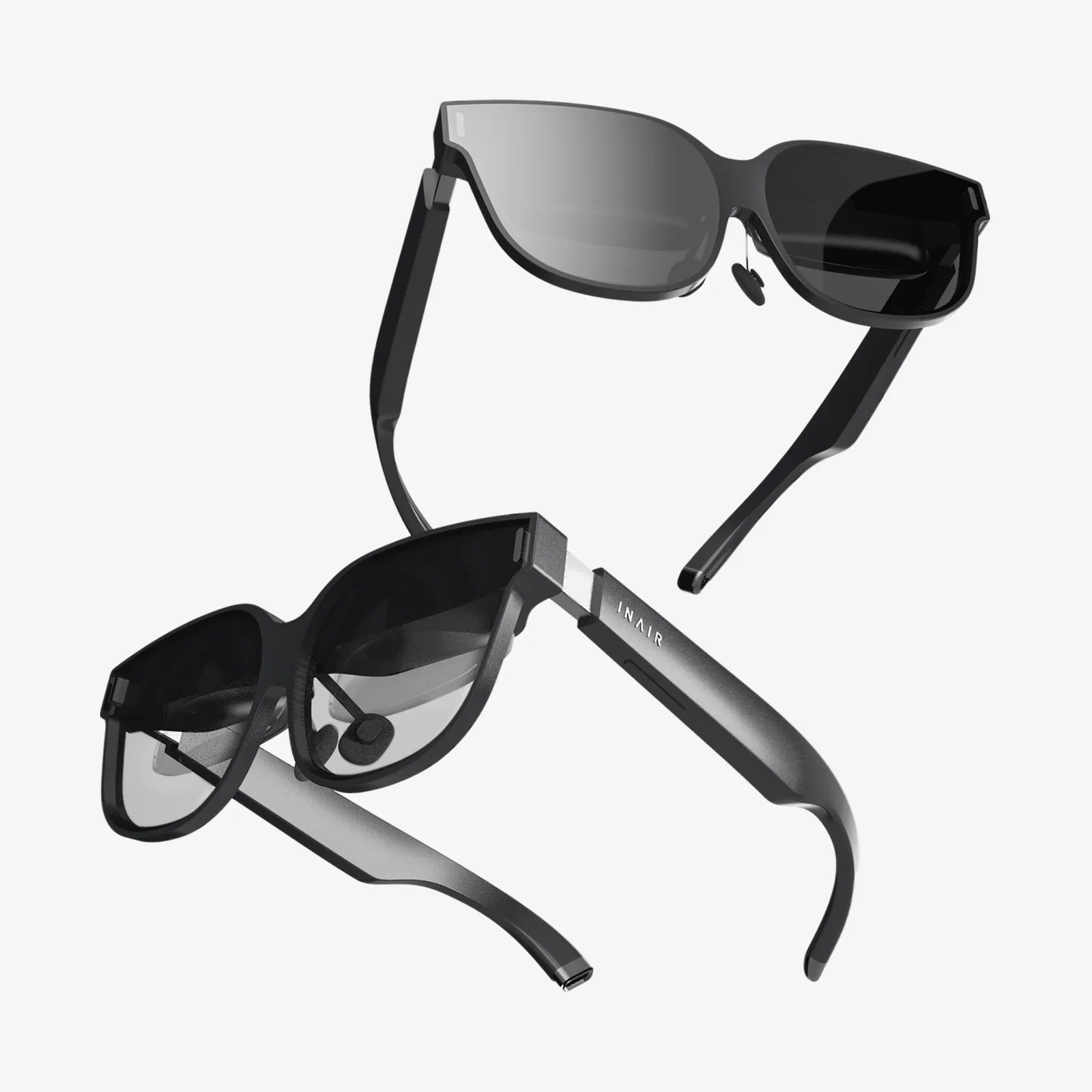
While smartphones served as the initial launchpad for AR, the future lies in wearable technology. Head-Mounted Displays (HMDs) and smart glasses are undergoing a radical transformation, shedding their bulky, prototype aesthetics for designs that are increasingly sleek, socially acceptable, and powerful.
The optical systems within these devices represent a monumental leap forward. Waveguide technology, including holographic and diffractive waveguides, allows digital images to be projected directly into the user's field of view without the need for large, heavy lenses. These systems are becoming more efficient, offering wider fields of view, higher resolution, and better contrast—all crucial for creating immersive and readable overlays. Furthermore, advancements in microLED displays promise to deliver the brightness and energy efficiency required for all-day wearable use.
Artificial intelligence is the brain that gives AR its contextual intelligence. Machine learning models, particularly those for computer vision, are trained on vast datasets to perform real-time object recognition. Your AR device doesn't just see a flat surface; it can identify it as a specific model of printer, a historical monument, or a complex engine component.
AI enables semantic understanding. It allows the system to not only identify an object but also understand its function and context. For instance, pointing your device at a car's engine could trigger AR overlays that label each part, while pointing it at a restaurant's facade could display its menu and reviews. AI also powers gesture and gaze tracking, creating intuitive hands-free interfaces where users can select, move, or manipulate digital content with natural motions or simply by looking at it.
The computationally intensive nature of high-fidelity AR, especially when powered by complex AI models, presents a significant challenge for the limited battery and processing capacity of wearable devices. This is where next-generation connectivity and distributed computing come into play.
The high bandwidth, low latency, and massive connectivity capabilities of 5G networks are a perfect match for AR's demands. They allow for offloading heavy processing tasks to powerful cloud servers, a concept known as cloud rendering. The user's wearable device can stream incredibly detailed and complex AR experiences in real-time, much like streaming a 4K movie, without needing the onboard hardware to generate it all. This is augmented by edge computing, which processes data closer to the user than traditional cloud data centers, slashing latency to imperceptible levels and ensuring instantaneous response—a non-negotiable requirement for AR interactions that feel natural and responsive.
The convergence of these technologies is already yielding transformative applications across a wide spectrum of industries, moving far beyond entertainment.
Perhaps the most significant impact of AR is happening in the industrial sector. Technicians wearing AR smart glasses can see step-by-step repair instructions overlaid directly onto the machinery they are fixing, highlighting exactly which bolt to turn and which wire to check. This reduces errors, slashes training time, and improves efficiency. In manufacturing, digital twins—virtual replicas of physical systems—can be projected onto the factory floor, allowing engineers to visualize processes, simulate changes, and identify bottlenecks before implementing them in the real world. Remote experts can see what an on-site worker sees and provide visual guidance from anywhere on the globe, saving immense time and travel costs.
In medicine, AR is becoming a powerful tool for both education and practice. Medical students can explore detailed, life-sized holograms of the human anatomy from every angle, peeling back layers of muscle, tissue, and organs. Surgeons can use AR overlays during procedures to visualize critical information like a patient's vasculature or the precise location of a tumor directly on their body, without ever needing to look away from the operating field. This enhances precision and improves patient outcomes.
The retail experience is being fundamentally reshaped. Customers can use their smartphones or AR mirrors to virtually try on clothes, glasses, or makeup without ever touching a physical product. Furniture retailers allow shoppers to place true-to-scale 3D models of sofas, tables, and decor into their own living rooms to see how they fit and match their existing space before making a purchase. This bridges the gap between online shopping's convenience and the confidence of an in-store experience, reducing return rates and increasing customer satisfaction.
AR turns any environment into an interactive learning space. History students can witness historical events unfold around them on the school playground. Chemistry students can manipulate and combine virtual molecules on their desk. Mechanics-in-training can practice complex repairs on a digital engine, making mistakes without costly consequences. This experiential learning leads to dramatically improved engagement, retention, and understanding of complex subjects.
Despite the incredible promise, the path to a fully augmented world is not without significant hurdles and profound ethical questions.
Technical challenges remain, particularly in achieving all-day battery life in a wearable form factor that is both powerful and socially acceptable. Creating photorealistic digital content that interacts flawlessly with a dynamic and unpredictable physical world is an immense ongoing challenge.
However, the larger concerns are societal. The collection of vast amounts of visual and spatial data through AR devices raises monumental privacy and security issues. Who owns the data of what you see and where you go? How is it stored and used? The potential for constant surveillance and data harvesting is unprecedented.
Furthermore, the concept of attention is called into question. If digital notifications and information are constantly competing for our visual field, will we lose our ability to focus on the physical world and the people in it? The advent of advertising and spam in our AR field of view could create a new form of intrusive marketing. There is also the risk of a new digital divide, where access to these powerful AR tools creates a gap between those who can afford them and those who cannot, in education, the workplace, and daily life.
Finally, the ability to alter our perception of reality itself is a double-edged sword. While it can be used for incredible good, it also has the potential for misinformation and manipulation on a scale never before seen. Different people in the same location could be seeing entirely different versions of reality, a concept known as reality divide, which could have serious social and political ramifications.
The journey of augmented reality is a testament to human ingenuity, a story of disparate technologies converging to create something far greater than the sum of their parts. We are moving from a world of isolated pixels on a glass slate to a future where information is contextual, intuitive, and embedded in our surroundings. The device itself is fading into the background, and the experience is moving to the forefront. This is not just an upgrade to our gadgets; it is an upgrade to our very perception, offering a new lens through which to understand and interact with the world. The door to this new reality is now open, and the first steps inside are revealing a landscape of limitless possibility, waiting not to be viewed, but to be lived.
Share:
2025 Augmented Reality Interaction Trends: A New Era of Digital Intimacy
Augmented Reality Examples Android: Transforming Your Smartphone's Reality