


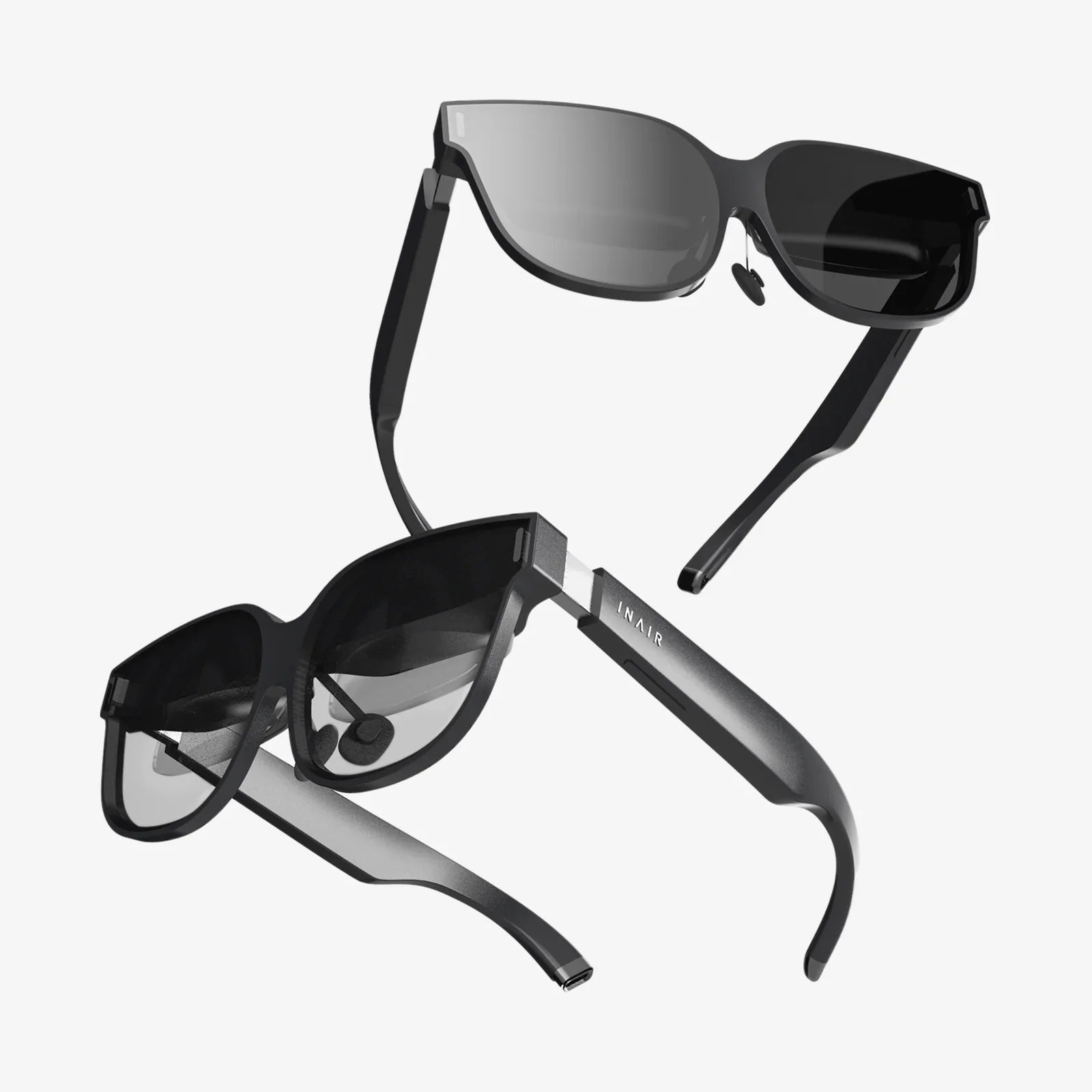
Imagine a world where digital information doesn’t confine you to a screen but instead, flows seamlessly into your physical environment, enhancing everything you see, do, and learn. This is no longer a futuristic dream; it’s the tangible promise held within the sleek, sophisticated frames of modern augmented reality headsets. These devices are poised to fundamentally alter our interaction with technology, data, and each other, offering a glimpse into a future where the digital and physical coalesce into a single, enhanced reality. The journey into this new dimension of experience is just beginning, and the advantages are as vast as they are transformative.
Beyond the Hype: Defining the Augmented Advantage
At its core, an augmented reality headset is a wearable computer that projects digital imagery and information onto the user's field of view, effectively overlaying a data-rich layer onto the real world. Unlike fully immersive virtual reality, which replaces your environment, AR enhances it. This fundamental distinction is the source of its greatest strengths. The advantages of this technology are not merely incremental improvements on existing paradigms; they represent a foundational shift in human-computer interaction, moving us from looking at technology to looking through it into an augmented world of possibilities.
Revolutionizing the Industrial and Manufacturing Landscape
Perhaps the most immediate and impactful advantages of AR headsets are found within professional and industrial settings, where they are already driving unprecedented gains in efficiency, accuracy, and safety.
Supercharging Productivity and Complex Tasks
Imagine a technician tasked with repairing a complex, unfamiliar piece of machinery. Instead of constantly shifting their gaze between the equipment and a physical manual or a tablet, digital instructions, 3D diagrams, and animated guides are superimposed directly onto the components they are working on. This hands-free access to contextual information drastically reduces task completion time, minimizes errors, and significantly lowers the cognitive load on the worker. Assembly line workers can see exactly which part goes where, warehouse pickers can have optimal routes and item locations highlighted in their vision, and architects can walk through full-scale 3D models of their designs long before ground is broken.
Unprecedented Remote Collaboration and Expert Guidance
Geographical barriers dissolve with AR. A seasoned expert located thousands of miles away can see exactly what a field technician sees through a shared visual feed. The expert can then annotate the real world in real-time, drawing arrows, highlighting components, and providing guidance as if they were standing right there. This "see-what-I-see" capability slashes travel costs, reduces equipment downtime, and allows organizations to leverage their top talent instantly, anywhere on the globe. This transforms training and mentorship, enabling novice employees to learn complex procedures on the job with virtual oversight.
Enhancing Safety and Situational Awareness
In hazardous environments, information is the key to safety. AR headsets can provide workers with constant, contextual data about their surroundings—displaying warning signs for high-temperature surfaces, highlighting potential trip hazards, or overlaying structural stress points on a construction site. For firefighters, thermal imaging data can be projected onto their view, allowing them to see through smoke. This constant stream of relevant environmental data creates a heightened state of situational awareness, helping to prevent accidents and save lives.
Transforming Education and Lifelong Learning
The educational potential of AR headsets is staggering, moving learning from passive absorption to active, immersive exploration.
Interactive and Immersive Learning Experiences
Textbooks become dynamic portals. A student studying anatomy can walk around a life-sized, beating human heart, peeling back layers to understand its structure. History lessons are transformed as students witness historical events unfold around them in their classroom. Abstract concepts in physics and chemistry become tangible, interactive models that learners can manipulate with their hands. This experiential learning paradigm boosts engagement, improves knowledge retention, and caters to a variety of learning styles.
Skill Development and Professional Training
From medical students practicing complex surgical procedures on virtual patients to mechanics learning to rebuild an engine, AR provides a risk-free, repeatable, and cost-effective training sandbox. Trainees can make mistakes without real-world consequences, receiving instant feedback and guidance from the system. This accelerates the learning curve and creates a more highly skilled workforce across countless trades and professions.
Redefining Social Connection and Entertainment
While professional applications are compelling, the advantages of AR headsets will profoundly reshape our personal lives, how we connect with others, and how we entertain ourselves.
A New Dimension of Communication and Presence
Future video calls will feel less like staring at a grid of faces on a screen and more like sitting in the same room with holographic representations of loved ones or colleagues. AR can project realistic, life-sized avatars into your space, enabling natural eye contact and body language, creating a powerful sense of shared presence and co-presence that is impossible with current technology. This has the potential to combat the isolation of remote work and connect families across continents in a more meaningful way.
The Future of Gaming and Interactive Media
Gaming will explode beyond the television and into your living room, backyard, and city streets. Imagine defending your home from an alien invasion that appears to be happening on your street, or solving a puzzle game that uses your entire house as the game board. AR transforms the entire world into a playground, encouraging physical movement, social interaction in shared physical spaces, and entirely new genres of location-based entertainment that blend narrative with reality.
Personalized Experiences and Live Event Enhancement
Attending a live sports game or concert will be a completely customized experience. With an AR headset, you could pull up real-time player stats that hover over the field, choose from different camera angles, or even have a virtual replay appear right on the court in front of you. At a museum, exhibits can come alive, with artifacts telling their own stories and paintings animating to explain their history. The experience becomes personalized and deeply informative.
Empowering Daily Life and Personal Productivity
On an individual level, AR headsets promise to become the ultimate personal assistant, seamlessly integrated into the fabric of our daily routines.
The Ultimate Contextual Computing Interface
This technology has the potential to make the smartphone obsolete by providing information exactly when and where you need it. Walking through a foreign city? Directional arrows are painted onto the street, and restaurant reviews and ratings float next to their entrances. Cooking a new recipe? The instructions and timers appear right next to your mixing bowl. Your entire digital world—messages, notifications, calendars—can be pinned virtually in your space, accessible with a glance but not intrusive, allowing you to stay connected without being disconnected from your environment.
Accessibility and Overcoming Limitations
The assistive potential is profound. For individuals with visual impairments, AR could highlight curbs, identify obstacles, and read out text from signs. For those with hearing impairments, real-time speech-to-text transcription could be displayed within their field of view during conversations. AR can provide cognitive assistance by reminding users of names, tasks, or sequences, acting as a powerful tool for empowerment and independence for millions of people.
Navigating the Challenges and Looking Ahead
Of course, this future is not without its challenges. Widespread adoption hinges on overcoming hurdles related to social acceptance, privacy concerns, data security, and ensuring the hardware becomes comfortable, stylish, and affordable for the mass market. The ethical implications of a world where digital content is persistently layered over reality must be carefully considered and addressed.
Yet, the trajectory is clear. The advantages of AR headsets point toward a more efficient, knowledgeable, connected, and empowered society. We are moving toward a paradigm of ambient computing, where technology understands the context of our world and serves us within it, rather than demanding our full attention on a isolated screen. This is not about escaping reality, but about enhancing it, enriching our perceptions, and expanding our capabilities. The headset is merely the window. The real magic begins when we look through it and see not just a new device, but a new way of being, working, and playing in a world where anything is possible.
Share:
VR Headset Age Appropriate Guidelines Every Parent Must Know
VR Headset Age Appropriate Guidelines Every Parent Must Know