Imagine a world where digital information doesn't just live on a screen in your hand but is seamlessly woven into the very fabric of your reality, accessible instantly, intuitively, and without breaking the bank. This is no longer the distant dream of science fiction; it is the imminent promise of 2025's most exciting tech revolution: affordable AI glasses with premium features. For years, the concept of smart eyewear has been tantalizing, yet perpetually out of reach for the average consumer, either due to prohibitive costs, clunky designs, or underwhelming functionality. But a seismic shift is underway, driven by rapid advancements in micro-optics, machine learning, and manufacturing. The coming year is poised to deliver a new class of device that democratizes augmented intelligence, offering a glimpse into a future where powerful AI assistance is as commonplace and essential as the smartphone is today. The barrier between the digital and physical is about to dissolve, and it will happen through a pair of glasses you can actually afford.
The Convergence: How Premium Became Affordable
The journey to affordable premium AI glasses is a story of technological convergence. Several independent fields of innovation have matured simultaneously, creating a perfect storm that allows for high-end features to be produced at a fraction of their previous cost.
First, and perhaps most critically, are the breakthroughs in waveguide optics. This technology, which was once a costly military and enterprise-grade secret, is now being manufactured at scale. These transparent lenses can project high-resolution images directly into the user's field of view without obstructing their vision. Advances in nano-imprinting and holographic film have drastically reduced the cost of these complex optical elements, making a crystal-clear augmented overlay a standard feature rather than an expensive luxury.
Second, the silicon powering these devices has become both incredibly powerful and remarkably efficient. The proliferation of dedicated neural processing units (NPUs) in compact chip designs means 2025's AI glasses can perform complex on-device AI computations without draining the battery or requiring a constant tether to a phone. This onboard intelligence is what enables real-time translation, object recognition, and contextual information retrieval instantly and privately.
Finally, the software ecosystem has matured. Developers now have access to robust AR software development kits (SDKs) and standardized platforms, making it easier to create compelling applications. This growing app ecosystem increases the inherent value of the hardware, justifying the investment for consumers and creating a virtuous cycle of innovation and adoption.
Defining "Premium" in the 2025 Landscape
So, what exactly constitutes a "premium feature" in this new, accessible context? The definition has evolved from mere technical specs to a holistic user experience.
Visual Fidelity and Comfort
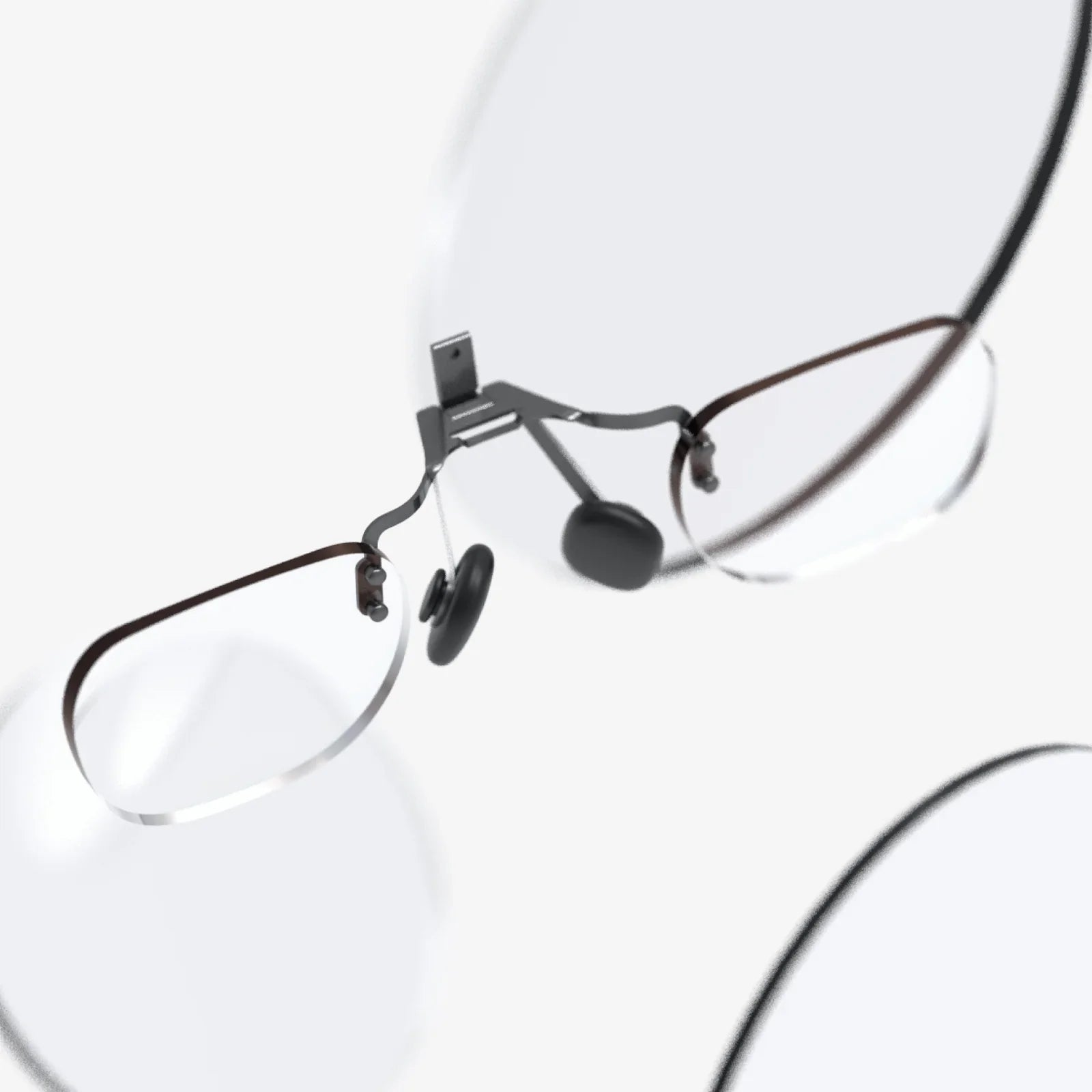
Gone are the days of dim, narrow field-of-view displays that felt like looking through a postage stamp. Premium in 2025 means a bright, high-resolution display that can be easily viewed in direct sunlight, with a field of view wide enough to feel immersive for reading text and viewing interactive elements. Crucially, this visual experience is coupled with all-day comfort. Manufacturers are utilizing lightweight, flexible polymers and bespoke, adjustable nose pads to create glasses that people forget they're wearing. They are designed to be indistinguishable from high-end traditional eyewear, coming in a variety of shapes and styles to suit personal taste, rather than screaming "tech gadget."
Advanced On-Device AI and Spatial Awareness
True premium intelligence means the glasses understand not just what you ask, but also the context of your surroundings. This is enabled by a sophisticated suite of sensors—including high-resolution cameras, depth sensors, and microphones—all working in concert.
-
Real-Time Translation and Transcription: Conversations with someone speaking another language happen with near-instant subtitles appearing in your vision. Lectures and meetings can be transcribed live, with key points highlighted.
-
Contextual Object Recognition: Look at a landmark to get its history, scan a restaurant menu to see reviews and dietary tags, or identify a plant in your garden. The AI proactively serves information relevant to what it sees.
-
Spatial Audio and Personal Assistance: Audio is delivered through micro-speakers that create a private soundscape without isolating you from your environment. Your AI assistant can whisper notifications, read messages, or provide navigation cues directly into your ears without needing headphones.
Seamless Connectivity and Battery Life
Premium features are useless without reliable power and connectivity. 2025's devices are moving beyond simple Bluetooth tethering. Many will feature embedded 5G connectivity, allowing them to operate as standalone devices when necessary. Battery technology has also seen incremental but vital improvements. Through efficient components and innovative charging solutions like solar-sensitive frames or ultra-compact docking cases that provide multiple full charges, the goal is a device that can last from morning until night on a single charge.
The Impact: Transforming Everyday Life
The proliferation of affordable, capable AI glasses will have a profound impact on how we work, learn, and navigate the world.
In the workplace, field technicians will have schematics and expert guidance overlaid on complex machinery they are repairing. Surgeons could have vital signs and 3D anatomical guides visible during procedures. Warehouse workers will see optimized picking routes and inventory data, dramatically improving efficiency.
For education and accessibility, the implications are staggering. Students could explore historical events through immersive recreations happening right in their classroom. Individuals with visual impairments could receive enhanced auditory descriptions of their surroundings, while those with hearing difficulties could rely on flawless real-time captioning of every conversation.
In our social lives, these glasses will change how we consume content and connect with others. Instead of staring down at a phone during a concert, you might see a setlist and artist info floating subtly by the stage. Navigating a new city becomes intuitive, with directional arrows painted onto the sidewalk itself.
Navigating the New Frontier: Privacy and Social Etiquette
Of course, this new always-on, always-sensing technology brings legitimate concerns. The prospect of people wearing cameras and microphones on their faces raises critical questions about privacy and consent. The industry's success hinges on addressing these concerns head-on with transparent design.
Premium features in 2025 must include privacy-by-design. This means obvious physical recording indicators (like a bright LED light) that cannot be disabled, strict on-device data processing that doesn't stream video to the cloud unnecessarily, and clear, user-controlled permissions for every app. Social acceptance will also require the development of new etiquettes—unspoken rules about when it is and isn't appropriate to use such immersive technology in public spaces.
The Future is Clear
The stage is set for 2025 to be remembered as the year augmented reality stepped out of the lab and into the mainstream. The convergence of affordable manufacturing, powerful miniature computing, and intelligent software has finally broken the long-standing trade-off between cost and capability. We are entering an era where sophisticated AI, capable of enhancing our perception and understanding of the world, will be available to everyone. This isn't just about a new gadget; it's about fundamentally expanding human potential. The tools to augment our reality, to learn, work, and connect in ways we've only imagined, are being polished, priced for the masses, and prepared for their debut. Get ready to see the world, and your place within it, in a whole new light.


Share:
VR If You Wear Glasses: The Ultimate Guide to a Perfect Fit
Augmented Reality and Elementary Education: Transforming Classrooms into Interactive Learning Hubs