


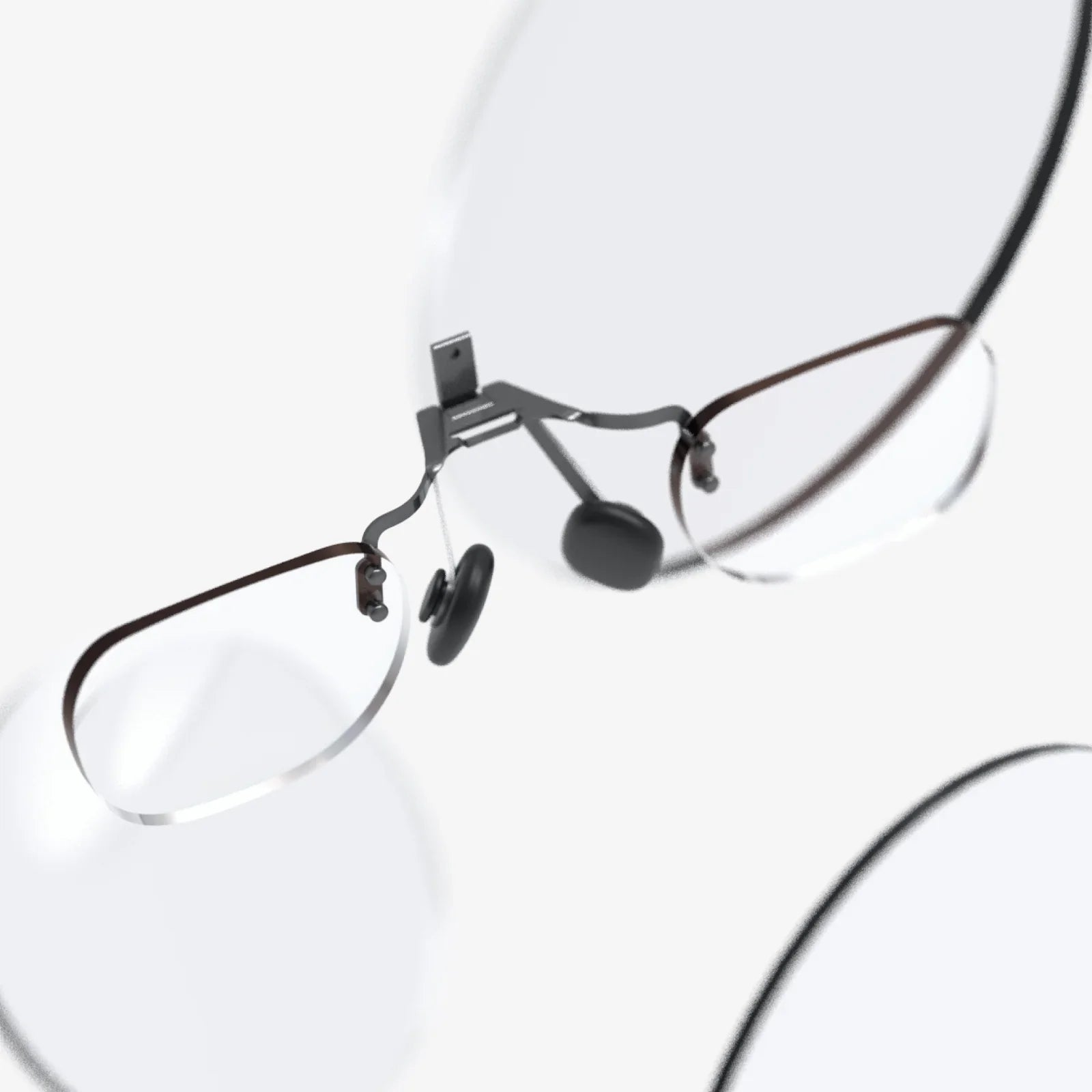
Imagine a world where digital information doesn't live on a screen in your hand, but is seamlessly woven into the fabric of your reality. Directions float on the sidewalk ahead of you, a recipe hovers next to your mixing bowl without a smudge, and a virtual colleague sits across your real kitchen table. For years, this vision of augmented reality was a futuristic fantasy, tethered to powerful computers and priced for deep-pocketed developers. But a seismic shift is underway. The era of prohibitive cost and clunky prototypes is giving way to a new dawn of accessibility. Affordable AR glasses are no longer a distant promise; they are arriving on the market, and they are poised to fundamentally alter how we work, learn, play, and connect.
The Technological Leap Making It Possible
The journey to affordability is a story of relentless innovation and engineering ingenuity. Early AR headsets were marvels of technology but were burdened by complex optical systems, powerful processing requirements, and low-yield manufacturing processes. The path to a lower price point has been paved by advancements in several key areas.
Waveguide Displays: The Magic of Miniaturization
At the heart of any AR glasses is the display system—how digital light is projected into your eyes. The breakthrough technology enabling sleeker, cheaper designs is the optical waveguide. Think of a waveguide as a incredibly thin piece of glass or plastic that acts like a highway for light. A micro-display projector, often using LEDs or lasers, injects light into the edge of this waveguide. Through a process of total internal reflection and diffraction (using microscopic gratings), the light is bounced around inside the waveguide until it's directed outwards into the user's eye.
The advantage is profound: it allows the bulky projection components to be moved to the temples of the glasses, leaving the lenses thin and relatively normal-looking. As manufacturing techniques for these nanoscale gratings have improved, yields have gone up and costs have plummeted, making this once-exotic technology feasible for consumer products.
The Rise of Smartphone-Powered AR
Another critical factor in reducing cost is the shift in processing power. Instead of building expensive, power-hungry processors and batteries into the glasses themselves, many affordable models opt for a tethered or companion approach. The glasses act as a sophisticated display, while your smartphone—a device you already own and upgrade regularly—becomes the brain.
Your phone handles the heavy lifting: running the AR software, tracking your position in space via its cameras and sensors, connecting to the internet, and pumping the visual data to the glasses. This symbiotic relationship dramatically cuts the bill of materials for the glasses, stripping them down to the essential components: optics, sensors for basic tracking, and a simple interface. It's a clever way to leverage existing, widespread technology to bootstrap the AR revolution.
Economies of Scale and Strategic Design
As the industry matures, component suppliers are achieving economies of scale. Mass production of micro-displays, inertial measurement units (IMUs), and miniature cameras is bringing down costs across the board. Furthermore, companies are making strategic design choices to hit a price point. This might mean opting for a smaller field of view (FOV), monochrome displays instead of full color, or focusing on specific use cases rather than trying to be an all-in-one device. This focus allows for a more streamlined and cost-effective product.
Beyond the Price Tag: What "Affordable" Really Means
"Affordable" is a relative term, but in the context of AR glasses, it signifies a crucial transition. It's moving from a price point measured in thousands of dollars, reserved for enterprise and specialist applications, to one measured in hundreds—a range accessible to curious consumers and small businesses.
This affordability unlocks a different mindset. When a device costs as much as a high-end laptop, its use must be justified for specific, high-value tasks. When it costs as much as a premium pair of sunglasses or a gaming console, it enters the realm of experimentation, casual use, and spontaneous creativity. It becomes a platform for developers to truly innovate upon, knowing there is a potential mass audience for their applications. This creates a virtuous cycle: more users attract more developers, who create better apps, which in turn attracts more users.
A World Transformed: Applications of Accessible AR
The true potential of affordable AR glasses is realized not in the technology itself, but in the applications it enables. By putting a persistent, hands-free digital layer over the world, these devices can enhance nearly every aspect of daily life.
Productivity and Remote Collaboration
The way we work is already distributed, but collaboration often feels distant and impersonal through a flat video call. Affordable AR can change that. Imagine a remote expert being able to see what a field technician sees and draw annotated arrows and diagrams directly into their field of view to guide a repair. Colleagues in different countries could collaborate on 3D models as if they were physically present in the same room, manipulating a holographic design with their hands. For the everyday user, it could mean having multiple virtual monitors available anywhere you go, turning a coffee shop table into a multi-screen workstation.
Navigation and Contextual Information
Say goodbye to the awkward dance of holding up your phone to follow a blue dot on a map. With AR glasses, turn-by-turn directions can be superimposed onto the real world, with giant floating arrows indicating the correct path. This extends beyond driving to walking tours in a new city, where historical facts and building names could pop up as you look around. At the supermarket, your shopping list could highlight the aisle and exact shelf where your items are located.
Education and Interactive Learning
Learning becomes an immersive, interactive experience. Anatomy students could walk around a life-sized, beating holographic heart. History students could witness historical events unfold on their desk. Mechanics could learn to repair an engine by following step-by-step instructions that identify each part and show the correct tools to use. This hands-on, visual learning style can dramatically improve comprehension and retention.
Entertainment and Gaming
The success of mobile AR games proved there's a massive appetite for blending gameplay with the real world. Affordable glasses will take this to the next level. Instead of holding up a phone, your entire world becomes the playground. You could have a virtual pet that follows you around, defend your living room from an alien invasion, or watch a movie on a virtual IMAX screen projected onto your wall. Social AR experiences will allow friends to play games and share digital experiences together in the same physical space, regardless of distance.
Navigating the Challenges Ahead
The path forward is not without its obstacles. For affordable AR glasses to achieve mainstream success, several challenges must be addressed.
- Battery Life and Performance: Balancing a full day of use with a sleek, comfortable form factor is incredibly difficult. Efficient power management is paramount.
- Social Acceptance and Design: Glasses need to be something people actually want to wear. This means prioritizing fashion, comfort, and a range of styles to suit different tastes. The goal is to avoid the geeky, isolating look of early head-mounted displays.
- Privacy and Ethics: Devices with always-on cameras and microphones understandably raise privacy concerns. Clear and transparent data policies, user controls over recording, and visual indicators when recording is active will be essential to build public trust.
- The Killer App: While many use cases are compelling, the industry is still searching for that one undeniable application that drives everyone to want a pair.
The Future is Clear, and It's Augmented
We are standing at the precipice of the next major computing platform shift. Just as the graphical user interface and the smartphone changed everything, affordable augmented reality promises to redefine our relationship with technology. It’s a shift from looking at a device to looking through it into an enhanced world.
The initial wave of affordable AR glasses may not be perfect. They might have limited fields of view, rely on your phone, and offer a curated set of apps. But that's how all transformative technology begins. It starts accessible, iterates rapidly, and evolves based on how real people use it in their real lives. The barrier to entry has been shattered. The promise of a digital layer seamlessly integrated into our physical existence is no longer science fiction reserved for the wealthy or the well-funded. The tools to build and experience that future are now within reach, and they are only going to get better, smarter, and more integrated into the tapestry of our everyday lives. The real world is about to get a massive upgrade, and you won't need to break the bank to see it.
Share:
Work Smarter with AI: The Ultimate Guide to Boosting Your Productivity
What Is The Most Powerful AI? The Unseen Giants Reshaping Our World