


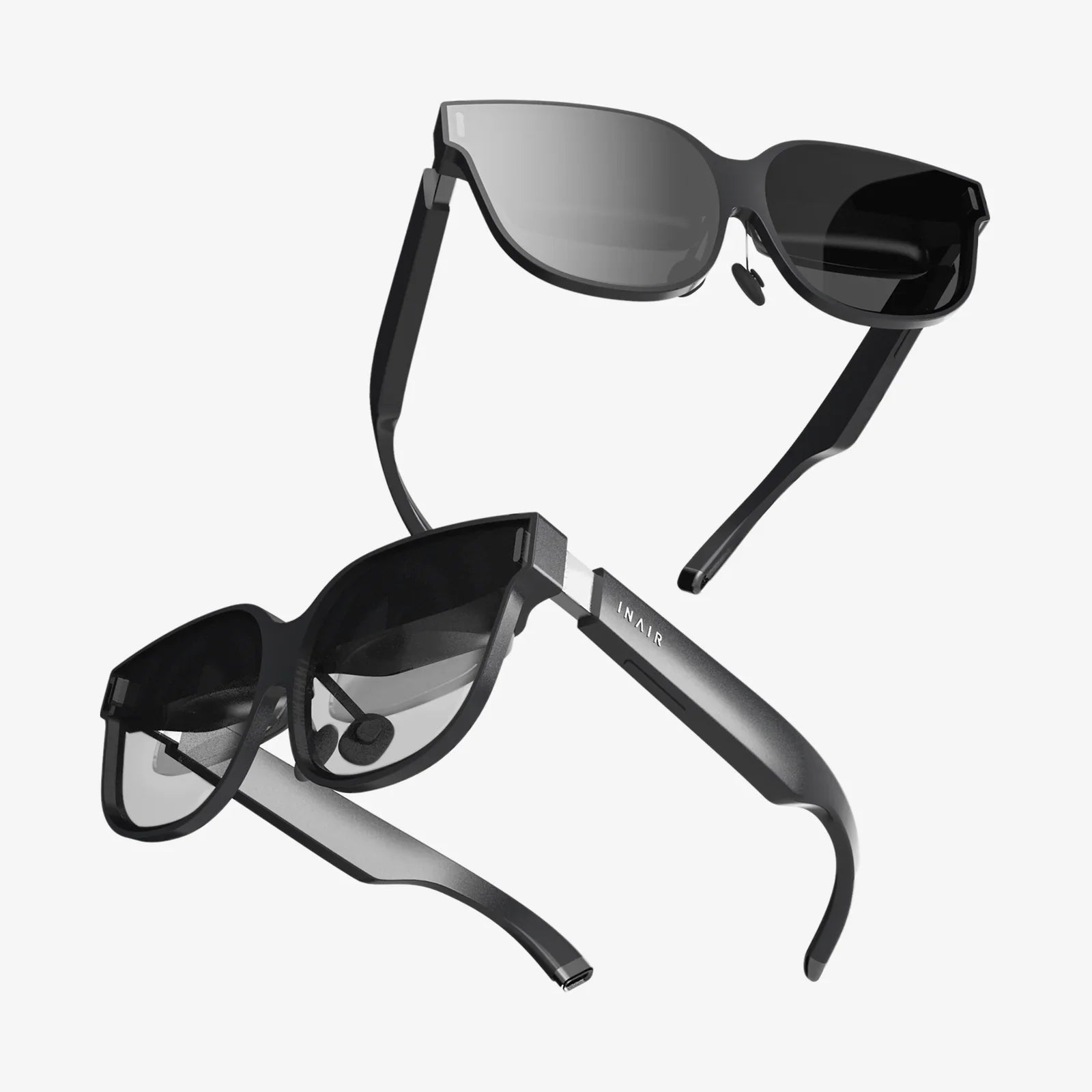
- by wangfred
Affordable AR VR Glasses: Democratizing the Future of Immersive Technology
- by wangfred
Imagine slipping on a pair of sleek glasses and instantly overlaying a virtual workspace with multiple floating monitors onto your cluttered desk, or being transported from your living room to the front row of a concert happening across the globe. For years, such experiences were promised by the tech industry, but they remained locked behind a formidable paywall, accessible only to deep-pocketed developers and hardcore enthusiasts. That era is officially over. The arrival of truly affordable AR and VR glasses is not just a minor market shift; it's a full-scale democratization of immersive technology, poised to transform how we work, learn, play, and connect. This isn't a glimpse into a far-off future—it’s happening right now, and it’s accessible to anyone with a curious mind and a modest budget.
To understand the significance of today's affordable options, we must first look back at the landscape just a few years ago. High-fidelity VR systems often required a powerful, expensive computer to run them, creating a total entry cost that could easily surpass a couple thousand dollars. Standalone headsets lowered this barrier somewhat, but initial price points were still a significant investment for the average consumer. AR glasses, particularly those offering a true stereoscopic, immersive experience, were even more costly, often existing only in enterprise or prototype stages.
The dramatic reduction in cost is a story of rapid technological maturation and economies of scale. Key components like micro-displays, sensors (gyroscopes, accelerometers, magnetometers), and processors have become significantly cheaper to produce. As manufacturing processes for these core technologies have improved and demand has increased, the per-unit cost has plummeted. Furthermore, intense competition in the tech sector has driven companies to innovate not just in capability, but also in cost-efficiency, seeking to capture the immense potential of the mainstream market.
The term "affordable" is relative, but in the current market, it generally refers to devices that are accessible without requiring a major financial commitment. We can categorize them into a few tiers:
Creating a compelling yet affordable device is a delicate balancing act. Manufacturers achieve lower price points through several key design and engineering choices without completely sacrificing the user experience.
Many affordable AR glasses are described as "companion devices." They offload the heavy lifting—processing, data, and battery life—to the smartphone in your pocket, which is a device most consumers already own. The glasses contain the essential optics and sensors to track movement and display images, but they connect via a simple cable or wireless protocol to the phone. This is the single biggest factor in reducing the cost of entry for augmented reality.
While high-end devices might use custom, ultra-high-resolution OLED displays and complex pancake lenses, affordable models often utilize more established and cost-effective Fresnel lenses paired with high-quality LCD panels. These technologies still provide a clear, immersive picture and are far less expensive to manufacture at scale.
Tracking is another area for optimization. 3DoF tracks rotational movement (pitch, yaw, roll)—perfect for watching movies or sitting in a virtual cockpit. The more immersive 6DoF, which also tracks positional movement (forward/back, up/down, left/right), requires more sophisticated sensors and cameras. Some affordable devices opt for 3DoF to keep costs low, while others implement less complex 6DoF systems that, while effective, may not be as robust as those in premium headsets.
Instead of premium materials like magnesium alloy and glass, budget-friendly models often use high-quality polymers and plastics. This reduces both manufacturing complexity and material cost while keeping the device lightweight and comfortable.
The impact of affordable AR and VR glasses extends far beyond cheaper video games. By becoming accessible, these devices open up transformative applications across numerous fields.
Imagine history students taking a virtual field trip to ancient Rome, medical students practicing complex procedures on virtual anatomy, or mechanics learning to repair a new engine model with step-by-step instructions overlaid directly onto the equipment. Affordable AR/VR makes these scalable learning experiences possible for schools and training centers with limited budgets, fostering deeper understanding and retention through immersion.
The concept of the "virtual office" becomes tangible with affordable glasses. Remote workers can have multiple virtual screens set up anywhere, collaborate with colleagues as if they were in the same room through life-like avatars, and conduct virtual prototyping and design reviews in 3D space. This enhances productivity, reduces the need for physical travel, and creates a more connected and engaging remote work culture.
Try before you buy takes on a new meaning. Shoppers can use AR glasses to see how a new sofa would look in their living room, how a pair of glasses fits their face, or how a new shade of paint would change their wall's appearance—all from their home. This reduces purchase hesitation and returns, creating a more confident and satisfying shopping experience.
Affordable VR puts users in the center of the action. They can attend live sports events and concerts virtually, feeling the energy of the crowd from the best seat in the house. Social VR platforms allow people to meet, play, and interact with friends and family across vast distances in shared virtual spaces, combating loneliness and fostering a new form of social presence that video calls cannot match.
It's crucial to have realistic expectations. Affordable does not mean "identical to a $1,500 device." There are understandable trade-offs.
The key is to see these not as flaws, but as conscious design choices that make the technology accessible. For the vast majority of new users, the experience will still be mind-blowing.
Before you take the plunge, consider these factors to find the right pair of affordable glasses for you:
The trend toward affordability is only accelerating. We can expect continued innovation in display technology (like microLED), optics, and battery efficiency to further drive down costs while improving performance. The line between AR and VR will continue to blur with devices offering mixed reality (MR) capabilities even at lower price points. As the user base expands exponentially, developers will be incentivized to create even more compelling and diverse software, creating a virtuous cycle of innovation and adoption.
This is the moment that science fiction becomes everyday reality. The gatekeepers are gone, and the virtual frontier is open to all. Whether you're a student, a professional, a creator, or simply a curious explorer, the power to reshape your reality and expand your horizons now sits comfortably within your budget, waiting for you to put it on and see the world in a whole new way.
Share:
3D Sculpt Online: The Ultimate Guide to Mastering Digital Clay
AR Smart Glasses Description: The Future of Computing on Your Face