


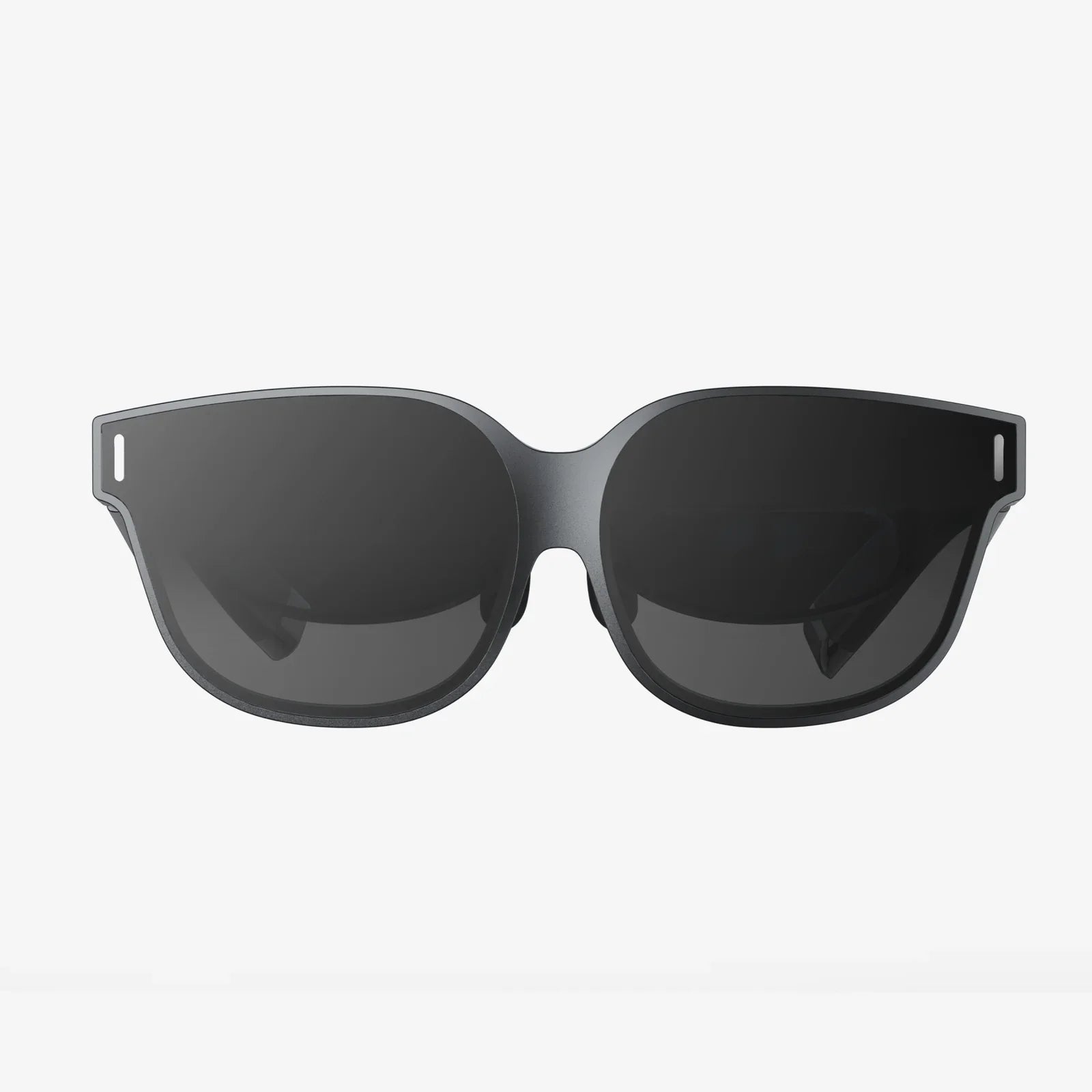
Imagine slipping on a sleek pair of glasses and instantly overlaying your world with interactive digital information, from navigating a new city with floating arrows to collaborating with a holographic colleague sitting on your couch. This sci-fi dream is no longer confined to high-end enterprise budgets or research labs; it’s arriving in homes and offices everywhere, thanks to the rapid emergence of affordable augmented reality headsets under $1000. This new price point isn't just a minor discount; it's a seismic shift that is throwing open the doors to spatial computing for the masses, promising to fundamentally alter how we work, learn, play, and connect.
The Price Barrier Cracks: From Niche to Mainstream
For years, augmented reality was synonymous with prohibitively expensive hardware, often costing several thousand dollars. These devices were powerful, packed with cutting-edge sensors and processing power, but they were squarely targeted at Fortune 500 companies, specialized industrial applications, and deep-pocketed developers. The high cost created a significant barrier to entry, stifling widespread adoption and limiting the development of consumer-focused applications. The ecosystem was caught in a loop: high hardware prices led to a small user base, which discouraged major software investment, which in turn kept the user base small.
The sub-$1000 category shatters this cycle. By leveraging advancements in display technology, computer vision algorithms, and more efficient manufacturing processes, manufacturers are now able to deliver compelling AR experiences at a fraction of the previous cost. This shift is akin to the move from room-sized mainframes to the personal computer. It’s moving the technology from a specialized tool for a few to a versatile platform for everyone.
What Can You Really Get for Under $1000?
It's a fair question: what compromises are made to hit this attractive price point? The answer is more nuanced than simply listing inferior specs. The engineering philosophy here is one of smart prioritization rather than outright compromise.
These devices typically focus on core AR functionality: clear passthrough cameras or optical see-through displays, robust inside-out tracking (eliminating the need for external sensors), and enough processing power, either onboard or via a capable tethered connection, to run immersive applications smoothly. You might not find the absolute highest resolution micro-OLED displays or the most expansive field of view available on the market, but you will find displays that are more than adequate for a vast range of applications.
Connectivity is another key area. Many affordable AR headsets opt for a hybrid approach. Some are fully standalone, with a mobile processor, battery, and operating system all contained within the headset, offering complete freedom of movement. Others might be tethered to a powerful computer or gaming console, leveraging its immense processing power to deliver high-fidelity graphics that would be impossible to generate on a mobile chip. There are also headsets that connect via a single USB-C cable to a modern smartphone, using it as the brain and battery, a clever way to reduce cost and complexity. Each approach has its merits, and the diversity within this price range means there's likely a solution tailored to different needs and existing tech ecosystems.
Beyond Gaming: The Expansive World of AR Applications
While gaming and entertainment are often the first applications that come to mind—and indeed, they are a massive driver—the utility of affordable AR extends far beyond. This accessibility is unlocking value across numerous sectors.
Revolutionizing Education and Training
Imagine medical students practicing complex surgical procedures on detailed, interactive holograms before ever touching a scalpel. Mechanics can see a layered, step-by-step guide overlaid on the engine they are repairing. History students can walk through a digitally reconstructed ancient Roman forum right from their classroom. Affordable AR makes these experiential learning tools scalable, moving them from a single, expensive university lab to every student's desk.
Transforming Remote Work and Collaboration
The concept of the "metaverse office" becomes tangible with affordable AR. Instead of a flat video call, teams can meet in a shared virtual space, interacting with 3D models of products, brainstorming on virtual whiteboards that feel physical, and feeling a genuine sense of presence with remote colleagues. For design and architecture, clients can walk through a full-scale holographic model of their future home, making changes in real-time.
Enhancing Everyday Productivity
On a more personal level, AR can serve as the ultimate multi-monitor setup, projecting limitless virtual screens around you in any coffee shop or airport. Virtual assistants could appear as avatars, providing information contextually. Navigation arrows can guide you through a subway station, and real-time translations can be overlaid onto street signs and menus when you travel.
The Developer Gold Rush: Building for the Next Platform
The influx of affordable hardware is a clarion call to developers and creators. A larger, more diverse audience is now within reach, creating a fertile ground for innovation. The app stores for these platforms are beginning to swell with content, ranging from practical utility apps and creative tools to immersive games and social experiences.
This democratization of the hardware means indie developers and small studios can now afford to experiment and build for AR without securing massive venture capital funding. They can purchase a headset, use accessible development platforms, and bring their ideas to life. This bottom-up innovation is crucial for discovering the true "killer apps" that will drive the next wave of adoption. It’s no longer about what massive corporations think we should do with AR; it’s about what a global community of creators dreams up.
Navigating the Purchase: Key Considerations
With several compelling options now available, choosing the right headset requires careful thought. Price is the initial filter, but it shouldn't be the only one.
Display Technology: Consider whether you prefer optical see-through (where you look directly at the real world through lenses) or video passthrough (where cameras feed the real world to screens inside the headset). Each has advantages in terms of graphical fidelity and real-world clarity.
Form Factor and Comfort: These are devices you wear on your head, often for extended periods. Weight, balance, strap design, and overall comfort are critically important. Some prioritize a glasses-like form, while others favor a more robust design for feature completeness.
Tracking and Input: How does the headset track your movement through space? How do you interact with the digital world? Look for robust inside-out tracking and intuitive controllers or advanced hand-tracking capabilities that let you use your natural gestures.
Content Library and Ecosystem: A headset is only as good as the software it runs. Research the available apps, games, and experiences. Consider its compatibility with your existing devices (PC, phone, console) and whether it aligns with your primary use cases—be it gaming, productivity, or content creation.
The Future is Clear, and It's Affordable
The trajectory is unmistakable. The technology will continue to improve at a rapid pace. We can expect lighter, more comfortable designs, longer battery life, higher-resolution displays with wider fields of view, and even more intuitive interaction models—all while staying within or even driving down this new, accessible price bracket. The sub-$1000 segment is not a temporary trend; it is the new battleground where the future of augmented reality will be forged. It will force continuous innovation and competition, ultimately benefiting the consumer with better products and richer experiences.
The era of staring at a rectangular screen for hours on end is gradually giving way to a more natural, immersive, and integrated way of interacting with technology. Affordable augmented reality headsets under $1000 are the key that unlocks this new dimension, placing the power of spatial computing directly into the hands of millions. This isn't just about buying a new gadget; it's about investing in a new lens through which to see and shape your world. The digital and physical are finally merging on your terms, and the doorway to that future is now open and waiting for you to step through.
Share:
Virtual Meeting Hardware: The Ultimate Guide to Building Your Professional Setup
The First VR Head Mounted Display: A Journey to the Birth of Virtual Reality