


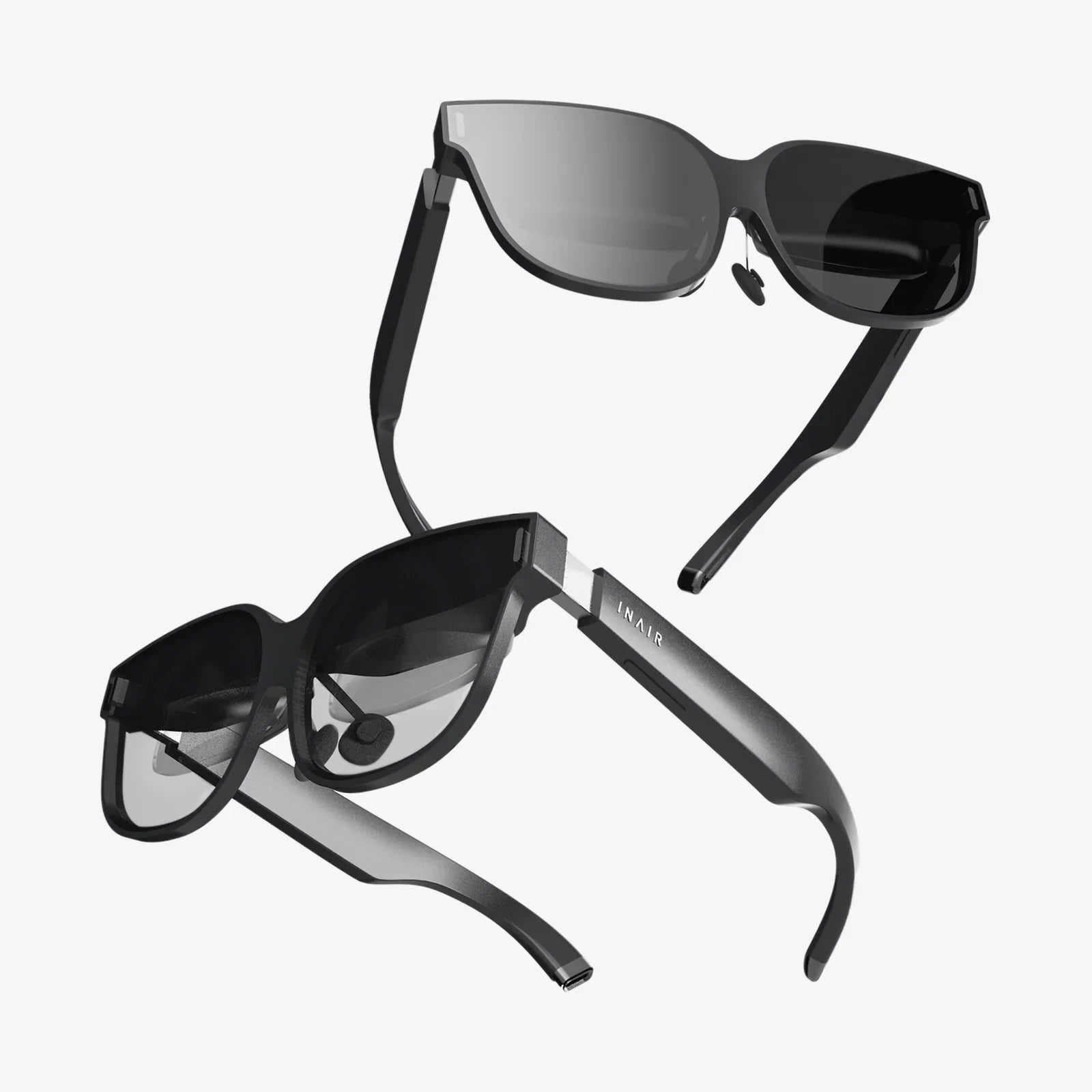
Imagine slipping on a pair of sleek glasses and instantly overlaying your world with interactive digital information, navigating city streets with floating arrows, or learning to repair an engine with step-by-step holographic instructions. Until recently, this futuristic vision was locked behind a prohibitively expensive paywall, a tantalizing glimpse of tomorrow reserved for deep-pocketed developers and tech enthusiasts. But a seismic shift is underway. The once-distant dream of immersive augmented reality is now startlingly within reach, thanks to a new wave of affordable augmented reality headsets under $300. This isn't just a minor price drop; it's a democratization of technology that promises to fundamentally alter how we work, learn, play, and connect.
The Dawn of Accessible AR: Why Price Matters
For years, high-quality augmented reality experiences were synonymous with high cost. Early professional and development kits often carried price tags stretching into the thousands of dollars, effectively placing them out of consideration for the average consumer, educator, or small business. This high barrier to entry stifled widespread adoption and limited the creative exploration of AR's potential. The arrival of capable hardware in the sub-$300 category is a game-changer. It moves AR from a niche curiosity to a mainstream accessible technology. This affordability unlocks a vast new user base, fostering a richer ecosystem of applications and content driven by diverse needs and imaginations, rather than just corporate budgets.
Demystifying the Technology: How Do They Work?
At their core, these affordable AR headsets perform a complex ballet of hardware and software to blend the digital with the physical. Understanding the core components helps appreciate the engineering marvel they represent at this price point.
Optical Systems: See-Through Displays
Unlike Virtual Reality (VR) headsets that block out the world, AR devices must allow you to see your surroundings clearly. Budget-friendly models typically employ one of two methods:
- Optical See-Through: These headsets use specialized semi-transparent lenses (like waveguides or combiners) that reflect micro-display images into your eyes while allowing ambient light to pass through. This creates a convincing blend of real and virtual, all while keeping the form factor relatively sleek.
- Video See-Through: This method uses outward-facing cameras to capture a live video feed of your environment. This feed is then combined with digital elements on an internal display (like a smartphone screen) that you look into. While this can sometimes introduce a slight lag, it allows for powerful digital manipulation of the real world before it reaches your eyes.
Sensors: The Digital Nervous System
To understand and interact with your environment, these headsets are packed with an array of sensors. This suite almost always includes:
- IMUs (Inertial Measurement Units): Combining accelerometers and gyroscopes, these track the precise rotation and movement of your head, ensuring digital objects stay locked in place as you look around.
- Cameras: Beyond video see-through, cameras are crucial for computer vision tasks. They map the physical space (a process called SLAM - Simultaneous Localization and Mapping), track hand gestures for controller-free interaction, and can recognize specific images or objects to trigger AR experiences.
- Depth Sensors (on some models): Some devices include dedicated depth sensors (like time-of-flight sensors) to create a highly accurate 3D map of the environment, allowing for more realistic occlusion where virtual objects can pass behind real-world furniture.
Processing Power: The Brain of the Operation
There are two primary processing paradigms in this affordable category:
- Standalone Headsets: These are all-in-one devices with their own onboard processor, battery, and operating system. They offer complete freedom of movement without being tethered to another device, making them incredibly convenient for immersive experiences.
- Smartphone-Powered Headsets: Leveraging the powerful computer already in your pocket, these headsets use your phone's display and processing power to run the AR experience. The headset itself acts primarily as a sophisticated housing for the lenses and sensors. This is a key driver of affordability, as it drastically reduces the hardware cost.
What to Look For: Key Features in the Sub-$300 Bracket
Navigating this new market requires knowing which features deliver the most bang for your buck. Compromises are inevitable at this price, but smart choices can yield an incredibly satisfying experience.
Field of View (FOV)
Measured in degrees, the FOV determines how much of your vision is filled with the digital overlay. A narrow FOV can feel like looking through a small window, while a wider FOV is far more immersive. In this budget range, expect FOVs typically between 30 and 50 degrees. While not the expansive 90+ degrees of high-end kits, a well-implemented 40-degree FOV is more than sufficient for a wide range of applications.
Tracking and Latency
This is arguably the most critical factor for a comfortable experience. Rock-solid tracking means digital objects don't jitter, drift, or float unnaturally. Low latency means the digital world reacts to your head movements instantly. Any noticeable delay between moving your head and the image updating can lead to disorientation or motion sickness. Prioritize headsets with positive user reviews specifically praising their tracking stability.
Display Resolution and Brightness
A higher resolution means sharper text and clearer graphics, which is vital for reading information or appreciating detail. Brightness is equally important; the display must be luminous enough to be visible against various real-world backgrounds, especially in well-lit rooms or outdoors. Look for specs on resolution per eye and nits (a measure of brightness).
Input Methods: Controllers, Hands, and Voice
How do you interact with the holograms? Many headsets come with a simple handheld controller, similar to a TV remote, for pointing and clicking. The most exciting advancement is the integration of hand tracking, allowing you to use your natural gestures to pinch, grab, and manipulate virtual objects. This feels incredibly intuitive and is a sign of a more mature platform. Voice control is also a common feature for launching apps or performing searches.
Comfort and Design
If a headset isn't comfortable, you won't wear it. Look for designs with good weight distribution, adjustable straps, and soft, replaceable facial interfaces. Consider whether the design is intended for short, focused sessions or longer-term wear. The overall form factor is also evolving from bulky goggles to more glasses-like designs, even at this price point.
Battery Life
For standalone devices, battery life is a key consideration. Two to three hours of active use is common, which is adequate for most gaming or viewing sessions but something to be mindful of for all-day productivity. Some designs feature hot-swappable batteries for extended use.
A World of Applications: What Can You Actually Do?
The true value of this technology is realized in its applications. Affordable hardware sparks innovation in software, leading to powerful and practical uses.
Education and Interactive Learning
Imagine history students walking through a holographic reconstruction of ancient Rome, biology classes examining a beating heart model from every angle, or mechanics-in-training following guided instructions overlaid directly onto an engine block. AR transforms abstract concepts into tangible, interactive experiences, revolutionizing the learning process and improving knowledge retention.
Productivity and Remote Assistance
This is a killer app for enterprise. A technician in the field can wear a headset and have a remote expert see their view and draw annotations directly into their vision, guiding them through a complex repair. Architects and interior designers can place full-scale 3D models of their designs into a physical space for clients to walk through before a single brick is laid. Digital screens and virtual workspaces can be set up anywhere, untethering productivity from a physical desk.
Gaming and Entertainment
While VR gaming immerses you in another world, AR gaming brings the game into your world. Turn your living room into a dungeon crawling with monsters, your tabletop into a strategic battlefield, or your entire city into a scavenger hunt playground. Beyond gaming, imagine watching a sports game with live stats floating beside the players or having a virtual cinema screen appear on your blank wall.
Navigation and Information
Walking through a new city? Instead of looking down at your phone, glance down the street and see floating directional arrows and points of interest superimposed on the buildings. Look at a restaurant and instantly see its reviews and menu highlights. This concept of ambient computing provides contextual information exactly when and where you need it, making you more present in your environment, not less.
Limitations and Realistic Expectations
It's crucial to enter this market with realistic expectations. These are not $3,000 professional systems. Compromises are made to achieve affordability.
- Performance: Graphics will be functional but may not be as photorealistic as high-end AAA VR games. Complex experiences might have simplified visuals.
- Field of View: As mentioned, the digital overlay will not fill your entire peripheral vision. It will be contained within a clearly defined window.
- Content Library: The ecosystem is still growing. While major platforms exist, the volume of content isn't yet on par with mature gaming consoles, though it's expanding rapidly.
- Design: While improving, most devices in this range are still recognizably a headset, not a fashion accessory. The quest for true glasses-like form factors at a low cost is ongoing.
The Future is Now, and It's Affordable
The barrier has been broken. The narrative that transformative technology must be expensive is being rewritten before our eyes. Affordable augmented reality headsets under $300 are not merely cheap toys; they are the accessible gateways into a new layer of reality, the founding tools of a new creative medium, and the practical instruments that will enhance our daily lives in countless ways. This is just the beginning of a wave of innovation, and it's a wave that everyone can now ride.
This isn't just about saving money; it's about gaining an entirely new perspective on your reality. The power to enhance your perception, supercharge your productivity, and redefine your play is no longer a fantasy of the distant future—it's a purchase away, waiting for you to put it on and see what's possible.
Share:
Challenges and Benefits of a Virtual Meeting: Navigating the New Digital Workspace
Best VR to Get: Your Ultimate Guide to Navigating the Virtual Frontier