


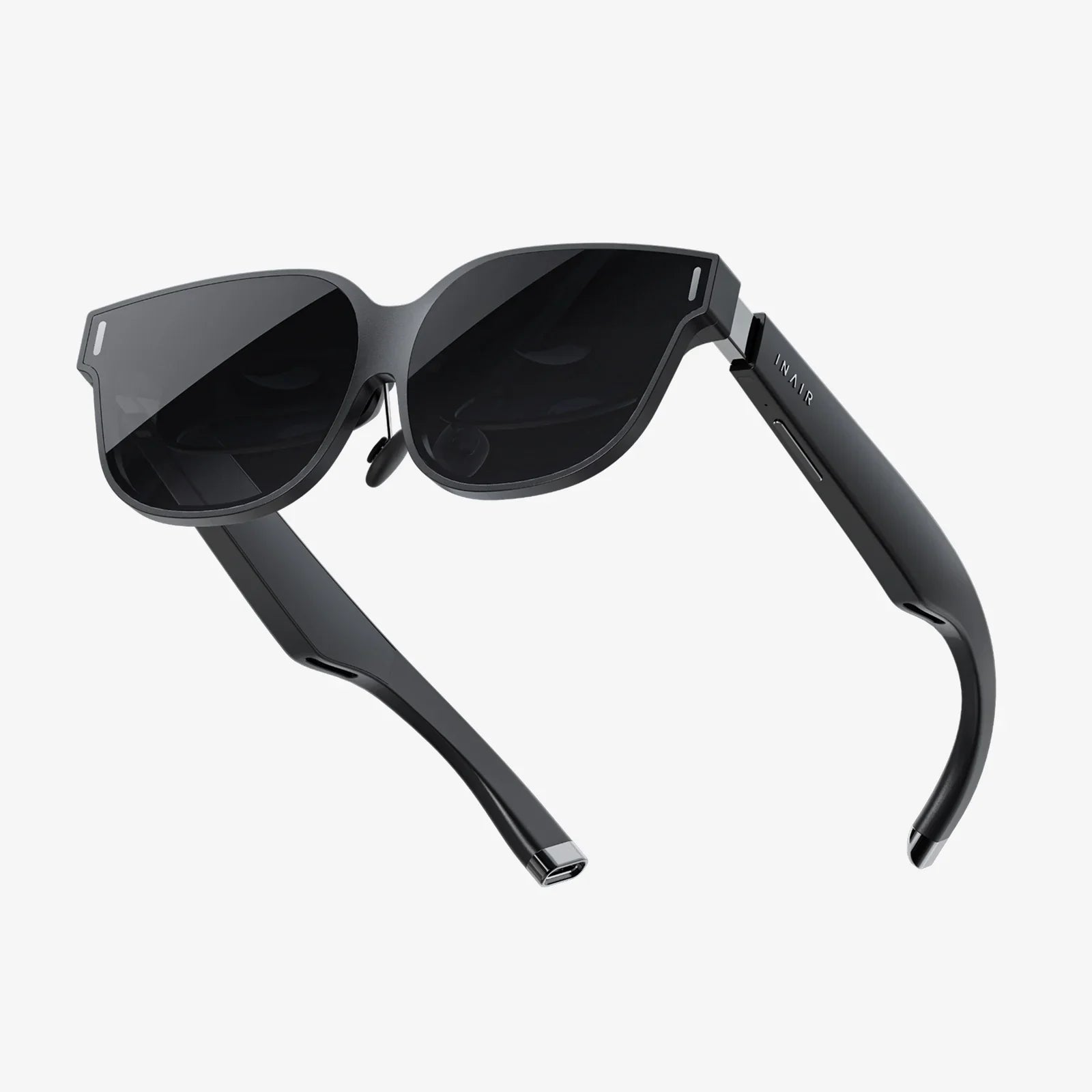
Imagine slipping on a lightweight visor and instantly being transported to a front-row concert, a virtual training ground for a new job, or a collaborative workspace with colleagues from across the globe—all without draining your bank account. This is no longer a distant sci-fi fantasy; it's the promise of the affordable VR headset market in 2025. The barriers to entry are crumbling, and the next generation of immersive technology is poised to become as commonplace as the smartphone in your pocket. The journey to mainstream adoption has been a long one, but 2025 is shaping up to be the definitive year where high-fidelity virtual reality becomes truly accessible to everyone.
The Evolution of Accessibility: From Niche to Mainstream
The path to the 2025 affordable VR landscape has been paved with both rapid innovation and hard-learned lessons. Just a few years prior, the term “affordable VR” was often synonymous with compromised experiences—grainy displays, limited processing power, and a lack of compelling software. Early efforts relied heavily on smartphones for their computational and display capabilities, offering a tantalizing glimpse of VR but ultimately falling short on performance, comfort, and immersion.
The shift began with the rise of standalone headsets, which integrated all necessary components into a single, untethered device. This was a monumental leap forward, eliminating the need for an expensive gaming computer or console. However, the first wave of these devices still occupied a mid-to-high price range. The real catalyst for change was the refinement of manufacturing processes, increased competition, and the development of more cost-effective, purpose-built chipsets. By 2025, these economies of scale have fully matured. The components that once commanded a premium—high-resolution displays, inside-out tracking cameras, and efficient processors—are now produced at a fraction of the cost, allowing manufacturers to deliver exceptional value.
Defining “Affordable” in the 2025 VR Market
In the context of the 2025 market, “affordable” no longer means “cheap and low-quality.” Instead, it represents a sweet spot of price-to-performance ratio that was unimaginable just a generation ago. Industry analysts now place the “affordable” tier in a range that is comparable to other mainstream consumer electronics like premium tablets or gaming consoles. This price point delivers a feature set that satisfies both new users and VR enthusiasts looking for a secondary, more accessible device.
For this investment, consumers can expect a complete, out-of-the-box experience. This typically includes the headset itself, a pair of ergonomic controllers, and all the necessary hardware to get started. The era of hidden costs is largely over. The business models have also evolved. While some manufacturers may offer subscription services for premium content or cloud-based processing power, the core functionality of the device is not gated behind ongoing payments. The headset you buy is the headset you own, capable of running a vast library of software natively.
Key Technological Innovations Driving Down Costs
The dramatic improvement in affordability is directly tied to several key technological breakthroughs that have reached maturity by 2025.
Advanced Pancake Lenses
The adoption of pancake lens optics has been a game-changer for both form factor and cost. These complex lens systems allow for a much shorter distance between the display and the user's eyes, enabling headsets to be significantly smaller, lighter, and more comfortable. While initially expensive, mass production has driven costs down. This technology also reduces the “screen door effect” and provides a sharper, more uniform image across the entire field of view, enhancing immersion without requiring prohibitively expensive ultra-high-resolution displays.
Cost-Effective Micro-OLED Displays
Display technology has seen incredible gains. Micro-OLED panels, which were once reserved for enterprise-level and military applications, are now being produced for consumer-grade devices. These displays offer exceptional pixel density, true blacks, high contrast ratios, and incredibly fast response times, all while being incredibly compact and power-efficient. Their manufacturing yield rates have improved dramatically, making them a viable option for mid-range headsets.
Integrated On-Device AI Chips
Perhaps the most significant innovation is the integration of specialized AI co-processors within the headset’s main System-on-a-Chip (SoC). These dedicated units handle complex tasks like inside-out positional tracking, hand-tracking algorithms, and foveated rendering with extreme efficiency. By offloading this work from the main CPU and GPU, the overall performance is smoother, battery life is extended, and the hardware requirements (and thus cost) are kept in check. This intelligent distribution of processing power is fundamental to the 2025 affordable VR experience.
Wi-Fi 7 and Cloud Streaming
The widespread adoption of Wi-Fi 7 has unlocked high-fidelity cloud streaming for VR. Affordable headsets can now leverage remote servers to handle the most graphically demanding applications, effectively acting as a wireless conduit for immense computational power. This means users are no longer strictly limited by the silicon inside their headset; they can access photorealistic environments and complex simulations streamed directly from the cloud, vastly expanding the potential library of experiences available on an otherwise modest device.
Must-Have Features in a 2025 Affordable VR Headset
When evaluating options in this competitive market, certain features have become standard expectations, not luxuries.
- High-Resolution Pass-Through Cameras: Full-color, high-resolution pass-through is now table stakes. This is crucial for blending virtual elements with your physical environment for mixed reality (MR) experiences, which have become a primary use case for productivity and social interaction.
- Precise Inside-Out Tracking: The need for external base stations or sensors is completely obsolete. Advanced inside-out tracking using wide-angle cameras and AI inference provides sub-millimeter accuracy for both headset and controller positioning.
- Natural Hand Tracking: While controllers are still included for gaming, sophisticated hand-tracking capabilities allow for intuitive interaction with menus, virtual objects, and productivity tools without any accessories.
- All-Day Comfort: Lightweight materials, balanced weight distribution, and easily swappable facial interfaces and straps are essential. Manufacturers understand that comfort is paramount for adoption.
- A Robust, Curated Content Ecosystem: The hardware is meaningless without software. A strong library of games, fitness apps, social platforms, and productivity tools, backed by a reliable digital storefront, is a critical feature of the platform itself.
Beyond Gaming: The Expanding Universe of VR Applications
The value proposition of an affordable headset in 2025 extends far beyond the realm of entertainment. This accessibility is fueling a revolution in how we work, learn, and connect.
Virtual Workspaces: Remote work has been permanently transformed. Employees can join virtual offices where they have persistent desks, collaborate on 3D models with colleagues, and whiteboard ideas in a shared space that feels infinitely more productive than a grid of video calls.
Education and Training: From medical students practicing complex procedures to mechanics learning the intricacies of a new engine, VR provides a safe, scalable, and cost-effective training environment. Historical field trips, immersive language learning, and interactive science experiments are becoming standard in classrooms equipped with a set of affordable headsets.
Social Connection: Social VR platforms have evolved into vibrant digital metropolises. People attend live concerts, watch movies together in virtual theaters, or simply hang out in custom-designed virtual homes, fostering a sense of presence and togetherness that physical distance cannot erase.
Health and Fitness: VR fitness has exploded in popularity. Engaging games that provide a full-body workout make exercise fun and addictive. Affordable headsets with good comfort and tracking are perfect for this active use case, often including features like heart rate monitoring integration.
Navigating Your Purchase: A Practical Guide
With several compelling options on the market, making a choice requires careful consideration of your needs.
First, identify your primary use case. Are you a hardcore gamer, a fitness enthusiast, a remote worker, or a parent looking for an educational tool? Your answer will dictate the importance of factors like controller design, display refresh rate, battery life, and the available software library.
Second, consider ergonomics. If possible, try before you buy. Comfort is highly subjective. Look for a device with adjustable straps, good weight distribution, and available accessory options to ensure it can be worn for extended periods without fatigue.
Third, research the ecosystem. Your headset is a gateway to a specific platform. Investigate its digital storefront. Does it have the apps and games you want? How active is its development community? Is there a healthy ecosystem of accessories? A slightly more expensive headset with a richer content library may offer better long-term value.
Finally, read independent reviews. Pay attention to assessments of display quality, tracking reliability, and software stability. Real-world performance often differs from marketing spec sheets.
The Future is Now, and It's for Everyone
The developments in affordable VR technology are not happening in a vacuum. They are part of a broader convergence with augmented reality (AR) and artificial intelligence (AI). The headsets of 2025 are increasingly MR-first devices, designed to understand and interact with your physical space intelligently. This paves the way for a future where digital information is seamlessly layered onto our reality, enhancing everything from navigation to maintenance and design.
The race to affordability is also a race to accessibility. Features like advanced voice control, AI-powered narration for the visually impaired, and customizable interfaces are making these devices usable by a wider range of people than ever before. This democratization of technology ensures that the benefits of immersive computing can be shared across society.
The stage is set for a revolution not in a lab, but in your living room. The affordable VR headset of 5 is no longer a piece of specialized equipment; it’s a versatile portal to new worlds of play, work, and human connection. The question is no longer if you will try it, but which incredible experience you will choose first. Your front-row seat to the future is waiting, and it finally has a price tag you can't refuse.
Share:
What's The Cheapest VR Headset - A Guide to Affordable Virtual Reality
Best Resolution VR Headset 2025: A Deep Dive into the Pinnacle of Visual Fidelity