


- by wangfred
AI and AR Solutions Are Reshaping Reality and Redefining Human Potential
- by wangfred
Imagine a world where the digital and physical realms don't just coexist but are seamlessly, intelligently intertwined—a world where your environment understands you, anticipates your needs, and overlays a tapestry of useful information directly onto your field of vision. This isn't a distant sci-fi fantasy; it's the emerging reality being built today at the powerful intersection of Artificial Intelligence and Augmented Reality solutions. This convergence is not merely a technological trend; it's a fundamental shift in how we compute, interact with data, and perceive the world around us, promising to unlock unprecedented levels of human efficiency, creativity, and understanding.
For years, AI and AR developed on parallel tracks. AR offered the display—the "eyes" to see an enhanced world—but often lacked the brain to make sense of it. AI, the brilliant "brain," was often confined to servers and screens, disconnected from the rich, contextual data of the real world. Their integration is a match made in technological heaven, creating a closed-loop system of perception, processing, and projection.
At its core, AR is about augmenting the user's reality with digital content. But for that content to be meaningful and contextually relevant, the system must first understand the environment. This is where AI comes in. Machine learning algorithms, particularly computer vision, are trained on vast datasets to recognize objects, people, spatial layouts, and even gestures and emotions. This allows the AR system to do more than just place a static 3D model in your room; it can understand that the model is a piece of machinery, identify its components, and dynamically display maintenance instructions precisely where they are needed.
Conversely, AR provides AI with something crucial: a real-world interface and a continuous stream of multimodal sensory data. An AI can analyze terabytes of abstract data, but AR gives it a canvas to present its findings in an intuitive, spatially-aware manner. It also feeds the AI a constant stream of visual, auditory, and locational data from the user's perspective, creating opportunities for real-time learning and adaptation that are impossible in a purely digital environment. This symbiotic relationship creates a powerful feedback loop: the AI makes the AR smarter, and the AR makes the AI more perceptive and actionable.
The most profound immediate impacts of integrated AI and AR solutions are occurring in high-stakes, high-precision fields like manufacturing and medicine. Here, the combination of intelligent data analysis and hands-free, visual guidance is revolutionizing protocols and improving outcomes.
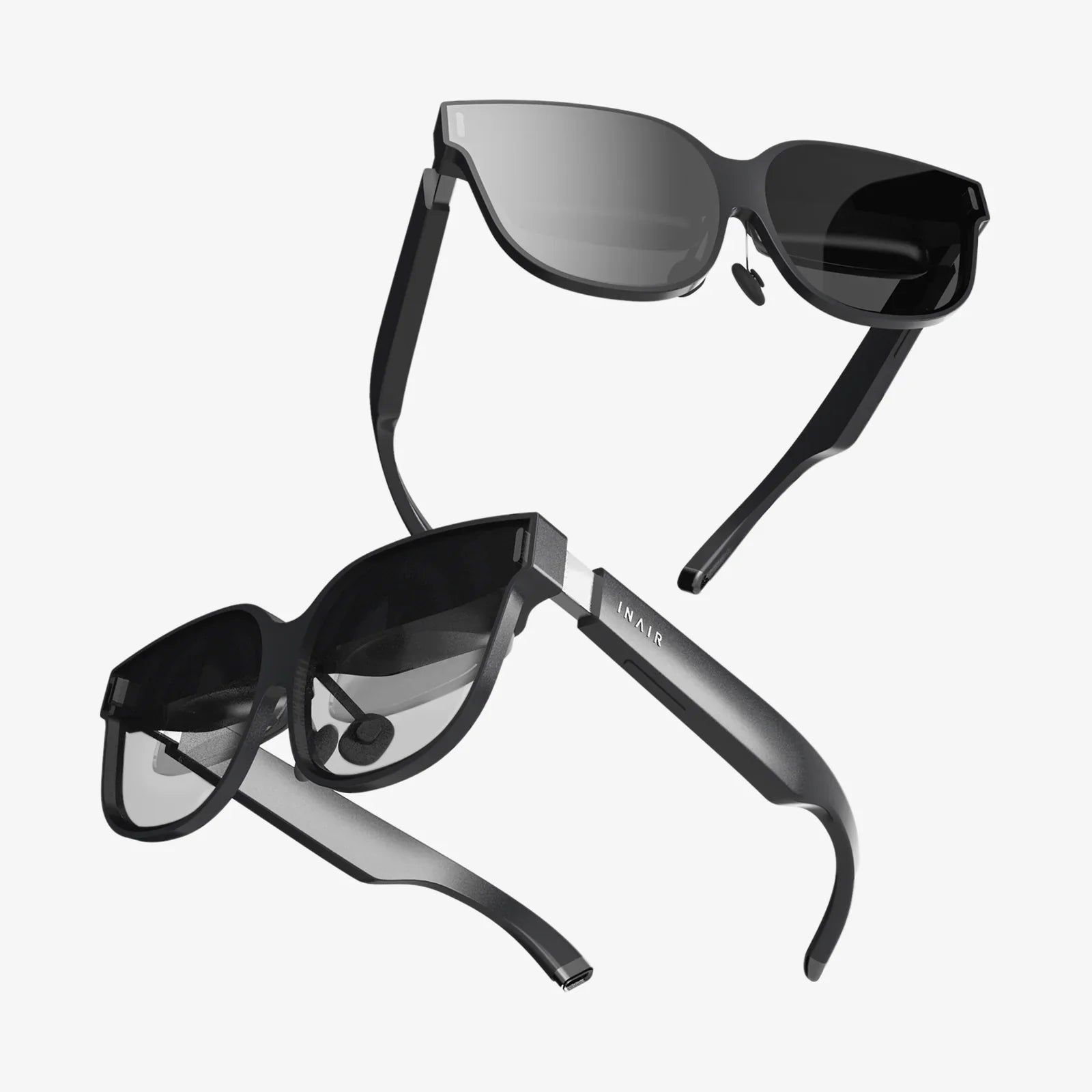
On the factory floor, technicians wearing smart glasses are no longer reliant on paper manuals or trips back to a computer terminal. An AI-powered AR system can visually identify a complex engine component through the camera, instantly retrieving its entire service history and the relevant schematic from a cloud database. It then projects step-by-step holographic repair instructions onto the exact bolts that need turning, highlighting potential issues it detects, such as a worn-out part. The AI can guide the technician through the most efficient sequence of actions, warn them if a tool is being used incorrectly, and even allow a remote expert to see what they see and annotate their field of view to provide live guidance. This reduces errors, slashes training time, and minimizes downtime.
In the medical field, the implications are even more staggering. Surgeons are using AR headsets to overlay critical patient data—like heart rate and blood pressure—directly into their line of sight during procedures, eliminating the need to look away at a monitor. More advanced applications involve integrating AI with medical imaging. An AI algorithm can analyze pre-operative scans (like CT or MRI) to identify tumors, blood vessels, and nerves. This intelligence is then projected by the AR system as a precise, holographic roadmap onto the patient's body, effectively giving the surgeon X-ray vision. This enhanced visibility allows for more precise incisions, safer navigation around critical structures, and ultimately, better patient outcomes. Furthermore, AI-driven AR is becoming a powerful tool for medical training, allowing students to practice complex procedures on interactive, holographic patients that respond realistically.
Beyond industry and healthcare, the fusion of AI and AR is poised to reshape our daily consumer and educational experiences. These technologies are moving out of specialized niches and into the mainstream, offering personalized and immersive interactions.
The retail sector is undergoing a digital metamorphosis. Imagine pointing your smartphone at a piece of furniture in a showroom. The AI instantly recognizes the product, and your screen displays not just its price and specs, but uses AR to show you how it would look in your own living room, scaled to the correct size and in the correct color. AI algorithms can analyze your past purchases and browsing history to suggest items that match your style, creating a highly personalized shopping experience. For clothing, virtual try-on solutions use AI to accurately map your body shape and pose, allowing you to see how garments will fit and move on you before making a purchase, drastically reducing return rates and increasing consumer confidence.
In education, AI and AR are dismantling traditional learning barriers. Instead of reading about ancient Rome, students can walk through a digitally reconstructed Colosseum teeming with virtual citizens, all powered by their AR device. AI tutors can monitor a student's progress within these immersive lessons, adapting the difficulty and content in real-time based on their comprehension and engagement levels. A complex molecular structure becomes a interactive 3D model that students can walk around and dismantle, with an AI assistant explaining each component. This move from abstract description to experiential learning caters to different learning styles and dramatically improves knowledge retention by making education a dynamic, interactive adventure.
The potential of AI and AR is boundless, but this powerful convergence also introduces a host of complex ethical and practical challenges that society must proactively address. The very nature of these technologies—always-on cameras, microphones, and sensors combined with powerful AI analytics—creates a unprecedented privacy paradigm.
These devices continuously capture and analyze the world around the user, which inevitably includes other people who have not consented to being recorded or processed. This raises critical questions about data ownership, consent, and surveillance. Will conversations be recorded and analyzed? Will individuals be automatically identified and tagged with public (or private) information? The potential for misuse, from corporate data harvesting to state-sponsored surveillance and sophisticated new forms of cyberstalking, is significant. Developing robust ethical frameworks, transparent data policies, and perhaps even new digital etiquette norms will be crucial for the responsible adoption of these technologies.
Furthermore, the concept of reality itself becomes malleable. If an AI can curate and alter what we see and hear in real-time, how do we maintain a shared sense of objective truth? The threat of hyper-realistic, AI-generated AR misinformation—where fake news manifests as a seemingly real event happening in the street—is a profound societal risk. Other challenges include digital addiction, the potential for further erosion of human attention spans, and the creation of a new digital divide between those who can afford these advanced tools and those who cannot.
Despite these challenges, the trajectory is clear. The future of computing is moving away from isolated screens and into our ambient environment. The next great interface won't be a touchscreen; it will be the world itself. We are heading towards a future of ambient intelligence, where AI and AR work together so fluidly that they become an invisible, intuitive extension of our own cognition.
We can anticipate the development of more advanced form factors—from sleek glasses to contact lenses and eventually direct neural interfaces—that will make the technology more socially acceptable and comfortable for all-day use. AI models will become more efficient, capable of running complex reasoning directly on the device (edge computing), which will reduce latency, improve responsiveness, and enhance user privacy. The digital overlays will become more persistent and richly interactive, blending so seamlessly with physical reality that the line will begin to blur.
This isn't about replacing reality with a virtual one; it's about enhancing our own reality with a layer of useful, intelligent information. It's about augmenting human potential, not replacing it. The mechanic becomes a master technician with encyclopedic knowledge at their fingertips. The surgeon gains superhuman precision and vision. The student gains an immersive understanding of abstract concepts. The challenge for developers, policymakers, and users alike is to steer this powerful convergence toward applications that empower, educate, and connect us, while vigilantly guarding against the pitfalls that could undermine the very fabric of our society.
The fusion of AI and AR is quietly building a new layer of reality, one where information is not just at our fingertips but woven into the very fabric of our perception, promising to redefine every task, every lesson, and every interaction in ways we are only beginning to imagine.