


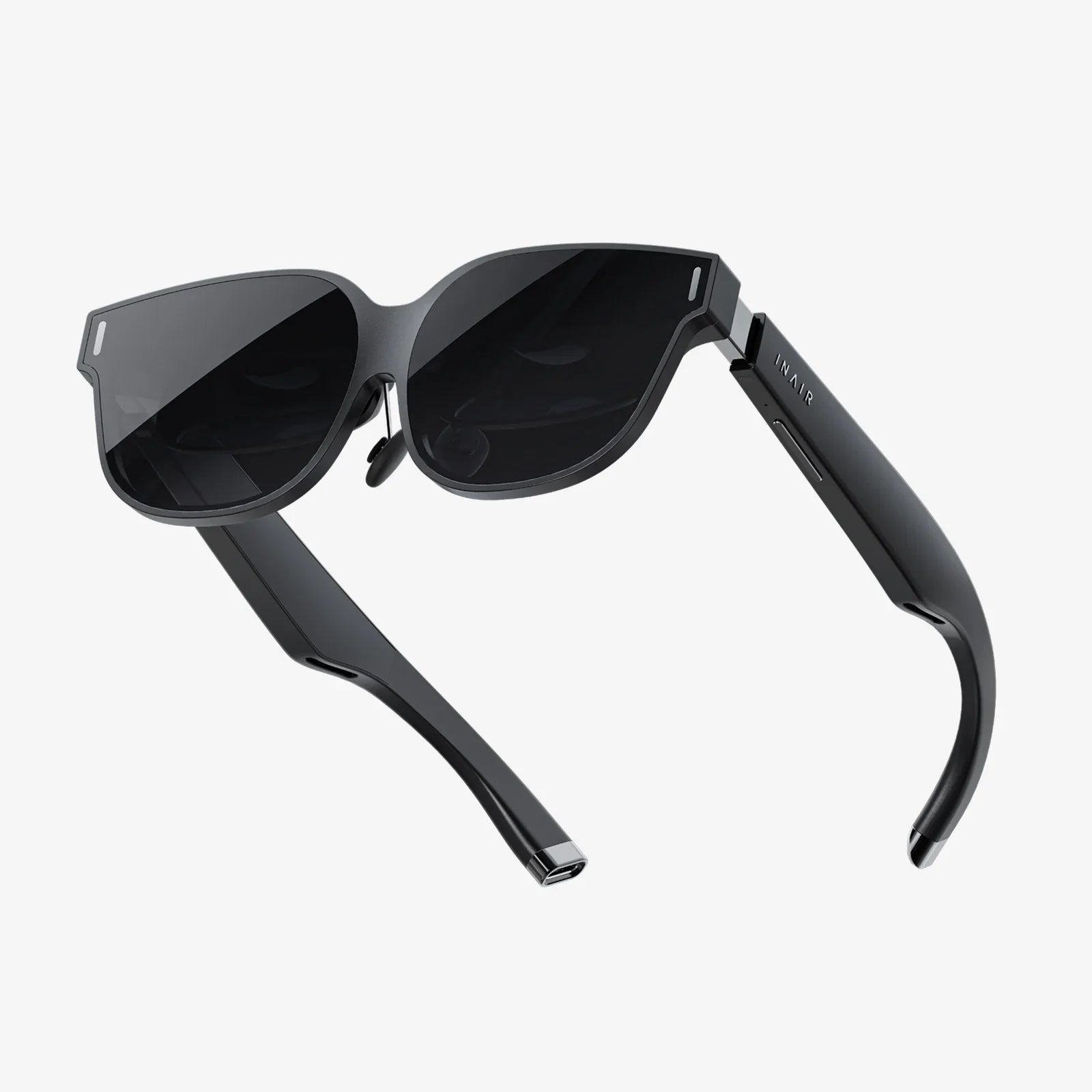
Imagine a world where your digital environment doesn't just respond to your commands but anticipates your needs, learns from your behavior, and evolves in real-time to create a deeply personal and seamless experience. This is no longer the stuff of science fiction; it is the burgeoning reality being forged at the intersection of Artificial Intelligence (AI) and Virtual Reality (VR). These two technological titans, once developing on parallel tracks, are now converging in a symbiotic dance that is amplifying the capabilities of both, pushing the boundaries of what is possible and setting the stage for a future where the line between the physical and the digital becomes increasingly indistinct. This powerful fusion is not merely an upgrade to existing systems; it is a fundamental reshaping of human-computer interaction, creative expression, and experiential learning.
The Symbiotic Relationship: More Than the Sum of Its Parts
At its core, the relationship between AI and VR is one of profound symbiosis. VR provides the immersive canvas—a three-dimensional, interactive digital space. AI provides the intelligence—the brain that populates this canvas with dynamic, responsive, and believable elements. One without the other is powerful, but together, they unlock unprecedented potential.
Virtual Reality, in its purest form, is a sensory delivery system. It tricks our brains into believing we are somewhere we are not by providing convincing visual, auditory, and sometimes haptic stimuli. However, traditional VR experiences are often static or scripted. The environment may be beautiful, but it lacks a certain life, a reactivity that truly mimics the unpredictability of the real world. This is where AI steps in as the essential catalyst.
Artificial Intelligence, particularly subsets like machine learning, natural language processing, and computer vision, breathes life into the virtual world. It acts as the central nervous system of the simulation. AI algorithms can generate complex environments on the fly, create non-player characters (NPCs) with convincing behaviors and dialogues, and adapt the narrative or challenges based on the user's actions and emotional state. This transforms a pre-recorded tour into a living, breathing world that exists in direct response to its inhabitant.
Breathing Life into Virtual Worlds: The Role of AI-Powered NPCs
One of the most tangible and exciting applications of AI in VR is the creation of intelligent agents and NPCs. Gone are the days of characters with a handful of repetitive dialogue lines and simple, predictable patrol routes. AI enables the development of digital humans and entities with agency, memory, and emotional intelligence.
Through natural language processing, users can converse with these characters using their own voice and natural speech, not pre-selected menu options. The AI interprets the intent and sentiment behind the words and generates a contextually appropriate response in real-time. This allows for deep, meaningful, and unscripted conversations. Machine learning models can enable these characters to learn from each interaction. They can remember a user's preferences, past actions, and even their personality traits, adjusting their own behavior to build a relationship over time.
This has staggering implications. In educational VR, a student could practice a foreign language by conversing with a virtual native speaker who patiently corrects their grammar and adjusts the complexity of the conversation. In corporate training, an employee could navigate a difficult conversation with a virtual human resources representative, receiving instant feedback on their tone and approach. In therapeutic settings, patients could confront and manage social anxieties in a safe, controlled environment populated by AI-driven characters. The virtual world becomes a dynamic stage for human interaction, guided by an intelligent, adaptive director.
The Rise of the Infinite Canvas: AI-Generated Environments
Beyond populating worlds with characters, AI is revolutionizing the very creation of the environments themselves. Procedural content generation, supercharged by AI, is moving beyond random level creation into the realm of intelligent, context-aware world-building.
AI algorithms can be trained on vast datasets of images, architectural blueprints, and natural landscapes to learn the underlying rules of design and ecology. A developer or even a user could simply describe a desired environment—"a serene, moss-covered ancient ruin in a misty forest at dusk"—and the AI could generate a unique, fully realized, and explorable 3D space matching that description. This technology promises near-infinite variation, ensuring that no two experiences are ever exactly alike.
This capability is a game-changer for numerous fields. Architects and urban planners could walk clients through AI-generated prototypes of buildings and cityscapes that haven't even been drafted on paper yet, with the AI iterating on designs in real-time based on feedback. Historians could reconstruct lost cities with astonishing accuracy, using AI to fill in gaps in the archaeological record based on its knowledge of architectural styles from that era. Game designers could create vast, open worlds that feel hand-crafted and unique around every corner, greatly expanding the scope and depth of virtual experiences without a proportional increase in development time and cost.
Enhancing the Human Experience: Personalization and Accessibility
The fusion of AI and VR is also paving the way for hyper-personalized experiences tailored to the individual user. AI acts as a dedicated guide and curator within the virtual space, using data from user interactions, biometric feedback, and explicit preferences to shape the journey.
For instance, if a user's heart rate (monitored through wearable tech integration) spikes during a particular challenging segment of a VR game, the AI could dynamically lower the difficulty or offer a hint to reduce frustration. In a virtual museum tour, the AI could learn which artistic movements a user lingers on and subsequently guide them to other similar works they would enjoy, effectively acting as a personal art historian. This level of personalization ensures that the experience is always engaging, relevant, and attuned to the user's emotional and cognitive state.
Furthermore, AI is a powerful tool for enhancing accessibility in VR. Computer vision can track a user's movements and translate imperfect gestures into perfect in-game actions, making experiences more accessible for those with motor disabilities. Real-time speech-to-text and text-to-speech translation, powered by AI, can break down language barriers, allowing users from different parts of the world to collaborate and socialize in a shared virtual space as if they were speaking the same language. AI can also generate audio descriptions for the visually impaired, narrating the visual elements of the environment to create a rich, multi-sensory experience for all.
Transforming Industries: From Prototyping to Remote Collaboration
The impact of this technological convergence extends far beyond entertainment and gaming. It is poised to revolutionize core sectors of the global economy.
- Healthcare and Therapy: Surgeons are using VR simulations with AI patients that exhibit realistic physiological responses to practice complex procedures. Psychologists are employing VR exposure therapy for PTSD, where AI carefully controls the intensity of traumatic triggers in a safe environment, personalizing the treatment protocol for each patient's progress.
- Manufacturing and Design: Engineers can design and test prototypes in immersive virtual environments. AI can then simulate countless stress tests, weather conditions, and real-world usage scenarios on these digital twins, identifying potential failures and optimizing designs long before a physical model is ever built, saving immense time and resources.
- Enterprise and Remote Work: The concept of the "metaverse" for work is being realized through VR collaboration spaces. AI enhances these spaces by providing real-time meeting transcription, translating conversations between colleagues, generating and manipulating 3D models on the fly based on verbal commands, and even managing virtual meeting logistics.
- Retail and Real Estate: Customers can try on clothes using hyper-realistic AI-generated avatars that match their exact body shape or tour properties that are not yet built, with AI staging the virtual home with furniture and decor tailored to the prospective buyer's taste.
Navigating the Ethical Labyrinth: Challenges and Considerations
With such transformative power comes a host of profound ethical questions and challenges that society must urgently address. The hyper-immersion of VR, combined with the persuasive power of AI, creates a potent mix that demands careful consideration.
Data Privacy and Biometric Surveillance: These technologies are inherently data-hungry. To function optimally, they require a constant stream of intimate data: eye gaze, body movement, vocal inflections, heart rate, and even emotional responses. This creates an unprecedented risk for biometric surveillance and the manipulation of user behavior. Who owns this data? How is it stored and used? The potential for misuse by corporations or governments is significant.
The Bias Problem: AI models are only as good as the data they are trained on. If this data contains societal biases (which it often does), the AI will perpetuate and potentially amplify these biases within the VR world. This could lead to virtual training simulations that reinforce stereotypes or NPCs that treat users differently based on learned prejudices.
Psychological Effects and Reality Blurring: When virtual experiences become indistinguishable from—or even preferable to—real life, what are the psychological consequences? Issues of addiction, dissociation, and the manipulation of memory (as AI could potentially alter or generate false memories within a simulation) are serious concerns. Establishing clear ethical guidelines for the development and deployment of these combined technologies is not a luxury; it is an imperative for ensuring they benefit humanity rather than exploit it.
Authentication and Identity: In a world where AI can generate convincing digital humans, how do we verify identity and establish trust? The potential for deepfake technology to be used in VR for impersonation and fraud is a terrifying prospect that requires robust digital authentication frameworks.
The Future is a Shared Hallucination
The journey of AI and VR is just beginning. We are moving towards a future where these technologies will become increasingly intertwined, leading to the development of persistent virtual worlds that are intelligent, adaptive, and shared by millions. The next frontier will involve the integration of other sensory feedback—true haptics, smell, and taste—to create ever more complete immersions. Brain-computer interfaces, though still in early stages, hint at a future where we might interact with these intelligent virtual worlds through thought alone.
This confluence represents more than a technological evolution; it is a new medium for human experience. It offers the potential to overcome physical and geographical limitations, to experiment with identity, to learn and empathize in ways previously unimaginable, and to solve complex real-world problems through unparalleled simulation. The virtual worlds of tomorrow will not be cold, static digital realms. They will be living, breathing extensions of our own reality, shaped by collective human creativity and guided by artificial intelligence. They will be our shared hallucinations, and they will change everything.
We stand at the precipice of a new dimension of human experience, where the only limit is the imagination of the creators and the ethical frameworks we choose to build alongside the technology. The fusion of intelligence and immersion is not just changing how we play games or design products; it is offering a mirror to our own reality, challenging us to decide what we want to become within it.
Share:
Wireless Eyeglass Frames Are Revolutionizing Vision and Connectivity
What Is The Hologram Technology: Peering Into The Future of Light