


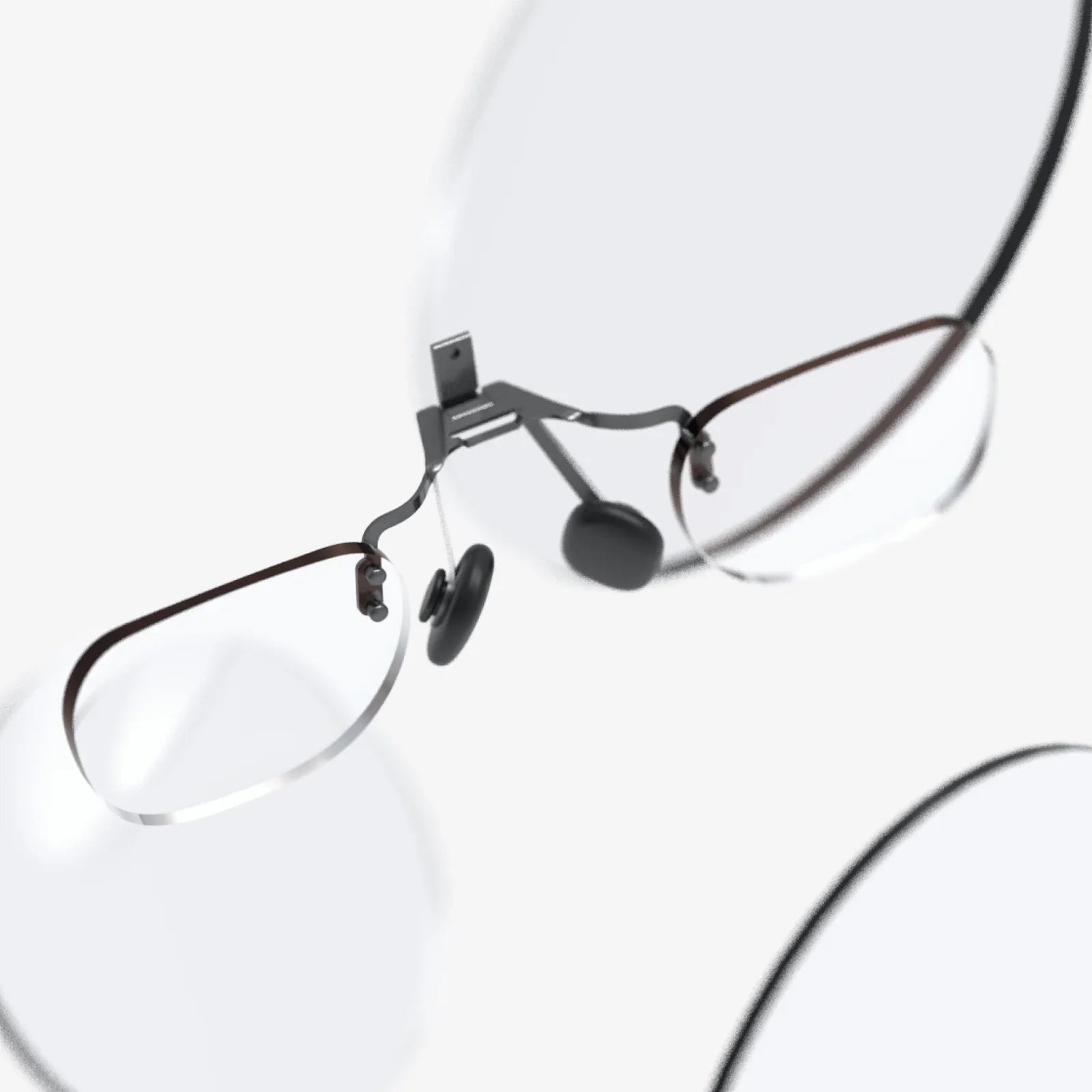
Imagine a world where your most personal technology doesn't feel like technology at all. It feels like a natural extension of your senses, an invisible assistant that enhances your reality without ever getting in the way. This is the promise held within the sleek, minimalist design of wireless eyeglass frames, a innovation quietly poised to revolutionize not just how we see, but how we hear, connect, and interact with the digital universe. They represent a fundamental shift from wearable devices we carry to intelligent systems we inhabit, marking the beginning of a truly seamless integration of human and machine.
The Anatomy of Invisible Innovation
At first glance, wireless frames are a study in elegant simplicity. Their power, however, lies in the sophisticated engineering hidden within their unassuming form. Unlike traditional eyewear, these frames are built upon a foundation of advanced materials, often employing proprietary metal alloys or high-strength polymers that are both incredibly lightweight and durable enough to house delicate electronics. The arms of the frames are no longer mere structural supports; they are meticulously designed conduits, housing a network of miniature components that work in perfect harmony.
The core of this system is a low-energy processing unit, a tiny chip that acts as the brain, managing data flow and power distribution. Integrated into the arms are miniature, high-fidelity speakers that sit just off the ear. This bone conduction or open-ear audio technology delivers sound directly to the user without blocking ambient noise, allowing for a constant awareness of one's surroundings—a critical feature for safety and social interaction. Equally important are the beamforming microphones, strategically placed to isolate the wearer's voice from wind and background chatter, ensuring crystal-clear call quality.
Powering this entire ecosystem is perhaps the most crucial innovation: the battery system. Engineers have overcome immense challenges to embed ultra-thin, high-density batteries discreetly within the frame's architecture. These are coupled with efficient wireless charging solutions, often involving a sleek, portable case that not only protects the glasses but also replenishes their power multiple times over, enabling all-day use. This relentless miniaturization and integration are what transform a concept into a practical, desirable product.
A Symphony of Sensory Enhancement
The true genius of wireless frames is their multifunctionality. They are not a single-purpose tool but a versatile platform that enhances daily life in a multitude of ways.
Auditory Freedom
For the audiophile and the professional alike, wireless frames liberate audio from the ear canal. They offer a superior alternative to traditional headphones for phone calls, listening to podcasts, or enjoying music during activities where situational awareness is key—like cycling, walking through a city, or working in an office. The sound is personal and immersive yet allows the real world to remain present and accessible, eliminating the isolating feeling of noise-cancelling earbuds.
Seamless Connectivity
As a hub for connectivity, these frames seamlessly pair with smartphones, laptops, and other devices. They manage notifications, allowing users to discreetly take calls or hear important alerts without ever reaching for their phone. This fosters a more present and engaged lifestyle, reducing the constant, distracting need to glance at a screen. For individuals who need to be constantly connected for work, this hands-free, eyes-free access to communication is transformative.
The Augmented Horizon
While current models excel in audio, the architecture of wireless frames is the perfect foundation for the next leap: augmented reality (AR). Future iterations will likely incorporate micro-displays project information directly onto the lenses—navigation arrows superimposed onto the street, translated text floating over a foreign menu, or a colleague's shared document hovering during a virtual meeting. The wireless frame is the essential stepping stone, normalizing the form factor and user interface for the AR revolution to come.
Beyond Convenience: Profound User Benefits
The impact of this technology extends far beyond mere convenience, offering tangible benefits that improve health, accessibility, and personal expression.
Ergonomic and Health Advantages
By combining vision correction with audio functionality, wireless frames significantly reduce the need for additional devices. This alleviates the physical strain associated with prolonged headphone use, such as ear fatigue and pressure headaches. Furthermore, by keeping the ear canal open, they promote better ear hygiene and reduce the risk of infections common with in-ear devices. For those who require hearing assistance, this technology also offers a discrete and powerful alternative to traditional hearing aids, blending assistive technology seamlessly into everyday life.
Unprecedented Accessibility
Wireless frames are a powerful tool for accessibility. Real-time translation and transcription services can be a lifeline for those who are hard of hearing or navigating language barriers. For individuals with visual impairments, audio descriptions of surroundings or text-to-speech for reading could be integrated directly into the auditory experience. This technology has the potential to dismantle barriers and create a more inclusive environment for millions.
A Statement of Style
In a market saturated with clunky techwear, wireless frames stand out by prioritizing aesthetics. They are designed to look like sophisticated eyewear first and foremost. Users are offered a wide range of styles, shapes, and colors, allowing them to choose a pair that reflects their personal style rather than forcing them to adopt a generic "tech" look. This focus on fashion is key to their widespread adoption, making advanced technology something people are proud to wear.
Navigating the Current Landscape and Challenges
Despite their promise, wireless eyeglass frames are not without their challenges. As a relatively nascent category, there are hurdles to overcome. Battery life, while impressive for their size, is still finite and requires mindful charging habits. The audio quality, though excellent for calls and podcasts, may not yet satisfy audiophiles seeking deep bass from larger drivers. There is also the question of cost, as the advanced engineering and components place them at a premium price point compared to standard glasses or headphones.
Furthermore, the industry must grapple with universal questions of data privacy and security. A device that sits on your face, sees what you see, and hears what you hear collects a profound amount of personal data. Manufacturers must prioritize transparent data policies and robust security measures to build and maintain user trust. The industry's long-term success depends on it.
The Future is Framed
The trajectory of wireless eyeglass frames points toward even deeper integration and intelligence. We can anticipate advancements in biometric sensors that monitor health metrics like heart rate and activity levels, always-on AI assistants that contextually understand your needs, and increasingly sophisticated AR experiences. They will evolve from a communication device into a comprehensive health, navigation, and information platform.
This evolution will likely see greater collaboration between tech companies and traditional eyewear brands, merging high fashion with cutting-edge technology. Customization will also become key, with options for prescription lenses, personalized fit, and tailored software experiences becoming the standard. The goal is a product that is uniquely, perfectly yours.
The journey of personal technology has been a constant pursuit of invisibility—smaller, faster, and more integrated. We moved from desktop computers to laptops, to phones in our pockets, and now to technology on our faces. Wireless eyeglass frames represent a pivotal moment in this journey. They are not just another gadget; they are a new platform, a blank canvas upon which the future of human-computer interaction will be painted. They challenge us to reimagine a world where technology fades into the background, empowering us to live our lives more fully in the foreground.
We stand at the precipice of a new sensory paradigm, where the line between assisting our lives and augmenting our reality is becoming beautifully blurred. The next time you see someone wearing a pair of stylish, seemingly ordinary glasses, look closer. They might not just be seeing the world—they might be listening to its hidden data, communicating with an invisible network, or viewing a digital layer you can't perceive. The future is not in your hand; it's on your face, and it's waiting for you to put it on.
Share:
AI and VR: The Confluence of Intelligence and Immersion Reshaping Reality
What Is The Hologram Technology: Peering Into The Future of Light