


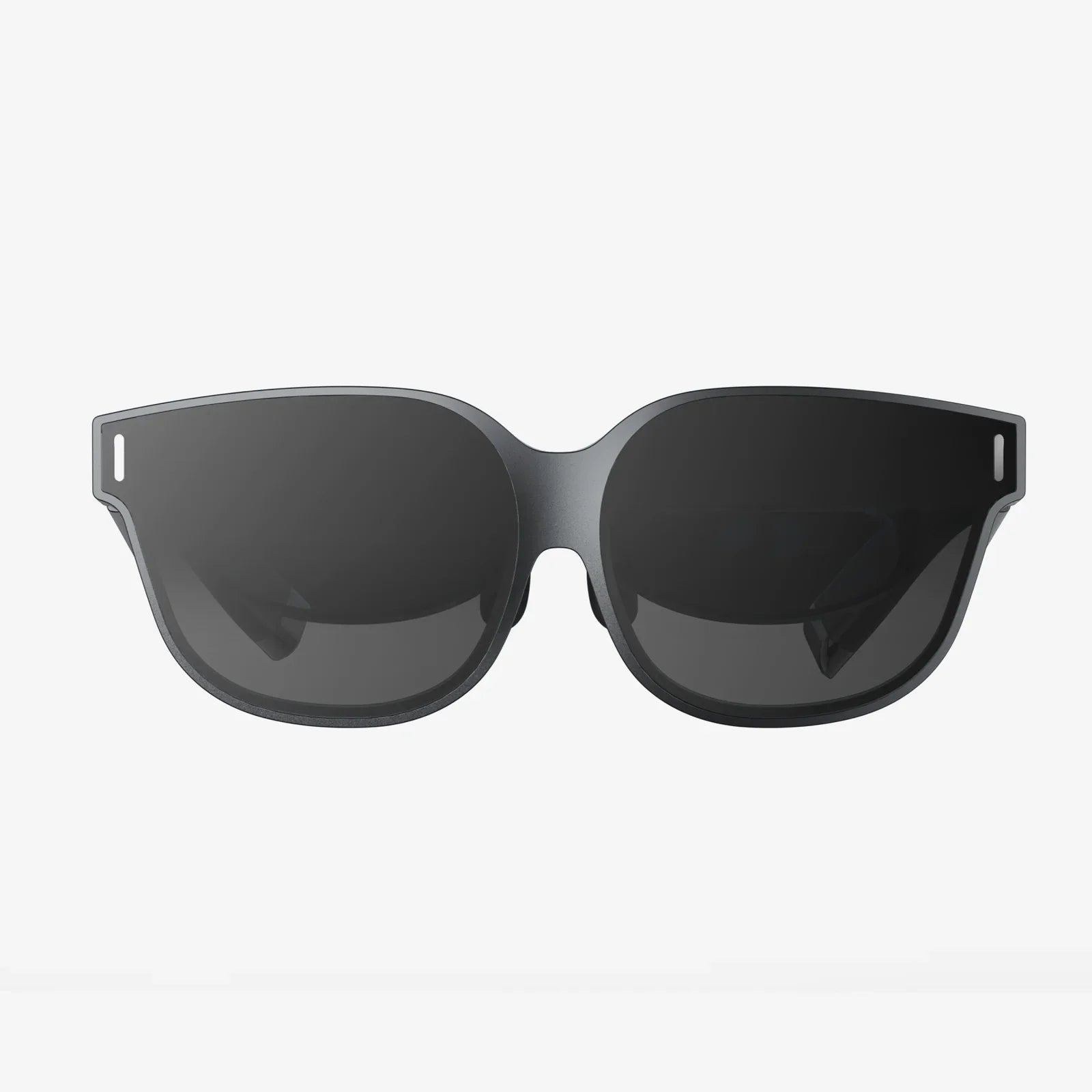
Imagine a world where information doesn't live on a screen in your pocket but is seamlessly painted onto the canvas of your reality. Where the digital and the physical cease to be separate realms and instead coalesce into a single, enhanced experience. This is the profound promise of AI AR glasses, a technology poised not merely to change what we see, but to fundamentally redefine how we interact with the world, our work, and each other. We stand on the precipice of a revolution where the line between human intuition and artificial intelligence will blur into invisibility, all through a pair of sleek, intelligent lenses.
The Architectural Marvel: More Than Meets the Eye
At their core, AI AR glasses are a symphony of miniaturized hardware and sophisticated software, each component playing a critical role in orchestrating the illusion of a blended world. Unlike their predecessors, which were often clunky and offered limited functionality, the next generation is being designed for all-day wearability and utility.
The hardware foundation is a marvel of modern engineering. Micro-displays, often using waveguides or holographic optical elements, project light directly into the user's eyes, overlaying digital images onto their field of view. These displays are complemented by a suite of sensors that act as the glasses' eyes and ears. High-resolution cameras, depth sensors, LiDAR scanners, and inertial measurement units (IMUs) continuously scan the environment, building a real-time, three-dimensional map of the surrounding space. This spatial mapping is the crucial canvas upon which the AI will paint.
However, the true magic, the intelligence that breathes life into this hardware, is the onboard artificial intelligence. This is not a simple processor; it's a neural processing unit (NPU) or a dedicated AI accelerator designed for one primary task: to understand the world in real-time. It performs a breathtaking array of computations simultaneously: computer vision to identify objects, people, and text; simultaneous localization and mapping (SLAM) to understand its own position within the mapped environment; natural language processing to interpret voice commands and queries; and gesture recognition to translate subtle hand movements into commands. This continuous, real-time analysis is what transforms the glasses from a passive display into an interactive, context-aware companion.
Transforming the Professional Landscape
The most immediate and impactful applications for AI AR glasses are emerging within enterprise and specialized professions, where the technology offers a clear return on investment by augmenting human capability.
The Hands-Free Technician
For field service technicians, mechanics, and engineers, AI AR glasses are a game-changer. Imagine a technician repairing a complex piece of machinery. Through their glasses, they see a digital overlay highlighting the specific component that needs replacement. An instruction manual is pinned in their peripheral vision, and a remote expert, seeing exactly what the technician sees through a live feed, can draw digital arrows and annotations directly onto the real world to guide them. The AI can recognize parts via computer vision and pull up schematics, torque specifications, or order history instantly. This reduces errors, slashes training time, and eliminates the need to constantly look down at a tablet or manual with greasy hands.
The Surgeon's Second Set of Eyes
In healthcare, the stakes are even higher. Surgeons can use AI AR glasses to view critical patient data—heart rate, blood pressure, pre-operative scans—without ever turning away from the operating field. The AI could overlay a reconstructed 3D model of a tumor from a CT scan directly onto the patient's body, precisely guiding incisions. During medical training, students can observe procedures from the surgeon's point of view, with vital information and annotations displayed in real-time, creating an immersive learning experience far beyond textbooks.
Revolutionizing Design and Architecture
Architects and interior designers can step inside their blueprints. AI AR glasses allow them to visualize a full-scale 3D model of a building on an empty plot of land or place virtual furniture within a client's living room to perfect the layout before a single purchase is made. The AI can run simulations, showing how sunlight will move through a space at different times of day or how people will flow through a building, enabling data-driven design decisions at an unprecedented level.
Weaving Intelligence into the Fabric of Daily Life
Beyond the workplace, the ultimate goal for AI AR glasses is to become an indispensable, unobtrusive part of our everyday existence, offering what is often termed ambient computing—information and assistance that is available when you need it and invisible when you don't.
- Navigational Clarity: Forget looking at a blue dot on a phone map. Directions are painted onto the sidewalk ahead of you, with arrows floating in your periphery guiding you through a complex subway station or a new city, all while keeping your head up and engaged with your surroundings.
- Contextual Awareness: The glasses, powered by their AI, become the ultimate personal assistant. Look at a restaurant, and instantly see its reviews and menu highlights floating nearby. Look at a product in a store, and see a comparison of prices from online retailers or a note that it contains an ingredient you're allergic to. Meet someone at a conference, and discreetly see their name and how you're connected on a professional network, effortlessly overcoming awkward introductions.
- Real-Time Translation: Language barriers begin to dissolve. Look at a foreign street sign or menu, and the text is instantly overlaid with a translation. Have a conversation with someone speaking another language, and see subtitles of what they're saying in real-time, creating a truly seamless cross-cultural communication tool.
- Accessibility Reimagined: For individuals with visual or hearing impairments, the potential is profound. The AI could amplify text, enhance contrast, and highlight obstacles for those with low vision. For those who are deaf or hard of hearing, it could provide advanced, real-time captioning of the world around them, transcribing conversations and identifying important sounds like sirens or alarms.
The Invisible Elephant in the Room: Privacy and the Societal Reckoning
The power of AI AR glasses is also the source of their greatest peril. A device that continuously records the environment through cameras and microphones, identifies people and objects, and connects to the cloud is a privacy advocate's nightmare. The societal implications are vast and require careful, proactive consideration.
The most pressing concern is the surveillance dilemma. If everyone is wearing glasses that can record, how do we prevent a world of constant, non-consensual surveillance? What are the norms for recording in public versus private spaces? The concept of anonymity in public could become a relic of the past. This necessitates the development of strong ethical frameworks and clear, enforceable regulations. Technical solutions, like clear physical indicators when recording is active (e.g., a light) and digital "privacy zones" where recording is automatically disabled, must be baked into the hardware from the outset.
Furthermore, the AI's constant analysis raises questions about data ownership and bias. The data collected about the world and the user is incredibly valuable. Who owns it? How is it used? If the AI is designed to recognize objects and people, it must be trained on diverse datasets to avoid perpetuating the biases we see in other AI systems today. A world where your glasses misidentify people or objects based on flawed training data is a dangerous one.
There is also the risk of a new digital divide. Will this transformative technology be accessible to all, or will it create a class of "augmented" individuals with significant advantages over those who cannot afford or choose not to adopt it? The societal and economic implications of such a split are profound and must be addressed to ensure equitable progress.
The Road Ahead: From Prototype to Paradigm
The journey to mainstream adoption of AI AR glasses is fraught with technical and social hurdles that must be overcome. The current generation of devices often grapples with limitations in battery life, as the immense processing power required drains energy quickly. Solving this will require breakthroughs in battery technology and ultra-low-power chip design.
Form factor remains a significant barrier. For people to wear them all day, they must be indistinguishable from, or even more stylish than, traditional eyewear. This demands incredible advances in miniaturizing components like displays, batteries, and compute units without sacrificing performance.
Finally, the most abstract but perhaps most important challenge is the creation of a truly intuitive user interface (UI) and user experience (UX). The interaction model cannot be a simple port from smartphones. It must be designed for a spatial, hands-free world, relying on voice, gesture, gaze, and context. It needs to understand intent and provide information without being obtrusive, creating a calm computing experience that enhances life rather than distracting from it.
The development of a robust and open spatial web is also crucial. This is a version of the internet where digital content has a place in the real world, much like how websites have a URL today. This will require new standards, protocols, and creation tools to build the immersive content that will give these glasses their purpose.
The path forward is not about building a better screen; it's about building a better layer of understanding. It's about creating a silent, intelligent partner that empowers us with knowledge precisely when and where we need it, freeing our minds and our hands to engage more deeply with the physical world and the people in it. The companies and societies that navigate the ethical minefield with transparency and foresight, that prioritize human-centric design over mere technological spectacle, will be the ones to unlock its true potential. We are not just building a new device; we are coding the very fabric of our future reality, and the responsibility to weave it wisely has never been greater.
The revolution will not be televised; it will be illuminated, annotated, and seamlessly integrated into your field of view. The age of staring down at a slab of glass and metal is slowly coming to an end, making way for a more intuitive, more human, and more immersive way of living. The future is not in your hand; it's right before your eyes, waiting for you to see it.
Share:
AR and VR in Fashion: The Digital Revolution Reshaping Style and Shopping
Glasses That Show Your Phone Screen: The Future of Personal Computing is on Your Face