


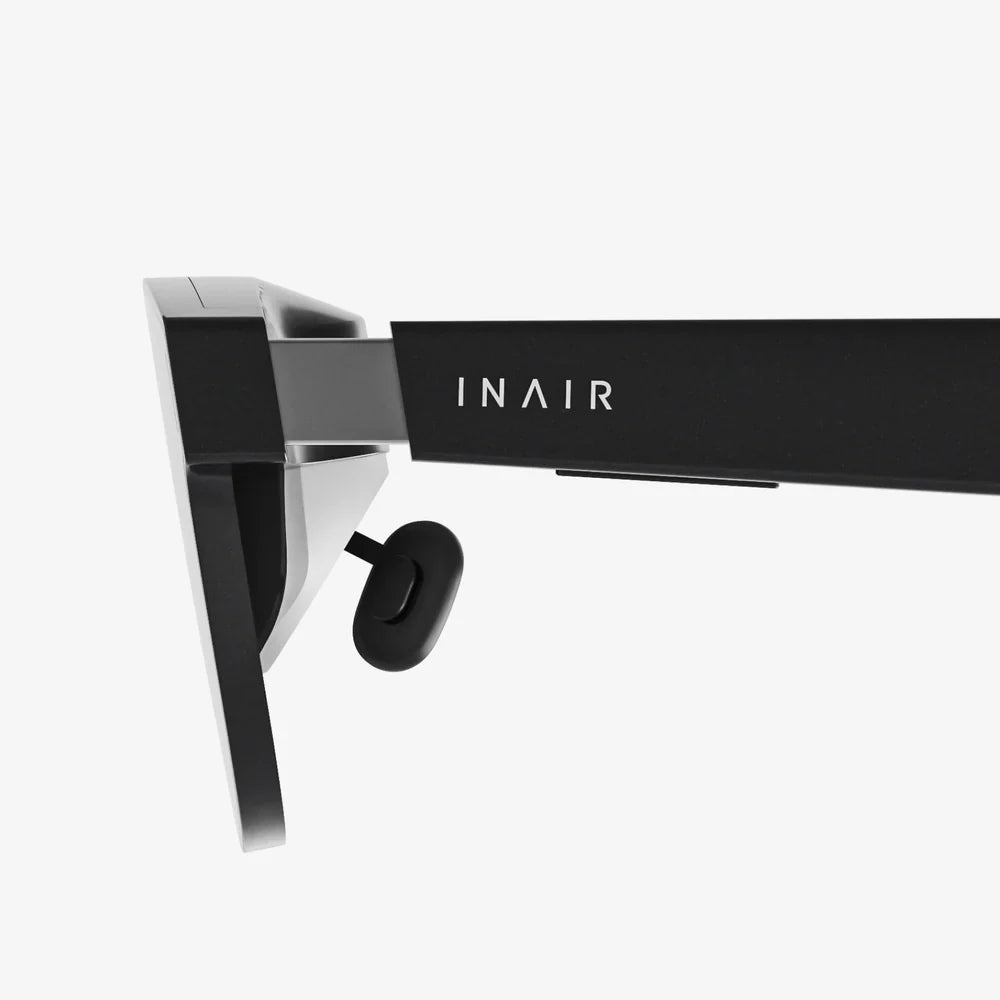
Imagine a world where the digital and physical seamlessly intertwine, not through a screen in your hand, but through the very air you breathe and the space you inhabit. Your surroundings become a dynamic canvas, intelligently responsive to your presence, your needs, and even your unspoken thoughts. This is not a distant science fiction fantasy; it is the imminent future being forged at the intersection of two of the most transformative technologies of our time: Artificial Intelligence and Augmented Reality. The fusion of AI and AR is unlocking a tidal wave of innovation, generating ideas that promise to revolutionize everything from how we work and learn to how we connect and create. We stand on the precipice of a new sensory dimension, and the possibilities are as limitless as our imagination.
The Confluence of Two Revolutions
To understand the power of AI AR ideas, one must first appreciate the unique capabilities that each technology brings to this powerful synergy. Augmented Reality provides the canvas and the context. It is the technological lens that overlays digital information—images, data, 3D models, annotations—onto our perception of the real world. Through AR glasses, smart lenses, or even smartphone cameras, we can enrich our environment with a persistent digital layer.
However, without intelligence, this digital layer is static and dumb. It can show us a pre-rendered 3D model of a sofa in our living room, but it cannot understand if it fits the room's aesthetic, recommend a better alternative based on our past preferences, or adjust the lighting on the model to match the time of day. This is where Artificial Intelligence becomes the indispensable brain. AI, particularly subsets like machine learning, computer vision, and natural language processing, provides the cognition. It is what allows the AR system to see, listen, understand, and reason.
Computer vision algorithms enable the AR device to map the environment, identify objects and surfaces, and understand spatial relationships. Natural language processing allows for voice-controlled, intuitive interaction within the AR space. Machine learning empowers the system to learn from user behavior, predict intent, and personalize the experience in real-time. The combination is greater than the sum of its parts: AR gives AI eyes and a voice in our world, and AI gives AR a brain and the ability to be truly contextual and responsive. This confluence is the engine for the next generation of AI AR ideas.
From Static Overlays to Dynamic Intelligence: The Core Principles
The most groundbreaking AI AR ideas are built upon a few core principles that define this new paradigm of interaction.
Contextual Awareness and Personalization
The dumb AR of yesterday would show every user the same generic information. The AI-powered AR of tomorrow is deeply contextual. By continuously analyzing the environment through its sensors, an AR device can understand not just where you are, but what you are doing. Are you looking at a complex piece of machinery? An AI AR system can instantly overlay step-by-step repair instructions, highlighting the exact bolt you need to turn next. Are you walking through a foreign city? The system can translate street signs in real-time and superimpose historical information about the building you're gazing upon, tailored to your known interests in architecture. The experience is dynamically personalized, shifting from a one-size-fits-all overlay to a bespoke digital assistant that understands your immediate context.
Proactive Assistance and Predictive Analytics
Moving beyond simple responsiveness, advanced AI AR ideas involve systems that can anticipate needs. By learning from vast datasets of user behavior and environmental data, the AI can predict what information or tool you will need next and surface it before you even ask. Imagine a technician working on a wind turbine. The AR system, recognizing the model of the turbine and the specific component being inspected, could proactively highlight a common failure point for that part and display the relevant maintenance log from last quarter. It shifts the user interaction from pull (searching for information) to push (receiving intelligent, timely suggestions), dramatically increasing efficiency and reducing cognitive load.
Generative and Co-Creative Capabilities
This is perhaps the most exciting frontier. Here, AI is not just an analyst but a co-creator within the AR space. Using generative AI models, users can conjure and manipulate digital content through natural language and gesture. An interior designer could say, "Show me a modern chaise lounge in a deep blue fabric right here," and a photorealistic 3D model would instantly generate and place itself in the room. A sculptor could use hand gestures to rough out a digital clay form, with an AI assistant automatically refining the geometry or suggesting complementary shapes. These AI AR ideas transform the user from a consumer of pre-made digital content into a conductor of a generative orchestra, able to manifest complex ideas into their spatial reality with unprecedented ease.
Transforming Industries: A World Remade
The practical applications of these principles are already taking shape, poised to disrupt nearly every sector of the global economy.
Revolutionizing Enterprise and Industrial Workflows
The enterprise space is a primary beneficiary. AI AR ideas are creating the ultimate hands-free, knowledge-on-demand platform for field service, manufacturing, and logistics. Technicians can receive remote expert guidance, with an AI system overlaying precise annotations onto their field of view, literally guiding their hands. In warehouses, AR smart glasses can direct pickers to items via the most efficient route, while AI manages inventory in real-time, predicting stockouts before they happen. On factory floors, assembly line workers can see digital work instructions superimposed on the physical product in front of them, with the AI verifying each step is completed correctly to ensure quality control. This convergence is building a smarter, safer, and vastly more efficient frontline workforce.
Redefining Education and Training
Education will transition from passive learning to active, immersive discovery. Instead of reading about the Roman Empire, students can walk through a digitally reconstructed Forum, with an AI guide narrating history and answering questions. Medical students can practice complex surgical procedures on hyper-realistic AR holograms that respond to their incisions, with an AI tutor providing real-time feedback and adjusting the difficulty of the simulation based on their performance. This learning-by-doing in a risk-free, digitally enhanced environment accelerates skill acquisition and deepens understanding in ways textbooks never could.
Unleashing New Forms of Creativity and Design
For creators, AI AR ideas offer a new medium. Architects and urban planners can design buildings at 1:1 scale, walking clients through virtual structures placed on the actual empty lot. Fashion designers can drape digital fabrics onto real models, using generative AI to instantly create thousands of pattern variations. Artists can use the world as their studio, painting with light in three dimensions or sculpting virtual installations that interact with the wind and sunlight of their physical location. The barrier between idea and prototype, between concept and experience, is dissolving.
Enhancing Daily Life and Social Connection
On a personal level, this technology will become a ubiquitous assistant. Your AR device could help you cook by recognizing ingredients on your counter and suggesting recipes, then overlaying a timer and instructions onto your mixing bowl. It could break down language barriers in real-time, translating subtitles onto a foreign film or providing live transcription of a conversation for someone who is hard of hearing. Socially, it could allow for shared experiences where friends in different parts of the world can interact with the same persistent digital object or play an immersive game that uses all the space in their respective living rooms. The very fabric of our daily social and practical interactions is set to be rewoven.
Navigating the Inevitable Challenges
For all its promise, the path forward is not without significant hurdles. The realization of these ambitious AI AR ideas depends on overcoming profound technical, ethical, and social challenges.
Technologically, we need devices that are socially acceptable—think stylish glasses, not bulky headsets—with all-day battery life, immense processing power, and flawless connectivity. The "perception" problem, teaching AI to understand the nuanced complexity of every possible real-world environment with perfect reliability, remains a monumental task in computer science.
More critically, the ethical implications are vast. The always-on, always-sensing nature of AR devices coupled with powerful AI raises alarming privacy concerns. These systems will have an unprecedented view into our lives, our environments, and our behaviors. Who owns this data? How is it used? The potential for constant surveillance, both corporate and governmental, is a dystopian risk that must be addressed with robust regulation and transparent design principles.
Furthermore, the digital divide could evolve into a sensory divide. Will access to this enhanced reality and the opportunities it affords become a privilege for the wealthy? There is also the risk of reality fragmentation, where individuals exist in heavily personalized information bubbles, seeing a world curated and altered by algorithms, potentially eroding shared factual foundations and deepening social divides. Navigating these challenges is not a sidebar to innovation; it is a prerequisite for building a future that is equitable, ethical, and truly enhancing for all of humanity.
The convergence of AI and AR is not merely another tech trend; it is a fundamental shift in the paradigm of human-computer interaction. We are moving from a world of devices we look at to one of intelligent environments we look through and interact with. The AI AR ideas emerging today are the blueprints for this new reality—a reality where our digital and physical selves are no longer separate, but harmoniously integrated. The canvas is blank, the tools are powerful, and the only limit is our collective imagination. The next great idea might not be written on a whiteboard; it might be generated in the space around you, waiting for you to reach out and bring it to life.
Share:
Compare Wearables Android Compatible: Your Ultimate Guide to Picking the Perfect Device
Compare Wearables Android Compatible: Your Ultimate Guide to Picking the Perfect Device