


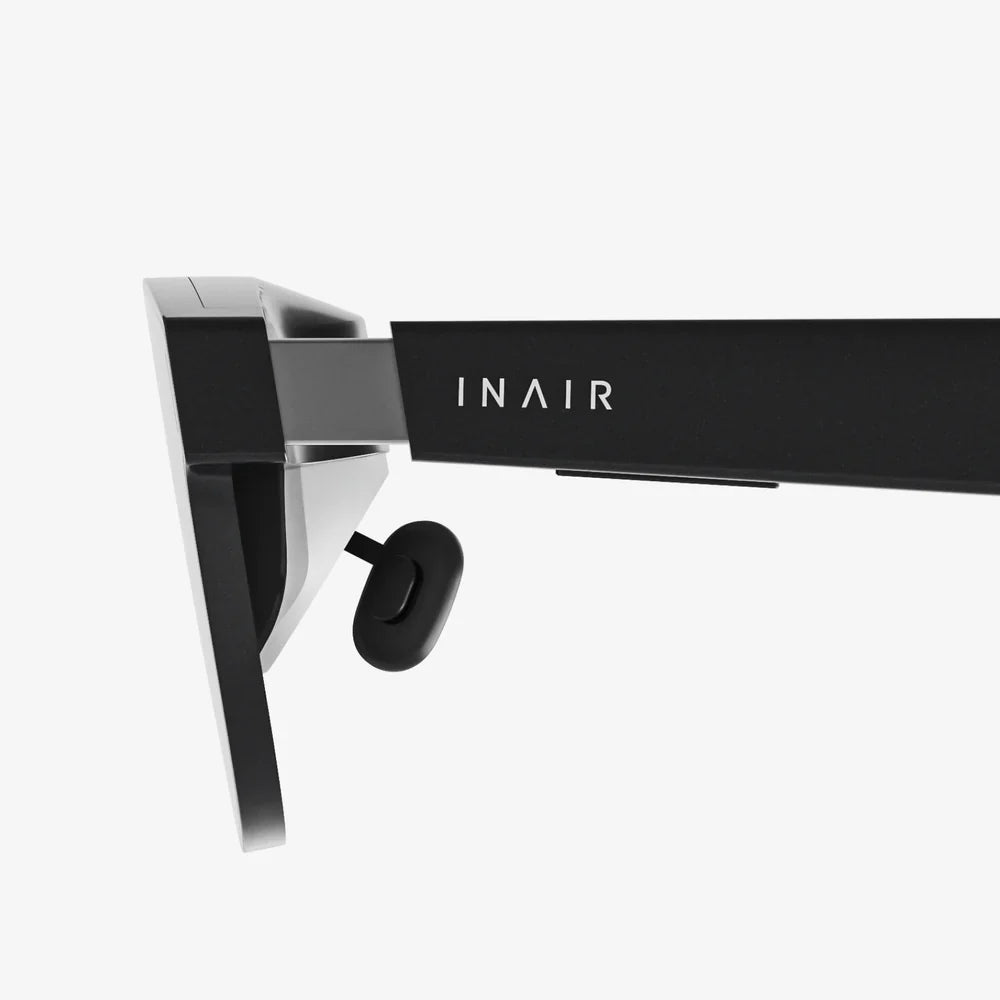
Imagine a world where your surroundings don't just exist; they understand you. A digital assistant doesn’t just respond to your voice but reads your intent from your gaze, a training simulation adapts in real-time to your mistakes, and a virtual architect manipulates holographic blueprints with the fluidity of thought. This isn't a distant sci-fi fantasy. It is the imminent future being forged today at the powerful intersection of three transformative technologies: Artificial Intelligence, Augmented Reality, and Virtual Reality. The fusion of AI based AR VR represents more than a technological trend; it is a fundamental shift in how we compute, interact, and perceive reality itself, promising to dissolve the barriers between the digital and the physical in ways we are only beginning to comprehend.
The Foundational Trinity: Understanding the Core Technologies
Before delving into their powerful synergy, it's essential to define the individual roles of each technology in this triad.
Artificial Intelligence (AI) is the engine of cognition. It refers to the capability of machines and systems to mimic human intelligence processes, including learning from data, recognizing patterns, making decisions, and solving problems. Through subsets like machine learning (ML) and deep learning, AI systems can improve their performance over time without being explicitly reprogrammed for every new task.
Augmented Reality (AR) is the art of overlay. It superimposes computer-generated digital information—images, sounds, text—onto the user's view of the real world. The goal of AR is not to replace reality but to enhance it, providing additional context and information seamlessly integrated into our natural environment. This is typically experienced through smartphone cameras, smart glasses, or heads-up displays.
Virtual Reality (VR) is the craft of immersion. It creates a completely computer-generated simulation of an environment, completely replacing the user's real-world surroundings. Using a head-mounted display (HMD) and motion-tracking equipment, VR plunges the user into a digital world, isolating them from physical reality to create a sense of true presence and immersion.
For years, AR and VR operated largely as separate, parallel tracks in the race toward spatial computing. However, their potential was inherently limited. AR systems were often clumsy, projecting generic information that didn't truly understand the context of the environment. VR worlds, while immersive, were largely static and scripted, lacking the dynamism and unpredictability of reality. This is where AI enters the equation, not as a fourth wheel, but as the essential catalyst that unlocks the true potential of both.
The Catalyst: How AI Empowers and Elevates AR and VR
Artificial Intelligence acts as the central nervous system for intelligent AR and VR experiences. It provides the critical capabilities that move these technologies from being passive viewers to active, understanding participants in our world.
1. Environmental Understanding and Semantic Recognition
Early AR could place a digital cartoon character on your table, but it didn't know what the table was. AI-powered computer vision changes this entirely. Deep learning models can be trained to not only identify objects (a chair, a wall, a computer) but also understand their properties and relationships within a space.
- Object Recognition and Tracking: AI algorithms can identify and track countless objects in real-time with high accuracy, allowing digital content to interact with the physical world realistically. A virtual ball can bounce off your real sofa because the AI recognizes the sofa as a solid object.
- Surface Detection and Mapping: AI enhances SLAM (Simultaneous Localization and Mapping) techniques, allowing devices to understand the geometry of a room—distinguishing between floors, walls, ceilings, and irregular surfaces. This enables persistent placement of AR objects that stay locked in place.
- Semantic Understanding: This is the leap from seeing to comprehending. AI can understand that a flat, horizontal surface is a "desk" suitable for placing a virtual lamp, while a vertical, rectangular surface is a "window" that light should shine through. This contextual awareness is what makes AR feel truly magical and intuitive.
2. Enhanced User Interaction and Intuitive Interfaces
AI shatters the limitations of traditional controllers and touchscreens, enabling natural and intuitive interaction within AR and VR environments.
- Gesture and Gaze Tracking: AI models can interpret hand gestures, finger movements, and even eye gaze with remarkable precision. This allows users to manipulate virtual objects as if they were physical—pushing, pulling, rotating, and selecting with their hands. In a medical AR application, a surgeon could navigate 3D scans with a wave of their hand without breaking sterility.
- Voice and Natural Language Processing (NLP): Integrating AI-powered voice assistants creates a hands-free, conversational interface. A technician wearing AR glasses can ask, "Show me the wiring diagram for this component," and the AI, understanding both the command and the context of the component in view, can instantly overlay the correct schematic.
- Emotion and Intent Recognition: The next frontier involves AI that can read user emotions through facial expression analysis or physiological signals. A VR training simulation for public speaking could adapt the audience's behavior based on the user's visible nervousness, providing a tailored experience.
3. Dynamic Content Generation and Personalization
AI ensures that no two experiences are exactly the same, generating content that is dynamic, responsive, and uniquely tailored to the individual user.
- Procedural Content Generation: In VR, AI can generate vast, complex, and unique environments on the fly, creating endless possibilities for exploration in gaming, architecture, and simulation. Instead of a pre-built world, the AI constructs it dynamically as the user moves through it.
- Adaptive Learning and Difficulty Scaling: AI can act as a personalized guide or opponent. In an educational VR module, the AI can identify a student struggling with a concept and automatically generate new, simpler practice problems or offer hints. In a VR game, the AI can adjust the difficulty of enemies in real-time based on the player's skill level.
- Personalized AR Feeds: Imagine walking through a city with AR glasses. An AI curator, knowing your interests, history, and current goals, could highlight relevant information—the history of a building you're looking at, a restaurant menu that fits your diet, or navigation cues tailored to your walking pace. It filters the world's noise to show you only what matters.
4. Realistic Avatars and Social Presence
For social VR and collaborative AR to feel genuine, the digital representations of people must be convincing. AI is crucial for creating realistic and responsive avatars.
- Facial Animation and Expression: AI-driven algorithms can track a user's facial expressions in real-time via cameras and map them precisely onto a digital avatar. This captures the subtle nuances of a smile, a frown, or a raised eyebrow, conveying emotion and intent that is critical for meaningful communication.
- Voice-driven Animation: AI can also animate avatars based on speech patterns, ensuring the mouth movements and expressions sync naturally with the spoken words, even for users without advanced face-tracking hardware.
- Behavioral Modeling: Advanced AI could learn a user's mannerisms and speech patterns over time, allowing their avatar to exhibit lifelike idle animations and behaviors that reinforce the sense of a real person being present.
Transforming Industries: Practical Applications of AI Based AR VR
The theoretical power of this technological symbiosis is already manifesting in tangible, revolutionary applications across the economic spectrum.
Healthcare and Medicine: Saving Lives with Enhanced Vision
The healthcare sector is witnessing some of the most profound impacts. AI based AR VR is moving from the lab to the operating room and the clinic.
- Surgical Planning and Augmented Surgery: Surgeons can use VR to rehearse complex procedures on patient-specific 3D organ models generated from MRI or CT scans. During the actual surgery, AR glasses can overlay these models onto the patient's body, providing an X-ray vision-like view of critical structures like nerves, blood vessels, and tumors, all guided by AI to ensure precision alignment.
- Medical Training and Simulation: VR simulations powered by AI can create highly realistic patient scenarios that react to a student's actions. The AI patient can deteriorate, improve, or respond to drugs in real-time, providing an unparalleled training ground without risk.
- Patient Rehabilitation and Therapy: AR and VR make physical therapy engaging. AI can track a patient's movements during exercises, provide real-time form correction through AR overlays, and adjust the difficulty of VR games to match recovery progress. It's also being used effectively for exposure therapy in treating phobias and PTSD.
Manufacturing, Engineering, and Maintenance
In industrial settings, the combination is driving unprecedented gains in efficiency, safety, and accuracy.
- Assembly and Repair Guidance: AR glasses can provide workers with step-by-step holographic instructions overlaid directly onto machinery. AI makes this intelligent by recognizing the specific model of equipment and customizing the instructions. It can highlight the exact bolt to turn, warn if a step is missed, and display torque values, drastically reducing errors and training time.
- Remote Expert Assistance: An on-site technician wearing AR glasses can stream their view to a remote expert. The expert can then draw annotations and instructions that appear in the technician's field of view. AI can enhance this by automatically identifying parts and pulling up relevant manuals or schematics based on what the camera sees.
- Design and Prototyping: Engineers and designers can collaborate in a shared VR space to interact with life-size 3D models of new products. AI can run simulations within this virtual environment, testing for stress, aerodynamics, or ergonomics in real-time, allowing for rapid iteration before a physical prototype is ever built.
Education and Corporate Training
The era of passive learning is ending. AI based AR VR creates immersive, interactive, and deeply memorable educational experiences.
- Immersive Learning: Instead of reading about ancient Rome, students can walk through a digitally reconstructed Forum, with AI-driven virtual citizens going about their day. Biology students can step inside a human cell and interact with its organelles.
- Personalized Skill Development: Corporate training for tasks like public speaking, sales pitches, or emergency response can be conducted in safe VR environments. An AI coach can analyze performance, provide feedback on speaking pace, use of filler words, eye contact, and more, offering a level of personalized feedback impossible in a traditional classroom.
Retail and E-Commerce
The way we shop is being reimagined, blending the convenience of online shopping with the confidence of in-person inspection.
- Virtual Try-On and Preview: AR apps allow customers to see how furniture would look in their living room, how clothes would fit on their body, or how a new paint color would appear on their walls. AI enhances this by ensuring accurate scaling, lighting, and shadow rendering for photorealism, and by recommending products based on user preferences and past behavior.
Navigating the Challenges and Ethical Considerations
Despite its immense promise, the path forward for AI based AR VR is not without significant hurdles and profound ethical questions.
- Data Privacy and Security: These technologies are inherently data-hungry. They continuously capture vast amounts of visual and audio data from our homes, workplaces, and public spaces. The question of who owns this data, how it is stored, and how it is used is paramount. The risk of pervasive surveillance is a serious concern that must be addressed with robust regulation and transparent data policies.
- Hardware Limitations: For truly seamless experiences, we need devices that are powerful, socially acceptable, lightweight, and have all-day battery life. Current hardware often struggles with the immense computational demands of running advanced AI and high-fidelity graphics simultaneously. Breakthroughs in processing, battery technology, and display miniaturization are still required.
- User Safety and Reality Blurring: Immersing users in virtual worlds or augmenting their reality poses physical risks, from tripping over real objects while engaged in VR to distracted walking in AR. Furthermore, the potential for addiction, the psychological impact of blurring lines between real and virtual, and the use of these technologies for sophisticated misinformation and deepfakes are societal challenges we must proactively confront.
- Algorithmic Bias: The AI models that power these systems are trained on data created by humans. If this data contains societal biases, the AI will perpetuate and potentially amplify them. An AR system that fails to accurately track darker skin tones or a VR hiring simulation that favors one demographic over another are real dangers that require diligent effort to mitigate.
The Future is a Blended Reality
The trajectory is clear: the distinct lines between AI, AR, and VR will continue to blur, evolving toward a unified field of spatial computing. We are moving toward always-available, context-aware, intelligent systems that augment our perception, cognition, and interaction with the world. The device itself may eventually fade into the background—a pair of ordinary-looking glasses or even contact lenses—while the AI-powered digital layer becomes an inseparable and invaluable extension of our own minds.
The ultimate potential of AI based AR VR is not to help us escape reality, but to help us understand it more deeply, connect with it more meaningfully, and interact with it more powerfully. It promises to augment not just our reality, but our very humanity, expanding the limits of creativity, empathy, and knowledge. The journey into this blended world has already begun, and its destination will be shaped by the choices we make today.
This isn't just about the next generation of entertainment or a new gadget; it's about building a new layer of human experience. The fusion of AI with AR and VR is quietly constructing the lens through which we will all see, learn, and connect tomorrow—and that future is arriving faster than anyone anticipated. The question is no longer if this integrated reality will become commonplace, but how quickly we can adapt to harness its full potential for progress.
Share:
AI Tools for Business: The Ultimate Guide to Transforming Operations and Driving Growth
Define VR: A Comprehensive Exploration of Virtual Reality Technology