


- by wangfred
AI Based Glasses: The Invisible Revolution Reshaping Our Reality
- by wangfred
Imagine a world where your perception is no longer limited by your biological senses, where information flows as naturally as sight, and where the boundary between the digital and physical realms dissolves into a seamless, augmented experience. This is not a distant science fiction fantasy; it is the imminent future being built today, and it’s being worn on our faces. The convergence of advanced optics, miniature sensors, and powerful artificial intelligence is birthing a new category of device that promises to be as transformative as the smartphone: AI based glasses. This technology is poised to leap from the pages of tech blogs and into our daily lives, fundamentally altering how we work, socialize, navigate, and understand the world itself.
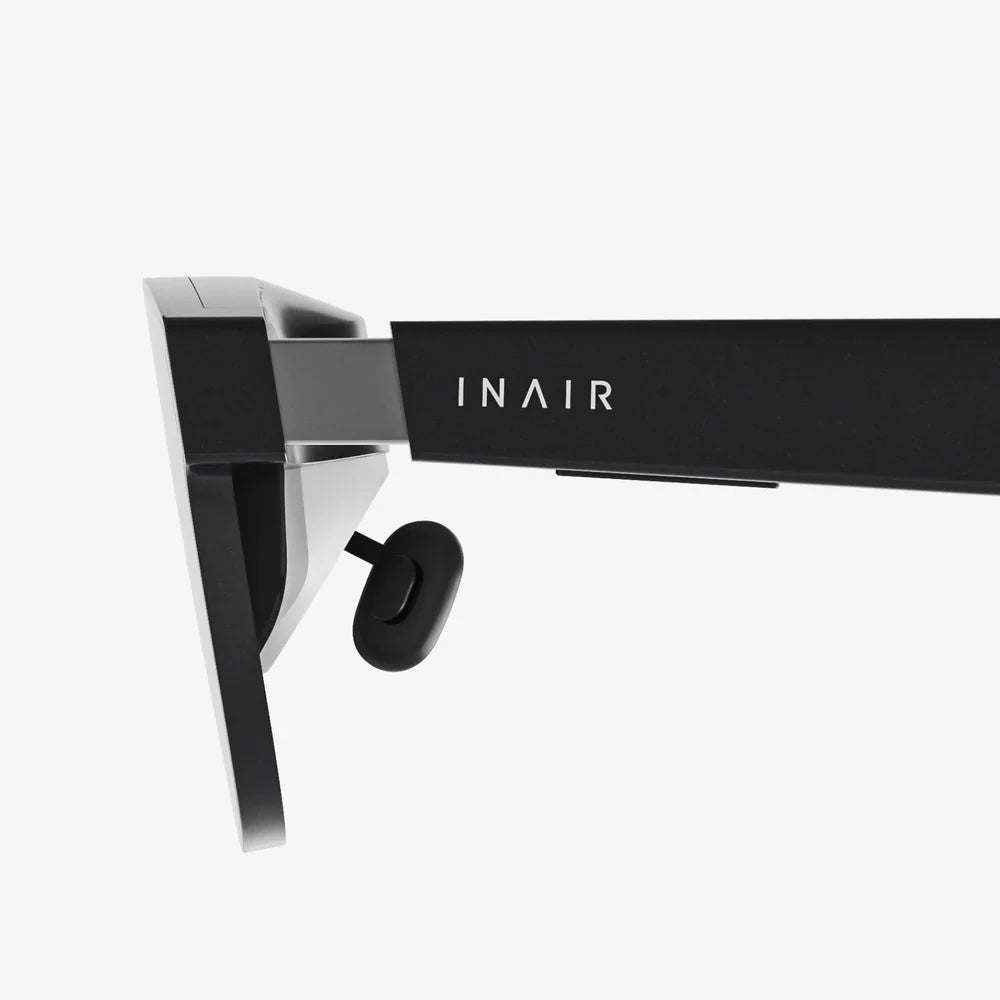
To the casual observer, a pair of AI based glasses might look like a slightly bulkier version of standard eyewear. But hidden within their sleek frames and lenses is a dense ecosystem of sophisticated technology, a symphony of hardware and software working in perfect harmony.
At the core of this system is the visual processing unit. This isn't just a camera; it's a set of sophisticated sensors, including high-resolution image sensors and often depth sensors or time-of-flight cameras, that act as the digital eyes. They continuously capture the world in front of the wearer, feeding a raw data stream of pixels and depth information to the brain of the operation.
That brain is the on-device AI processor, a specialized chip designed for one primary task: running complex neural networks at high speed and with extreme power efficiency. This is the true differentiator. Earlier attempts at smart glasses relied on a constant, high-bandwidth connection to a smartphone or cloud server to process visual data. The latency—the delay between seeing something and getting a response—made interactions clunky and unnatural. Modern AI glasses perform this processing directly on the device, a feat known as edge computing. This eliminates latency, preserves battery life by not constantly transmitting data, and, crucially, enhances user privacy by keeping sensitive visual data local.
This onboard AI is running a suite of powerful algorithms capable of real-time object recognition, scene understanding, and optical character recognition (OCR). It can identify a person's face, read a street sign in a foreign language, recognize a product on a shelf, or understand the layout of a room instantly. This processed information then needs to be presented to the user, which is the job of the optical display. Technologies like micro-LEDs projected onto waveguides or holographic optical elements beam digital images directly into the user's retina, overlaying text, graphics, and animations onto their real-world view. All of this is powered by a compact yet high-density battery and managed by a sophisticated operating system designed for constant, context-aware operation.
The potential applications for this technology are vast, stretching across every facet of human existence. They promise not just to add features to our lives but to fundamentally enhance our capabilities.
One of the most immediate and profound impacts of AI glasses is in the field of accessibility. For the visually impaired, this technology can act as a powerful seeing-eye guide. Imagine glasses that can narrate the world: describing the scene ahead (“a busy crosswalk, wait for the signal”), identifying obstacles (“a curb ahead, step down”), reading menus aloud, and even recognizing friends as they approach and whispering their name into your ear. For those who are deaf or hard of hearing, real-time speech-to-text transcription can be displayed directly in their field of view, turning conversations into captioned interactions and making group discussions infinitely more accessible. This isn't just convenience; it's a tool for genuine independence and social inclusion.
The industrial and professional world is ripe for augmentation. For a field technician repairing a complex piece of machinery, AI glasses can overlay schematic diagrams, highlight the specific component to be replaced, and provide a hands-free video call with an expert guiding them through each step. Surgeons could have vital patient statistics and 3D anatomical guides superimposed on their view during an operation. Architects could walk through a physical building and see the underlying electrical and plumbing systems through the walls. The concept of the “digital twin”—a virtual copy of a physical object—becomes interactive and immediate, allowing workers to manipulate and understand complex systems in situ.
On a more personal level, AI glasses promise to dissolve the friction between our digital and social lives. Instead of constantly looking down at a phone for directions, arrows and street names can be painted onto the road itself. Meeting a new colleague? Their name, role, and a recent shared project could discreetly appear next to their face, saving you from awkward introductions. Traveling abroad could mean seeing real-time translations of signs and conversations, effectively breaking down language barriers. This constant, contextual stream of information creates a layer of intelligence over the world, making navigation, social interaction, and learning more fluid and intuitive than ever before.
However, this powerful technology does not arrive without significant and profound ethical dilemmas. The very features that make AI glasses so transformative also make them potentially invasive and dangerous if not developed and regulated with extreme care.
The most glaring concern is privacy. A device that is always-on and always-looking represents the ultimate surveillance tool. The ability to secretly record video, identify strangers through facial recognition, and gather data on everyone and everything in the environment raises dystopian specters of a society with no anonymity. Without strong ethical frameworks and clear regulations, we risk creating a world of constant, involuntary surveillance where anyone wearing glasses could be a potential recorder, fundamentally eroding trust in public spaces.
This leads directly to the issue of consent. If you are being recorded or identified by someone's AI glasses in a café, do you have a right to know? Should there be clear visual or auditory signals when recording is happening? How does society establish new norms for a world where remembering a face is no longer a human limitation but a digital function that can be searched and shared? The legal and social frameworks for this are virtually nonexistent.
Furthermore, the data ownership question is paramount. The visual data captured by these devices is incredibly intimate. Who owns it? The user? The manufacturer? Could it be mined for advertising purposes, or even subpoenaed by governments? The potential for misuse is staggering, requiring robust encryption and clear, transparent data policies that prioritize the user's rights above all else.
Finally, there is the psychological and social impact of living in an augmented reality. Will constant notifications and information overlays lead to further distraction and anxiety, pulling us further from the present moment? Could it create a new digital divide between those who can afford augmented intelligence and those who cannot? These are not merely technical challenges but deep philosophical questions that we must grapple with as a society.
The path to mainstream adoption of AI glasses is still fraught with hurdles. Battery life remains a significant constraint; true all-day computing on such a small form factor is a monumental engineering challenge. Social acceptance is another major barrier. Google Glass famously faltered in part because of the “glasshole” stigma—the social awkwardness and privacy concerns of wearing a camera on your face. Overcoming this will require designs that are indistinguishable from fashionable eyewear and features that provide undeniable utility without being intrusive.
Furthermore, we need to develop a more intuitive and subtle user interface than voice commands or a tiny touchpad. Future iterations may rely on nuanced gestures, eye-tracking, or even neural interfaces to create a truly seamless interaction. The software ecosystem, or the “app store” for augmented reality, is also in its infancy. Developers are still discovering the language and paradigms for building useful and engaging AR experiences.
Despite these challenges, the momentum is undeniable. The technological pieces are falling into place, and the potential benefits are too great to ignore. We are moving from a world of mobile-first to a reality that is ambient-first, where computing is everywhere, context-aware, and invisible. AI based glasses are the vanguard of this shift, the first true embodiment of a future where technology doesn't demand our attention but quietly enhances our capabilities within our natural environment.
The next time you put on a pair of glasses, take a moment to look around. Soon, that simple act will be the gateway to a layer of intelligence, connection, and understanding woven directly into the fabric of your reality. The revolution won't be displayed on a screen you hold in your hand; it will be reflected in your eyes, changing everything you see and everything you can be.