


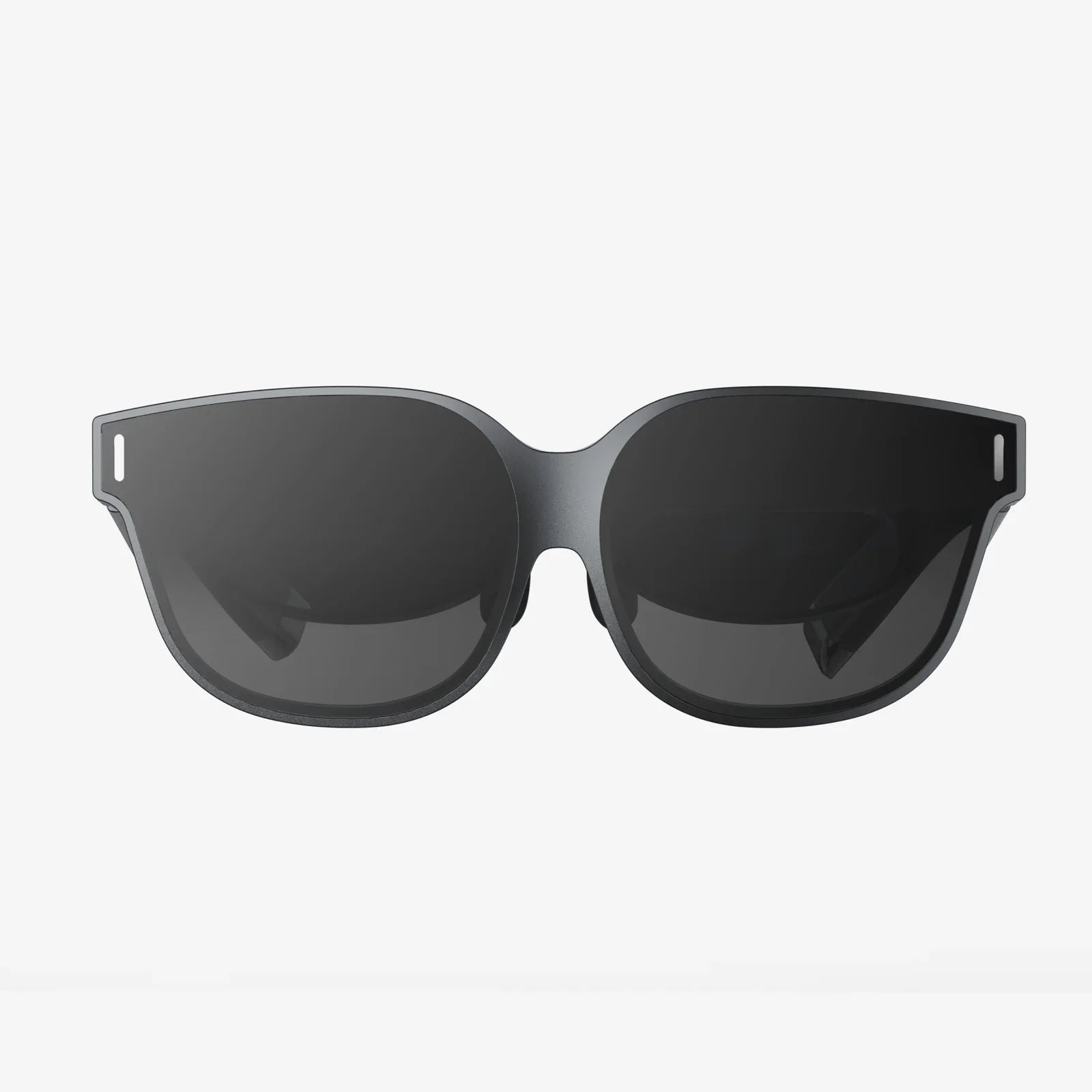
Imagine a world where your surroundings don't just respond to your commands but anticipate your needs, where the very fabric of your home, your car, and your city is woven with threads of intelligent, responsive computing. This isn't a distant sci-fi fantasy; it's the burgeoning reality being built today by innovators at the bleeding edge of AI based hardware projects. This fusion of sophisticated algorithms with tangible, physical components is breaking computers out of their rectangular boxes and embedding cognition into the world around us, creating a silent revolution that promises to be more transformative than any technological shift we've seen before.
The Symbiotic Fusion of Silicon and Intelligence
The journey of artificial intelligence has been a rollercoaster, from its theoretical beginnings to the software-driven explosion of the last decade. For years, the focus was almost exclusively on algorithms—building more complex neural networks, training larger models on massive datasets in sprawling cloud data centers. However, a fundamental bottleneck emerged: the hardware running these advanced algorithms was fundamentally general-purpose. Central Processing Units (CPUs), the workhorses of computing for decades, are brilliant at handling a wide variety of tasks sequentially but are notoriously inefficient at the parallel mathematical computations that are the lifeblood of neural networks.
This inefficiency sparked a paradigm shift. Instead of forcing generic hardware to run AI software, a new wave of engineers began asking a revolutionary question: what if we built hardware specifically designed for the unique demands of AI? This gave birth to the core concept behind modern AI based hardware projects: specialized integrated circuits. Unlike CPUs, these chips are architected from the ground up to perform the massive matrix multiplications and convolutions required for deep learning with breathtaking speed and minuscule power consumption. This specialization is the key that unlocks true intelligence at the edge, far from the cloud's reach.
Key Architectures Powering the Intelligent Edge
Not all AI accelerators are created equal. Different AI based hardware projects leverage a variety of architectural approaches, each with its own strengths and ideal applications.
Neural Processing Units (NPUs)
NPUs represent a category of processors specifically designed as accelerators for machine learning algorithms. They are often integrated into larger System-on-a-Chip (SoC) designs, sitting alongside CPUs and GPUs to handle AI inference tasks. Their design is hyper-specialized, featuring thousands of tiny, efficient cores that work in parallel to process predictive models. This makes them exceptionally power-efficient, allowing them to be embedded in mobile phones to enhance photography, in smart speakers to process wake words locally, and in sensors that must run for years on a single battery.
Field-Programmable Gate Arrays (FPGAs)
For researchers and developers, flexibility is sometimes as important as raw power. FPGAs are semiconductor devices that can be reconfigured and programmed after manufacturing. This allows engineers to create a custom hardware architecture optimized for their specific neural network model. An FPGA can be programmed one day to accelerate a natural language processing model and reconfigured the next for a computer vision task. This malleability makes FPGAs an invaluable tool for prototyping new AI algorithms and for deploying adaptable systems in environments where requirements may change, such as scientific research or complex industrial automation.
Application-Specific Integrated Circuits (ASICs)
When a particular AI task is standardized and demands maximum performance and efficiency, the ultimate solution is an ASIC. These are chips custom-built for a single application or a very narrow set of tasks. The development cost is high and the design is fixed upon manufacture, but the payoff is unparalleled performance. They represent the pinnacle of specialization for AI based hardware projects, offering astounding computational density and energy efficiency that NPUs and FPGAs cannot match. They are the engines behind the most demanding AI applications, from vast data center inference clusters to the autonomous driving systems currently in development.
Revolutionizing Industries from the Ground Up
The impact of moving AI from the cloud into dedicated hardware is seismic, enabling applications that were previously impossible, too slow, or too power-hungry to be practical.
Edge Computing and the Internet of Things (IoT)
This is perhaps the most fertile ground for AI based hardware projects. Traditional IoT operates on a simple premise: sensors collect data and send it to the cloud for processing and analysis. This model creates crippling latency, massive bandwidth consumption, and significant privacy concerns. AI hardware flips this model on its head. An intelligent camera with an onboard NPU can analyze video footage in real-time, identifying specific objects or events—a person entering a restricted area, a defective product on an assembly line—and only send a curated alert instead of a constant, bandwidth-choking video stream. This enables true real-time decision-making at the source of data generation, making everything from smart agriculture to industrial predictive maintenance vastly more efficient and robust.
Robotics and Autonomous Systems
Robots, whether they are vacuuming floors or navigating city streets, cannot afford the latency of a round-trip to a cloud data center. Their survival and functionality depend on millisecond-level reactions. AI hardware provides the computational brainpower for real-time sensor fusion, path planning, and obstacle avoidance. A delivery robot can use its on-board vision processor to instantly identify a pedestrian stepping onto the road, and an autonomous drone can adjust its flight path to avoid a bird based on local processing alone. This autonomy is what separates automated machines from truly intelligent agents.
Healthcare and Biotechnology
The potential for life-saving applications here is immense. Portable medical diagnostic devices equipped with AI chips can analyze blood samples or medical imagery at the point of care, providing instant results in remote clinics. Wearable health monitors can track vitals and use on-device learning to detect subtle, personalized anomalies that signal an oncoming epileptic seizure or a hypoglycemic event, alerting the wearer or their doctor immediately. This moves critical diagnostic power from the hospital lab directly into the hands of individuals and community health workers, democratizing access to advanced healthcare.
Smart Homes and Consumer Electronics
The consumer market is already experiencing this shift. Smartphones use dedicated AI chips to power computational photography, stitching together multiple images in real-time for perfect low-light shots. Smart displays can use gaze detection to understand user interest. Televisions can upscale content. Crucially, this processing is done on-device, keeping private conversations and video data within the home, addressing growing consumer concerns about privacy and data security.
The Developer's Toolkit: Building the Next Generation
The proliferation of this technology has been accelerated by the development of accessible hardware platforms aimed at makers, students, and professional developers. These single-board computers and developer kits, often no larger than a credit card, pack enough processing punch to run complex neural networks. They come with cameras, microphones, and arrays of sensors, providing a complete toolkit for prototyping everything from a gesture-controlled interface to an autonomous rover. This democratization of powerful AI hardware has unleashed a tsunami of creativity, allowing a new generation of innovators to experiment and build intelligent solutions without a multi-million-dollar lab.
Navigating the Challenges on the Horizon
Despite the exciting progress, the path forward for AI based hardware projects is not without its significant hurdles. The design and fabrication of custom silicon is an extraordinarily expensive and complex endeavor, creating a high barrier to entry. Furthermore, the field is grappling with a critical shortage of engineers who possess the rare cross-disciplinary expertise spanning electrical engineering, computer architecture, and machine learning. There is also the looming question of sustainability. As we embed billions of intelligent devices into our environment, the lifecycle management of this hardware and the energy footprint of manufacturing it become pressing concerns that the industry must address responsibly.
We are standing at the precipice of a new era, one defined not by what our computers can do, but by what our world can do now that it is becoming a computer. AI based hardware projects are the chisels and brushes shaping this new reality, transforming inert objects into responsive partners. The intelligence is no longer out there in the cloud; it's in the camera that sees, the speaker that listens, and the car that navigates. It’s becoming ambient, woven into the very infrastructure of our lives, promising a future that is not only connected but truly cognizant.
Share:
Good AI Glasses: The Invisible Revolution Reshaping Our Digital Lives
Glasses Chip: The Invisible Revolution Reshaping Your Digital World