


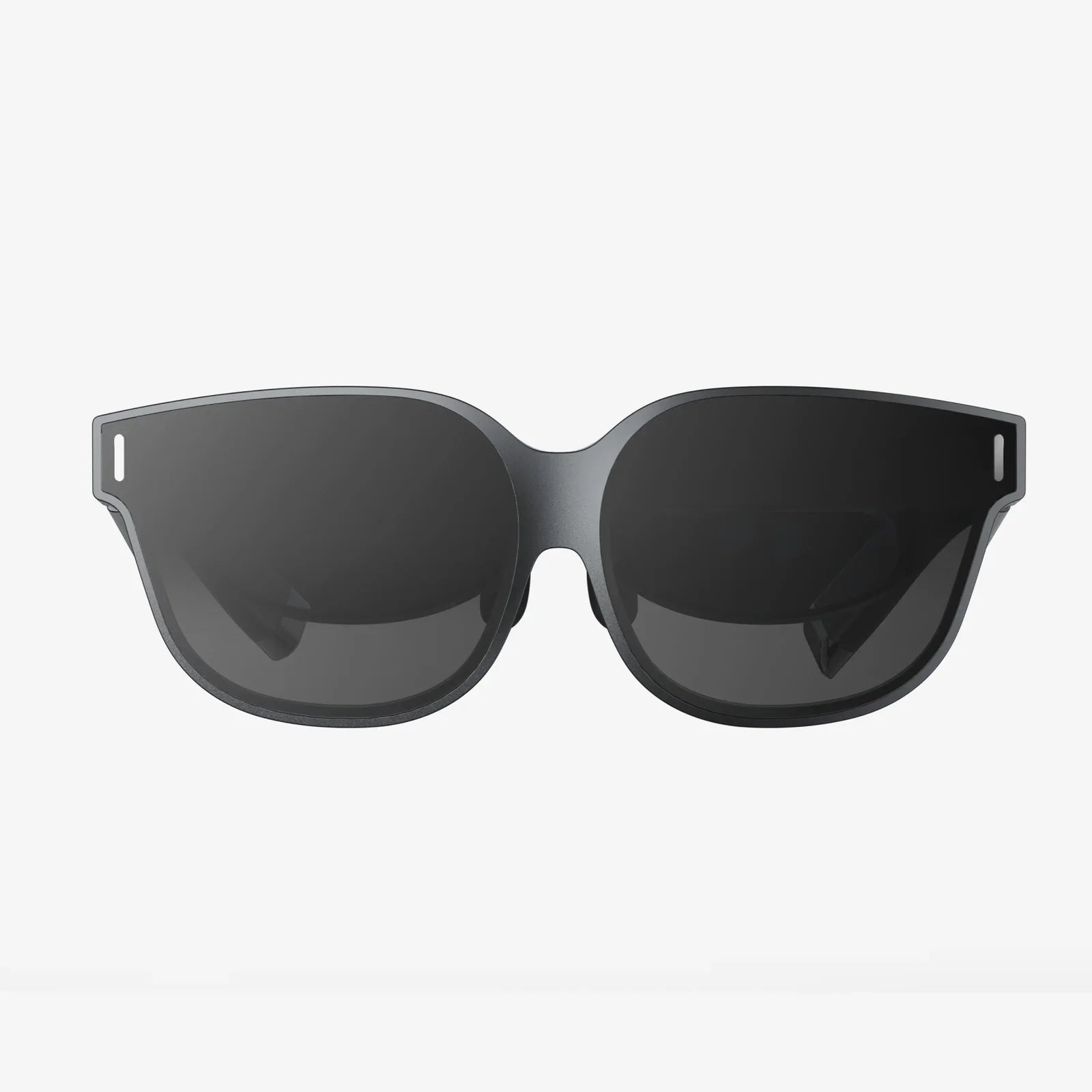
- by wangfred
AI Blocking Glasses: The Unexpected Frontier of Personal Privacy and Digital Defense
- by wangfred
Imagine walking through a city where every camera is a potential witness, every facial recognition system a silent identifier, and your every movement could be logged, analyzed, and stored without your knowledge or consent. Now imagine a simple, elegant pair of glasses that could render you a digital ghost, invisible to the all-seeing eyes of artificial intelligence. This is not science fiction; it is the provocative promise of AI blocking glasses, a technology that is as much a philosophical statement as it is a physical accessory, pushing us to confront the very boundaries of privacy in the 21st century.
The concept of AI blocking glasses did not emerge from a vacuum. It is a direct response to the rapid and often unregulated proliferation of facial recognition technology. From law enforcement databases and retail analytics to social media tagging and public security cameras, our faces have become a primary key for unlocking vast troves of personal data. This constant, passive data harvesting has created a palpable sense of unease, a feeling of being perpetually watched in what scholars term the 'panopticon' of modern life.
In this climate, a need arose for a tool that could reclaim a measure of anonymity. Early attempts at digital camouflage involved elaborate makeup patterns or clothing designed to confuse algorithms. However, these were often impractical for daily use. The innovation of AI blocking glasses was to distill this counter-surveillance concept into a wearable, socially acceptable, and effective form factor. They represent a tangible solution for those seeking to opt-out of pervasive biometric tracking, offering a shield for the individual against the expansive reach of corporate and governmental AI systems.
At their core, AI blocking glasses function by exploiting the fundamental weaknesses of how facial recognition algorithms 'see' and process images. These systems typically work by first detecting a face within a frame, then identifying key nodal points—the distance between the eyes, the width of the nose, the shape of the jawline. These points create a unique facial signature, which is then compared against a database.
AI blocking glasses disrupt this process through two primary methods, often used in combination:
The most sophisticated pairs feature near-infrared (NIR) light-emitting diodes (LEDs) embedded around the frames. These LEDs project patterns of light onto the wearer's face that are invisible to the human eye but overwhelmingly bright to digital cameras and sensors. This creates a 'blinding' effect, washing out the facial features with noise and making it impossible for the algorithm to accurately identify or map the key nodal points. To the AI, the face becomes an incomprehensible glare of overexposed data.
This method involves printing or embedding specific, high-contrast patterns onto the lenses or frames. These patterns are not random; they are carefully designed using a technique from machine learning known as an 'adversarial attack.' These patterns are calculated to trigger misclassifications in the neural network. Instead of seeing a face, the AI might be tricked into seeing a different object entirely, like a cartoon or an animal, or it might simply fail to register a face at all, dismissing the entire area as visual static. It's a digital sleight of hand, exploiting the AI's own logic to defeat it.
The critical question for any potential user is: do they really work? The answer is nuanced. Against many commercial, off-the-shelf facial recognition systems, particularly older or less sophisticated models, these glasses have demonstrated a high degree of effectiveness in controlled tests. They can successfully prevent detection and identification in a variety of lighting conditions.
However, their efficacy is not absolute. The field of AI is a relentless arms race. As defensive technologies like these glasses emerge, AI developers are already working on countermeasures. More advanced algorithms are being trained on datasets that include images of people wearing such devices, learning to ignore the visual noise or to identify a person by features the glasses cannot obscure, such as their gait, ear shape, or body proportions. Furthermore, the effectiveness can vary dramatically depending on the angle of the camera, the resolution of the image, and the specific algorithm being used. They are a powerful tool, but not an infallible cloak of invisibility.
The emergence of AI blocking glasses has ignited a fierce debate that sits at the intersection of law, ethics, and technology. On one side of the argument is the fundamental right to privacy. Proponents argue that individuals have an inherent right to control their own biometric data and to move through public spaces without being automatically identified and tracked. These glasses are framed as a necessary tool for exercising that right in a world that is increasingly hostile to it. They are a form of self-defense for journalists, activists, whistleblowers, and any citizen wary of mass surveillance.
The counter-argument, often put forth by law enforcement and security agencies, centers on public safety and security. They contend that the widespread adoption of such technology could hamper criminal investigations, hinder the search for missing persons, and allow malicious actors to operate with enhanced anonymity. Some jurisdictions have already begun to explore legislation that would ban the use of such devices in specific sensitive areas, like banks or airports, setting the stage for a legal battle over where the line between personal privacy and public security should be drawn.
Ultimately, AI blocking glasses serve as a Rorschach test for society's attitude towards technology and privacy. Your view of them likely depends on your level of trust in the institutions deploying surveillance technology. For some, they are a paranoid accessory for the overly cautious. For others, they are an essential piece of equipment for maintaining a shred of personal autonomy.
Their existence forces us to ask difficult questions: What does it mean to have a private life in public? Should we have to wear a special device to achieve a basic level of anonymity? By creating a market for counter-surveillance wearables, are we normalizing a future where privacy is a premium feature rather than a default right? The glasses themselves are a symptom of a much larger disease: the unchecked advancement of surveillance capitalism and the erosion of digital consent.
The development of AI blocking technology is unlikely to stop at glasses. We are already seeing research into accessories, clothing, and even makeup that utilizes similar adversarial principles. This signals the beginning of a long-term technological tug-of-war. As privacy-enhancing technologies become more advanced and accessible, surveillance systems will evolve in response, becoming more robust and perhaps less reliant on the facial features these current devices target.
This ongoing battle may lead to a paradoxical outcome: a world where both surveillance and counter-surveillance are ubiquitous, canceling each other out in a digital stalemate. Alternatively, it could lead to a societal reckoning where we collectively establish clear, ethical, and legally binding rules for the use of biometric technology, rendering such defensive tools unnecessary. The path we take depends not just on technologists, but on lawmakers, advocates, and the choices of the general public.
So, the next time you see someone wearing a pair of sleek, modern frames, look closer. They might just be a fashion statement. But they could also be a walking manifesto, a silent protest against the invisible data extraction happening all around us. They are a symbol of resistance, a small but significant step in the fight to ensure that in the age of artificial intelligence, the human right to anonymity is not just preserved, but fiercely defended.
Share:
Latest AI Glasses 2025: The Dawn of Invisible Computing
Latest AI Glasses 2025: The Dawn of Invisible Computing