


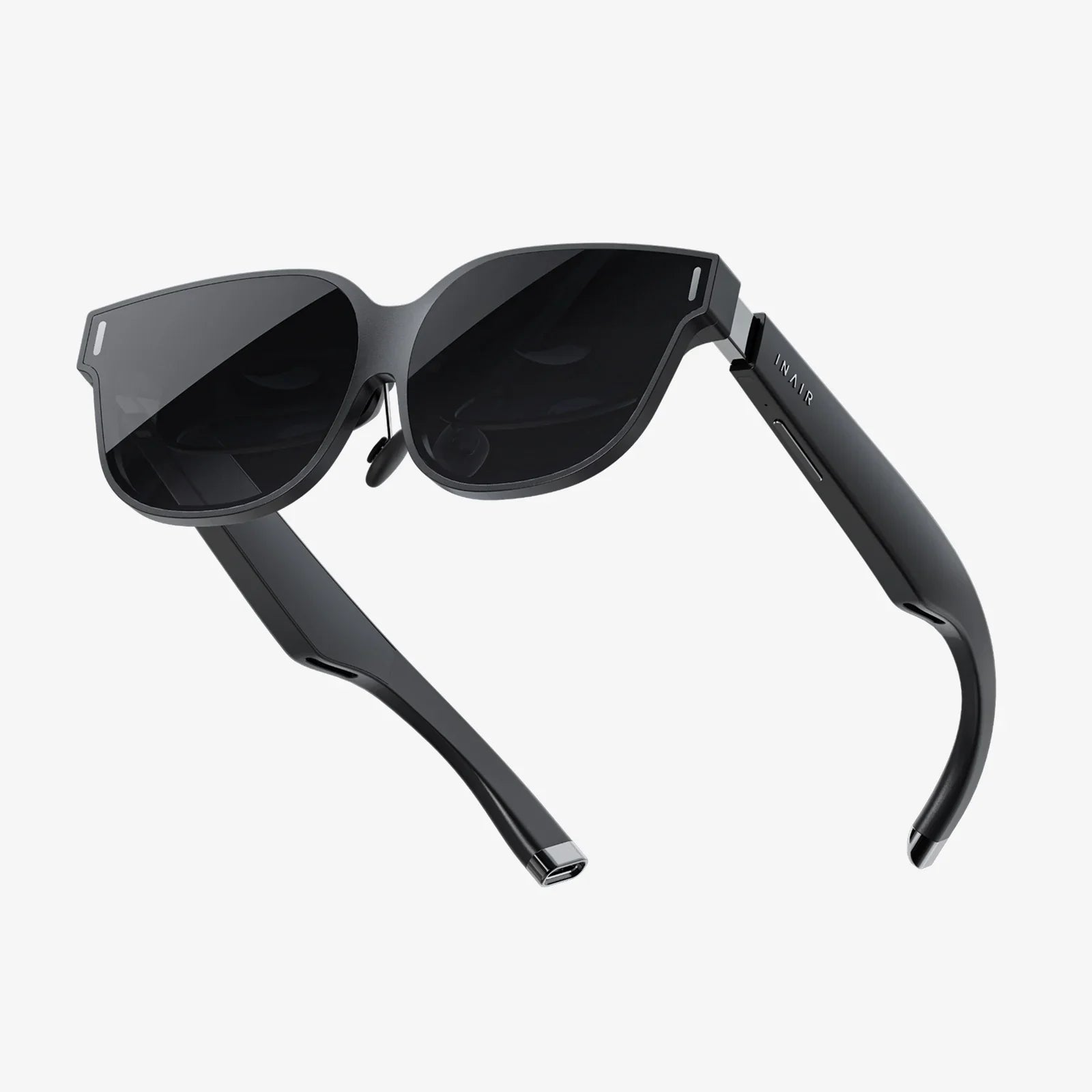
Imagine a world where information doesn't just live on a screen in your pocket but is elegantly superimposed onto the world itself. Where directions appear as floating arrows on the pavement, where the name of a distant mountain materializes against its peak, and where a recipe hovers conveniently beside your mixing bowl without a single smudge on your phone. This is not a distant sci-fi fantasy; it is the imminent reality being ushered in by the rapid development of AI display sunglasses, a technological convergence poised to redefine our perception of reality itself.
The Architectural Marvel: How They Work
At their core, AI display sunglasses are a symphony of advanced hardware components working in perfect harmony. Understanding this architecture is key to appreciating their revolutionary potential.
Micro-Displays and Waveguide Optics
The magic begins with incredibly small, high-resolution micro-displays, often based on technologies like MicroLED or OLED. These are the digital canvases that generate the initial image. However, projecting this image directly into the eye is a significant challenge. This is where waveguide optics come into play. These are transparent lenses embedded with microscopic gratings that trap light from the micro-displays, channel it through the lens material via total internal reflection, and then eject it precisely into the user's eye. The result is a crisp, bright digital overlay that appears to float in the user's field of view, all while allowing them to see the real world clearly through the same lens.
The Sensor Suite: The Eyes and Ears of the System
For the overlay to be contextually relevant, the sunglasses must understand the environment. This is achieved through a sophisticated array of sensors typically including:
- High-Resolution Cameras: To capture live video of the user's point-of-view, enabling object recognition, text translation, and scene analysis.
- Depth Sensors/ToF (Time-of-Flight) Sensors: To map the environment in three dimensions, understanding the distance and spatial relationship between objects. This allows digital content to be anchored to real-world surfaces.
- Inertial Measurement Units (IMUs): Comprising accelerometers and gyroscopes, these track the precise movement and orientation of the user's head, ensuring the digital overlay remains stable and locked in place.
- Microphones: For voice command input and ambient audio analysis.
- GPS and Bluetooth: For location tracking and connecting to other devices.
Onboard Intelligence: The Brainpower
The raw data from the sensors is meaningless without processing. This is the domain of the onboard AI co-processor, a specialized chipset designed for low-power, high-performance machine learning tasks at the edge. This processor runs complex neural networks in real-time to perform tasks like:
- Computer Vision: Identifying objects, people, text, and scenes from the camera feed.
- Natural Language Processing (NLP): Understanding and responding to voice commands.
- Simultaneous Localization and Mapping (SLAM): Creating a real-time 3D map of the unknown environment while tracking the user's position within it.
This local processing is crucial for responsiveness and privacy, as many tasks can be completed without sending sensitive visual data to the cloud.
Beyond Novelty: The Transformative Applications
The true power of this technology lies not in the hardware itself, but in its software-defined applications. The use cases span from practical daily aids to professional revolutions.
Augmented Navigation and Exploration
Forget glancing down at a phone map. AI display sunglasses can project turn-by-turn directions directly onto the street, highlight the entrance to a building you're searching for, or provide historical information about a landmark as you look at it. For hikers, a glance at a plant could identify its species, or a look at a ridge could show the trail name and elevation.
Real-Time Translation and Accessibility
This is one of the most powerful applications. A user could look at a foreign street sign, menu, or document and see it instantly overlaid with a translation in their native language. For the hearing impaired, the glasses could transcribe a conversation in real-time, displaying the text beneath the speaker's face, making social interactions profoundly more accessible.
Enhanced Productivity and Hands-Free Assistance
For field technicians, mechanics, or surgeons, having schematics, instructions, or vital statistics displayed in their line of sight is a game-changer. They can follow complex procedures without looking away from their work, improving both efficiency and safety. In logistics, workers can see inventory information and picking instructions overlaid on warehouse shelves.
Personalized Context and Social Intelligence
Powered by AI, the glasses could become a personal assistant that understands social context. At a large conference, they could discreetly display the name and company of a person you're talking to after a quick glance. They could remind you of an item on your shopping list as you walk past it in the store, or even offer subtle conversational prompts based on the topic being discussed.
Navigating the Ethical and Societal Labyrinth
Such a powerful tool does not arrive without significant questions and potential pitfalls. The path to widespread adoption is fraught with ethical challenges that must be addressed proactively.
The Privacy Paradox
Devices with always-on cameras and microphones represent a fundamental shift in surveillance capability. The potential for unauthorized recording in private spaces, facial recognition without consent, and the constant collection of biometric data is a serious concern. Robust privacy frameworks, clear user indicators when recording is active, and strong data anonymization policies will be non-negotiable. The debate over individual convenience versus collective privacy will be central to their acceptance.
The Social Contract and Etiquette
How will society adapt? If someone is wearing these sunglasses in a conversation, are they recording? Are they looking up information about you? Are they even paying attention? New social norms and etiquettes will need to emerge. The concept of "eye contact" may need to be redefined, and the line between enhanced interaction and rude distraction will be blurry.
Information Overload and Digital Dependency
There is a risk of cognitive overload—a constant stream of notifications and data obscuring the simple experience of being present in the moment. The design of these systems must prioritize user well-being, with features that encourage digital detox, filter non-essential information, and prioritize notifications based on true urgency rather than constant interruption.
The Future Vision: Where Do We Go From Here?
The current generation of technology is merely the first step. The future trajectory points toward even deeper integration and capability.
Seamless Form Factor
The goal is a pair of glasses that are indistinguishable from standard fashion eyewear—lightweight, stylish, and with all-day battery life. Advances in battery technology, chip miniaturization, and ultra-low-power displays will be critical to achieving this.
Advanced AI and Contextual Understanding
Future AI models will move beyond simple recognition to true contextual understanding and anticipation. The system will learn user habits and preferences, offering information before it's even asked for, and acting as a true cognitive extension.
Haptic and Multi-Sensory Feedback
Interaction will evolve beyond voice and touch. Subtle bone conduction audio for private sound and even haptic feedback through the frames (e.g., a gentle vibration to indicate a left turn) will create a richer, more immersive, and less intrusive user experience.
The emergence of AI display sunglasses marks a pivotal moment, not just in consumer tech, but in human-computer interaction. They represent a move away from isolated screens and toward a future where our digital and physical realities are seamlessly interwoven. While the challenges of privacy, ethics, and social adaptation are immense, the potential to augment human capability, enhance accessibility, and redefine how we learn, work, and explore our world is truly staggering. The next great interface isn't in your hand; it's on your face, and it's looking back at the world with you.
Share:
What Is Considered The Best VR Headset? A Deep Dive Into The Ultimate Immersive Experience
How Long Can You Wear a VR Headset - The Ultimate Guide to Comfort and Safety