


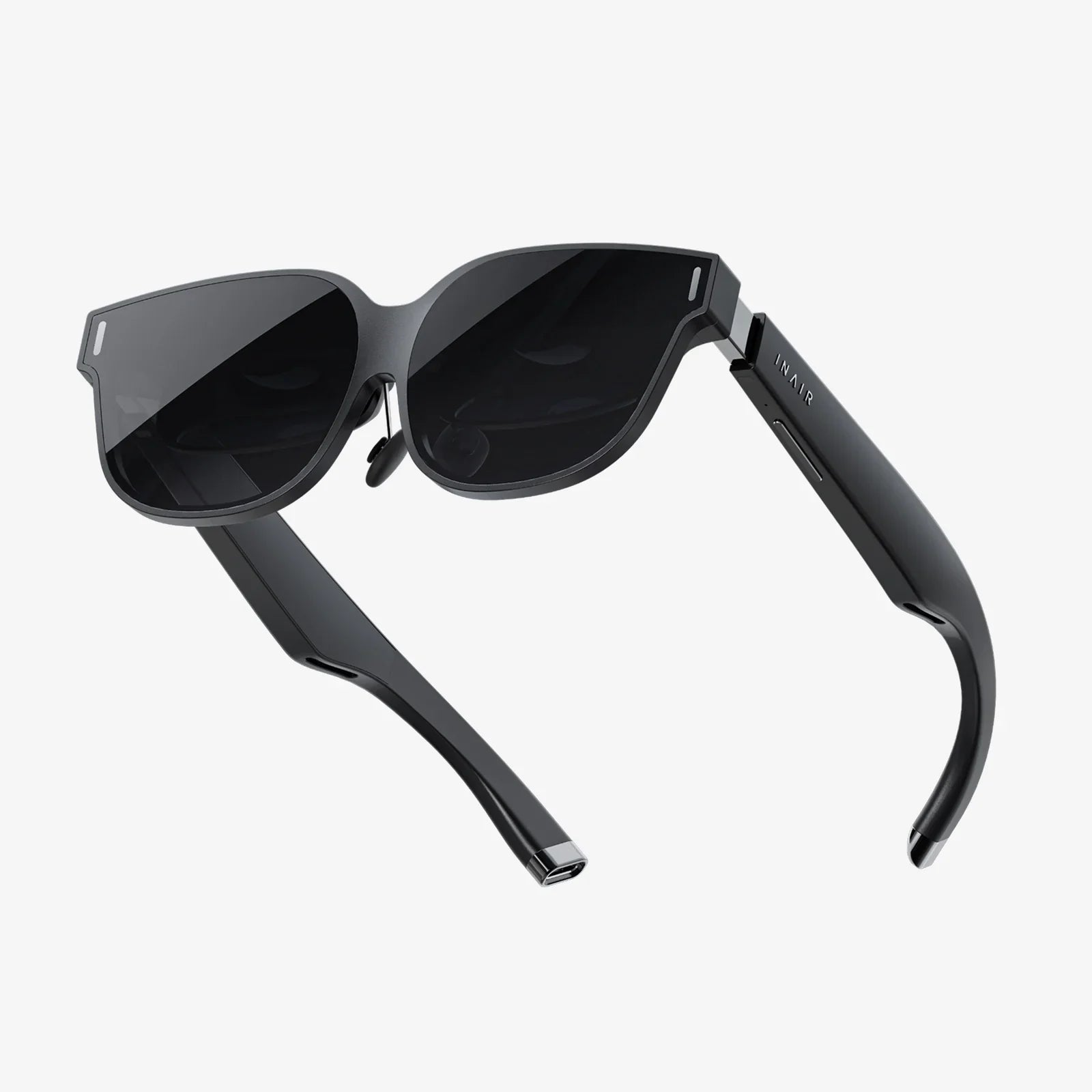
Imagine a world where information flows as effortlessly as sight, where language barriers dissolve before your eyes, and the digital world seamlessly overlays your physical reality. This is not a distant future promised by science fiction; it is the emerging present, made possible by a revolutionary piece of wearable technology sitting right on the bridge of your nose. The era of AI enabled glasses is here, and it’s poised to fundamentally alter our perception of reality itself.
Beyond Vision Correction: The New Paradigm of Wearable Tech
For centuries, glasses served a single, vital purpose: correcting imperfect vision. Then, they evolved into a fashion statement, an extension of personal identity. Today, we stand at the precipice of a third, far more profound evolution. AI enabled glasses are not merely lenses in a frame; they are sophisticated computational platforms. They represent the convergence of several groundbreaking technologies: advanced micro-optics, powerful, miniaturized processors, bone conduction audio, always-on connectivity, and, most importantly, sophisticated artificial intelligence and machine learning algorithms.
This fusion transforms a passive tool into an active assistant. The core concept is ambient computing—where technology recedes into the background of our lives, providing information and functionality only when we need it, without the constant distraction of a screen in our hands. It’s about augmenting our natural capabilities, making us smarter, more connected, and more efficient without interrupting the flow of our real-world interactions.
How They Work: The Symphony of Sensors and Intelligence
The magic of AI enabled glasses lies in their intricate, yet increasingly discreet, internal architecture. While designs vary, most incorporate a common set of components working in concert.
- Micro-Cameras and Sensors: Small, high-resolution cameras act as the device’s eyes, capturing the world from the user’s perspective. These are supplemented by a suite of sensors including accelerometers, gyroscopes, and magnetometers to understand head position, movement, and orientation.
- Onboard Processing Unit: A tiny, powerful chipset housed within the frame acts as the brain. This is where the raw data from the cameras and sensors is initially processed. Advancements in edge computing allow more of this processing to happen directly on the device, reducing latency and enhancing privacy by minimizing the need to constantly stream data to the cloud.
- Connectivity Modules: Bluetooth and Wi-Fi chips connect the glasses to a user’s smartphone or directly to the internet, enabling access to vast cloud-based AI models for more complex tasks like real-time language translation or advanced object recognition.
- Audio System: Instead of traditional speakers, most designs use bone conduction technology. This transmits sound waves through the bones of the skull directly to the inner ear, leaving the ear canal open to hear ambient sounds. This is crucial for safety and situational awareness.
- Display Technology: This is the most critical and varied component. Some project simple, monochromatic data like notifications or directions onto a small prism in the corner of the lens. More advanced systems use waveguides or holographic technology to project full-color, interactive augmented reality (AR) overlays that appear to float in the user’s field of view.
- The AI Engine: This is the true differentiator. The AI software is what interprets the visual and sensor data. Using computer vision, it can identify objects, read text, recognize faces, and map environments. Using natural language processing, it can understand spoken commands and provide contextual, spoken responses. It learns from user interactions to provide more personalized and proactive assistance over time.
A World of Applications: From Accessibility to Enterprise
The potential applications for this technology are as vast as human experience itself. They are already demonstrating profound utility across numerous domains.
Revolutionizing Accessibility and Inclusion
Perhaps the most immediate and impactful use case is in assistive technology. For the visually impaired, AI glasses can act as a powerful set of artificial eyes.
- Scene Description: A user can point their gaze at a room, and the AI will provide an audio description: "You are in a kitchen. There is a round table with two chairs to your left. A sink is directly ahead."
- Text Reading: The glasses can instantly read aloud text from menus, signs, documents, or product labels, granting unprecedented independence.
- Object and Person Finding: Users can ask, "Where are my keys?" and the glasses, having remembered their location, can guide their gaze with audio cues. Some systems can even be trained to recognize familiar faces and whisper a name when that person approaches.
- Navigation: Providing turn-by-turn audio guidance, not based on a map, but on what the user actually sees—"Turn right at the blue door ahead."
For those who are hard of hearing, real-time transcription capabilities can display conversations as subtitles on the lenses, making every interaction more accessible.
Supercharging Professional and Productivity Workflows
In the professional world, AI glasses are moving from gimmick to essential tool.
- Field Service and Maintenance: A technician repairing a complex machine can see schematics overlaid onto the equipment, receive step-by-step guidance, or stream their view to a remote expert who can annotate their vision with arrows and notes.
- Healthcare: Surgeons can access patient vitals and imaging data without looking away from the operating field. Medical students can observe procedures with anatomical labels superimposed on their view.
- Logistics and Warehousing: Workers fulfilling orders can have optimal picking routes and item information displayed directly in their line of sight, dramatically improving speed and accuracy.
- Hands-Free Information Access: For anyone from a chef following a recipe to a scientist conducting an experiment, the ability to call up information, take notes, or set timers through voice commands, without contaminating a workspace or breaking focus, is a game-changer.
Redefining Social and Personal Interaction
On a personal level, the technology promises to break down barriers and enhance daily life.
- Real-Time Translation: Imagine traveling to a foreign country and reading a street sign or menu simply by looking at it, with the translation appearing instantly. Or having a conversation with someone speaking another language, hearing their words translated in near-real-time through your glasses—a true Babel Fish made real.
- Contextual Learning: Looking at a landmark could bring up historical facts. At an art museum, gazing at a painting could reveal information about the artist and the piece’s history.
- Memory Augmentation: The glasses could act as a perfect, searchable photographic memory, recalling where you left an item, the name of someone you met at a conference, or the details of a recipe you tried last month.
The Inevitable Challenges: Privacy, Security, and the Social Contract
This powerful technology does not arrive without significant challenges, particularly in the realms of ethics, privacy, and social norms. The very feature that makes these glasses so powerful—their ability to continuously see and interpret the world—is also their greatest point of contention.
- The Privacy Paradox: A device with always-on cameras, even if designed for user benefit, inherently raises concerns about surveillance. The potential for unauthorized recording in private spaces, the non-consensual collection of biometric data (like face recognition), and the constant logging of one’s environment create a massive privacy challenge. Clear, transparent indicators—both physical and digital—that recording is active are a non-negotiable requirement.
- Data Security: The amount of intimate data collected by these devices is staggering: everything you see, everywhere you go, everyone you meet. This data must be encrypted both in transit and at rest. The principle of data minimization should be paramount—only collecting and retaining what is absolutely necessary for the functionality the user has requested.
- Social Acceptance and Etiquette: The presence of cameras in social situations is already a sensitive issue. Wearing them during a conversation could make others feel uncomfortable, monitored, or distrustful. Establishing new social norms and etiquette around their use in sensitive areas like bathrooms, locker rooms, and private meetings will be crucial for widespread adoption.
- Digital Divide and Accessibility: As with any advanced technology, there is a risk that these powerful augmentations will only be available to those who can afford them, potentially creating a new class of "enhanced" individuals and widening existing social and economic gaps.
Navigating these issues will require robust public discourse, thoughtful regulation that protects individual rights without stifling innovation, and a commitment from developers to embed ethical principles like privacy-by-design into the core of their products.
The Future Lens: What Lies Ahead for AI Enabled Glasses
The current generation of AI glasses is merely the first step. The trajectory points toward devices that are increasingly lighter, more powerful, and more socially acceptable. We can anticipate several key developments.
- True AR Becomes Standard: Future iterations will move beyond small, monochromatic notifications to rich, full-color, interactive 3D holograms seamlessly integrated into our environment. Virtual screens will replace physical monitors, and digital art will decorate physical walls.
- Advanced Biometric Integration: Sensors will monitor health metrics like pupil dilation, blink rate, and even blood oxygen levels, providing real-time health insights and early warnings for conditions like fatigue or dehydration.
- Brain-Computer Interfaces (BCI): The ultimate goal is moving beyond voice commands and gestures. Early-stage research into non-invasive BCIs could eventually allow us to control our digital overlays and retrieve information simply by thinking, making the interface truly invisible and instantaneous.
- The Demise of the Smartphone? While not imminent, the long-term vision is that these glasses could become our primary computing device, relegating the smartphone to a occasional connectivity hub. Why pull a rectangle from your pocket when the world itself is your interface?
The path forward is one of convergence, where the physical and digital realms cease to be separate places we switch between, and instead become a single, unified, augmented reality.
We are standing at the dawn of a new sensory experience, one where our understanding of the world is no longer limited by our own biological hardware. AI enabled glasses are the key that unlocks this door, offering a glimpse into a future where knowledge is contextual, assistance is ambient, and our reality is limited only by our imagination. The question is no longer if this future will arrive, but how quickly we can adapt to its profound possibilities and navigate its complex challenges to build a world that is not only smarter, but more human.
Share:
AR VR Capabilities: Redefining Reality and Reshaping the Future of Human Experience
Information About Augmented Reality: The Digital Layer Transforming Our World