


- by wangfred
AI Generated AR: The Invisible Revolution Reshaping Our Reality
- by wangfred
Imagine walking through a city where every street sign translates in real-time, historical figures materialize on street corners to tell their stories, and the very architecture around you can be redesigned on the fly with a simple voice command. This is not a distant science fiction fantasy; it is the imminent future being built today at the powerful intersection of two of the most transformative technologies of our time: artificial intelligence and augmented reality. While AR provides the canvas, overlaying digital information onto our physical world, it is AI that acts as the intelligent brush, the discerning eye, and the creative mind. This fusion, known as AI-generated AR, is moving beyond pre-programmed animations and static holograms into a realm of dynamic, context-aware, and deeply personalized experiences that promise to fundamentally alter how we work, learn, play, and connect.
At its most basic, Augmented Reality is about perception—understanding the environment to place digital content within it. Early AR relied on simpler computer vision techniques, often requiring specific markers or struggling with inconsistent lighting and occlusions. Artificial Intelligence, particularly the subfields of machine learning and deep learning, supercharges this perception, transforming it from a crude sense into a sophisticated understanding.
Computer Vision on Steroids: AI models, trained on vast datasets of images and videos, can perform real-time object recognition, semantic segmentation, and spatial mapping with astonishing accuracy. An AI-powered AR system doesn't just see a flat surface; it can identify it as a wooden desk, a concrete wall, or a grassy field. It can understand the difference between a pet, a person, and a piece of furniture, allowing for intelligent occlusion where digital objects can realistically hide behind real-world ones.
This is where the magic truly begins. AI doesn't just identify objects; it comprehends scenes. By analyzing the spatial relationships between objects, lighting conditions, and even the inferred purpose of a space, an AI system can generate AR content that is contextually relevant. For instance, pointing a device at a car engine could cause an AI to generate step-by-step repair instructions overlaid directly on the specific parts needing attention. In a retail store, it could highlight products that align with a user's previously indicated dietary preferences or past purchases.
The most revolutionary aspect is the shift from displaying AR content to generating it in real-time. Generative AI models can create novel text, images, 3D models, and animations based on textual or vocal prompts. Couple this with AR, and you have a system where a user can simply say, "Show me a medieval castle right here," and the AI instantly generates a photorealistic 3D castle model, perfectly scaled and anchored to the chosen location in the physical world. This eliminates the need for teams of 3D artists to manually create every asset, democratizing content creation and enabling infinite possibilities.
The theoretical potential of AI-generated AR is vast, but its practical applications are already taking shape across numerous sectors, promising unprecedented gains in efficiency, safety, and engagement.
The static textbook is becoming a relic of the past. Imagine a medical student studying human anatomy not from diagrams, but from a fully interactive, AI-generated 3D hologram of the human body. They could isolate systems, simulate diseases, and even practice virtual surgeries that respond with realistic physiology. For complex machinery training, such as aircraft engines or power plant turbines, AI-generated AR can create interactive guides and simulate fault conditions, allowing trainees to learn and make mistakes in a risk-free environment. The AI can adapt the training module in real-time based on the user's performance, offering hints or increasing complexity.
The try-before-you-buy concept is being elevated to a new dimension. AI-generated AR allows customers to visualize products in their own space with incredible accuracy. It’s not just about seeing if a new sofa fits; an AI can analyze your room's lighting, color scheme, and decor style to suggest products or even generate custom furniture designs on the spot. Virtual try-ons for clothes and accessories, powered by AI that understands fabric drape and body kinematics, will become photorealistic and ubiquitous, drastically reducing return rates and boosting consumer confidence.
The design process is becoming a collaborative, immersive experience. Engineers and designers in different locations can meet in a shared AR space to interact with a full-scale, AI-generated 3D prototype of a new product. They can make changes through natural language commands—"Make this panel thicker," "Change the material to brushed aluminum"—and see the prototype update instantly. On the factory floor, assembly line workers can use AR glasses that overlay intelligent, AI-generated instructions directly onto their task, reducing errors and speeding up complex assembly processes.
Beyond practical utility, AI-generated AR is poised to unleash a new wave of creativity and reshape social interaction.
Art is escaping the frame and entering our world. Artists can use AI tools to create dynamic, interactive sculptures that exist in public parks or respond to the presence of viewers. Filmmakers and game developers are crafting immersive narratives where the story unfolds in the user's living room or city streets. This "physical metaverse" blends the fictional and the real, creating deeply personal and location-based experiences. User-generated content will explode as tools become more accessible, allowing anyone to become a creator of their own augmented world.
Remote collaboration will move from flat video calls to shared holographic workspaces. Colleagues from across the globe could appear as life-like avatars in your office, able to manipulate virtual models together. AI-powered real-time translation could be rendered as AR subtitles in the air, seamlessly breaking down language barriers during in-person conversations. Social media may evolve from feeds of photos to shared AR experiences and filters that are generated uniquely for each environment and interaction.
With great power comes great responsibility, and the fusion of AI and AR presents a unique set of profound challenges that society must urgently address.
An AI-generated AR system, by its very nature, is a perceptual device. It is constantly scanning, analyzing, and interpreting the world around the user. This raises critical privacy questions. Where is this visual and auditory data processed and stored? How is it used? The potential for constant surveillance, either by corporations or governments, is significant. There is a risk of creating a world where our every interaction with our environment is monitored, analyzed, and potentially exploited for advertising or control.
As AR content becomes more photorealistic and contextually aware, the ability to distinguish between what is real and what is digitally generated will become increasingly difficult. This opens the door to sophisticated new forms of misinformation, manipulation, and fraud. Malicious actors could generate convincing AR overlays that alter people's perception of reality—changing road signs, creating fake public announcements, or even superimposing people into scenarios where they never were. The concept of "deepfakes" becomes a tangible, environmental threat.
This technological leap risks creating a new kind of social stratification. Will access to these powerful augmented layers of information become a premium service, creating a class of "augmented" citizens with significant cognitive and informational advantages over those who cannot afford or choose not to use the technology? Ensuring that the benefits of AI-generated AR are distributed equitably is a major societal challenge.
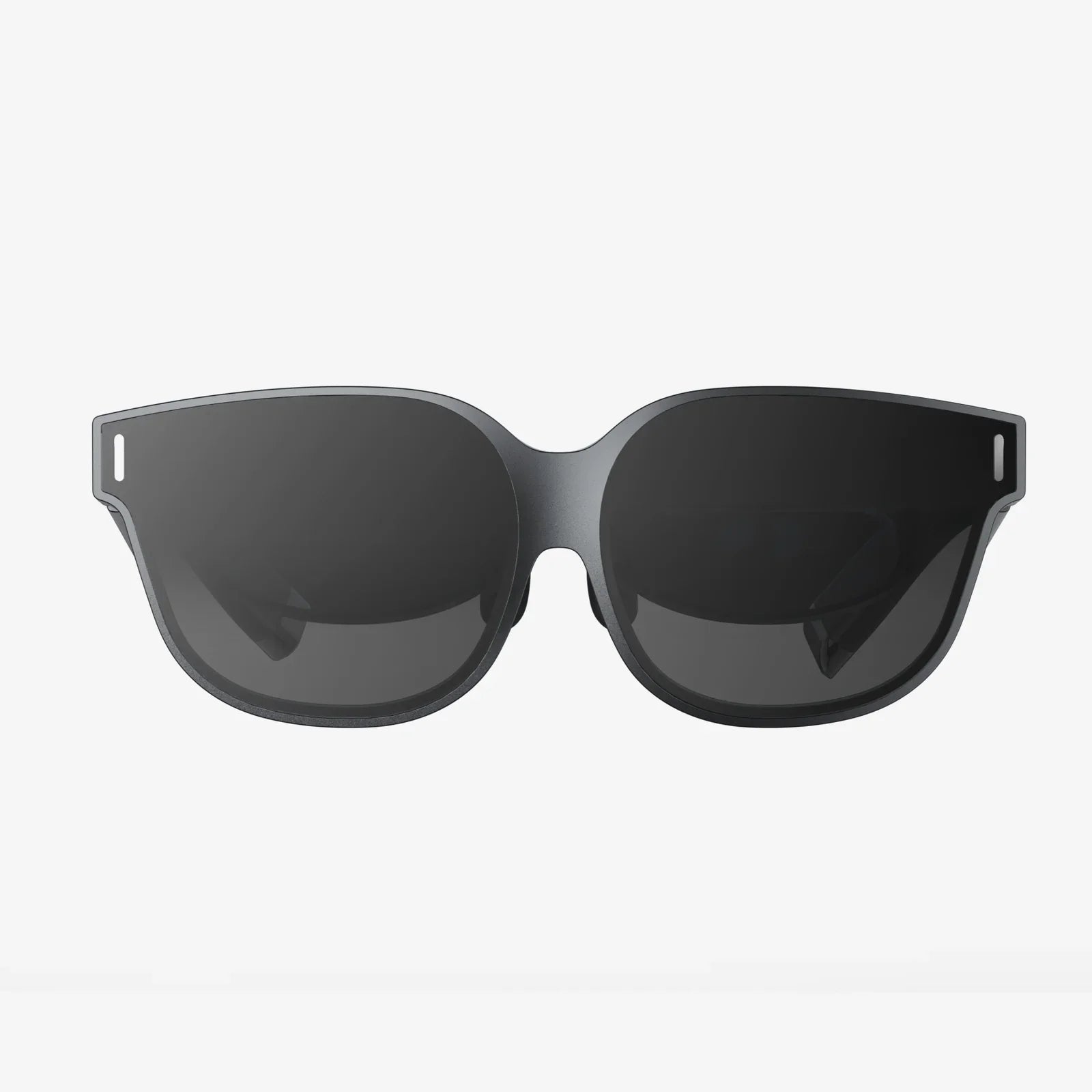
The current state of AI-generated AR, largely reliant on smartphones and early-stage smart glasses, is merely the seed. The future lies in more seamless interfaces. The ultimate goal is a ubiquitous, always-on AR experience delivered through lightweight, socially acceptable eyewear or even contact lenses. In this future, the AI becomes a constant, ambient companion, an invisible guide that enhances our perception and capabilities without overwhelming us.
We are moving towards a world where our environment is not just something we observe, but something we can dialogue with. The physical world will become a dynamic interface, and AI will be the language we use to command it. This represents a fundamental shift in the human-computer interaction paradigm, from looking at a device to having the computer look out at the world with us and for us.
The convergence of AI and AR is not merely a technological trend; it is the foundation for a new layer of reality. It promises to augment not just our world, but our very humanity—expanding our knowledge, amplifying our creativity, and deepening our connections. Yet, it also demands a new level of digital literacy, ethical foresight, and proactive regulation. The invisible revolution is already here, quietly weaving intelligence into the fabric of our everyday perception, and its ultimate impact will be determined by the choices we make today.
You've only just begun to scratch the surface of the digital layer waiting to be unlocked; the world you see is about to become a living, breathing canvas, and the tools to paint it are already in your hands—the next time you look up from your screen, remember, reality is no longer just what you see, but what an intelligent system can help you imagine, creating a fusion of the real and the virtual so seamless it will become impossible to tell where one ends and the other begins.