


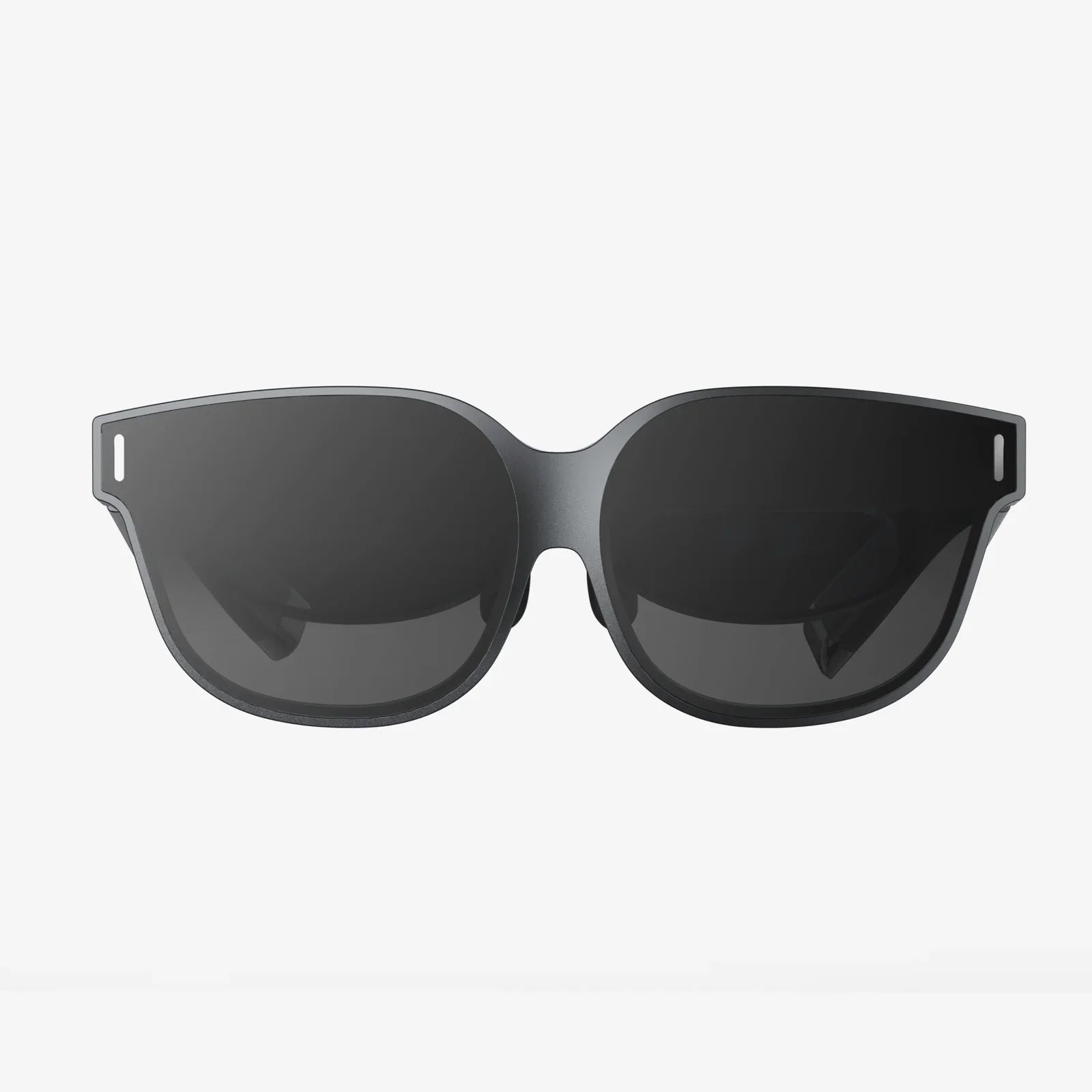
Imagine walking through the bustling streets of Sydney or the vast outback of the Northern Territory, and the world itself speaks to you. Street signs translate instantly, the name of a rare bird flitting through a gum tree appears before your eyes, and a forgotten colleague’s name and last meeting point discreetly materialise as you greet them. This is not a scene from a distant science fiction film; it is the imminent reality promised by AI glasses, a technological wave that is beginning to lap at Australia's shores, poised to fundamentally reshape how we interact with information and our environment.
The Convergence of Intelligence and Vision
At its core, the concept of AI glasses represents the next logical step in the evolution of wearable technology. Where smartphones placed a world of information in our pockets, and smartwatches brought it to our wrists, AI glasses aim to overlay that digital realm seamlessly onto our physical reality. This is achieved through a sophisticated combination of hardware and software. Miniaturised high-resolution displays, often using waveguide or microLED technology, project images directly into the user's field of vision. These are powered by compact yet potent onboard processors, and a suite of sensors—including cameras, microphones, inertial measurement units (IMUs), and increasingly, specialised depth sensors—continuously scan and interpret the surrounding world.
The true magic, however, lies in the artificial intelligence that processes this constant stream of data. Machine learning algorithms, many running in real-time on the device itself, are tasked with the incredible challenge of understanding a chaotic and unpredictable world. They perform tasks like object recognition, facial identification (with appropriate privacy safeguards), text extraction and translation, and spatial mapping. This allows the glasses to contextually understand what the user is looking at or listening to, and provide relevant, timely information without the need to ever glance down at a separate screen.
Beyond Novelty: Practical Applications in the Australian Context
The potential applications for this technology are vast and particularly resonant within the unique geographical and economic landscape of Australia.
Revolutionising Trade and Industry
For Australia's robust trades sector, AI glasses offer a paradigm shift in productivity and safety. An electrician in Melbourne could see wiring diagrams overlaid directly onto the circuit board they are repairing, guided step-by-step through a complex installation with their hands completely free. A mechanic in Perth could visually compare a worn-out part from a mining truck with a 3D model of a new one, instantly confirming the correct replacement and placing an order. Remote experts, based anywhere from Brisbane to Berlin, can see exactly what a field technician sees, annotating their real-world view with arrows and notes to guide them through a repair, drastically reducing downtime and the cost and carbon footprint of travel.
Transforming Healthcare and Accessibility
In healthcare, the implications are profound. Surgeons could have vital patient statistics and imaging data visible during procedures without turning away from the operating table. For individuals who are blind or have low vision, AI glasses can act as a powerful visual interpreter, audibly describing people, objects, text, and even currency denominations, granting a new level of independence. For those who are deaf or hard of hearing, real-time speech-to-text transcription can be displayed within the glasses, making conversations in noisy environments, like a busy Australian pub or a corporate meeting, significantly more accessible.
Enhancing Tourism and Education
Australia's status as a premier tourist destination makes it a perfect testing ground for augmented travel experiences. Imagine visiting the Royal Botanic Gardens Victoria and having the name and origin of every exotic plant pop up as you walk by. A tourist at Uluru could witness historical reenactments and Dreamtime stories visually narrated across the landscape itself. In education, students on a field trip to the Australian War Memorial could see historical figures and events come to life, creating an immersive and unforgettable learning experience that goes far beyond any textbook.
The Australian Market: A Unique Ecosystem
Adopting any new technology in Australia comes with its own set of considerations. The vast distances and relatively sparse population outside major urban centres highlight the critical importance of robust connectivity for cloud-dependent features, making devices with strong on-device processing capabilities particularly attractive. Australian consumers are also known for being discerning and value-conscious, meaning that early adopters will demand clear, practical utility beyond mere gadgetry to justify the investment.
Furthermore, Australia has some of the world's strongest privacy and data security laws. The Privacy Act and the Notifiable Data Breaches (NDB) scheme set a high bar for how personal information—especially the highly sensitive biometric and visual data collected by AI glasses—must be handled. Manufacturers and software developers aiming for success in the Australian market will need to prioritise transparency, user control, and on-device data processing to build the essential trust of Australian consumers. The question of social etiquette and recording in public spaces is also a significant one that will need to be navigated carefully as the technology becomes more prevalent.
Navigating the Challenges: Privacy, Social Acceptance, and Safety
The path to mainstream adoption of AI glasses is not without its hurdles. The most significant barrier is the perennial concern of privacy. The idea of a device that can continuously record video and audio is understandably disconcerting. Successful products will need to incorporate clear physical indicators—like a visible light when recording—and design their features with privacy-first principles, ensuring that data is processed locally whenever possible and that users have complete control over their information.
Social acceptance is another key challenge. The term "Google Glass backlash" still lingers in the collective memory, a reminder that being a "glasshole"—someone who uses the technology in a socially intrusive or obnoxious manner—is a real concern. Modern AI glasses are trending towards designs that look nearly indistinguishable from regular prescription eyewear, which will help them blend into everyday life. Ultimately, as the technology proves its value in subtle, helpful, and non-intrusive ways, social norms will gradually adapt, much as they did with Bluetooth earpieces and smartphones themselves.
The Future is Clear: What's Next for AI in Australia?
The current generation of AI glasses is primarily focused on discrete information delivery and specific professional use cases. The future, however, points towards a more integrated and intelligent experience. We can anticipate advancements in battery technology that will allow for all-day use, and improvements in display clarity and field of view that will make digital objects indistinguishable from reality. The AI itself will evolve from simply recognising objects to understanding complex scenes and intentions, potentially predicting a user's needs before they even articulate them.
For Australia, this presents an incredible opportunity not just as a consumer market, but as an innovator. Australian universities and research institutions are world-leaders in fields like computer vision, machine learning, and robotics. There is immense potential for homegrown companies to develop specialised AI software tailored for Australian industries—from agriculture and mining to healthcare and education—that can run on this new hardware platform. The fusion of Australian AI expertise with global hardware innovation could create a unique and powerful synergy.
The journey towards ubiquitous augmented reality is a marathon, not a sprint. The first steps are being taken now, and Australia is uniquely positioned to both benefit from and contribute to this technological leap. AI glasses promise to unlock a new layer of understanding and interaction with the world around us, offering a glimpse into a future where the line between the digital and the physical gracefully dissolves, empowering us with knowledge and capability like never before.
Share:
Cost of Augmented Reality Technology: A Comprehensive Breakdown for Businesses and Developers
AR VR Technology Advances 2025: The Year the Digital and Physical Worlds Truly Merge