


- by wangfred
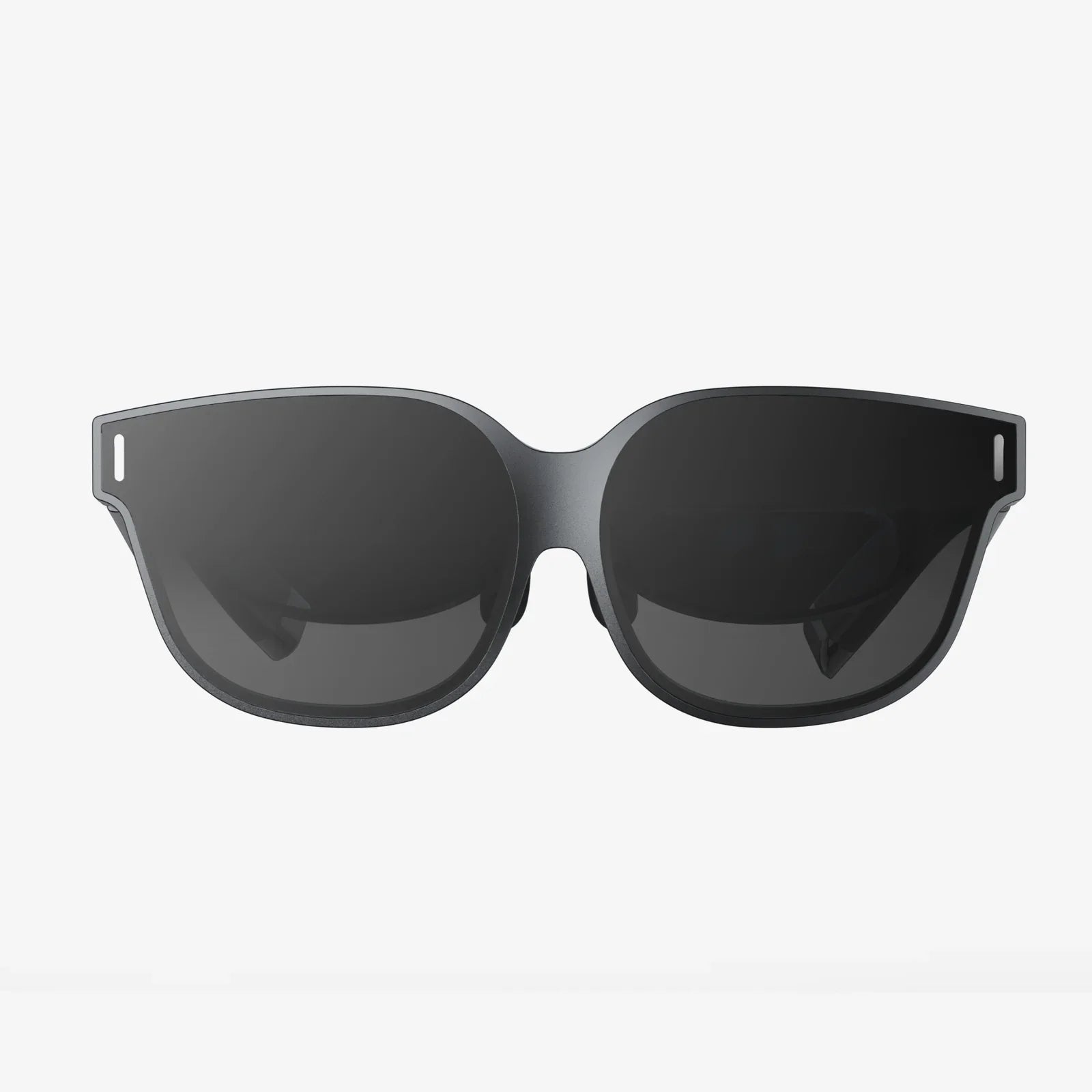
AI Glasses Benefits: Transforming Daily Life Through Augmented Intelligence
- by wangfred
Imagine a world where information floats seamlessly before your eyes, where language barriers dissolve with a glance, and where the digital and physical realms merge into a single, enhanced reality. This is not a distant science fiction fantasy; it is the emerging present, made possible by the rapid advancement of AI glasses. This transformative wearable technology is poised to redefine our interaction with the world, offering a suite of benefits that extend far beyond mere convenience into the realms of accessibility, safety, and human capability.
The concept of augmenting human vision is an ancient one, but the integration of artificial intelligence marks a quantum leap. Early iterations of smart eyewear were often clunky, limited in function, and socially awkward. Today, however, the convergence of miniaturized sensors, powerful on-device processing, sophisticated machine learning algorithms, and more discreet designs has unlocked a new paradigm. These devices are no longer just screens on your face; they are intelligent visual assistants, processing the world in real-time to provide contextually relevant information and assistance.
Perhaps the most profound and immediate impact of AI glasses is in the field of accessibility, offering unprecedented independence to individuals with visual impairments.
Through advanced computer vision, AI glasses can identify and vocalize text from any surface—a restaurant menu, a street sign, a product label, or a document. This real-time optical character recognition (OCR) empowers users to navigate written information independently, a fundamental capability many take for granted.
By mapping the environment in three dimensions, these devices can provide audio cues to help users avoid obstacles, locate doorways, and navigate complex indoor and outdoor spaces with greater confidence. This turns a potentially disorienting journey into a guided, safe experience.
For those who struggle with facial recognition, AI glasses can discreetly identify and name acquaintances as they approach, facilitating smoother and less anxious social interactions. Furthermore, they can analyze facial expressions and provide feedback on emotional cues, aiding those with social cognitive challenges.
From finding a lost set of keys on a cluttered table to identifying denominations of paper money, these glasses can describe objects and their spatial relationships, restoring a layer of environmental awareness and practical autonomy.
In the professional sphere, AI glasses are emerging as a powerful tool for hands-free operation and enhanced efficiency across numerous industries.
For field technicians, engineers, surgeons, and mechanics, accessing manuals, schematics, or patient data traditionally requires looking away from the task at hand. AI glasses project this information directly into the user's field of view, allowing for continuous, focused work without interruption. A surgeon can view a patient's vitals or a 3D model of an organ without turning their head; a technician can follow complex repair instructions while keeping their hands on the equipment.
Through built-in cameras and microphones, an expert located anywhere in the world can see exactly what a field worker sees. They can then annotate the worker's real-world view with digital arrows, highlights, or text, guiding them through a complex procedure in real-time. This drastically reduces travel costs, accelerates problem-solving, and democratizes expertise.
Imagine attending an international meeting where foreign speech is instantly translated and subtitled within your vision, or having every word of a lecture or interview transcribed live. AI glasses break down language and information barriers, facilitating seamless global collaboration and ensuring critical details are never missed.
The educational potential of this technology is immense, offering a new medium for interactive and immersive learning.
Whether learning to play a musical instrument, repair an engine, or perform a complex scientific experiment, AI glasses can overlay step-by-step instructions directly onto the physical objects. This "see-what-I-see" guidance accelerates the learning curve and improves retention by providing information in context.
Visiting a museum becomes a deeply personalized experience. By gazing at an exhibit, a user can trigger additional information, 3D reconstructions, or related media, transforming a static display into a dynamic, interactive portal to the past.
On a personal level, AI glasses are poised to change how we connect with others and document our lives.
The ability to capture photos and video from a natural first-person perspective allows for a more authentic and immersive way to share experiences with friends and family, from a child's first steps to the view from a mountain summit.
These devices can act as a seamless memory aid, recording conversations (with consent) or moments and then helping you recall where you left an item or what was discussed in a previous meeting by retrieving the relevant visual and auditory data.
With such powerful capabilities come significant responsibilities and potential pitfalls that must be carefully considered.
The always-on camera and microphone represent a profound privacy challenge. The potential for surreptitious recording raises concerns for both wearers and non-wearers. Robust, transparent consent mechanisms, clear visual indicators when recording, and strong data encryption are non-negotiable requirements for the ethical deployment of this technology.
The amount of personal, visual, and auditory data collected by these devices is staggering. Who owns this data? How is it stored, processed, and used? Preventing unauthorized access and commercial exploitation of this intimate information is a critical hurdle.
There is a risk that the benefits of AI glasses could exacerbate social inequalities if they remain a luxury good. Furthermore, new social norms will need to evolve. Is it rude to wear them during a conversation? How do we know if someone is recording us? These questions of etiquette and law will need to be addressed as the technology becomes more prevalent.
The trajectory of AI glasses points toward even deeper integration. Future iterations may feature advanced biometric monitoring for health, more immersive augmented reality overlays for gaming and design, and even deeper AI integration that anticipates our needs before we verbalize them. The line between assistant and companion may blur.
The true power of AI glasses lies not in replacing reality, but in enriching it. They offer the promise of making the world more accessible, our work more efficient, and our understanding deeper. While the path forward requires navigating complex ethical questions with care and foresight, the potential to augment human experience and overcome longstanding limitations is undeniable. We are standing on the brink of a visual revolution, and the view through this new lens promises to change everything.