


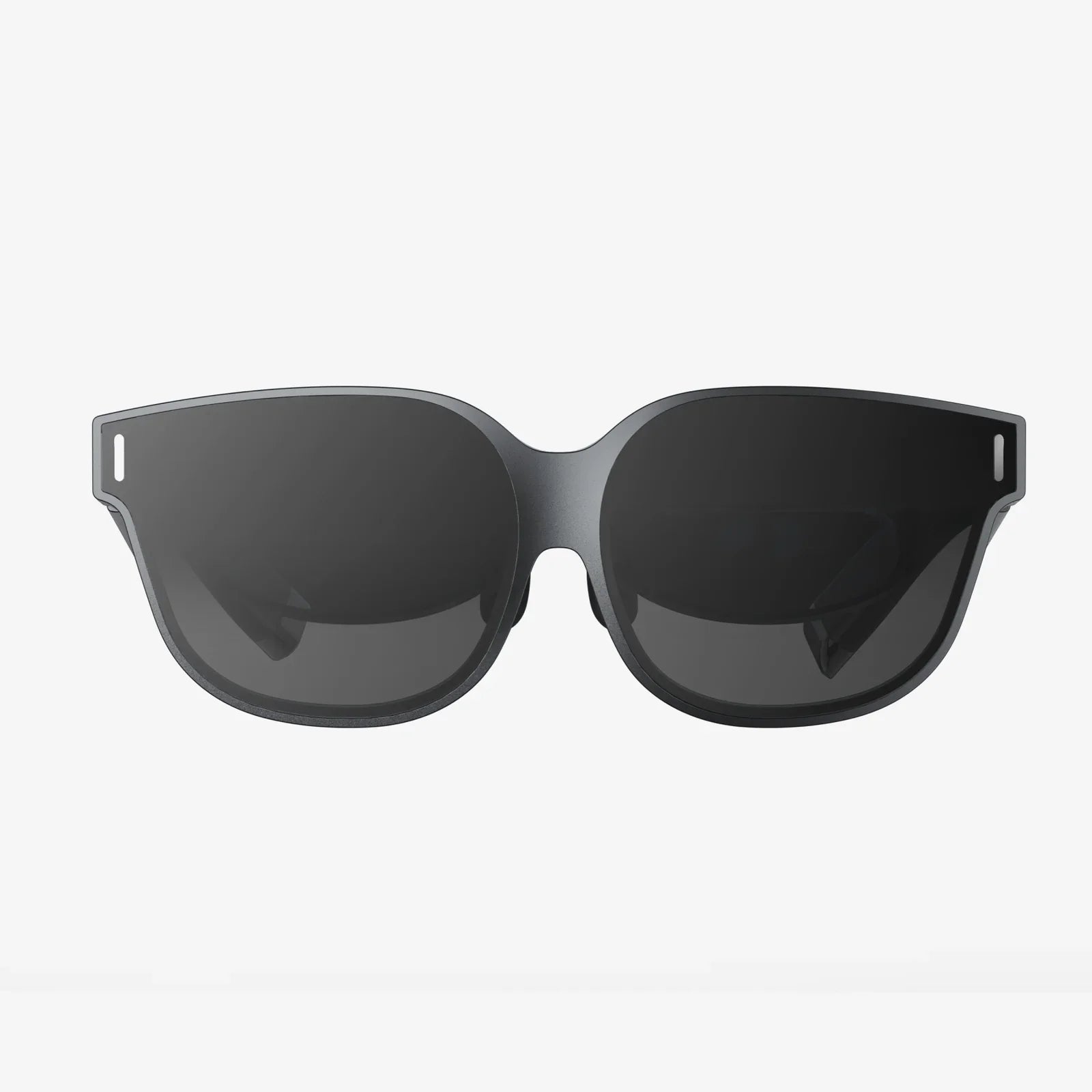
- by wangfred
AI Glasses Brands 2025: The Dawn of a Seamless Augmented Reality Future
- by wangfred
Imagine a world where information flows as naturally as sight itself, where the digital and physical realms don’t just coexist but are seamlessly, intelligently intertwined. This is the promise held by the most advanced AI glasses brands of 2025, a promise that is rapidly transitioning from science fiction to an accessible, tangible reality. The race to dominate your field of vision is on, and the stakes have never been higher.
The journey to the sophisticated devices of 2025 has been one of incremental innovation and sudden, revolutionary leaps. Early iterations were often bulky, socially awkward, and limited by primitive augmented reality (AR) overlays and underwhelming battery life. They were tools for niche enthusiasts and developers. The turning point came with the convergence of several critical technologies. Breakthroughs in micro-OLED and laser beam scanning displays delivered stunning, high-resolution visuals onto impossibly small, transparent waveguides. Simultaneously, the miniaturization of sensors—LiDAR, depth sensors, and high-resolution cameras—allowed these devices to understand the world in breathtaking detail.
However, the true game-changer, the element that earns them the "AI" prefix, is the advent of powerful, on-device neural processing. Unlike their predecessors that relied heavily on cloud connectivity, 2025's models feature dedicated Neural Processing Units (NPUs) that perform real-time scene analysis, object recognition, and natural language understanding with imperceptible latency. This shift from cloud-dependent to intelligence-first design is what finally makes them feel like a natural extension of human capability rather than a clunky peripheral.
The competitive landscape is defined by a few core technological pillars where brands are fiercely competing for supremacy.
The primary interface is, of course, visual. The leading brands have settled on a few display technologies, each with its own trade-offs. Waveguide technology, which pipes light to the eye using microscopic gratings, remains dominant for its sleek, glasses-like form factor. Birdbath optics, which use a semi-transparent mirror to reflect display light into the eye, offer brighter colors and higher contrast but often result in a slightly bulkier design. The holy grail remains holographic optics, which some forward-thinking brands are beginning to integrate, promising even wider fields of view and more natural visual integration with the real world.
This is the brain of the operation. The NPU is the component that transforms a camera and a screen into an intelligent assistant. It’s what allows the glasses to identify a product on a shelf and instantly pull up reviews, translate a street sign in real-time, or provide contextual information about a landmark you’re viewing. In 2025, this AI is not just reactive; it’s increasingly proactive and personalized. It learns from your habits, anticipates your needs, and surfaces information before you even have to ask, all while prioritizing user privacy by processing sensitive data locally on the device.
To understand the world, the glasses must be able to perceive it with depth and precision. An array of sensors acts as its eyes and ears. High-resolution RGB cameras, depth sensors, and inertial measurement units (IMUs) work in concert to create a precise 3D map of the environment. Spatial audio plays a crucial role too, with beamforming microphones that isolate your voice in a noisy room and speakers that deliver private, immersive sound directly to your ears without bothering those around you. Seamless 5G and Wi-Fi 6E connectivity ensure that when cloud computation is necessary, it happens instantly.
Perhaps the most significant hurdle has been design. The leading brands of 2025 have finally cracked the code, offering styles that range from sporty to sophisticated, many indistinguishable from high-end traditional eyewear. This social acceptance is paramount. Battery technology has also seen impressive gains. Through advanced power management and the efficiency of NPUs, most devices now offer full-day battery life, often supplemented by sleek, portable charging cases that provide multiple additional charges.
Rather than a homogenous market, 2025’s landscape is characterized by brands carving out distinct niches based on their philosophy and target audience.
These are the tech behemoths with vast existing ecosystems of smartphones, apps, and services. Their strategy is to make their glasses the ultimate accessory—a complementary device that enhances and extends the functionality of your phone and other devices. Their strength lies in deep, seamless integration. Imagine looking at a smart home device and instantly seeing its status and controls, or having a message notification appear and being able to respond with a glance, all synced perfectly with your phone, laptop, and tablet. Their focus is on convenience, communication, and contextual information within their walled garden.
While consumer devices grab headlines, some of the most successful and robust AI glasses are those designed for the enterprise market. These brands focus on durability, hands-free operation, and specific professional applications. They are transforming fields like manufacturing, where technicians can see assembly instructions overlaid on machinery; logistics, where warehouse workers can see picking and packing information without consulting a handheld scanner; and healthcare, where surgeons can access patient vitals and imaging data without looking away from the operating table. For these brands, the value proposition is clear: increased efficiency, reduced errors, and enhanced training.
This category comprises agile startups and dedicated AR firms that are pushing the boundaries of what’s possible. Often unburdened by the need to support a legacy ecosystem, they compete on pure technological prowess. They might be the first to market with a new display technology, offer a radically wider field of view, or develop a groundbreaking spatial computing interface that doesn’t rely on a traditional smartphone-style OS. They attract developers, creators, and early adopters who are willing to trade some polish for a glimpse into the far future of the technology.
Recognizing that eyewear is as much a fashion statement as a tool, a fascinating trend has emerged: partnerships between technology companies and iconic luxury eyewear and fashion houses. These collaborations result in devices where the technology is seamlessly embedded into genuinely stylish frames. The target audience for these brands is the style-conscious consumer for whom tech must be invisible until it is needed. They prove that functionality doesn't have to come at the cost of aesthetics, making AI glasses a desirable object beyond their utility.
So, what does this all mean for the user? The applications are as diverse as human activity itself.
The path forward is not without its obstacles. Privacy concerns are paramount. The idea of a device with always-on cameras and microphones worn on one’s face requires an unprecedented level of trust. The leading brands are addressing this with physical hardware shutters, clear user indicators for when sensors are active, and a firm commitment to on-device processing. Furthermore, the concept of "digital eye strain" and the long-term effects of having screens so close to the eye are subjects of ongoing research. Finally, there is the risk of a digital divide, where access to this always-connected information layer could create new societal gaps.
As we stand in 2025, the conversation has moved beyond mere speculation. The most visionary AI glasses brands are no longer selling a product; they are selling a new layer of human experience, a cognitive canvas painted over reality itself. The question is no longer if this technology will become ubiquitous, but how we will choose to shape it, regulate it, and integrate its profound capabilities into the very fabric of our lives. The future is not just something we will see; it is something we will look through.
Share:
2025 Augmented Reality Interaction Trends: A New Era of Digital Intimacy
2025 Augmented Reality Interaction Trends: A New Era of Digital Intimacy