


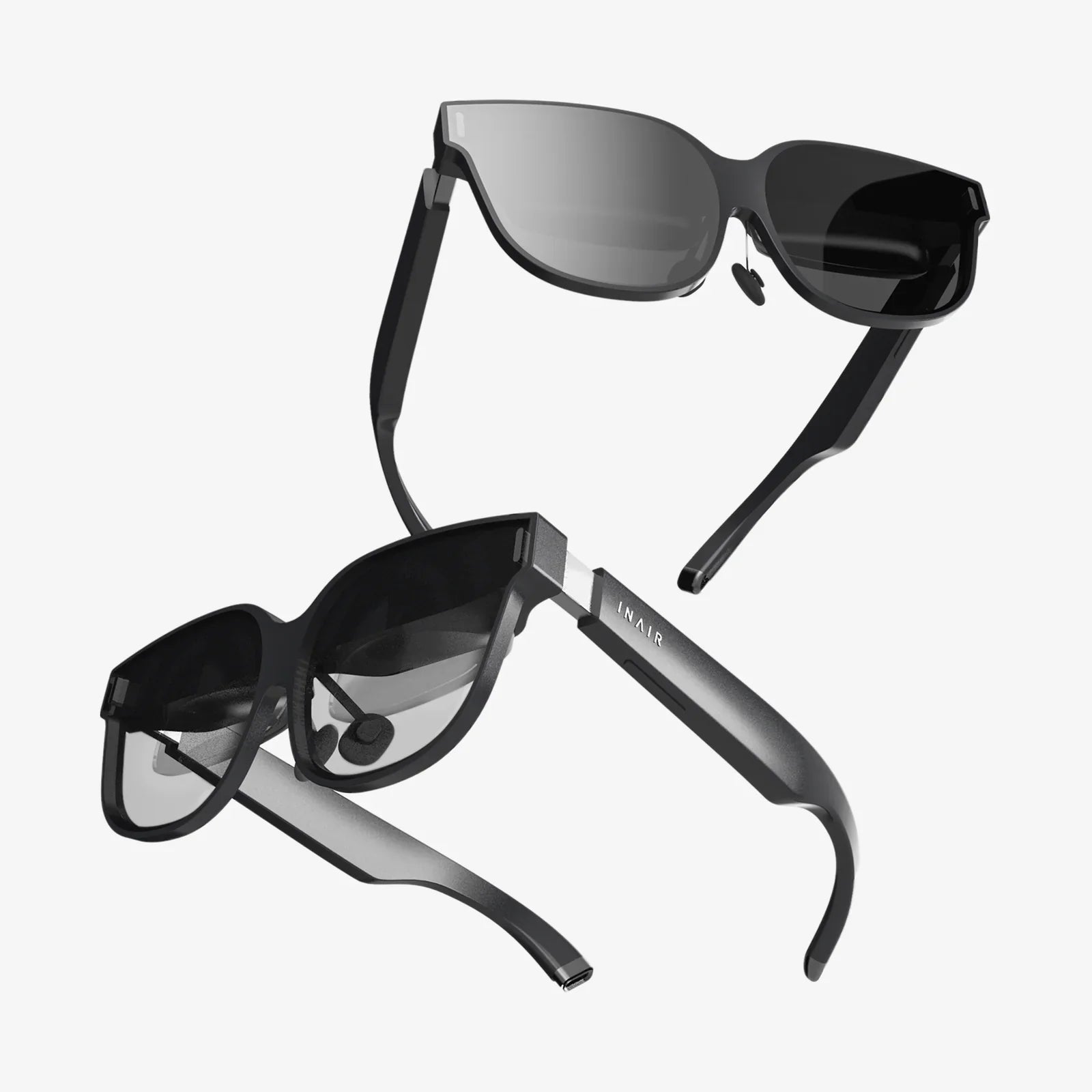
Imagine a world where your most complex questions are answered not by typing into a search bar, but by simply whispering to an empty room. A world where a foreign language is no longer a barrier, with subtitles for life appearing before your eyes. A world where the line between your digital life and physical reality doesn't just blur—it disappears entirely. This is not a distant science fiction fantasy; it is the imminent future being built, piece by intricate piece, by a new and fiercely competitive wave of AI glasses companies. These innovators are not just creating a new gadget; they are constructing the next fundamental platform for human-computer interaction, aiming to place a powerful, context-aware artificial intelligence directly onto our faces, forever changing how we perceive, interact with, and understand the world around us.
The Architectural Pillars of Smart Eyewear
The development of functional and compelling AI eyewear is a monumental feat of engineering, requiring the seamless integration of several advanced technologies into a form factor that is socially acceptable, comfortable, and aesthetically pleasing. The challenge for AI glasses companies is to balance immense computational power with minimal power consumption and a lightweight design.
Advanced Micro-Displays and Optical Systems
At the heart of the user experience is the display technology. Unlike virtual reality headsets that completely envelop the user in a digital environment, AI glasses are designed for augmented reality (AR), overlaying digital information onto the real world. This is achieved through micro-displays like Liquid Crystal on Silicon (LCoS), MicroLED, or Laser Beam Scanning (LBS) modules. These tiny projectors send light into a series of waveguides or combiners—essentially transparent lenses etched with microscopic patterns that reflect the light directly into the user's retina. This creates the illusion that text, images, and 3D holograms are floating in the space in front of them. The race among component manufacturers and AI glasses companies is to make these waveguides more efficient, providing a wider field of view, full color, high brightness for outdoor use, and ultimately, a design that is indistinguishable from regular eyeglasses.
Sensing the World: A Suite of Sophisticated Sensors
For the AI to understand and interact with the environment, it must first perceive it. This requires a sophisticated sensor package that typically includes:
- High-Resolution Cameras: These are the primary "eyes" of the device, used for computer vision tasks like object recognition, text scanning, and capturing photos and video.
- Depth Sensors: Time-of-Flight (ToF) sensors or stereoscopic cameras measure the distance to objects, allowing the AI to understand the geometry of a space and place digital objects accurately within it.
- Inertial Measurement Units (IMUs): Comprising accelerometers, gyroscopes, and magnetometers, these track the precise movement and orientation of the user's head in real-time.
- Microphones: An array of microphones is crucial for beamforming, which allows the glasses to hear voice commands clearly even in noisy environments and to enable features like real-time translation.
- Environmental Sensors: Some prototypes include sensors for temperature, humidity, and air quality, adding another layer of contextual data.
The On-Device Intelligence: Processing and Connectivity
The raw data from these sensors is meaningless without processing. This is where the "AI" in AI glasses truly comes to life. While some complex computations can be offloaded to a paired smartphone or cloud server via high-speed 5G or Wi-Fi connectivity, latency is the enemy of a seamless experience. Therefore, a significant amount of AI processing must happen directly on the glasses themselves, known as edge computing. This requires specialized, low-power processors (NPsUs or Neural Processing Units) capable of running machine learning models for tasks like natural language processing, real-time object detection, and simultaneous localization and mapping (SLAM) without draining the battery. The efficiency of these chips is a primary differentiator for AI glasses companies.
The Voice of Command: Intuitive Interaction Modalities
Interacting with a device on your face requires a new paradigm. Touchscreens are impractical. The leading solution is voice control, powered by always-on, low-power voice assistants that can be activated with a wake word. However, whispering commands in public isn't always desirable. This has led to the exploration of alternative methods, such as subtle touch panels on the temples of the glasses, gesture recognition using the onboard cameras, and even emerging technologies like subvocalization recognition, which detects the tiny neuromuscular signals generated when you think about speaking without making a sound.
A Spectrum of Market Players and Strategies
The landscape of AI glasses companies is not a monolith. It is a diverse ecosystem of players, each with distinct strengths, philosophies, and target markets. Their approaches can be broadly categorized, reflecting different visions for how this technology will integrate into our lives.
The Tech Titans: Building the Platform Ecosystem
Several of the world's largest technology corporations are investing billions into this space. Their goal is not merely to sell hardware but to establish the dominant software platform and ecosystem for spatial computing. They aim to create the equivalent of the iOS or Android operating system for your eyes, a platform upon which countless developers will build applications and services. This strategy leverages their existing expertise in AI, cloud computing, mobile operating systems, and vast app stores. For these giants, the glasses are a gateway to capturing unprecedented amounts of contextual data and becoming the primary interface for the next generation of the internet.
The Disruptive Startups: Niche Innovation and Agile Development
Alongside the tech titans, a vibrant scene of agile startups is pushing the boundaries of what's possible. These smaller AI glasses companies often lack the resources to build a full-stack ecosystem, so they frequently adopt a more focused strategy. Some partner with larger firms to provide specialized components or software. Others target specific enterprise verticals—like healthcare, manufacturing, or logistics—where they can solve acute, high-value problems with tailored solutions. Their agility allows them to innovate quickly in areas like novel display technologies, specialized AI models for industry-specific tasks, and unique form factors, often acting as the R&D wing for the entire industry.
The Legacy Eyewear Brands: Design and Distribution
Recognizing that technology worn on the face must first and foremost be wearable, some established luxury and fashion eyewear brands have entered the fray, typically through partnerships. Their value proposition is rooted in decades of expertise in design, materials, and ergonomics. They understand how to create products that people are proud to wear as a fashion statement. Furthermore, they possess a global retail distribution network that pure-tech companies lack. Their strategy is to hide the advanced technology within frames that are indistinguishable from high-end fashion accessories, thereby addressing one of the biggest historical barriers to adoption: the "cyborg" aesthetic.
Transforming Industries: From Factories to Operating Rooms
While consumer applications generate significant buzz, the most immediate and impactful adoption of AI glasses is occurring within the enterprise sector. Here, the technology offers a clear return on investment by enhancing productivity, improving safety, and reducing errors.
Revolutionizing Manufacturing and Field Services
In complex industrial environments, AI glasses are a game-changer. A technician repairing a malfunctioning machine can have schematic diagrams, step-by-step instructions, or a live video feed from a remote expert overlayed directly onto their field of view. This allows them to work hands-free, drastically reducing downtime. Warehouse workers can use vision-picking systems where the glasses display the exact location and quantity of items to be retrieved, optimizing logistics and minimizing errors. The AI can also enhance safety by identifying potential hazards or confirming that a worker is wearing the correct personal protective equipment (PPE).
Advancing Medical Diagnostics and Patient Care
The healthcare sector stands to benefit enormously. Surgeons can have vital signs, pre-operative images like MRI or CT scans, and critical procedural data displayed in their periphery without looking away from the patient. This can improve precision and reduce cognitive load during complex operations. Medical students can use them for immersive training, and general practitioners could use AI-powered diagnostic assistants to cross-reference symptoms with vast medical databases in real-time, potentially aiding in early detection of conditions.
Redefining Remote Collaboration and Training
AI glasses dissolve geographical barriers for collaboration. An architect can walk through a construction site, and colleagues located anywhere in the world can see their exact point of view and draw digital annotations directly into the architect's visual space to highlight issues. Similarly, a senior engineer can guide a junior technician through a complex task remotely, seeing what they see and providing instructions as if they were standing side-by-side. This "see-what-I-see" capability is revolutionizing training and support across numerous fields.
The Consumer Horizon: A Personal Assistant for Life
The ultimate goal for many AI glasses companies is to create an indispensable consumer device. The envisioned use cases are vast and transformative, aiming to weave AI seamlessly into the fabric of daily life.
- Contextual Awareness: Imagine walking through a city and having the glasses recognize landmarks, providing historical facts, or highlighting highly-rated restaurants as you pass them, with reviews floating near their entrances.
- Real-Time Translation: Conversing with someone in a different language would feel natural. The glasses would transcribe their spoken words and display the translation in your line of sight in near real-time, effectively breaking down language barriers.
- Memory Augmentation: The glasses could act as a perfect, searchable memory aid, remembering where you left your keys, the name of a person you met at a conference, or the details of a recipe you want to try.
- Accessibility: For individuals with visual or hearing impairments, the technology could describe scenes, read text aloud, identify currency, or amplify and transcribe conversations.
Navigating the Ethical and Societal Labyrinth
The path to this augmented future is fraught with profound ethical and societal challenges that AI glasses companies, regulators, and society as a whole must confront. The very features that make the technology powerful also make it potentially invasive.
The Privacy Paradox: Always-On Cameras and Sensors
The most significant concern is privacy. A device with always-on cameras and microphones worn in public represents a fundamental shift in surveillance capabilities. The potential for unauthorized recording in private spaces, facial recognition on a mass scale, and the constant collection of biometric data from unsuspecting bystanders is a legitimate fear. Establishing clear norms, laws, and technological safeguards—like physical shutter switches, clear recording indicators, and robust data anonymization—is paramount. The question of who owns the data collected about the world and the people in it remains largely unanswered.
The Data Deluge: Security and Ownership
AI glasses will generate an unprecedented volume of intimate data: everything you look at, everything you say, your location, and your social interactions. This dataset is a goldmine for the companies that control it, but it is also a prime target for hackers. Ensuring this information is encrypted and secure is a critical technical hurdle. Furthermore, users must be given transparency and control over their data, including the right to access, delete, and dictate how it is used for advertising or training AI models.
Social Acceptance and the "Cyborg" Stigma
Social acceptance is the final barrier. Will people feel comfortable conversing with someone whose eyes are partially obscured by a display? Will wearing such devices in social settings be considered rude or distracting? Early wearers may be labeled as "cyborgs" or viewed with suspicion. The success of this technology hinges on it becoming socially invisible, which is as much a design and fashion challenge as it is a technological one. The companies that can create technology that fades into the background, both physically and socially, will be the ones to achieve mass adoption.
The journey ahead for AI glasses companies is as much about navigating this complex web of human concerns as it is about solving engineering puzzles. The companies that prioritize ethical design, user privacy, and social harmony alongside technological innovation will not only win the market but will also earn the trust required to usher in this new era. The future they are building is one of incredible potential, promising to augment human capability in ways we are only beginning to imagine. The race is on, and the prize is nothing less than the next lens through which humanity will see the world.
Share:
AR VR Developments 2025: The Year Reality Gets a Major Upgrade
All In One VR Glasses: The Ultimate Portal to Immersive Realities