


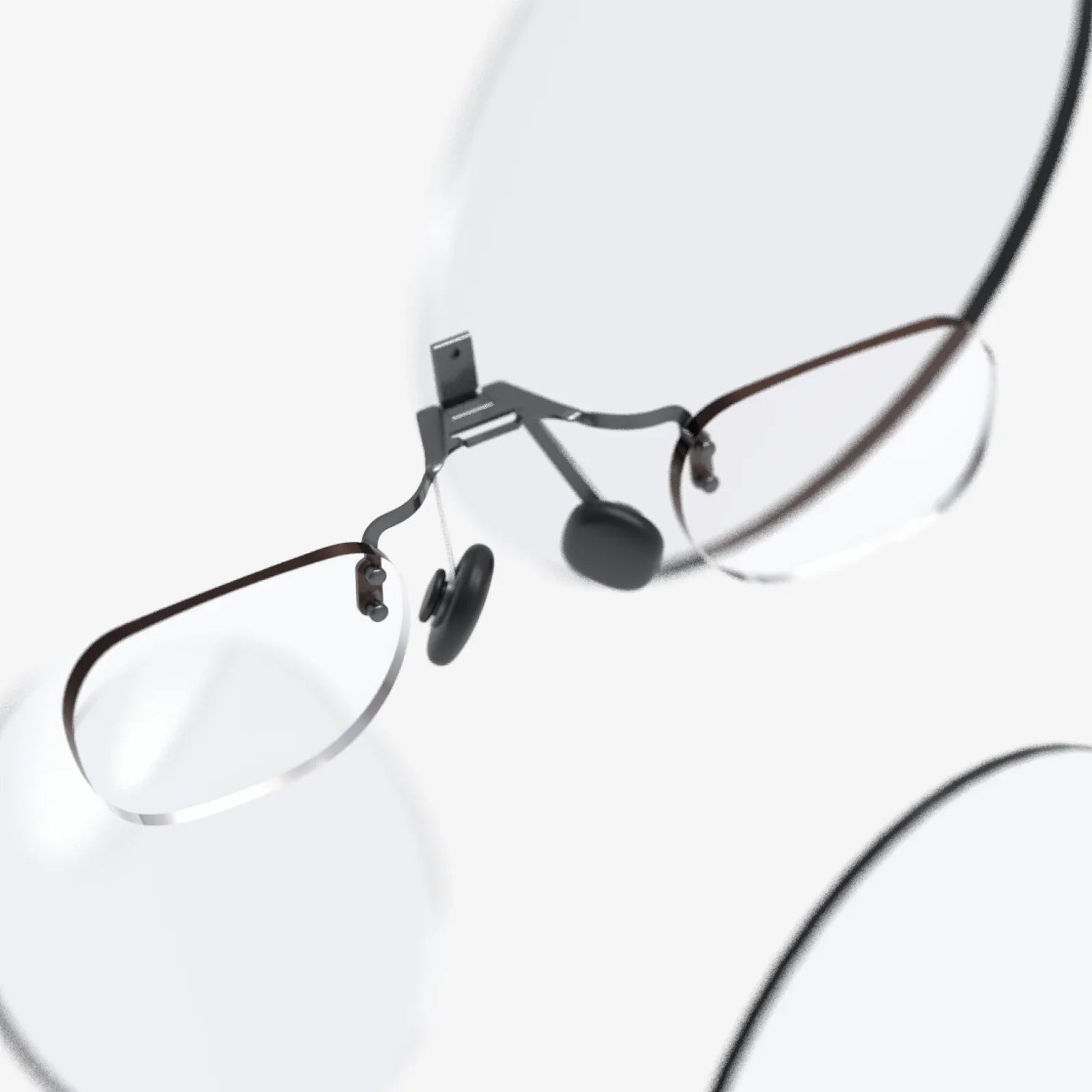
Imagine walking through a foreign city, directions floating effortlessly in your field of vision, translations of street signs appearing instantly, and notifications from your digital world arriving without you ever needing to look down at a screen. This is not a scene from a science fiction film; it is the rapidly approaching reality promised by AI glasses with robust connectivity on the go. This technological convergence is poised to fundamentally alter our relationship with information, our environment, and each other, moving us beyond the confines of the smartphone screen and into a world of ambient, contextual computing.
The Evolution of Wearable Intelligence
The journey to truly connected AI glasses has been a long one, marked by both ambitious prototypes and sobering public receptions. Early iterations of head-worn displays were often bulky, expensive, and offered limited functionality, confining them to niche industrial and enterprise applications. The concept of a consumer-grade device that could seamlessly blend digital overlays with the real world remained elusive, hampered by technological constraints in processing power, battery life, and most critically, connectivity.
The smartphone revolution provided the essential blueprint. It perfected the always-on, always-connected model of mobile computing, creating an ecosystem of apps and services that expect constant access to the cloud. AI glasses represent the next logical step: taking that powerful connected computer out of your pocket and placing its capabilities directly into your line of sight. The key differentiator, and the central challenge, is achieving this without the friction of a tethered experience. True "on-the-go" utility demands a level of wireless freedom and reliability that previous wearable attempts could not deliver.
The Connectivity Trifecta: Bluetooth, Wi-Fi, and Cellular
The magic of modern AI glasses lies in their ability to intelligently orchestrate a symphony of wireless technologies. This connectivity trifecta works in concert to provide a seamless and continuous user experience, each playing a distinct and vital role.
Bluetooth: The Personal Area Network
Bluetooth remains the foundational link for most AI glasses. It serves as a low-power, short-range bridge to the user's primary computing device, almost always a smartphone. This connection handles critical tasks like relaying notifications, managing call audio, streaming music directly to the glasses' speakers, and offloading processing tasks to the phone's more powerful chipset to conserve the glasses' battery. It is the constant, reliable tether that allows the glasses to be a lightweight accessory rather than a standalone behemoth.
Wi-Fi: The High-Speed Data Pipeline
When within range of a trusted network, AI glasses can leverage Wi-Fi for data-intensive operations. This is essential for tasks like downloading large software updates, streaming high-definition video for augmented reality (AR) experiences, or processing complex machine learning models in the cloud. Wi-Fi offers the bandwidth needed for rich, immersive content without draining a cellular data plan. The glasses' ability to automatically connect to known networks ensures that this high-speed pipeline is available whenever the user is at home, in the office, or at a café.
Cellular Connectivity: The Ultimate Freedom
This is the component that truly unlocks "on-the-go" potential. Embedded eSIM technology or compatibility with a physical SIM card allows advanced AI glasses to connect directly to cellular networks, independent of a smartphone. This grants them genuine autonomy. A user can leave their phone behind and still make calls, send messages, access navigation, and query the AI assistant. Whether on a morning run, commuting on a train, or walking through a factory floor, cellular connectivity ensures the glasses are always online, always gathering context, and always ready to assist. The transition between these networks—from Bluetooth to Wi-Fi to cellular—happens automatically and invisibly, creating a persistent bubble of connectivity around the user.
AI: The Brain Behind the Lenses
Connectivity provides the pathway, but artificial intelligence is the engine that drives the value. Raw data streams are useless without intelligent interpretation. The AI integrated into these glasses performs several monumental tasks in real-time:
- Natural Language Processing (NLP): This allows users to interact with their glasses through voice commands and natural conversation. The AI parses speech, understands intent, and executes tasks, from setting reminders to asking complex questions, with the answers delivered audibly or visually.
- Computer Vision: Perhaps the most transformative capability. The glasses' cameras continuously capture the world. The AI analyzes this visual data to identify objects, text, and people. It can translate a menu instantly, provide information about a landmark, read aloud text from a document, or even identify plant species during a hike.
- Contextual Awareness: By synthesizing data from connectivity (location, time), onboard sensors, and computer vision, the AI builds a sophisticated understanding of the user's context. It can proactively offer relevant information—suggesting a departure time for your next calendar appointment based on real-time traffic data pulled over the cellular connection, for instance.
Transforming Everyday Activities
The combination of always-on connectivity and powerful AI reshapes mundane tasks into extraordinary experiences.
Navigation and Exploration
Turn-by-turn directions are overlaid onto the real world, with arrows painted onto the street, eliminating the awkwardness of constantly checking a phone. For tourists, historical facts can pop up next to buildings, and restaurant reviews can appear as you walk past them, all fetched instantly via a cellular or Wi-Fi link.
Productivity and Work
Field technicians can have schematics and instruction manuals hover next to the equipment they are repairing, with a remote expert able to see their view and annotate their vision in real-time through a stable internet connection. Logistics workers can see inventory information and navigation cues through a warehouse, their hands free to carry items.
Communication and Social Interaction
Imagine having a live transcription of a conversation with someone speaking a different language displayed in your glasses, effectively breaking down language barriers on the fly. Or receiving a subtle, audible whisper of a key point you need to remember during a meeting, delivered by your AI assistant after listening in.
Navigating the Challenges: Privacy, Design, and Society
This powerful technology does not arrive without significant challenges. The concept of a device that is always watching and always listening, connected to the cloud, raises profound privacy concerns for both users and bystanders. Manufacturers must implement clear, physical privacy switches, transparent data handling policies, and robust security to prevent hacking. The societal etiquette of wearing such devices—when is it appropriate to record or interact with them—is yet to be written.
Furthermore, the design must overcome the hurdles of aesthetics, comfort, and battery life. Glasses are a personal fashion statement, and the technology must be integrated in a way that is socially acceptable and desirable to wear all day. Battery technology remains a limiting factor, especially when leveraging power-hungry cellular data and AI processing, necessitating innovations in power management and perhaps even swappable battery systems.
The Road Ahead: A Connected, Augmented Future
The trajectory is clear: connectivity will become more seamless, with the integration of advanced technologies like Low Earth Orbit (LEO) satellite communication ensuring global coverage, even in remote areas. AI models will become more efficient and capable, running increasingly on the device itself for lower latency and greater privacy. This will enable even more sophisticated and real-time interactions with our environment.
We are moving towards a future where accessing digital information will be as natural as looking at the world itself. The goal is not to lose ourselves in a virtual world, but to enhance our perception of the real one. AI glasses with robust on-the-go connectivity will become the primary portal to the digital realm, offering knowledge, assistance, and enrichment contextually and immediately, empowering us to be more present, more capable, and more connected than ever before. The age of glancing at a device is ending; the age of looking through one is just beginning.
The potential is staggering—a world where information is not sought but presented, where help is not requested but offered, and where the line between our digital intelligence and our own begins to gracefully blur, all through a pair of sleek frames that keep us effortlessly connected to everything, everywhere.
Share:
Augmented Reality Background The Digital Layer Reshaping Our World
Intelligent Smart Glass: The Transparent Future of Architecture and Design